 Write to the booksellers
BRANDYS Kazimierz
De mémoire ...
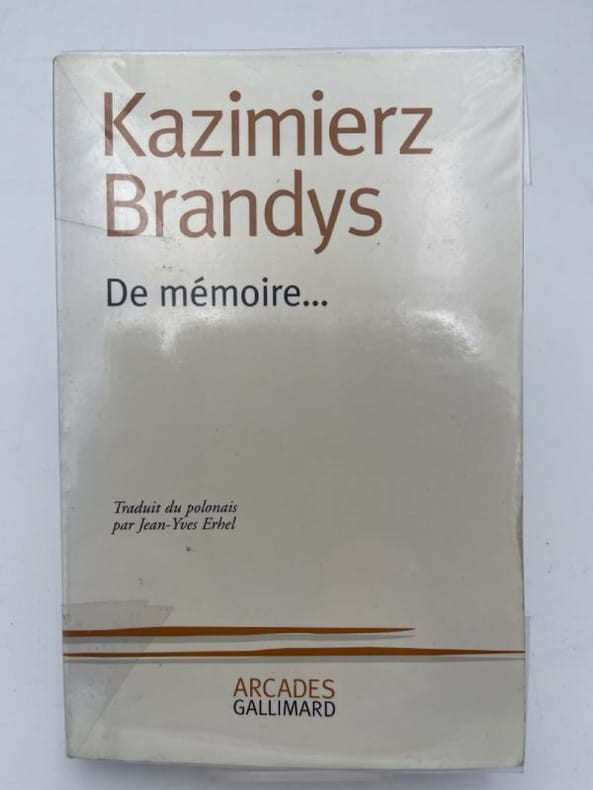
Gallimard Gallimard, 2003. In-12 broché, 280 pages. Bon état
Reference : 189599
ISBN : 2070753794
Toutes les expéditions sont faites en suivi au-dessus de 25 euros. Expédition quotidienne pour les envois simples, suivis, recommandés ou Colissimo.
Bookseller's contact details
Librairie Gil - Artgil SARL
Catherine et Caroline Gil
24 Bld Denys Puech
12000 Rodez
France
05 65 42 95 21
Payment mode


Sale conditions
Conformes aux usages de la librairie ancienne. Les prix sont nets. Frais de port en sus. Emballage gratuit. Les livres sont expédiés après réception du règlement en colis poste ou recommandé. <br />
5 book(s) with the same title
[ Recueil de 7 volumes d'Anciens Mémoires, Précis, Consultations relatifs à des affaires judiciaires dans le département de la Somme et régions limitrophes, de 1755 à 1813. Contient notamment : ] Tome I 1755-1773 : Mémoire pour Maître Bourdon, Greffier en chef de l'Hôtel de Ville de Péronne 1755 - Arrests de la Cour de Parlement portant défenses aux nommés Bazin, De La Sauvagère, Mormont & De Renty de récidiver leurs Libelles & diffammations - Sommaire pour Me Jean-Baptiste Ropiquet, Procureur en la Cour contre Messire De La Folie de Vorme, Seigneur de Reincheval - Sommaire pour Jacques Maillard, Fermier de la Ferme de Renancourt - Précis sur Délibéré pour le Sieur Gallot & les Héritiers du Sr Savoye, Propriétaires des Moulins bannaux du Bourg d'Ault - Mémoire pour Me Etienne Lalau, Prêtre Chapelain de la Cathédrale d'Amiens - Mémoire pour la Dame veuve Masset et les Sieurs Masset... tous Marchands Commissionnaires à Saint-Valéry sur Somme, Intimés Contre la prétendue Communauté des Gribaniers de la même Ville - Mémoire sur Délibéré pour le Sieur Dubus Avocat en Parlement... Elu en l'Election de Senlis - Observations Sommaires pour les Habitans, Corps & Communautés d'Wavant & Beauvoir-Rivière contre le Vicomte de Marle & la Dame son Epouse - Mémoire et Consultation pour M. Luneau de Boisjermain, Soucripteur de l'Encyclopédie contre le Sieur Briasson et le Sieur Lebreton - Mémoire pour Me Boistel, Ecuyer, Seigneur de Belloy-sur-Somme, Avocat en Parlement au Bailliage & Siège Présidial d'Amiens - Mémoire pour les Maïeurs & Echevins de la Ville d'Abbeville, Défendeurs ; contre le receveur Général des Domaines & Bois de la Généralité de Picardie - Mémoire pour les Maire, Echevins et Officiers Municipaux de la Ville d'Amiens, Intervenans, contre le Sieur Le Seneschal, Receveur Général des Domaines & Bois de Picardie, Demandeur - Précis pour Me Jean-Baptiste Hesse, Curé d'Agnière, Doyen de Chrétienté de Grandvilliers - Précis pour les Srs Claude & Balthazar Picquet Seigneurs de Belloy-sur-Somme - Mémoire pour le Marquis de Gouy contre la Marquise de Gouy, par Le Go, Procureur. 1772 - Addition au Mémoire par De Vergès et Linguet - A Messieurs les Grands Bailli, Lieutenant-Particulier & Hommes de Fiefs, Gradués de la Gouvernance & Bailliage Royal d'Arras. 1773 - Mémoire signifié pour les Sieurs Dégardin, Bailli-Général de la Châtellenie & Comté d'Oisy - Mémoire pour le Sieur Ducandas, Chanoine de l'église Cathédrale d'Amiens - etc... ; Tome II 1774-1777 : Consultation pour le Marquis de Soyecourt 1774 - Mémoire pour la Communauté des Procureurs au Parlement contre les Prévot et Echevins de la Ville de Paris, les Conseillers et Quartiniers, les Six Corps des Marchands, De l'Imprimerie de Louis-Charles Caron, Amiens, 1774 - Mémoire pour Anéglique Gallet,Veuve Clément, Contre Joseph & Jean-Baptiste Leroi, neveux & héritiers de Me Jean-Baptiste Leroi, en son vivant Curé de Warloy 1774 - Mémoire pour le Sieur Louis-Pierre-François Assegond Marchand Corroyeyr à Dieppe Contre Charles Duval, Marchand Tanneur à Blangy en Normandie - Mémoire sur Délibéré pour le Sieur Jean Marchant du Casseau, Avocat en Parlement, Intimé, Contre Timothée Girault, ci-devant Meunier du moulin de Saint-Eloy de Ferrière, Appelant, et les Abbé Prieur & Religieux de l'Abbaye Royale de Ferriere - Précis pour Gabriel Bos é Consors intimés Contre Me Jean Martin, Prêtre, Curé d'Allenay, appellant et contre Firmin Machet, Ménager à Bourseville - Mémoire pour les Maire, Echevins, Habitans & Corps commun de la Ville d'Albert en Auvergne contre M. le Comte de Merle, Brigadier des Armée du Roi, ci-devant son Ambassadeur en la Cour de Portugal 1775 - Précis pour la Demoiselle Elizabeth Mouret, Demanderesse, Contre Maître Watier & le Sieur Calixte Vilbault, dit Condé - Observations pour le Receveur-Général des Domaines & Bois de la Généralité d'Amiens, Demandeur, Contre le Sieur François-Alexandre de Bucy, Chevalier, Seigneur de Villers-Saint-Christophe, 1755 - Réponses Sommaires du Sieur de Bucy, Chevalier, Seigneur de Villers, aux Observations du Sieur le Sénéchal - Extrait de Titres et Observations Sommaires pour Monsieur le Comte de Crequi Canaples contre les Habitans de Beauquêne 1775 - Mémoire pour la Comtesse de Béthune, De l'Imprimerie de Philippe-Denys Pierres, Paris, Seguier, Avocat, Linguet Avocat 1775 - lettre de M . le Président de Meinières à Madame la Comtesse de Béthune - Mémoire pour la Comtesse de Béthune, Seconde Partie - Observations sur un Imprimé ayant pour titre : Mémoire pour Me Gerbier ancien Avocat, De l'Imprimerie de Philippe-Denys Pierres, Paris, 1775 - Supplêment aux Réflexions pour Me Linguet, Avocat de la Comtesse de Béthune - Mémoire pour la ville d'Amiens 1776 - Mémoire pour le sieur Isidore-Parfait Mimerel Chapelain de la Chapelle de Notre-Dame, dite de l'Aurore, érigée dans l'Eglise Cathédrale d'Amiens, Défendeur, contre le Sieur Asselin, Vicaire de la Paroisse de Notre-Dame, 1776 - Précis pour le Sieur Flesselle, Entrepreneur de l'un des Manufactures de la Ville d'Amiens, & encore les Sieurs Mercier & Doucet tous deux Voituriers au Village de Saint-Maurice-lès-Amiens, Contre les soi-disant Compagnons Fluqueurs & Déchargeurs de la Ville d'Amiens 1776 - Affaire très-intéressante pour le Commerce, en ce que l'Arrêt à intervenir doit faire réglement 1776 - mémoire pour les Syndic, Habitans, Corps & Communauté de la Paroisse de Vaux sous Amiens , Contre les Abbé, Prieurs & Religieux de l'Abbaye de Saint Jean d'Amiens, Ordre de Prémontré 1776 - Mémoire pour Firmin Sannier, Laboureur demeurant au Village de Métigny-Laleu, Défendeur, 1777 - Mémoire Me Cochepin, Seigneu de Métigny 1777 (avec plan dépliant en couleurs) - Mémoire Signié pour Sieur Louis-Robert Cocu, ci-devant négociant à Amiens, Appellant, contre Louis Vautour, Marchand de Modes à la même ville, 1777 - Précis pour Messie Vollant de Bervill, Marquis de Lisbourg, contre Messire Marie de Berne, Ecuyer, Seigneur de Lahaye - Précis pour la Dame Veuve du Comte de Fercourt, Tutrice de ses Enfans Mineurs, Défendresse, contre le Sieur Papin de Caumesnil, Demandeur - Précis dans l'Instance sur sur Référé pour le Sieur de La Morlière, Teinturier à Amiens, Contre le Sieur Cordier Duflos, Négociant à Abbeville 1777 - Précis pour les Frères Coquillard, Négocians à Amiens ; Tome III 1777 - 1783 : Précis pour le Sieur de Crocquoison de la Cour de Fiefs 1778 - Mémoire sur Délibéré pour les Sieurs Auguste & Augustin Coquillart, Frères, Négocians à Amiens, Appelans 1779 - Mémoire pour Jean-Baptiste Morgan, Ecuyer, Seigneur de Frucourt, Dondelainville & Warcheville, demeurant à Amiens, Contre le Sieur Sanson Leprince, Agent de Change, demeurant audit Amiens 1779 avec grand plan dépliant en couleurs - Mémoire signifié pour le Sieur Henry, Bourgois d'Amiens, Défendeur, contre le sieur Dotttin, 1779 - Précis pour les Habitans de Vignacourt, contre Philippe Duboisle, Habitant dudit lieu, et contre le Sieur de Famechon, Chevalier, Seigneur de Canteleu, Etouvi & autres lieux - Mémoire pour Me Pierre Bardoux, Notaire Royal au Bailliage d'Amiens, à la résidence de Fienvillez, et pour Jean-Baptiste Bardoux, Majeur Coutumier vivant de son Bien, contre Augustin Destrée, Tisserand, demeurant au village de Fief 1779 - Mémoire sur Appointement à mettre pour les Sieurs Paillieux négocians contre le Sieur Florimond d'Wailly, Fabricant, demeurant à Saint-Maurice-les Amiens, 1779 - Plaidoyer pour le Sieur Jean Tranel contre le Sieur de Portelance 1773 (nombreux mémoires sur la même affaire) - Mémoire pour les Officiers de la Sénéchaussée de Ponthieu & Siège Présidial d'Abbeville Contre Me Lavernier, Notaire Royal en la même ville 1780 - Mémoire pour Messire Louis-François Pingré, Ecuyer, Seigneur de Fricamps, La Houssoye, Vadancourt, Dutronquoy et autres lieux, 1781 - Mémoire signifié pour les Syndics, Habitans, Corps & Communautés du Bourg d'Auxi-le-Château, Picardie & Artois contre Messire Charles-Antoine, 1782 - Mémoire pour François Demonchy, Laboureu, demeurant à Woignarue, contre Jean-Baptiste Boinat, Tisserand, demeurant à Chepy, contre les Sieurs Navier du Coudray et Jean-Gaspard Testard-Desportes, intéressés dans les affaires du Roi, fermiers de la Mense Abbatiale de Saint-Valéry-sur-Somme, 1782 - Précis pour Adrien d'Arragon, Maître Sellier demeurant à Lignières-Châtelain, Conre Alexis Mouret, ci-devant Domestique à Paris, 1782 - Mémoire pour le Sieur Pierre-François Beauvarlet, Marchand Cirier, demeurant Abbeville, contre ses soeurs - Précis pour le sieur Nicolas Boulnois, Négociant à Sarcus en Picardie, contre le Sieur Robert, Négociant, ci-devant à Amiens, depuis à Philadelphie en Pensylvanie, & actuellement à Amiens, 1782 - Mémoire signifié pour Demoiselle Pélagie Monchaux, veuve du Sieur carretten Laboureur au village de Bussun contre Nicolas-Joseph Carrette, Laboureur, demeurant au village de Noyelles-en-Chaussée - Consulation pour Jean-Baptiste Boint, Tisserand à Chepy, 1783 - etc. ; Tome III bis 1776 - 1783 [ Recueil d'une vingtaine de mémoires, réponses ou consultations sur l'Affaire de la Baronie de Picquigny vendue au Comte d'Artois ] : Consutlations pour le Sr Calmer, Seigneur de la Baronie de Picquigny & du Vidamé d'Amiens, sur la question de savoir s'il est dû un droit de Quint & Requint à M. l'Evêque d'Amiens, pour la vente faite au prix de 1500500 livres de la Baronie de Picquigny, du Vidamé d'Amiens & dépendances, tenus en un seul Fief de son Evêché, 1776 - etc ; Tome IV 1784-1792 : Mémoire pour le Sr Bernard de Nolongue contre Bernard de Cléry, 1784 - Mémoire pour Messire Danzel Vicomte de Boismont, demeurant en son Château au Village d'Aigneville, 1784 - Requête au Roi et Pièce Justificative pour le Marquis de Wargemont ; contre le Comte de Wargemont, en présence de Monsieur le Comte d'Artois, 1785 - Mémoire pour Me De La Haye, Ecuyer, Seigneur de Vaulx-sous-Corbie, Sailly-le-Secq, 1785 - Mémoire et Consultation pour les Engagistes du Greffe des Présentations d'Amiens, 1786 - Mémoire Signifié pour Pierre-Marie Delahaye, Ecuyer, Seigneur de Molliens-le-Vidame, contre Langlois Seigneur de Courcelles - Mémoire Signifié pour les Seigneurs, Syndic, Habitans, Corps et Communauté du Village de l'Hortoy, Contre Me Antoine Marminia, Prêtre, Vicaire perpétuel à portions congrue de la Warde-Mauger, & Curé seul gros Décimateur de la Paroisse de l'Hortoy, 1787 - Mémoire pour Me Léonor Scribe, Notaire au Bailliage d'Amiens, 1787 - Mémoire pour le Sieur Brandicourt, Curé de Saint-Firmin le Confesseur, à Amiens, 1788 - Mémoire à Consulter pour Claude Boullet, Ecuyer, Sieur de Lamothe - Mémoire à Consulter et consultation contre les Srs Administrateurs de l'Hôpital-Général d'Amiens, 1789 - Mémoire pour les sieurs de Vermont contre le Sieur de Morel de Foucaucourt, 1789 - Mémoire pour le Sieur Delamarre, Laboureur à Sarcus, contre le Marquis de Grasse, 1789 - Observations des Sieurs Eloy-Louis et Dominique-César Leleu Frères, négocians, Sur un écrit intitulé "Second Mémoire pour les Maîtres Boulangers", 1789 - Compte-Rendu au Public par les Sieurs Leleu sur l'établissement des Moulins de Corbeil, 1789 - Rapport fait au Roi, par M. Taboureau, Contrôleur Général, le 23 Février 1777 - Réflexions d'un Citoyen sur la conduite du Peuple envers M. Jourdain de Leloge, Négociant à Amiens, 1789 - Mémoire pour le Sieur Jean Baptiste Alexandre Leleu Fils, Négociant & Consul en exercice de la Ville d'Amiens, 1789 - Réplique du Sieur Caron-Berquier, imprimeur, 1790 - Mémoire pour M. Bussilot, négociant à Amiens, 1790 - Observations de Germai-Louis Chambosse, receveur du district d'Amiens ; Tome V An 4 - 1806 : Précis servant de réponse pour le Cotoyen Guidé le jeune, Négociant demeurant à Amiens contre le Citoyen Barbieux, Négociant à Lille, An IV - Mémoire sur délibéré pour les Héritiers d'Honoré Delaporte contre les Enfan Lesouef - Mémoire à consulter et consultation pour les citoyens Durieux le jeune, et Morgan, négocians à Amiens, Contre la citoyenne Dujardin du Royal, an VI - Mémoire à Consulter, pour les intéressés à la Manufacture de draps et ratines d'Andely, stipulés et representés par les citoyens Ribard et Levieux, Négociants à Rouen - Mémoire à Consulter et Consultation pour le Citoyen Mille Marchand à Amiens, contre les Citoyens Mallet-Dessommes et Rousseau, An VII - Mémoire présenté à la Commission consulaire exécutive de la République Française, par les négocians et manufacturiers d'Amiens, An VIII - Mémoire pour le Cotoyen Pierre Louis, Négociant demeurant à Lille, contre le Citoyen Ladame, Négociant demeurant à Amiens An VIII - Mémoire pour Jean-Baptiste Canaples ci-devant Marchand à Oisemont contre Villeret, Cultivateur demeurant à Avelège, An IX - Réhabilitation Coulon Frères, An XI - Mémoire pour François-Joseph Lecus, Agent de Change, à Abbeville, Demandeur en Cassation, etc. - Tome VI 1806-1813 : Mémoire en réponse pour les Frères Enfantin, Demandeurs en homologation, poursuites et diligences de marcel Enfantin, l'un deux, Liquidateur, contre le Sieur Herbel fils - Affaire Veuve Dewarsy contre Poujol D'Avankerque (nombreux mémoires) - Mémoire pour Mme De Bussy de Folleville contre Musnier, Général de Division - Résumé pour Charpentier, Comte de l'Empire, Général de Division, contre Brayer Maison Neuve demeurant à Soissons - Précis pour le Sieur Dumoiron contre le Sieur Stubert - Consultation pour MM les Syndics à la Faillite de la Maison Virnot de Lille - Précis pour le Sieur Jean-Baptiste Laurent, ancien Négociant demeurant à Amiens - Conclusions motivées pour les Habitans de la Commune de Magny-le-Freule, etc...
7 vol. in-4 reliure uniforme début XIXe demi-basane marron, dos lisse orné numéroté de 1 à 6 avec un 3bis. Détail [ Contient Notamment ] : Tome I 1755-1773 : Mémoire pour Maître Bourdon, Greffier en chef de l'Hôtel de Ville de Péronne 1755 - Arrests de la Cour de Parlement portant défenses aux nommés Bazin, De La Sauvagère, Mormont & De Renty de récidiver leurs Libelles & diffammations - Sommaire pour Me Jean-Baptiste Ropiquet, Procureur en la Cour contre Messire De La Folie de Vorme, Seigneur de Reincheval - Sommaire pour Jacques Maillard, Fermier de la Ferme de Renancourt - Précis sur Délibéré pour le Sieur Gallot & les Héritiers du Sr Savoye, Propriétaires des Moulins bannaux du Bourg d'Ault - Mémoire pour Me Etienne Lalau, Prêtre Chapelain de la Cathédrale d'Amiens - Mémoire pour la Dame veuve Masset et les Sieurs Masset... tous Marchands Commissionnaires à Saint-Valéry sur Somme, Intimés Contre la prétendue Communauté des Gribaniers de la même Ville - Mémoire sur Délibéré pour le Sieur Dubus Avocat en Parlement... Elu en l'Election de Senlis - Observations Sommaires pour les Habitans, Corps & Communautés d'Wavant & Beauvoir-Rivière contre le Vicomte de Marle & la Dame son Epouse - Mémoire et Consultation pour M. Luneau de Boisjermain, Soucripteur de l'Encyclopédie contre le Sieur Briasson et le Sieur Lebreton - Mémoire pour Me Boistel, Ecuyer, Seigneur de Belloy-sur-Somme, Avocat en Parlement au Bailliage & Siège Présidial d'Amiens - Mémoire pour les Maïeurs & Echevins de la Ville d'Abbeville, Défendeurs ; contre le receveur Général des Domaines & Bois de la Généralité de Picardie - Mémoire pour les Maire, Echevins et Officiers Municipaux de la Ville d'Amiens, Intervenans, contre le Sieur Le Seneschal, Receveur Général des Domaines & Bois de Picardie, Demandeur - Précis pour Me Jean-Baptiste Hesse, Curé d'Agnière, Doyen de Chrétienté de Grandvilliers - Précis pour les Srs Claude & Balthazar Picquet Seigneurs de Belloy-sur-Somme - Mémoire pour le Marquis de Gouy contre la Marquise de Gouy, par Le Go, Procureur. 1772 - Addition au Mémoire par De Vergès et Linguet - A Messieurs les Grands Bailli, Lieutenant-Particulier & Hommes de Fiefs, Gradués de la Gouvernance & Bailliage Royal d'Arras. 1773 - Mémoire signifié pour les Sieurs Dégardin, Bailli-Général de la Châtellenie & Comté d'Oisy - Mémoire pour le Sieur Ducandas, Chanoine de l'église Cathédrale d'Amiens - etc... ; Tome II 1774-1777 : Consultation pour le Marquis de Soyecourt 1774 - Mémoire pour la Communauté des Procureurs au Parlement contre les Prévot et Echevins de la Ville de Paris, les Conseillers et Quartiniers, les Six Corps des Marchands, De l'Imprimerie de Louis-Charles Caron, Amiens, 1774 - Mémoire pour Anéglique Galletn Veuve Clément, Contre Joseph & Jean-Baptiste Leroi, neveux & héritiers de Me Jean-Baptiste Leroi, en son vivant Curé de Warloy 1774 - Mémoire pour le Sieur Louis-Pierre-François Assegond Marchand Corroyeyr à Dieppe Contre Charles Duval, Marchand Tanneur à Blangy en Normandie - Mémoire sur Délibéré pour le Sieur Jean Marchant du Casseau, Avocat en Parlement, Intimé, Contre Timothée Girault, ci-devant Meunier du moulin de Saint-Eloy de Ferrière, Appelant, et les Abbé Prieur & Religieux de l'Abbaye Royale de Ferriere - Précis pour Gabriel Bos é Consors intimés Contre Me Jean Martin, Prêtre, Curé d'Allenay, appellant et contre Firmin Machet, Ménager à Bourseville - Mémoire pour les Maire, Echevins, Habitans & Corps commun de la Ville d'Albert en Auvergne contre M. le Comte de Merle, Brigadier des Armée du Roi, ci-devant son Ambassadeur en la Cour de Portugal 1775 - Précis pour la Demoiselle Elizabeth Mouret, Demanderesse, Contre Maître Watier & le Sieur Calixte Vilbault, dit Condé - Observations pour le Receveur-Général des Domaines & Bois de la Généralité d'Amiens, Demandeur, Contre le Sieur François-Alexandre de Bucy, Chevalier, Seigneur de Villers-Saint-Christophe, 1755 - Réponses Sommaires du Sieur de Bucy, Chevalier, Seigneur de Villers, aux Observations du Sieur le Sénéchal - Extrait de Titres et Observations Sommaires pour Monsieur le Comte de Crequi Canaples contre les Habitans de Beauquêne 1775 - Mémoire pour la Comtesse de Béthune, De l'Imprimerie de Philippe-Denys Pierres, Paris, Seguier, Avocat, Linguet Avocat 1775 - lettre de M . le Président de Meinières à Madame la Comtesse de Béthune - Mémoire pour la Comtesse de Béthune, Seconde Partie - Observations sur un Imprimé ayant pour titre : Mémoire pour Me Gerbier ancien Avocat, De l'Imprimerie de Philippe-Denys Pierres, Paris, 1775 - Supplêment aux Réflexions pour Me Linguet, Avocat de la Comtesse de Béthune - Mémoire pour la ville d'Amiens 1776 - Mémoire pour le sieur Isidore-Parfait Mimerel Chapelain de la Chapelle de Notre-Dame, dite de l'Aurore, érigée dans l'Eglise Cathédrale d'Amiens, Défendeur, contre le Sieur Asselin, Vicaire de la Paroisse de Notre-Dame, 1776 - Précis pour le Sieur Flesselle, Entrepreneur de l'un des Manufactures de la Ville d'Amiens, & encore les Sieurs Mercier & Doucet tous deux Voituriers au Village de Saint-Maurice-lès-Amiens, Contre les soi-disant Compagnons Fluqueurs & Déchargeurs de la Ville d'Amiens 1776 - Affaire très-intéressante pour le Commerce, en ce que l'Arrêt à intervenir doit faire réglement 1776 - mémoire pour les Syndic, Habitans, Corps & Communauté de la Paroisse de Vaux sous Amiens , Contre les Abbé, Prieurs & Religieux de l'Abbaye de Saint Jean d'Amiens, Ordre de Prémontré 1776 - Mémoire pour Firmin Sannier, Laboureur demeurant au Village de Métigny-Laleu, Défendeur, 1777 - Mémoire Me Cochepin, Seigneu de Métigny 1777 (avec plan dépliant en couleurs) - Mémoire Signié pour Sieur Louis-Robert Cocu, ci-devant négociant à Amiens, Appellant, contre Louis Vautour, Marchand de Modes à la même ville, 1777 - Précis pour Messie Vollant de Bervill, Marquis de Lisbourg, contre Messire Marie de Berne, Ecuyer, Seigneur de Lahaye - Précis pour la Dame Veuve du Comte de Fercourt, Tutrice de ses Enfans Mineurs, Défendresse, contre le Sieur Papin de Caumesnil, Demandeur - Précis dans l'Instance sur sur Référé pour le Sieur de La Morlière, Teinturier à Amiens, Contre le Sieur Cordier Duflos, Négociant à Abbeville 1777 - Précis pour les Frères Coquillard, Négocians à Amiens ; Tome III 1777 - 1783 : Précis pour le Sieur de Crocquoison de la Cour de Fiefs 1778 - Mémoire sur Délibéré pour les Sieurs Auguste & Augustin Coquillart, Frères, Négocians à Amiens, Appelans 1779 - Mémoire pour Jean-Baptiste Morgan, Ecuyer, Seigneur de Frucourt, Dondelainville & Warcheville, demeurant à Amiens, Contre le Sieur Sanson Leprince, Agent de Change, demeurant audit Amiens 1779 avec grand plan dépliant en couleurs - Mémoire signifié pour le Sieur Henry, Bourgois d'Amiens, Défendeur, contre le sieur Dotttin, 1779 - Précis pour les Habitans de Vignacourt, contre Philippe Duboisle, Habitant dudit lieu, et contre le Sieur de Famechon, Chevalier, Seigneur de Canteleu, Etouvi & autres lieux - Mémoire pour Me Pierre Bardoux, Notaire Royal au Bailliage d'Amiens, à la résidence de Fienvillez, et pour Jean-Baptiste Bardoux, Majeur Coutumier vivant de son Bien, contre Augustin Destrée, Tisserand, demeurant au village de Fief 1779 - Mémoire sur Appointement à mettre pour les Sieurs Paillieux négocians contre le Sieur Florimond d'Wailly, Fabricant, demeurant à Saint-Maurice-les Amiens, 1779 - Plaidoyer pour le Sieur Jean Tranel contre le Sieur de Portelance 1773 (nombreux mémoires sur la même affaire) - Mémoire pour les Officiers de la Sénéchaussée de Ponthieu & Siège Présidial d'Abbeville Contre Me Lavernier, Notaire Royal en la même ville 1780 - Mémoire pour Messire Louis-François Pingré, Ecuyer, Seigneur de Fricamps, La Houssoye, Vadancourt, Dutronquoy et autres lieux, 1781 - Mémoire signifié pour les Syndics, Habitans, Corps & Communautés du Bourg d'Auxi-le-Château, Picardie & Artois contre Messire Charles-Antoine, 1782 - Mémoire pour François Demonchy, Laboureu, demeurant à Woignarue, contre Jean-Baptiste Boinat, Tisserand, demeurant à Chepy, contre les Sieurs Navier du Coudray et Jean-Gaspard Testard-Desportes, intéressés dans les affaires du Roi, fermiers de la Mense Abbatiale de Saint-Valéry-sur-Somme, 1782 - Précis pour Adrien d'Arragon, Maître Sellier demeurant à Lignières-Châtelain, Conre Alexis Mouret, ci-devant Domestique à Paris, 1782 - Mémoire pour le Sieur Pierre-François Beauvarlet, Marchand Cirier, demeurant Abbeville, contre ses soeurs - Précis pour le sieur Nicolas Boulnois, Négociant à Sarcus en Picardie, contre le Sieur Robert, Négociant, ci-devant à Amiens, depuis à Philadelphie en Pensylvanie, & actuellement à Amiens, 1782 - Mémoire signifié pour Demoiselle Pélagie Monchaux, veuve du Sieur carretten Laboureur au village de Bussun contre Nicolas-Joseph Carrette, Laboureur, demeurant au village de Noyelles-en-Chaussée - Consulation pour Jean-Baptiste Boint, Tisserand à Chepy, 1783 - etc. ; Tome III bis 1776 - 1783 [ Recueil d'une vingtaine de mémoires, réponses ou consultations sur l'Affaire de la Baronie de Picquigny vendue au Comte d'Artois ] : Consutlations pour le Sr Calmer, Seigneur de la Baronie de Picquigny & du Vidamé d'Amiens, sur la question de savoir s'il est dû un droit de Quint & Requint à M. l'Evêque d'Amiens, pour la vente faite au prix de 1500500 livres de la Baronie de Picquigny, du Vidamé d'Amiens & dépendances, tenus en un seul Fief de son Evêché, 1776 - etc ; Tome IV 1784-1792 : Mémoire pour le Sr Bernard de Nolongue contre Bernard de Cléry, 1784 - Mémoire pour Messire Danzel Vicomte de Boismont, demeurant en son Château au Village d'Aigneville, 1784 - Requête au Roi et Pièce Justificative pour le Marquis de Wargemont ; contre le Comte de Wargemont, en présence de Monsieur le Comte d'Artois, 1785 - Mémoire pour Me De La Haye, Ecuyer, Seigneur de Vaulx-sous-Corbie, Sailly-le-Secq, 1785 - Mémoire et Consultation pour les Engagistes du Greffe des Présentations d'Amiens, 1786 - Mémoire Signifié pour Pierre-Marie Delahaye, Ecuyer, Seigneur de Molliens-le-Vidame, contre Langlois Seigneur de Courcelles - Mémoire Signifié pour les Seigneurs, Syndic, Habitans, Corps et Communauté du Village de l'Hortoy, Contre Me Antoine Marminia, Prêtre, Vicaire perpétuel à portions congrue de la Warde-Mauger, & Curé seul gros Décimateur de la Paroisse de l'Hortoy, 1787 - Mémoire pour Me Léonor Scribe, Notaire au Bailliage d'Amiens, 1787 - Mémoire pour le Sieur Brandicourt, Curé de Saint-Firmin le Confesseur, à Amiens, 1788 - Mémoire à Consulter pour Claude Boullet, Ecuyer, Sieur de Lamothe - Mémoire à Consulter et consultation contre les Srs Administrateurs de l'Hôpital-Général d'Amiens, 1789 - Mémoire pour les sieurs de Vermont contre le Sieur de Morel de Foucaucourt, 1789 - Mémoire pour le Sieur Delamarre, Laboureur à Sarcus, contre le Marquis de Grasse, 1789 - Observations des Sieurs Eloy-Louis et Dominique-César Leleu Frères, négocians, Sur un écrit intitulé "Second Mémoire pour les Maîtres Boulangers", 1789 - Compte-Rendu au Public par les Sieurs Leleu sur l'établissement des Moulins de Corbeil, 1789 - Rapport fait au Roi, par M. Taboureau, Contrôleur Général, le 23 Février 1777 - Réflexions d'un Citoyen sur la conduite du Peuple envers M. Jourdain de Leloge, Négociant à Amiens, 1789 - Mémoire pour le Sieur Jean Baptiste Alexandre Leleu Fils, Négociant & Consul en exercice de la Ville d'Amiens, 1789 - Réplique du Sieur Caron-Berquier, imprimeur, 1790 - Mémoire pour M. Bussilot, négociant à Amiens, 1790 - Observations de Germai-Louis Chambosse, receveur du district d'Amiens ; Tome V An 4 - 1806 : Précis servant de réponse pour le Cotoyen Guidé le jeune, Négociant demeurant à Amiens contre le Citoyen Barbieux, Négociant à Lille, An IV - Mémoire sur délibéré pour les Héritiers d'Honoré Delaporte contre les Enfan Lesouef - Mémoire à consulter et consultation pour les citoyens Durieux le jeune, et Morgan, négocians à Amiens, Contre la citoyenne Dujardin du Royal, an VI - Mémoire à Consulter, pour les intéressés à la Manufacture de draps et ratines d'Andely, stipulés et representés par les citoyens Ribard et Levieux, Négociants à Rouen - Mémoire à Consulter et Consultation pour le Citoyen Mille Marchand à Amiens, contre les Citoyens Mallet-Dessommes et Rousseau, An VII - Mémoire présenté à la Commission consulaire exécutive de la République Française, par les négocians et manufacturiers d'Amiens, An VIII - Mémoire pour le Cotoyen Pierre Louis, Négociant demeurant à Lille, contre le Citoyen Ladame, Négociant demeurant à Amiens An VIII - Mémoire pour Jean-Baptiste Canaples ci-devant Marchand à Oisemont contre Villeret, Cultivateur demeurant à Avelège, An IX - Réhabilitation Coulon Frères, An XI - Mémoire pour François-Joseph Lecus, Agent de Change, à Abbeville, Demandeur en Cassation, etc. - Tome VI 1806-1813 : Mémoire en réponse pour les Frères Enfantin, Demandeurs en homologation, poursuites et diligences de marcel Enfantin, l'un deux, Liquidateur, contre le Sieur Herbel fils - Affaire Veuve Dewarsy contre Poujol D'Avankerque (nombreux mémoires) - Mémoire pour Mme De Bussy de Folleville contre Musnier, Général de Division - Résumé pour Charpentier, Comte de l'Empire, Général de Division, contre Brayer Maison Neuve demeurant à Soissons - Précis pour le Sieur Dumoiron contre le Sieur Stubert - Consultation pour MM les Syndics à la Faillite de la Maison Virnot de Lille - Précis pour le Sieur Jean-Baptiste Laurent, ancien Négociant demeurant à Amiens - Conclusions motivées pour les Habitans de la Commune de Magny-le-Freule, etc...
Cet ensemble unique et remarquable provient de la bibliothèque de l'amiénois Pierre-Joseph Berville (1751-1832). Fils d'un procureur au bailliage, homme de loi dès avant la Révolution, il est secrétaire général de l'assemblée provinciale de Picardie entre 1782 et 1787, premier suppléant aux Etats-Généraux en 1789, secrétaire du conseil général de la Somme en 1790 puis administrateur des hospices d'Amiens en l'an IV. Sous le Premier Empire, il sera nommé secrétaire général de la préfecture de la Somme. Il sera député de la Somme en 1815, pendant les Cent-Jours, puis, révoqué à la Seconde Restauration, il deviendra juge de paix dans le Canton de Charenton. Cet ensemble exceptionnel, rassemblant près de 200 mémoires souvent rares, et relié avec soin, nous fait rentrer d'une manière unique dans le détail des querelles judiciaires en Picardie, de la fin du règne de Louis XV jusqu'aux dernières années du Premier Empire. Notre descriptif rapide se contente de citer une partie des imprimés contenus dans les 7 volumes. Parmi ceux-ci, on notera la présence du mémoire en défense rédigé par l'avocat Simon Linguet dans l'affaire de la marquise de Gouy, où la présence de 2 plans dépliants en couleurs venant en illustration de plaidoiries. Bon ensemble (premier plat du premier volume coupé sans manque, accroc à une coiffe en tête, restauration ancienne avec mq. au dernier feuillet du tome 4, qq. petits frott. et usures, très bon état par ailleurs).
Pour en finir avec Vichy. Tome 1. Les oublis de la mémoire, 1940
État : Très bon état - Année : 1997 - Format : in 8° - Pages : 539pp - Editeur : Robert Laffont - Lieu d'édition : Paris - Type : Broché - Divers : Coins très légèrement cornés. - Commander rapidement : https://www.bons-livres.fr/livre/henri-amouroux/9242-pour-en-finir-avec-vichy-tome-1-les-oublis-de-la-memoire-1940?lrb
Lorsque mes petits-enfants auront quarante ans, Vichy obsèdera-t-il toujours la conscience française? Quels rapports la France entretiendra-t-elle alors avec ses anciennes blessures? Saura-t-on encore que Vichy est né de la plus cruelle et plus totale défaite de toute l'histoire de France, que l'on ne peut l'imaginer détaché des brutales exigences de l'occupant? Voilà un livre honnête, écrit par un homme qui, sans cacher ses propres convictions, fait oeuvre d'historien sérieux et soucieux de chercher les raisons et les circonstances qui ont poussées les chefs responsables à prendre les décisions qui aujourd'hui sont contestées, jugées et condamnées dans le confort de la vie paisible. Un livre qu'il faut avoir lu pour, tout simplement, savoir de quoi l'on parle.
Pour en finir avec Vichy. Tome 1. Les oublis de la mémoire, 1940
État : Très bon état - Année : 1997 - Format : in 8° - Pages : 539pp - Editeur : Robert Laffont - Lieu d'édition : Paris - Type : Broché - Divers : Coins très (très) légèrement cornés. - Commander rapidement : https://www.bons-livres.fr/livre/henri-amouroux/9119-pour-en-finir-avec-vichy-tome-1-les-oublis-de-la-memoire-1940?lrb
Lorsque mes petits-enfants auront quarante ans, Vichy obsèdera-t-il toujours la conscience française? Quels rapports la France entretiendra-t-elle alors avec ses anciennes blessures? Saura-t-on encore que Vichy est né de la plus cruelle et plus totale défaite de toute l'histoire de France, que l'on ne peut l'imaginer détaché des brutales exigences de l'occupant? Voilà un livre honnête, écrit par un homme qui, sans cacher ses propres convictions, fait oeuvre d'historien sérieux et soucieux de chercher les raisons et les circonstances qui ont poussées les chefs responsables à prendre les décisions qui aujourd'hui sont contestées, jugées et condamnées dans le confort de la vie paisible. Un livre qu'il faut avoir lu pour, tout simplement, savoir de quoi l'on parle.
Mémoire pour servir à l’histoire du siège de Gibraltar.
1783 Cadix. Hermil. 1783. 1 volume in-8, plein veau moucheté, filets ornés en encadrement sur les plats, dos lisse orné à la Grecque, pièce de titre en maroquin noir. Coins et plats frottées.67 pp. ; (1) p. bl.
Edition originale. Général français spécialisé dans les fortifications, Le Michaud d'Arcon inventa un procédé de batteries flottantes pour pouvoir libérer Gibraltar, en 1782, lors de son siège en attaquant par voie fluviale.Dans son mémoire, l’auteur se justifie de la défaite cuisante et veut qu’on lui rende justice, car le fiasco serait dû selon lui à un sabotage, sur fonds de jalousies entre les armées espagnoles et françaises. L'auteur voulut supprimer plusieurs passages compromettant, mais l'éditeur n'en fit rien et imprima l'ouvrage qui conserve en marge les indications "A supprimer à l'impression". Nombreuses notes et corrections manuscrites en marge. Barbier, III, 149.Relié à la suite : .Collection de pièces originales inconnues et intéressantes ou lettres du Maréchal de Richelieu, du Marquis de La Galissonnière, du Comte de Maillebois... sur l’expédition de Minorque ou de Mahon, en 1756.Paris. Paquet. An VI. (2) ff. ; 106 pp.Correspondances et rapports de plusieurs officiers faisant état de la situation militaire à Minorque au début de la guerre des 7 ans.(TRONSON DU COUDRAY. Charles).L’ordre profond et l’ordre mince, considéré par rapport aux effets de l’artillerie...A Metz et Paris. Ruault. Esprit. 1776. 101 pp. (3) pp. Au XVIIIème siècle, les progrès énormes en matière d’artillerie bousculent les différentes tactiques militaires utilisées jusqu’alors et font apparaitre plusieurs écoles, dont celles de l’ordre mince et de l’ordre profond, défendue par l’officier et tacticien Ménil-Durand. L’auteur, chef de brigade d’artillerie, la remet en question dans son ouvrage à une période où la polémique fait rage.LE MICHAUD D’ARCON. Jean.Réponse aux mémoires de M. de Montalembert publiés en 1790...Paris. 1790. (2) ff. ; 119 pp. ; (1) p. ; 38 pp. ; (1) ff.Montalembert est un général et ingénieur spécialisé tout comme le colonel d’Arçon, dans les fortifications. Montalembert défend sa vision des fortifications perpendiculaires, que discute vivement Le Michaud dans ce récit.Cet recueil de 4 ouvrages apporte des visions à la fois complémentaires et très concrètes sur les enjeux et stratégies militaires au 18ème siècles dont le point culminant sera la guerre des 7 ans, avec le cas de Gibraltar, dont les récits sur le sujet sont rares.


Mémoire écrite de l'Algérie depuis 1950. Les auteurs et leurs oeuvres.
État : Très bon état - Année : 1992 - Format : in 8° - Pages : 231pp - Editeur : Maisonneuve & Larose - Lieu d'édition : Paris - Type : Broché-cousu - Divers : Coins des plats de couv un peu frottés et pour l'un légèrement corné. Intérieur bien propre. - Commander rapidement : https://www.bons-livres.fr/livre/jeanine-de-la-hogue-et-simone-nerbonne/8702-memoire-ecrite-de-l-algerie-depuis-1950-les-auteurs-et-leurs-oeuvres?lrb
Un ouvrage qui bien que très incomplet (mais nul ne peut y prétendre compte-tenu de la masse considérable d'ouvrage traitant de l'Algérie même depuis 1950), est fort intéressant. C'est un travail qui, à l'époque de sa parution en 1992, est assez original. En tous cas, il est fort utile pour ceux qui s'intéresse à l'histoire de l'Algérie française. Après un avant-propos qui précise bien l'étendue et les limites de cette étude, les auteurs nous donnent une petite biographie et une bibliographie assez complète d'environ 330 auteurs de diverses sensibilités classés par ordre alphabétique.

