 Write to the booksellers
BARGUE, CHARLES & JEAN-LEON GEROME
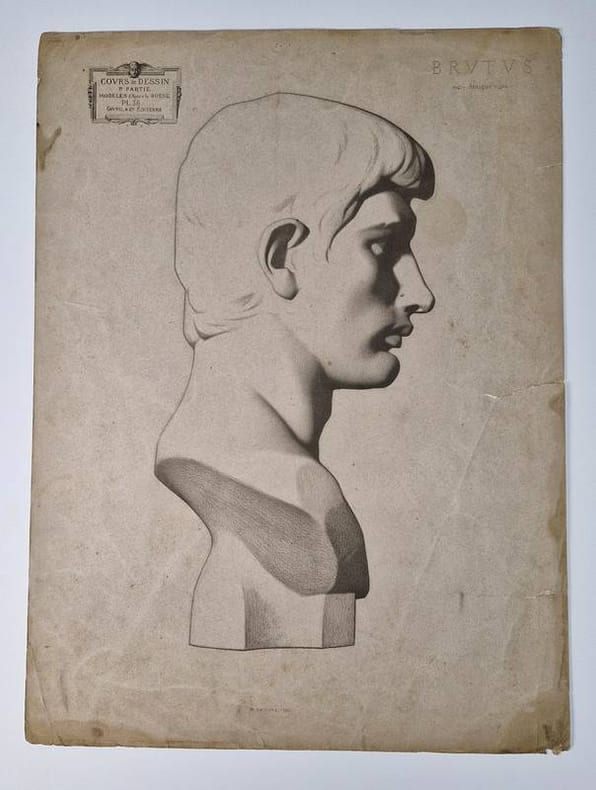
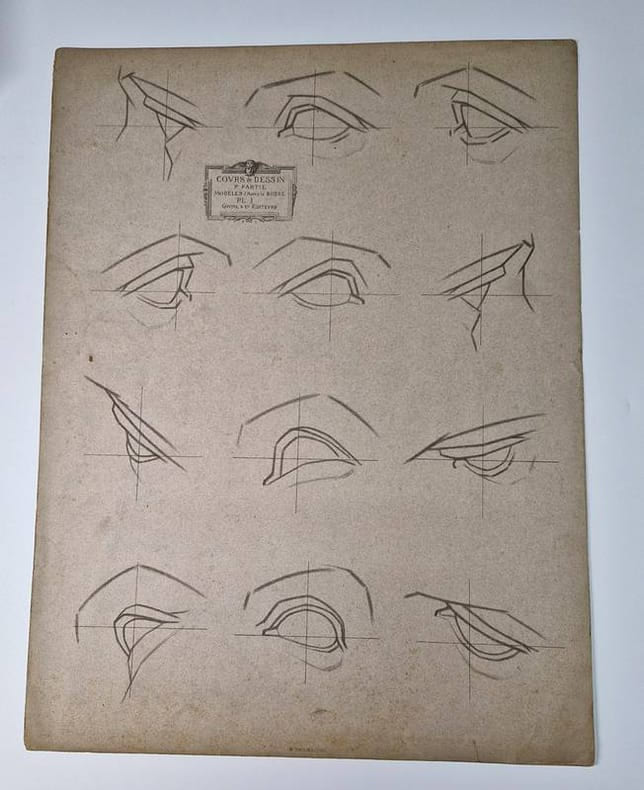
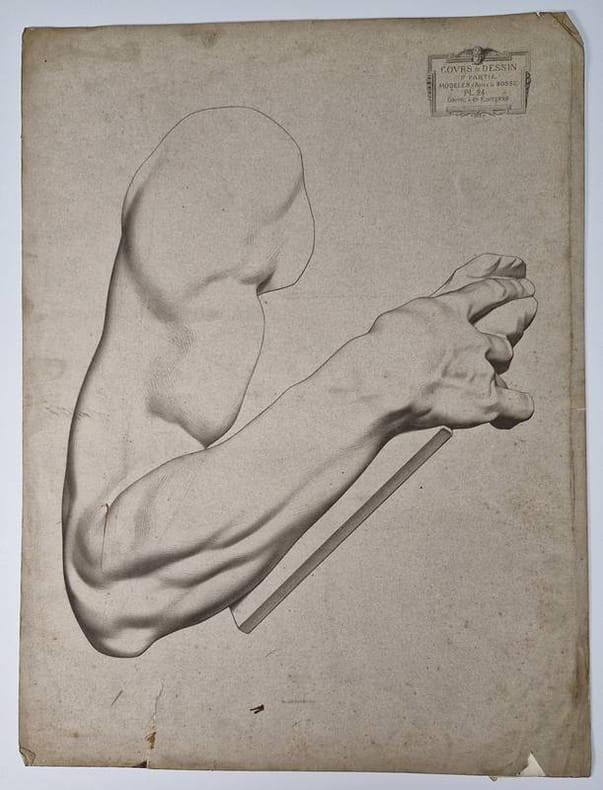
Cours de dessin. 1re Partie, Modèles d'après la bosse. 29 original lithographs (from a total of 70) from the first part of the Drawing Course ('Cours de dessin').
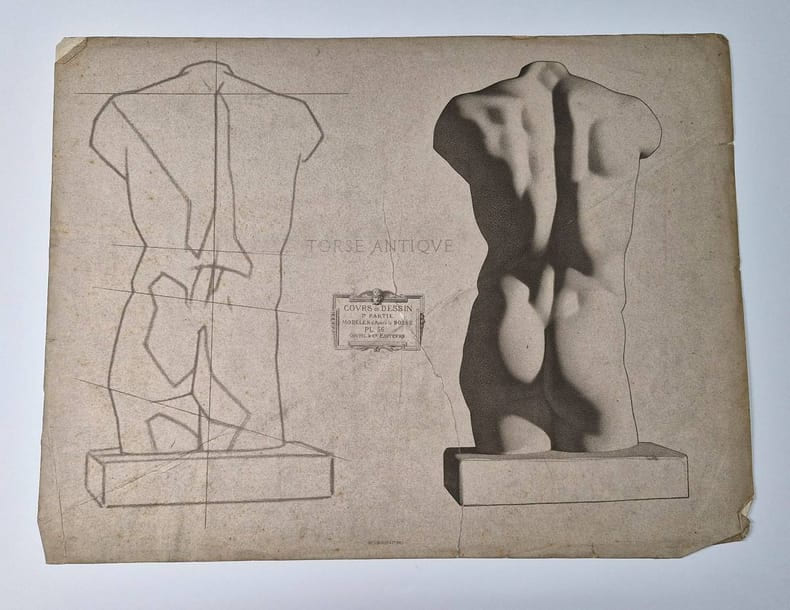
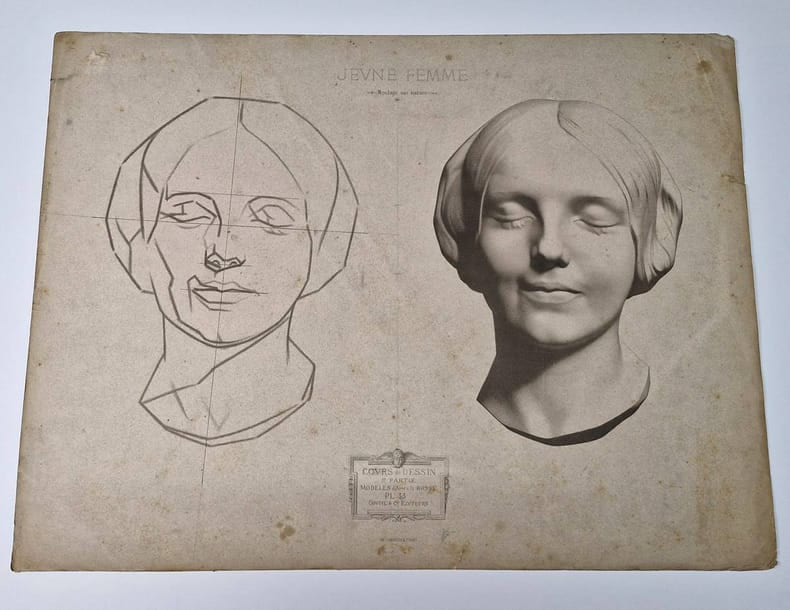
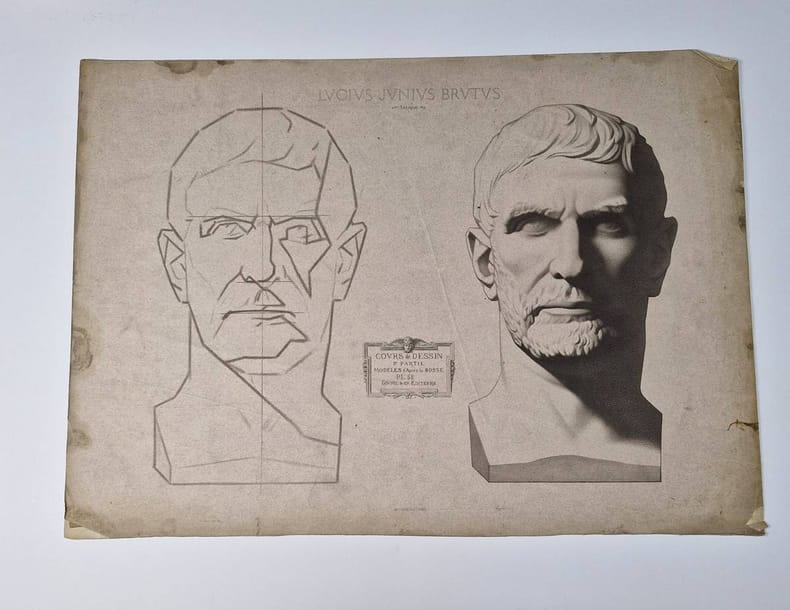
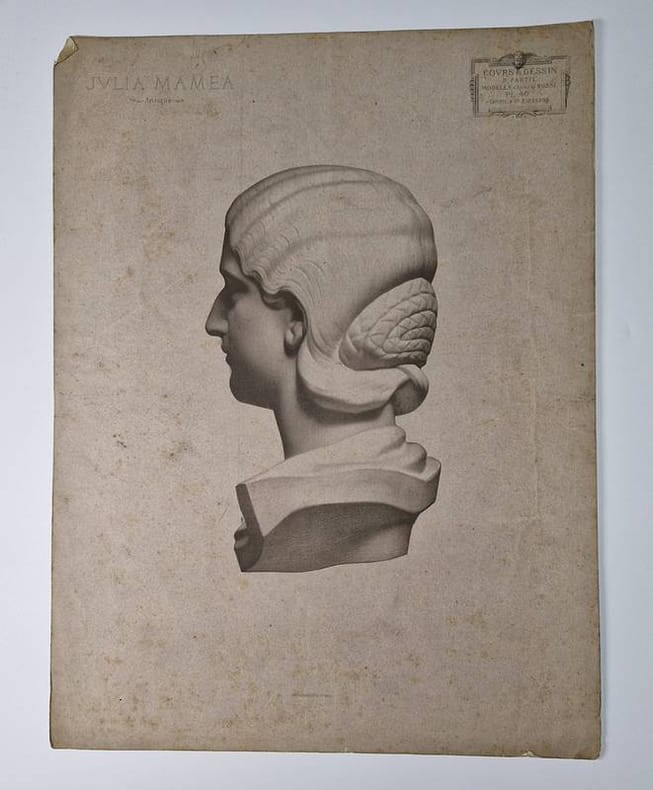
Paris, Goupil & Cie Editeurs, no date (1868)
Reference : 155470
[This course taught Vincent van Gogh how to draw human figures.] Loose-leaf plates on grey paper with the original white/grey paper backing. Dimensions: 44 x 59 cm. All plates are numbered. The following plates from the first series (Première partie) are on offer here: 1, 2, 5, 7, 9-12, 15-17, 19-22, 24-26, 28-29, 32, 36, 40, 42, 46, 49, 52-53, 56. Details: All plates have a small printed colophon in a frame, with the general title, the part number and title, the plate number and the publishers name. In fine print at the bottom of the sheets the name of the printer Lemercier in Paris is mentioned on most plates. 27 plates also have a small blind stamp of the firm Goupil in the lower margin. See for this stamp the French database 'marquesdecollections', stamp no. L.1090. Condition: Mosts lithos are in rather good condition. The plates have evidently been used, a few have tiny pinholes. Some of them have been folded, showing creases. Most of the plates are frayed and worn at the edges, with a few small tears and dog-ears. Several plates are foxed or spotted. Four plates are in lesser condition: plate 2 has large folds, the lower corners are damaged and there is foxing; plate 26 has two long creases and a large tear; plate 36 has a crease, a damaged corner and a tear of six cm.; plate 56 is almost torn through the middle. NOTE: The beautiful plates of the famous Drawing Course (Cours de dessin) by Bargue and Gérome were made for beginning students of drawing schools and art academies to copy. In this way they could become familiar with the principles of contour, light, and shade, and at the same time develop an appreciation for 'good taste' by looking at examples of great art. The drawings of the first part of the course were made after plaster casts of famous classical and renaissance statues. The series starts with simple forms of isolated body-parts and then offers images of gradually increasing complexity. To help the student to manage the essential forms of a head or torso, many plates are divided into two parts. A schematic outline with straight lines and angles stands beside the finished drawing. The plates of the drawing course are now hard to find. Of the original publication of 197 loose-leaf lithography plates, divided into three parts, there are only a few complete sets known. Our collection is a part of the first volume: 'Modèles d'après la bosse' (Models after casts), which consisted of 70 plates. It was published in 1868. The second series was: 'Modèles d'après les Maîtres de toutes les époques et de toutes les écoles' (1870) (Models after masters of all periods and all schools). The third series was: 'Exercices au fusain pour préparer à l'étude de l'académie d'après nature' (1873)(Charcoal exercises in preparation for drawing the academic nude). The first two sections were meant for schools for design and decorative arts. The third section with live models was used only in art academies. There were no instructions published with the plates, that was left to the teachers in the schools. It was common practice in the schools to start with copying prints and drawing from plaster casts of classical statues. As a second stage, students copied old masters. In the art academies, they then went on to live models. This training was part of the tradition of 19th century neoclassicsm. The imitation of nature was the only goal for artists. Objects and human bodies should be drawn and painted meticulously. Works of art were both realistic and idealistic, following the concept of 'good taste'. In France, this resulted in smooth and finished works, influenced by the standards of the French 'Académie des Beaux-Arts'. This so-called 'Academic Art' came under criticism at the end of the 19th century when the concept of art changed radically. The Drawing Course is the last great document of the 19th century tradition of art education. It was widely used in France and England. Vincent van Gogh writes about it in his letters, he has worked through the whole course at least once. Van Gogh worked very hard on this course because he hoped to gain some income with the sale of his drawings. In a sketchbook owned by the Van Gogh Museum in Amsterdam there are several pencil drawings made after Bargue's plates. Nowadays, the didactic and artistic quality of the course is greatly admired by both amateur and professional artists. The firm Goupil & Cie was an important publisher of original prints and art reproductions in Paris. They hired skilled engravers and lithographers and used the latest techniques. The firm also developed into a renowned art dealer. The 'Cours de dessin' sold very well for Goupil, and loose plates were still sold until the firm was dissolved around 1920. Charles Bargue (1826-1883) was a French draughtsman, lithographer and painter who has left a small number of paintings. Jean-Léon Gérome (1824-1904) was a French painter and sculptor, an esteemed representative of academic art. The main source for information on the course is: G.M. Ackerman. Charles Bargue with the collaboration of Jean-Léon Gérôme, Drawing Course. Paris, ACR, 2017 (first edition 2003). A copy of this book is added.
Bookseller's contact details
Antiquariaat Fragmenta Selecta
+31 20 418 55 65
Payment mode

Sale conditions
Terms of Sale All items offered are subject to prior sale. Your order will be final after you have received our confirmation, with a specification of the availability of the items and the shipping costs. All books are complete and in good antiquarian condition, unless otherwise described. Prices are in EURO. Postage and insurance are not included. Postage will be calculated at cost (no extra charges). Returns Books may be returned within 14 days of receipt, if returned in the same condition as sent, and packed, shipped and insured as received (please always notify us). We will refund the shipping costs of a return shipment only if our descriptions were not correct. How to pay Pre-payment is necessary for new customers. Our order confirmation will provide detailed information and a specification of the shipping costs. Customers who are known to us and libraries will be invoiced as usual. We accept Visa and Mastercard. You can submit your card information through our SECURE PAYMENT FORM. PayPal: we will send you a personal link to the PayPal website. Banktransfers: payment can be made into our bank account in The Netherlands.

