 Write to the booksellers
I.M. Björkhagen
First Swedish Book
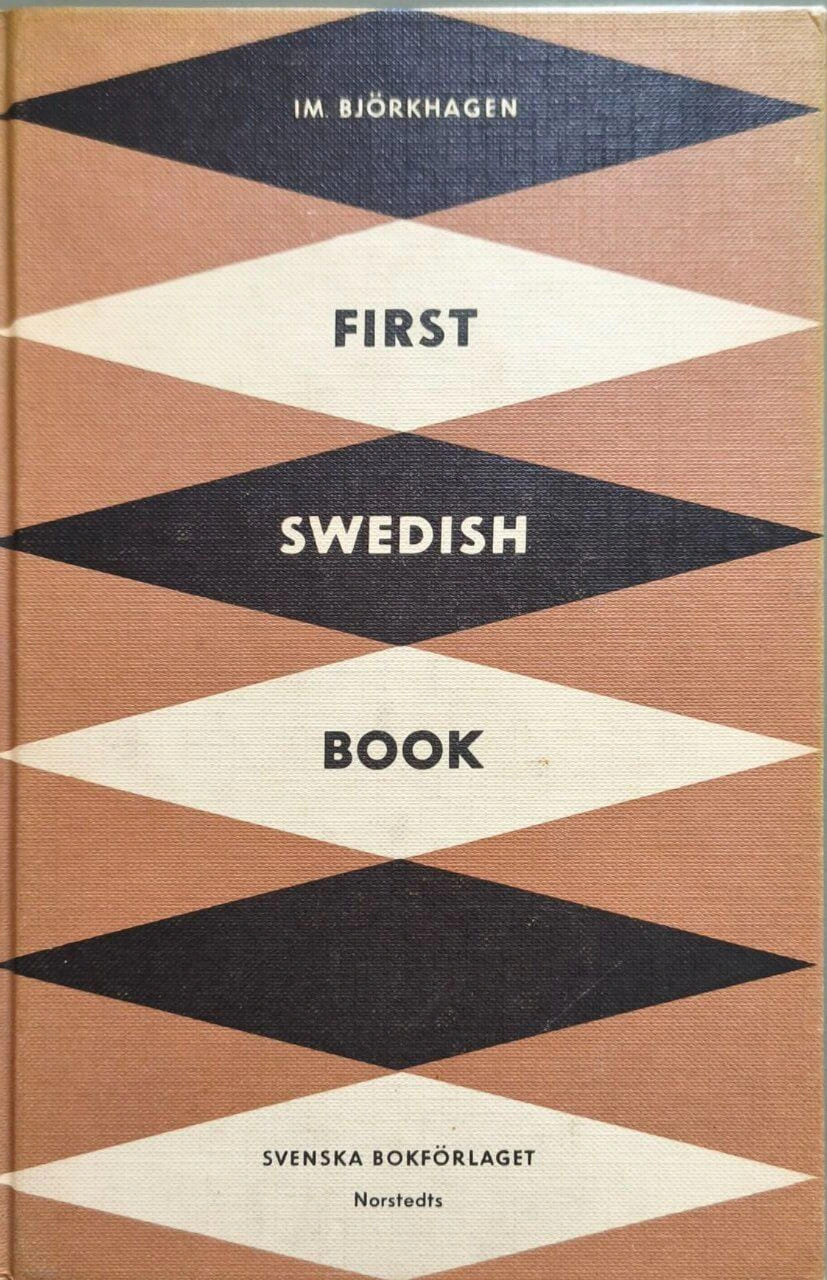
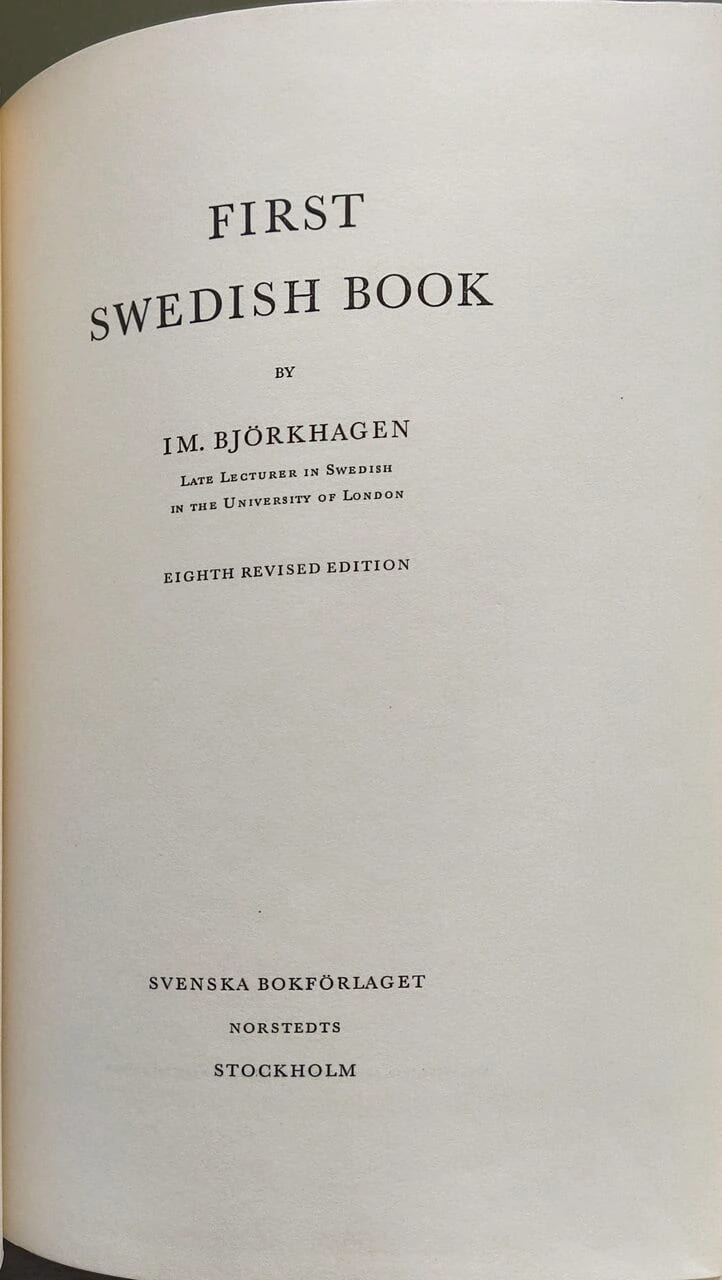
Svenska Bokförlaget Norstedts 175 pages in8. Sans date. reliure editeur. 175 pages. First Swedish Book est un manuel pratique pour apprendre le suédois conçu comme un complément à la grammaire Modern Swedish Grammar du même auteur. Publié par Svenska Bokförlaget Norstedts à Stockholm il a connu plusieurs éditions entre 1923 et 1960 et s'adresse aux étudiants anglophones
Reference : 18205
Bon état
Bookseller's contact details
Maison Vallon Librairie
Madame Vallon Emilie
maisonvallonlibrairie@gmail.com
07 46 22 77 51
Payment mode
Sale conditions
Bonjour, Nous vous remercions pour votre commande. Nous acceptons les paiements par chèque, à envoyer à l’adresse suivante : 12, 270 avenue Alphonse Lavallée 84250 Le Thor À l’ordre de Mme Vallon Brisson. Les virements bancaires peuvent être effectués sur le compte suivant : Mme Vallon Brisson IBAN : FR76 1130 6000 8448 1102 1058 519 Les frais de port pour la France métropolitaine sont forfaitaires : 6,90 € pour le premier livre. Pour le reste du monde, un tarif forfaitaire sera appliqué en fonction du nombre d’ouvrages commandés. Les ouvrages sont expédiés dès réception du règlement. Nous vous souhaitons une agréable lecture et à bientôt. L’équipe de Maison Vallon Librairie
1 book(s) with the same title
Citat ur ordförande Mao Tse-Tungs Verk (Swedish) (i.e. Quotations of Chairman Mao). - [FIRST SWEDISH EDITION OF MAO'S LITTLE RED BOOK]
Göteborg, Danelius Bokförlag, (1967). Small 8vo. Pages measuring 130 x 90 mm. Original red vinyl binding with blindstamped lettering and star to front cover. Includes black and white portrait of Chairman Mao and Lin Biao's corrected endorsement leaf in facsimile. (12), 274, (1) pp. Near mint condition. Ex libris ""H. Skottes Bibliotek"" to inside of front board.
First edition of the first Swedish translation of ""Quotations of Chairman Mao"" published in 1967, being the authorized translation from the English by Niels G. and Marika Holmberg. The Swedish translation has 33 chapters (as per the complete Chinese edition from 1965). In 1972, several editions of many languages were redone to remove the endorsements of Lin Biao. Lin Biao wrote an endorsement, choosing three sentences from the diary of Lei Feng, which he wrote in calligraphic script. This endorsement leaf is lacking in most copies due to political reasons: By heavily promoting the LRB, Lin Biao had greatly risen in importance within the Mao-hierarchy, and he was actually designated to become Mao's successor, however, rumours occurred that Lin Biao was planning to assassinate Mao and take over power immediately, and thus he was killed. Due to the close relationship between Lin Biao and Mao, the betrayal was considered the more disgraceful, in fact so disgraceful that it was decided that he had to be erased from modern history. Thus it was decided and commanded that the endorsement leaf was to be removed from all copies of the LRB, and getting caught with not having torn this leaf out might very well have meant the death penalty.The idea of publishing the little book of quotations, which are taken from the first official edition of Mao's writings (his selected works vols. 1-4, printed 1951-60), came to Lin Biao in late 1963 or early 1964, by which time the four volumes of Mao's works had become the chief reading and source of knowledge within China. The little (red) book was meant as inspirational reading for the public, and for several years a campaign was promoted urging (or perhaps commanding) everyone to study the thoughts of Chairman Mao in this form. The short quotation form made the thoughts more easily accessible, and even uneducated people (like the soldiers) were able to become acquainted with the thoughts and philosophy of their leader.""The LRB continued to be printed in huge quantities for mass distribution up until the time of Mao's death on September 9th, 1976. This brought about an official end to the Cultural Revolution (which had used the LRB as a frequent symbol). By the late 1970s a change in government discouraged its further circulation and millions upon millions of copies were collected and destroyed as obsolete paper even while the cult of Maoism continued. It was during the centenary of Mao Tse-tung's birth (1993) that copies were once again printed, this time as facsimiles in English, French and German being exact replicas dated 1966 and with ""First Edition"" printed behind each title-page. They can be easily distinguished by their bright shiny red laminated covers and the presence of colored photograph portraits near the front. As they can still be found all over China, most likely they have been printed again even more recently. No one denies Mao is the Father of his country, truly the last Emperor, a symbol of power and reverence who has been exonerated for the mistakes of his reign and consequently recognized for his achievements as hope for the future. His ideology forms a brilliant concept that is still readable and admired today for its political theories and strategies, and no doubt he would be very proud to know the effect he has had on his own country and the world will never forget him."" (Oliver Lei Han, Sources and Early Printing History of Chairman Mao's ""Quotations).


