 Write to the booksellers
Collectif
La libération
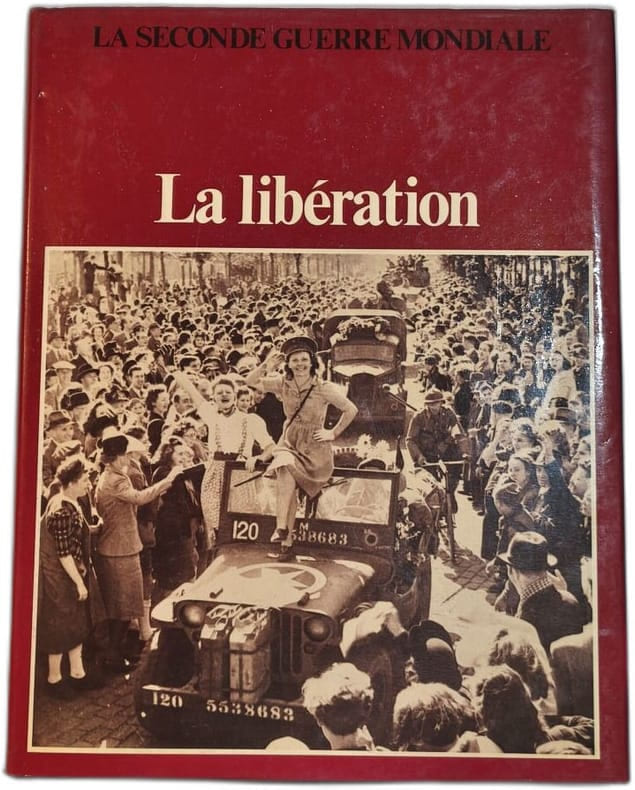
Editions Christophe Colomb 1984 143 pages IN4. 1984. Couverture rigide avec jaquette. 143 pages.
Reference : 1619
ISBN : 2880971039
Très bon état jaquette légèrement usagée
Bookseller's contact details
Maison Vallon Librairie
Madame Vallon Emilie
maisonvallonlibrairie@gmail.com
07 46 22 77 51
Payment mode
Sale conditions
Bonjour, Nous vous remercions pour votre commande. Nous acceptons les paiements par chèque, à envoyer à l’adresse suivante : 12, 270 avenue Alphonse Lavallée 84250 Le Thor À l’ordre de Mme Vallon Brisson. Les virements bancaires peuvent être effectués sur le compte suivant : Mme Vallon Brisson IBAN : FR76 1130 6000 8448 1102 1058 519 Les frais de port pour la France métropolitaine sont forfaitaires : 6,90 € pour le premier livre. Pour le reste du monde, un tarif forfaitaire sera appliqué en fonction du nombre d’ouvrages commandés. Les ouvrages sont expédiés dès réception du règlement. Nous vous souhaitons une agréable lecture et à bientôt. L’équipe de Maison Vallon Librairie
5 book(s) with the same title
Conflits, pouvoirs et société à la Libération
U.G.E., 10/18, 1980, 440 p., poche, légères traces d'usage, rousseurs sur les tranches et le pages, état correct.
Mouvement Ibérique de Libération - Mémoires de rebelles,
Editions CRAS, 2007, 380 pp., broché, traces de plis sur le dos, passages signalés au crayon, état très correct.
Cahiers de l'Institut de recherches marxistes, n° 35: La libération de la France tome II,
Cahiers de l'Institut de recherches marxistes, n° 35, 1988, 127 pp., broché, légères traces d'usage, état correct.
Cahiers de l'Institut de recherches marxistes, n° 10: La France dans la guerre et à la Libération,
Cahiers de l'Institut de recherches marxistes, n° 10, 1982, 157 pp., broché, légères traces d'usage, état correct.
Photographie originale - Christopher Street Liberation Day March, New York - Sous la banderole
Paris 1970 | 19.50 x 30 cm | une photographie
- Paris 1970, 19.5x30cm, 15 photographs. - On June 28, 1970, I attended New York's first Gay Pride celebration. The date corresponds to the first anniversary of the Stonewall riots, which launched the LGBTQ+ liberation movement in the United States. We set off from Christopher Street, a hotbed of gay culture in Greenwich Village, and made our way up 6th Avenue to Central Park. To round off the day, a contest for the longest kiss was held in the middle of the park! It was a great moment of joy, love and freedom. This couple, who kissed for hours under an umbrella, clearly didn't care about photographers!" (Interview with Clément Thierry, 2021) Exceptional pictorial history of 15 original black & white silver photographs from the period, signed on the back by the artist. All are stamped on verso by Jean-Pierre Laffont for the Gamma agency, and some have long mimeographed captions in French. The original prints of these photographs are extremely rare, as museums and galleries only possess reprints. This collection is a moving testimony to the beginnings of the now-famous Marche des fiertés, in the aftermath of the Stonewall riots, the first milestone in the emergence of the LGBTQ+ movement in the United States and around the world. On June 28, 1969, police raided Stonewall, a Greenwich Village dance bar run by the mob and catering mainly to homosexuals and transgender people. At the time, the United States prohibited establishments from serving alcohol to homosexuals, who were often victims of police violence. That night at Stonewall was one too many: the police, cornered by the customers, were forced to retreat inside the bar, and the riot lasted seven days. It would be fifty years, on June 6, 2019, before the New York City Police Department apologized to the LGBT community. The events of Stonewall, now considered the founders of gay liberation, led to the formation of some of the first radical homosexual activist groups, such as the Gay Liberation Front and Street Transvestite Action Revolutionaries (better known by the acronym STAR and founded by two of the most famous transgender activists: Marsha P. Johnson and Sylvia Rivera). The challenge was to transform this moment into a movement. With this in mind, the Christopher Street Liberation Day March was held on June 28, 1970, one year to the day after the Stonewall riots. The parade, made up of just a few courageous groups at the start in Sheridan Square (Greenwich village), saw its ranks swell by the time it reached Sheep Meadow (Central Park), bringing together over 10,000 demonstrators. This demonstration was to take place every summer, in New York and other major American cities, before spreading to other continents a few years later, becoming today a marker of democratic societies around the world. Our set of photographs shows the diversity of participants brandishing placards with slogans such as "Smash Sexism" or "Perverts' union for gay liberation". Others sport T-shirts with committed messages - "Femme / Butch", "Master / Slave" - or are in their simplest garb. Some marchers wear black T-shirts emblazoned with the Greek letter lambda (?), chosen by the Gay Activist Alliance (GAA) because it stands for liberation and can easily be confused with the insignia of American college fraternities. It was officially recognized as the international gay and lesbian symbol at the International Gay Law Congress in Edinburgh in 1974. The Reverend Robert Clement can be recognized in two shots in his religious vestments. "On June 28, 1970, I attended the first New York Gay Pride celebration. The date corresponds to the first anniversary of the Stonewall riots, which launched the LGBTQ+ liberation movement in the United States. We set off from Christopher Street, a hotbed of gay culture in Greenwich Village, and made our way up 6th Avenue to Central Park. To round off the day, a contest for the longest kiss was held in the middle of the park! It was a great moment of joy, love and f



