 Write to the booksellers
Henrik Stangerup
Lagoa Santa
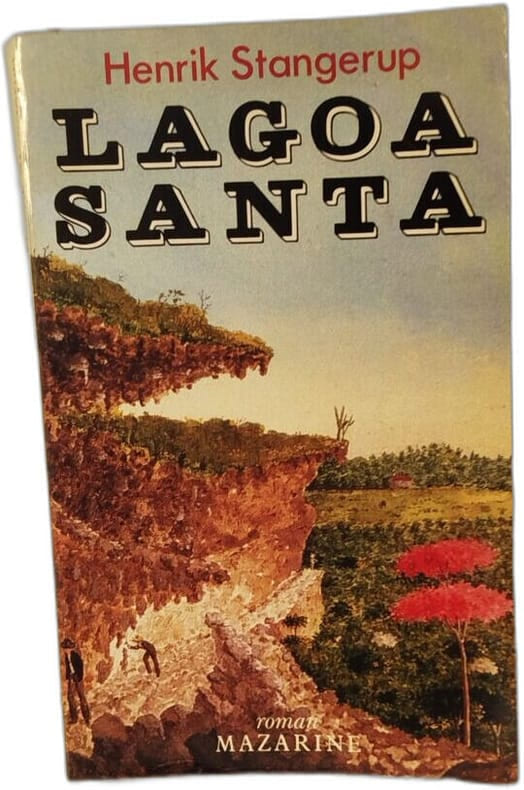
Mazarine 1985 316 pages in8. 1985. broché. 316 pages.
Reference : 1352
ISBN : 2863742019
Bon état
Bookseller's contact details
Maison Vallon Librairie
Madame Vallon Emilie
maisonvallonlibrairie@gmail.com
07 46 22 77 51
Payment mode
Sale conditions
Bonjour, Nous vous remercions pour votre commande. Nous acceptons les paiements par chèque, à envoyer à l’adresse suivante : 12, 270 avenue Alphonse Lavallée 84250 Le Thor À l’ordre de Mme Vallon Brisson. Les virements bancaires peuvent être effectués sur le compte suivant : Mme Vallon Brisson IBAN : FR76 1130 6000 8448 1102 1058 519 Les frais de port pour la France métropolitaine sont forfaitaires : 6,90 € pour le premier livre. Pour le reste du monde, un tarif forfaitaire sera appliqué en fonction du nombre d’ouvrages commandés. Les ouvrages sont expédiés dès réception du règlement. Nous vous souhaitons une agréable lecture et à bientôt. L’équipe de Maison Vallon Librairie
2 book(s) with the same title
Lagoa Santa: A Vegetacao de Cerrados Brasileiros. - [PRESENTATION-COPY]
Belo Horizonte, 1973. Large8vo. Bound with the original printed wrappers in recent half calf. With author's presenation inscription: ""On the occasion of the celebration of the / 50th anniversary of the death of Eugen Warming / who founded the science of Ecology / in Brazil, in 1863 - 1866, I present this work as a token of appreciation from / the Brazilian ecologists / Copenhagen / 16.9.1974 / Mario Guimaraes Ferri / Mario Ferri"". A nice and clean copy. (12), 362, (24) pp.
First Portugese translation – with the translator’s presentation inscription - of Warming’s pioneering ecological study based on Warming’s fieldwork in Brazil during the 1860s. It represents one of the first systematic attempts to understand vegetation not merely through taxonomy but in relation to environment, function and adaptation. Translator Ferri (1918 – 1985) pioneered field work in Plant Ecology in Brazil. His PhD thesis was one of the first scientific works of an experimental nature in the study of ecology of the vegetation of the cerrados. Warming spent several years (1863–1866) in the region of Lagoa Santa in the state of Minas Gerais, assisting the paleontologist Peter Wilhelm Lund, considered the father of the paleontology of Brazil.During this time, he undertook detailed observations of the local flora, particularly the cerrado vegetation—Brazil’s savanna biome. Unlike many of his contemporaries, Warming did not limit himself to cataloguing species. Instead, he explored how plants interacted with their environment: how they survived drought, coped with fire, and responded to poor soils. His focus on the functional aspects of vegetation-structure, life-form, and adaptation was deeply innovative and helped lay the groundwork for what would later become the discipline of ecology.

Jordfundne og nulevende Flagermus (Chiroptera) fra Lagoa Santa, Minas Geraes, Brasilien. Med Udsigt over Flagermusens inbyrdes Slaegtskab.
1892 65 p., 2 pls, 4to, paperbound (back cover missing, front cover loose and chipped). Two pages and one plate soiled. Without the French abstract. Published in: E Museo Lundii.

