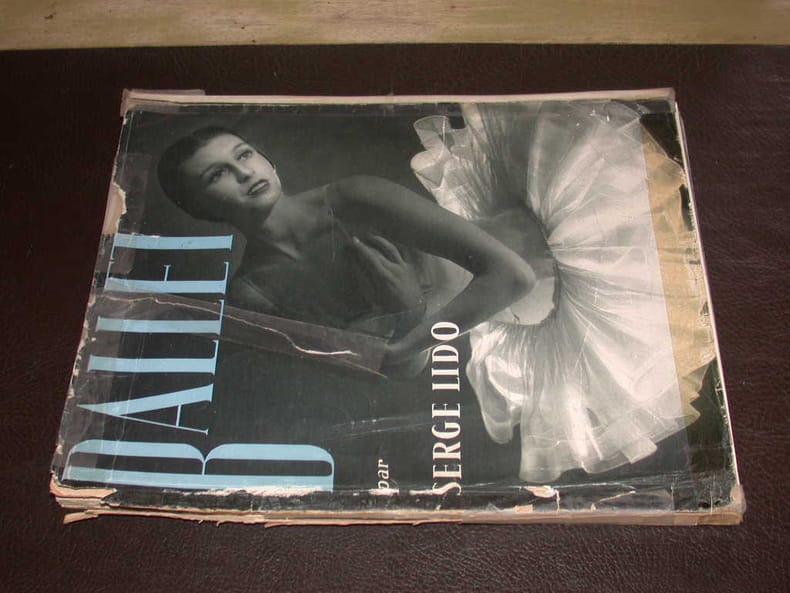
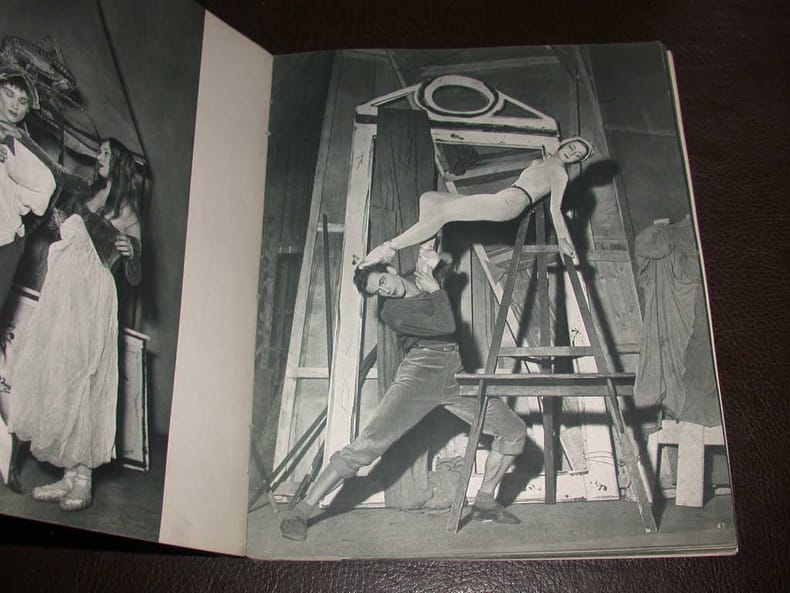
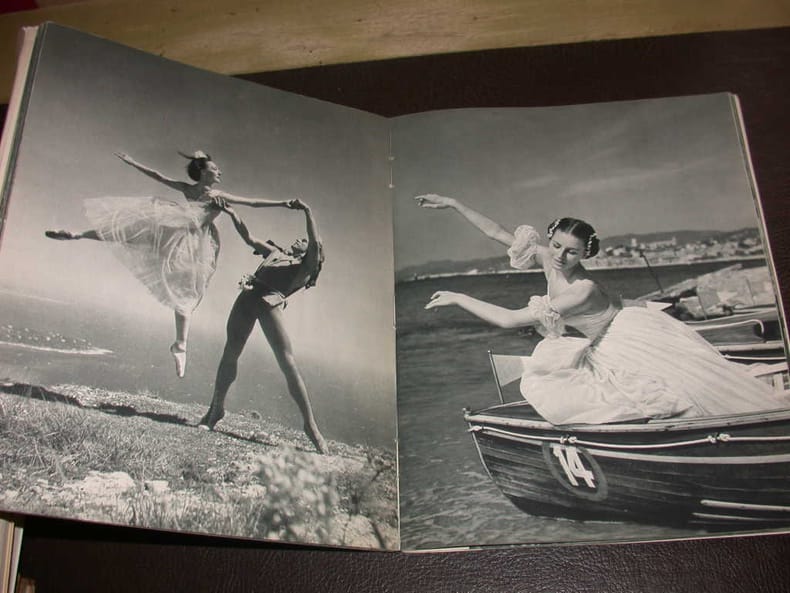
Art et industrie 2026 88 pages in4. 2026. Broché. 88 pages. Superbes photographies en noir. Poids : 580 gr
Reference : 9253
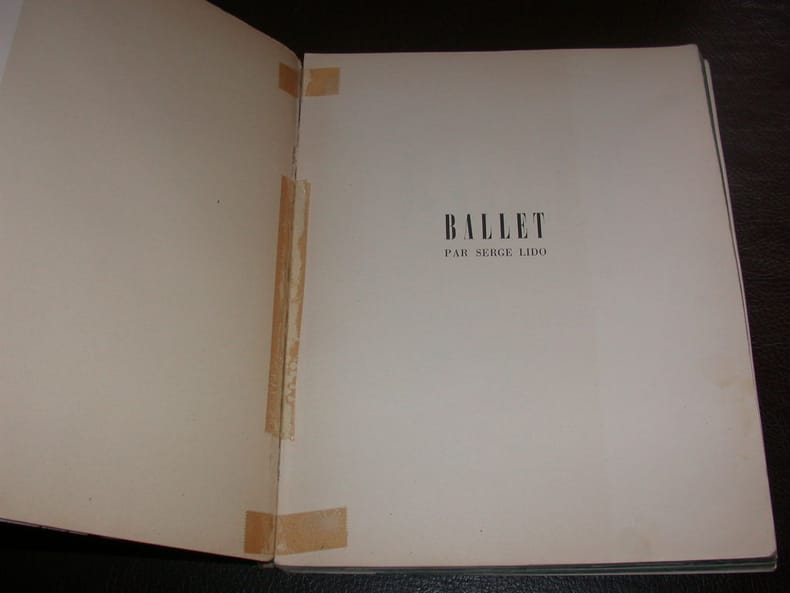
Mauvais Etat Couverture en mauvais état avec le dos cassé et du scotch. Intérieur propre
Bouquiniste
M. Thibault Hairion
04 92 46 94 05
Les livres sont expédiés sous deux jours ouvrés et les retours sont acceptés aux frais de l'acheteur
Nancy, P.U.F., 1991 ; in-4, 116 pp., reliure pleine toile d'éditeur avec jaquette illustrée. Préface de Patrick Dupont.
, Brepols - Harvey Miller, 2022 Hardback, 168 pages, Size:220 x 280 mm, Illustrations:84 col., Language: English. ISBN 9781912554812.
Summary In September 1739 at the château de Morville near Paris, a group of elite amateur artists staged a ballet pantomime known as the ?Ballet des Porcelaines,? and sometimes also as ?The Teapot Prince.? Written by the comte de Caylus, with music by Grandval, it tells the story of a prince who searches for his beloved on a faraway island ruled by an evil magician. The magician has turned the island's inhabitants into porcelain, an event the audience witnesses in the form of a male and female singer who spin around on stage until they transform into vases. Aside from the libretto and the score, nothing survives of the Ballet des Porcelaines. The costumes and choreography are unknown. Although it inspired later famous ballets featuring sleeping beauties and porcelain princesses, it seems to have been staged only twice: first in 1739 and again two years later on the grounds of the estate, next to a lake encircled by vases and an illuminated arch suggesting a nighttime performance. The château's owner served as France's foreign minister and promoted trade with Asia. We can assume some kind of chinoiserie imagery and context for the ballet, which can be interpreted both as a standard fairy tale love story and as an allegory for the intense European desire to know and steal the secrets of porcelain manufacture. The ballet is an example of the deep intertwining of visual and performing arts in eighteenth-century France, and to an enchantment with Asia embodied on stage and in life by porcelain goods. The plot's animation of porcelain also relates to a period understanding of the permeable boundary between persons and things manifested in a variety of cultural forms. The ballet exemplifies the profound sense of magic, mystery, and desire that porcelain instilled in European viewers (who referred to it as ?white gold?), an effect that is lost on many museumgoers today. TABLE OF CONTENTS Preface and Acknowledgments Meredith Martin Contributors I HISTORICAL REIMAGININGS Once Upon a Time at the Château de Morville: Commerce, Colonialism, and Chinoiserie in the Ballet des Porcelaines Meredith Martin My Porcelain Sickness Phil Chan Conjuring 1740: A Tale of Europe's Obsession with Porcelain Charlotte Vignon II ARTISTIC INTERVENTIONS Costume Design: Q&A with Harriet Jung Meredith Martin Choreography: Q&A with Xin Ying Meredith Martin Entering the Ivory Tower of Baroque Ballet Patricia Beaman Musically Steeping a Pot of Tea Leah Nelson Finding the Sound in Between Sugar Vendil III THE LOST BALLET The Manuscript: Libretto and Score Le Prince Pot-à-Thé: Ballet Pantomime French Transcription Dominique Quéro The Teapot Prince: A Pantomime Ballet Annotated English Translation Christine Jones IV CONTEMPORARY RESTAGINGS Photographs of the MET Peformance, December 6, 2021 Making the Porcelain Dance Wolf Burchard, The Metropolitan Museum of Art, New York Chinese Fantasies of Porcelain on the Cusp Between Life and Death Judith T. Zeitlin, The University of Chicago Living Things or the Collector as Audience:Animate Porcelain Dancers Elizabeth Rouget, Princeton University A Smash Hit in the Making Mia Jackson and Kate Tunstall, Waddesdon Manor and University of Oxford A Teapot Prince and His Enchanted Palace: The Royal Pavilion, Brighton Alexandra Loske, The Royal Pavilion and Museums Trust Brighton & Hove A Porcelain Room and a Teapot Prince:Maria Amalia's Salottino di porcellana and Le Prince Pot-à-Thé in Naples Sarah K. Kozlowski and Sylvain Bellenger, The Museum and Royal Park of Capodimonte, Naples Palazzo Grassi or the Past Revisited Bruno Racine, Palazzo Grassi, Venice The Sèvres Manufactory: Three Centuries of a Ballet of Porcelain Romane Sarfati and Charlotte Vignon, Sèvres-Manufacture et musée nationaux Works Cited
Paris Editions de l'Instutut Chorégraphique 0 4 plaquettes in-8 Agrafé Signé par l'auteur
EDITIONS ORIGINALES de ces 4 fascicules publiés en 1956 & 1957. Bulletin 1 : Du Ballet impérial russe au ballet soviétique (1906 - 1956) -- Bulletin 2 : Le Néo-classique. Sa naissance et son application dans le ballet contemporain. -- Bulletin 3 : Le Ballet contemporain -- Bulletin 4 : Le Ballet à travers le monde. Des ballets de diaghilev à nos jours. >>>Les 4 plaquettes sont signées ou dédicacées par Serge Lifar. >L'ensemble Très bon 0
Volkov N. Du Ballet Sovietique a Paris (Soviet Ballet in Paris). Grand Theatre Academy De La U.R.S.S. a Moscow. In Russian /Volkov N. Du Ballet Sovietique a Paris (Sovetskiy balet v Parizhe). Grand Theatre Academigue De LU.R.S.S. a Moscou. Theatre Academigue Dopera et de Ballet a Leningrad (Bolshoi Academic Theatre of the USSR in Moscow. Academic Theatre of Opera and Ballet in Leningrad.) Representation officielles. Gfhb: De Lopera 1954. Official introduction to the tour of the Soviet ballet in Paris in 1954. The book includes an essay by Nikolai Volkov about the Soviet ballet and numerous illustrations and photographs of scenes from performances and stars of the Soviet ballet. You are welcome to reach out to us for a detailed description of the copies currently available. Delivery of this book may take longer than usual including extended processing and pre-shipping time, no expedited shipping is available. Please advise us if you have a set date or a deadline to receive your order.SKUalb389e997508528a8f
LA MOTTE Antoine Houdar de; DESTOUCHES André Cardinal; RAMEAU Jean-Philippe & al.:
Reference : 11165
[Lyon], Aimé Delaroche / De Laroche, aux dépens de l'Académie, 1739 à 1741. In-4 de [2]-52-[2]; VIII-12 (l'odorat)-16 (l'ouïe)-16 (la vue); [2]-16 (le goût)-14 (le toucher); [2]-55; VI-51; 59; 48; 75 pages, plein veau moucheté, dos à 5 nerfs orné du lion des armoiries de Lyon, de fleurons, d'étoiles de roulettes et du titre (Recueil d'opéra / Ballet) dorés, roulette dorée sur les coupes, tranches et gardes marbrées. Reliure frottée, coiffe supérieure manque, accroc à la coiffe inférieure, large épidermure au second plat. Tables de matières inscrite à la plume en début de volume.
Vignettes de titres, bandeaux et culs-de-lampe.