 Write to the booksellers
Shirow Masamune:
Compass.
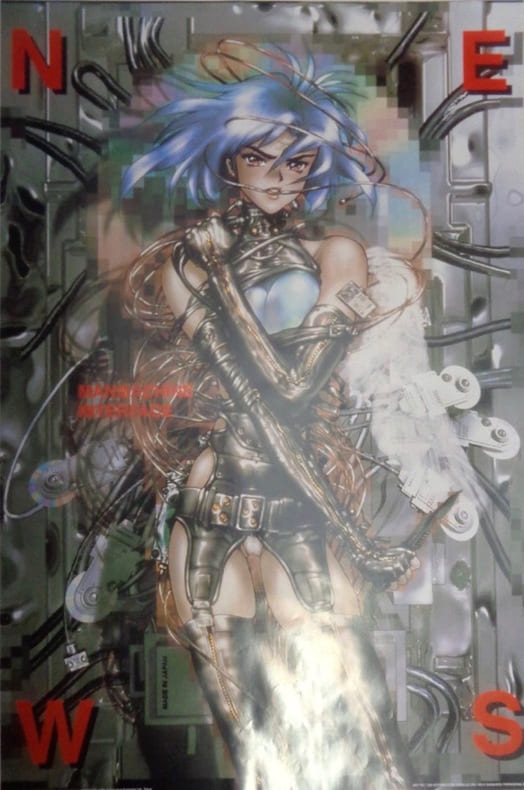
Affiche au format 68 x 98cm., en très bel état.
Reference : 3525
Nous ne mettrons pas en ligne toutes nos affiches manga, mais une liste complète est en préparation : demandez-la !
Bookseller's contact details
La Bergerie
Mme Aline Berger
Payment mode
Sale conditions
Paiement par virement bancaire en francs suisses ou en euros (sans frais), Twint et cartes de crédit. Les livres sont expédiés dans les jours suivant la réception du montant demandé.
5 book(s) with the same title
Libri Tres: In Quibus Primo Constructio Circini Proportionum Edocetur. - [THE INVENTION OF THE PROPORTIONAL COMPASS]
Mainz, Balthazar Lipp, 1605. 4to. Bound in a beautiful 18th century full mottled calf binding with double gilt line-borders to boards. Edges of boards gilt. Expertly rebacked perfectly matching the boards and the gilding. With gilt leather title-label and gilt ornamentations. End-papers renewed. B2 and B3 defective in lower blank margins, not affecting text. A nice and clean copy. 53, (1) pp. + 1 folded plate and numerous illustrations in text.
The exceedingly rare first edition of the first work to describe the construction of the adjustable proportional compass – the first work to describe both its construction and its application. The adjustable proportional compass became an indipensable tool for calculations and measurements for over three centuries. The proportional compass was a seminal calculating instrument in use from the end of the sixteenth century until the nineteenth century. Consisting of two rulers of equal length joined by a hinge, it was a precursor to the sector and could be used for solving problems in proportion, multiplication and division, geometry, and trigonometry, and for computing various mathematical functions, such as square roots and cube roots. The sector derives its name from the fourth proposition of the sixth book of Euclid, where it is demonstrated that similar triangles have their like sides proportional. Some sectors also incorporated a quadrant, and sometimes a clamp at the end of one leg which allowed the device to be used as a gunner's quadrant. “The device was apparently first developed by Joost Bürgi and first published by Levinus Hulsius (1604). Hulsius offered the instrument for sale and thus limited himself to instructions for its use and did not detail its construction. The present work provides construction details on the hindge and the creation of the scales.” (Tomash & Williams). The sector was invented, essentially simultaneously and independently, by a number of different people prior to the start of the 17th century. Credit for the invention is often given to either Thomas Hood (who did not claim priority himself), a British mathematician, or to the Italian mathematician and astronomer Galileo Galilei. Galileo, with the help of his personal instrument maker Marc'Antonio Mazzoleni, created more than 100 copies of his proportional compass design and trained students in its use between 1595 and 1598. Of the credited inventors, Galileo is certainly the most famous, and earlier studies usually attributed its invention to him. James Kynvyn, Robert Beckit and Charles Whitwell all at some point also seem to have claimed to priority of the invention.Giordano Bruno, shortly before his death, also saw its potential. It could measure the infinitesimal fractions of the angular degrees and calculate the proportions between lines, geometric shapes and solids, working on the proportionality and commensurability of angles and segments. This new precision in calculations confirmed Bruno’s thesis of the existence of the physical minimumas opposed to the Aristotelian thesis of the infinite divisibility. (see: Zaffino, Giordano Bruno and the Proportional Eight Spike Compass) The many claims of invention, however, do not deprive Horcher of being the very first to describe the actual construction of the instrument, thus being of seminal importance in its widespread use over more than three hundred years. Tomash & Williams H164

Reference : albc307f8b0c2b94fd5
Kudrevich B.I., Professor Theory and Practice of the Gyroscopic Compass. Part 4
Kudrevich B.I., Professor Theory and Practice of the Gyroscopic Compass. Part 4. Anschutz Gyroscopic Compass. In Russian /Kudrevich B.I., prof. Teoriya i praktika giroskopicheskogo kompasa. Chast 4. Giroskopicheskie kompasy Anshyuttsa. Representation of the military and naval forces of the RKA, L. type. Hydrographic management. Representation of the forces of the RKA. 1939. We have thousands of titles and often several copies of each title may be available. Please feel free to contact us for a detailed description of the copies available. The delivery of this book might be delayed beyond the usual timeframe due to extended processing and preparation before shipment, and faster shipping options are not offered. Please inform us if you need the order by a certain date or have a deadline. SKUalbc307f8b0c2b94fd5
Reference : alb5988dd4e2ac731dc
Kudrevich B.I. Theory and practice of gyroscopic compass. Part 3. Theory of gyr
Kudrevich B.I. Theory and practice of gyroscopic compass. Part 3. Theory of gyro-compass with mercury vessels. In Russian /Kudrevich B.I. Teoriya i praktika giroskopicheskogo kompasa. Chast 3. Teoriya giro-kompasa s rtutnymi sosudami. Leningrad Edition of the Hydrographic Directorate. 1932. We have thousands of titles and often several copies of each title may be available. Please feel free to contact us for a detailed description of the copies available. The delivery of this book might be delayed beyond the usual timeframe due to extended processing and preparation before shipment, and faster shipping opSKUalb5988dd4e2ac731dc
Reference : alb6edb9da698afa9c3
Imbert H., Taylor D., Underwood M. Compass 3: Workbook. In English /Imbert Kh
Imbert H., Taylor D., Underwood M. Compass 3: Workbook. In English /Imbert Kh., Teylor D., Andervud M. Compass 3: Workbook (Kompas 3: Rabochaya tetrad). Book in English. London. Macmillan Publishers. 1995. 112 p. We have thousands of titles and often several copies of each title may be available. Please feel free to contact us for a detailed description of the copies available. SKUalb6edb9da698afa9c3.
Компас 3Д Самоучитель КОМПАС-3D CAD / Le livre de la boussole 3D autodidacte KOMPAS-3D CAD / Kompas 3D Samouchytel Kompas-3D CAD [Compass 3D Self-Teacher Compass-3D CAD] (Ukrainian edition)
Le livre de la boussole 3D autodidacte KOMPAS-3D. format A5, russe, couverture souple, noir et blanc. 205 pages. imprimé en Ukraine. La formation se déroule sur KOMPAS-3D v21, mais convient également aux versions plus récentes. Ce manuel présente les principales possibilités fonctionnelles d'interaction avec le programme de modélisation 3D KOMPAS-3D. L'étude est construite de manière cohérente avec l'utilisation de la technologie de différenciation de niveau, ce qui permet aux apprenants de se familiariser méthodiquement avec les capacités du système de conception assistée par ordinateur et d'acquérir progressivement les compétences et les compétences nécessaires. La première partie du manuel étudie les bases de l'interaction de l'étudiant avec les fonctionnalités et les caractéristiques du travail dans un espace à deux dimensions, ainsi que les outils clés. La deuxième partie du manuel se concentre sur la maîtrise des compétences associées aux capacités de l'espace tridimensionnel, où la plupart des objets d'ingénierie sont créés, ainsi que sur les méthodes de génération de dessins sur des objets prêts à l'emploi. Après avoir étudié les principes de base de l'interaction avec les capacités fonctionnelles de KOMPAS-3D, les étudiants seront en mesure de développer des objets ingénieux complexes. — 205 pp. Language: Ukrainian. Condition: fine. Photos of the copy offered are available on request. Ships from Ukraine by Nova Post with tracking after receipt of payment (bank transfer or PayPal); delivery time 12–28 business days including customs clearance. Shipping for this book (up to 1 kg): Netherlands €24.70, Belgium €29.60, Germany €19.90, France €29.10, Austria €29.10, Switzerland €46.00; other countries on request. The exact amount is confirmed when we accept your order. The parcel is sent from outside the EU/UK/Switzerland. Import VAT on books (e.g. Netherlands 9 %, Germany 7 %, Belgium 6 %, France 5.5 %, Switzerland 2.6 %, UK 0 %) and a customs handling fee of the carrier may be charged to the buyer on delivery; they are not included in the price. Consumers in the EU have the statutory 14-day right of withdrawal (see the seller terms). If the book does not match the description or is damaged in transit, please contact us right after receipt.

