 Write to the booksellers
GROOM Winston SZCZECINER Pierre SZCZECINER Pierre
Only
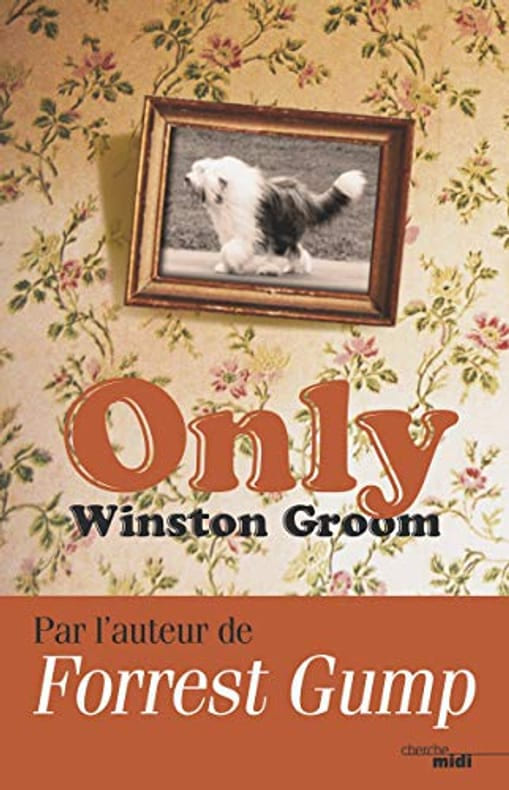
Cherche midi 2016 192 pages 22x14x2cm. 2016. Broché. 192 pages. Ils s'étaient connus en 1944 à leur sortie de l'ombre... L'un paysan communiste autodidacte d'esprit missionnaire s'engageait dans le militantisme syndical et politique l'autre étudiant frustré de sa course aux diplômes s'élançait dans le journalisme de témoignage comme correspondant de guerre. Durant 40 ans ils se retrouvèrent ainsi aux quatre coins du monde le premier à la pointe des hautes affaires de l'agro-alimentaire le second à l'avant-scène du grand reportage. Et fidèles à leurs origines ils revenaient se replonger ensemble avec délices dans la fraîcheur intacte de leur première rencontre. Mais brutalement à la sortie d'un hiver -cinq autres déjà- sonna l'heure de la dernière... Et le paysan dit à l'étudiant : Si les médecins ne se sont pas trompés qui m'accordent de six mois à un an de vie je viendrai chez toi dans les Pyrénées en mai et nous finirons de parler tous les deux sur ta terrasse face aux sommets... Neuf jours après hélas il s'en allait... Alors surmontant sa peine et ses scrupules et avec l'appui de témoins de tous bords humbles ou grands l'étudiant s'est décidé à combler ce mou de conversation. Car il connaissait le désir profond du Gavroche de Noé qui avait relevé l'extravagant défi de jouer au milliardaire rouge : Je compte sur toi pour que l'on sache un jour qui j'étais vraiment... La révélation dans toute la rigueur de l'amitié est bouleversante
Reference : 82768
ISBN : 9782749152769
French édition - Le livre jamais lu présente des marques de stockage sur la couverture et/ou les pourtours mais reste en très bon état d'ensemble. Expédition soignée sous blister dans une enveloppe a bulles
Bookseller's contact details
Démons et Merveilles
M. Christophe Ravignot
contact@demons-et-merveilles.com
07 54 32 44 40
Payment mode

Sale conditions
Rapidité d'envoi Tous nos articles sont expédiés le jour même de la confirmation de la commande Soin de l'emballage Un soin particulier est apporté à l'emballage, vos objets voyagent en toute sécurité. A votre écoute Si toutefois un incident devait survenir lors de l'acheminement de votre paquet, n'hésitez pas à nous contacter, nous mettrons tout en oeuvre pour vous satisfaire, en vous proposant un retour, un remboursement ou toute autre soluton à votre convenance. Professionnalisme Les livres que nous vendons sont pour la plupart des livres anciens, nous tâchons d'être le plus objectif possible quant à leur état.
5 book(s) with the same title
Monte Carlo up to Date. With four entirely original methods of play, the only ones that can succeed under the present changed rules.
Slnd, in8br, 48pp , mouillures sur la couverture et quelques pages.
De Amatoriis Affectionibus Liber. Iano Cornario Zuiccauiensi interprete. [Peri Erotikon Pathematon]. - [EDITIO PRINCEPS OF PARTHENIUS' ONLY SURVIVING WORK]
Basel, in Officina Frobeniana (Per Hieronymum Frobenium, & Nicolaum Episcopium), 1531. Small 8vo. Bound in a lovely, charming early 19th century red half calf with gilt title and lines to spine and lovely gold and red ornamented ""romantic"" paper over boards. A bit of wear to spine. Internally a very fine and clean copy. Title-page slightly soiled, and a vague marginal dampstain throughout, on most leaves barely visible. Froben printer's device to title-page, and in a larger version to verso of last leaf. Four large woodcut initials. 76, (44) pp.
The extremely scarce first printing, of both the original Greek text and the translation into Latin, of Parthenius's only surviving work, the historiographically, mythographically, and literarily hugely important ""Erotica Pathemeta"" (or ""Sorrows of Love""), which constitutes the only prose work by a Hellenistic poet to survive in its entirety and one of the few extant works of its genre, i.e the mythological or paradoxographical handbook, preserved from any period. The ""Erotica Pathemata"" constitutes the only surviving work by the famous Greek poet Parthenius of Nicea (fl. 1st century BC, Rome), the Greek teacher of Virgil, and the favourite author of Hadrian and Tiberius, who is now often referred to as ""the last of the Alexandrians"".Parthenius was Born in Nicaea in Asia Minor, He was captured in the third Mithradatic war and taken to Italy, where he became the Roman poet Virgil's teacher in Greek. He is considered a main influence on the ""Neoteroi"" - the group of ""modernist poets"" led primarily by Callimachus, and he played an important role in spreading a taste for ""Callimachean"" poetry in Rome.In his time, Parthenius was primarily famous as a poet, but unfortunately none of his poetic works have survived, and only some small fragments have been preserved. What we have in their place is the prose treatise ""Erotica Pathemata"", which has survived in merely one manuscript, probably written in the mid 9th-century. In 1531 Froben printed the editio princeps of both the original Greek text and the Latin version of it, and only in 1675 did it appear again. The Froben editio princeps is of great scarcity.The ""Erotica Pathemata"" is a little prose treatise consisting of thirty-six love stories, all with tragic or sentimental endings. The work was dedicated to Cornelius Gallus, and was, Parthenius explains, meant as ""a storehouse from which to draw material"".""The very concatenation of poetry and prose is interesting, and perhaps important. It could be that the ""Erotika Pathemata"" were first collected by Parthenius for his own use as a poet. But the collection of prose anecdote by a poet also locates Parthenius in the same tradition as Callimachus ..." Nicander ... " and Euphorion of Chalcis ... . Parthenius' is in fact the only prose work by a Hellenistic poet to survive entire. It proclaims its purpose as utilitarian, and begins with an epistolary introduction in which Parthenius offers his work to the poet Gallus as potential raw material for hexameter and elegiac poetry. This detail is of some importance for literary history. The loss of the poetry - not only of Parthenius, but also of his friends in Rome, of Gallus, Cinna, and the other ""neoteroi"" - is admittedly grievous" but the treatise, and particularly the implications of the dedication, offers some insight of their own into literary production in Rome in the middle of the first century BC. It is a period about which we should like to be better informed, the age of the supposed epyllion, of nascent elegy, and of experimentation with new Greek genres. The dedication suggests, on the one hand, intriguing possibilities for the sort of narrative poetry, both hexameter and elegiac, which Parthenius might have expected Gallus and his friends to write and on the other the text can be read (and may also have been intended to be read) for pleasure as a prose work in itself. Thus regarded, it raises questions about the hellenistic historiography in which the stories were embedded, about the diverse kinds of mythography written in the hellenistic period and the two-way relationship between mythography and poetry" about the types of stories it contains, the manner in which they were generated, the structure they exhibit, the messages about social life which are encoded within them. And not the least intriguing question concerns its relationship to the Greek novel, a genre which seems to have been gaining momentum in the first century BC, and other sorts of prose fiction. Stylistically too, the work should be of interest to historians of Greek prose. It is preserved by a lucky accident in a single manuscript, possibly because its Atticism pleased the Byzantines' ear as much as it appealed to their penchant for story-telling, and it is one of the very few surviving works of Greek prose from the middle of the first century BC. Indeed it is one of few extant works of its genre, the mythographical or paradoxographical handbook, preserved from any period."" (Lightfoot, Parthenius of Nicea. The Poetical Fragments of the ""Erotika Pathemata"". Edited with introduction and commentaries. 1999, pp. 2-3). As such, the ""Erotica Pathemata"", along with its author, apart from being of pivotal importance to the study of the ancient novel (the earliest examples of which date from exactly this perioed), Greek prose, and the Greek language (""Parthenius' Greek is of no little interest in view of the dearth of surviving material which is comparable in genre and date"" - Lightfoot, p. 283), also plays a central role in Hellenistic literature and is of decisive character to the development of Roman prose and poetry in the 1st century BC. ""It was Parthenius who taught me Greek -Yes, a freed prisoner-of-war, whose giftWas perfect elegiacs, faultless poems.He gathered brief love-stories, so that GallusCould turn them into song. Parthenius sleepsWatched over by sea-deities, by Glaucus,Panopea, Melicertes - Ino's son -Beside a river graved in celandine."" (Virgil - see Lightfoot, p. (97)).

Samling af den danske Scenes Dragter i 48 colorerede Fremstillinger. - [ONE OF ONLY A HANDFUL OF COPIES KNOWN]
Kjöbenhavn (Copenhagen), Steens Forlag, 1834. 12mo (15 x 9,5 cm). Lovely contemporary brown half calf with gilt ornamentation to spine. General wear along hinges and edges of boards. But overall a very nice copy. Tight and fine. Book-plate of Kaj Christensen (1960'ies) to inside of front board and and ownership signatures to front free end-paper (""W. Unsgaard"" and ""N. Neiidendam / 1900"") along with blindstamped ovnership stanp of Johan G. Melbye. Later pencil-annotation to inside of front board (stating that only tow copies are said to be preserved on private hands). VI, (2) pp. + 48 engraved and finely handcoloured plates. All the blank leaves inbetween the plates preserved as well.
Exceedingly scarce - one of only a handful of copies knwon to exist - first, and only, edition of Bruun’s “Collection of Costumes From the Danish Scene” from 1834, which contains 48 wonderful, engraved and handcoloured plates of costumes from some of the most famous plays and operas performed at the height of the Danish stage, including nine costumes to four of Mozart’s operas: La Nozze di Figaro, Don Giovanni, The Magic Flute, and Seraglio. These 48 magnificent plates showcase the wonderful diversity of the Danish stage at the time, the strong Gothic influence, the great influences of both German and French romanticism, and the influence of the Orient upon costumes of the Danish stage as well (eg. Seraglio, Lulu). In addition to the costumes for the operas by Mozart and for some of the most cherished Scandinavian plays (primarily Holberg), we have costumes for a wonderful array of other plays and operas that showcase the great influx upon Danish performance from many parts of Europe – Austria, Germany, France, Italy, United Kingdom. We have for instance Cinderella (Cendrillon), Monteverdi’s The Combat of Tancredi and Clorinda, La Dame Blanche, Beckford’s Azemia, Weber’s Der Freischutz and his Preciosa (which is based upon a novella by Cervantes). The full list of costumes is as follows: 1: Saft - i Sovedrikken. 2 & 3: Salomon Goldkalb & Brant – i Kong Salomon og Jörgen Hattemager. 4-6: Anna, Casper & Samiel - i Jaegerbruden. 7: Pantsatte Bondedreng – i Stykket af samme Navn (i.e. in the play by the same name). 8. Joseph – i Joseph og hans Brödre. 9 & 10: Montefiascone & Cendrillon - i Cendrillon. 11: Wenceslaus - i Herman von Unna. 12: Roux – i Röverborgen. 13: Hans Mortensen - i Aprilsnarrene. 14: Amenaide - i Taneredo. 15: Geert Westphaler - i Stykket af samme Navn (in the play by the same name). 16: Geske - i Den politiske Kandestöber. 17: Barthel - i Viinhösten. 18: Azemia - i Stykket af samme Navn (in the play by the same name). 19: Don Juan - i Stykket af samme Navn (in the play by the same name). 20 & 21: Jane & v. Thyboe - i Jacob v. Tyboe. 22 & 23: Preciosa & Pedro - i Preciosa. 24: Ariel - i Alfen som Page. 25 & 26: Valborg & Erland - i Axel og Valborg. 27 & 28: Hvide Dame & Georg Brovn – i Den hvide Dame. 29 & 30: Syvald & Rödhætten - i Deodata. 31-33: Almaviva, Bazile & Figaro - i Figaros Giftermaal. 34. Trampel - i Fugleskydningen. 35 & 36: Constance & Blonde - i Bortförelsen af Serailet. 37-39: Dilfeng, Barka & Lulu - i Lulu. 40 & 41: Mad. Voltisubito & Ledermann - i Recensenten og Dyret. 42: Zoe - i Væringerne i Miklagard. 43-45: Papageno, Monostatos & Papagena - i Trylleflöjten. 46 – 47: Mad. la Fleche & Arv - i Jean de France. 48: Jeppe - i Jeppe paa Bjerget. Many of the costumes with depiction of the actors and actresses are important in themselves and not only in a broader perspective - setting the tone for how to depict the characters in some of the most famous plays and operas for decades to come. An example of an individually highly significant illustration in the present work is the drawing of Christine Zrza in Constanze’s costume in Seraglio, wearing a so-called “Turkish” costume as a woman of the harem of Selim Pasha’s palace. Zrza herself was a significant figure in the foundation of Mozart’s operas on the Danish scene, playing also the first Countess Almavira in Figaro’s Marriage, the first Sextus in Titus, and the first Queen of the Night in The Magic Flute. The work is of immense scarcity, with only very few copies known to exist. Apart from the copy in the Royal Library in Copenhagen, OCLC list merely one copy, at Harvard. This copy only collates as having merely 1f. in addition to the 48 plates, where as our copy has all the four leaves in front consisting in title-page, contents-leaves and half-title. We have been able to locate one copy sold at auction, that having merely 43 plates. It is said that merely two copies are knbown on private hands. The great book collector Oscar Davidsen had a copy in his collection (nr. 5 in his auction catalogue (1940), where it is said of it that ""this collection is of great scarcity). Krohn:1482.
Kolhosp Tvaryn(i.e. “a Collective Farm of Animals” - being Animal Farm). - [FIRST UKRANIAN TRANSLATION OF ANIMAL FARM - WITH THE ONLY SURVIVING PREFACE TO THE WORK BY ORWELL HIMSELF]
(Munich), Prometheus, (1947). Original printed pictorial wrappers. In excellent condition with just slight edge wear and a small bump to upper capital. Internally also en very nice condition. Bookseller stamp to front free end-paper: Ukranian Book Store, Edmonton, Alberta. With portrait of Orwell after the preface.
Scarce first edition of the first Ukrainian translation of Animal Farm, being the only edition of Orwell’s masterpiece with a personal preface written by the author. Needless to say, Animal Farm constitutes one of the most important literary works of the 20th century. The satirical-political masterpiece magnificently reflects the events leading up to the Russian Revolution and brilliantly caricatures Stalinism. As Orwell himself put it, with this work, he deliberately tried ""to fuse political purpose and artistic purpose into one whole"". (Orwell, ""Why I Write""). Animal Farm brilliantly portrays not only the corruption of the revolution, but also how traits of human character themselves corrupt society. The greatest flaw of revolution is not the corrupt leadership on its own, but also the greed, indifference, ignorance, shortsightedness, wickedness, etc. that govern the individuals that make up the masses. George Orwell’s (1903-1950) Animal Farm was translated into Ukrainian by Ihor Ševcenko (1922-2009) – a Polish-born Ukrainian scholar, at the time residing in Germany – under the pseudonym Ivan Cherniatyns’kyi. The book was published by the Ukrainian publisher Prometheus in Munich in 1947. The Ukrainian title, Kolhosp Tvaryn (i.e. eng.: “A Collective Farm of Animals”) – a reference to Stalin’s collective farms (kolkhozy) – is deliberately not a literal translation, and “[a] brief examination of Ševcenko’s translation reveals that while his choices were distinctly loyal to the original English text, they simultaneously deepen the political allegory and expand the fairy tale tradition of the novel by domesticating certain aspects of the text through specific references to the Soviet Union and Ukrainian folktales.” (Gor, 2025, p. 18). The text “offered momentary solidarity, unity, and comfort to displaced Ukrainians through its loyal translation and parallel intentions between the source text and the translation” (Gor, 2025, pp. 3-4). At the time of the publication of Animal Farm, Ševcenko was regularly participating in the intellectual spheres of the Ukrainian Displaced Persons camps in Munich. There, he began sight-translating (i.e. without preparation) Animal Farm for camp residents. In April 1946, he wrote to Orwell requesting permission to publish the novel in Ukrainian. Among other things, he wrote to Orwell that ""‘Soviet refugees were my listeners. The effect was striking. They approved of almost all your interpretations. They were profoundly affected by such scenes as that of animals singing ""Beasts of England"" on the hill. Here I saw that apart from their attention being primarily drawn on detecting ""concordances"" between the reality they lived in and the tale, they visibly reacted to the absolute values of the book, to the tale types, to the underlying convictions of the author and so on. Besides, the mood of the book seems to correspond with their own actual state of mind... [T]he attitude of the Western World in many recent issues roused serious doubts among our refugees, who wondered how it were possible that nobody “knew the truth”’...Your bookhas solved the problem."" (Szewczenko to Orwell, 11 April 1946, XVIII, 236). Orwell immediately agreed to the translation, refused any royalties, and later also agreed to write a preface for it (Tatara, 2012"" Gor, 2025, p. 14). ""Although ‘frightfully busy’ Orwell did write this preface, which forever remained his most detailed explanation of the motives behind the “fairy story”. (Masha Karp: On the Ukranian Trnaslation of Animal Farm, the Orwell Foundation, 2022). The Ukrainian edition is especially interesting, not only because of its genesis, but also because it is the only edition of Orwell’s masterpiece with a personal preface written by the author, with the most detailed explanation of the motives behind the Animal Farm. In this context, it is worth noting that Orwell’s original version of the preface in English has been lost, and the only version surviving is the one he wrote for the Ukrainian translation. For the first edition in English, Orwell had intended to include his essay “Freedom of the Press” as a preface, but this was possibly rejected by the publishers. Overall, Orwell faced many obstacles when first publishing Animal Farm: It was rejected for almost a year by publishers, afraid of the criticism of England’s Soviet ally (Gor, 2025), and a preface never appeared. The small Ukranian printing press Promethius managed a print-run of 5.000 copies of the first edition of the Ukranian translation, but a mere 2.000 ended up being distributed throughout DP camps in and around Munich. The remaining copies were confiscated by the US military, who feared that it would be considered anti-Soviet propaganda and would jepardize the relationship with Stalin as the ally, who had helped defeat Hitler. The Americans thus handed over the confiscated copies to the Soviet authorities, who desctroyed them. Animal Farm was written between late 1943 and early 1944, when the wartime alliance with the Soviet Union was at its height and Stalin was held in highest esteem in Britain, among both the people and intelligentsia. Not surprisingly, it was initially rejected by both British and American publishers, and the publication of it was thus delayed. When it did appear, it became a great commercial success, however, probably not least due to the soon to follow Cold War. In his Ukranian preface, Orwell explains that 'It was of the utmost importance to me that people in Western Europe should see the Soviet régime for what it really was. Since 1930 I had seen little evidence that the USSR was progressing towards anything that one could truly call Socialism. On the contrary, I was struck by clear signs of its transformation into a hierarchical society, in which the rulers have no more reason to give up their power than any other ruling class. ""Having explained ‘why ‘totalitarianism is completely incomprehensible… to the workers and intelligentsia in a country like England’, Orwell named as the aim of his book ‘the destruction of the Soviet myth …essential’, he insisted, ‘for a revival of the Socialist movement’. (Orwell Foundation, 2022). The work is generally considered one of the best and most influential literary productions of the 20th century. The original subtitle ""A Fairy Story"" was dropped when the book was published in the United States, and all but one of the translations omitted it. References: Chalupa, Andrea (2012, March 7). How ‘Animal Farm’ Gave Hope to Stalin’s Refugees. Andrea Chalupa. Tatara, Halyna. (2012, July 31). George Orwell and the Ukrainian refugees: the untold story of Animal Farm. Ukrainian Institute London. The Orwell Foundation. (2022, March 15). Masha Karp on the Ukrainian translation of Animal Farm. The Orwell Foundation. The Orwell Foundation. Preface to the Ukrainian Edition of Animal Farm. Gor, Diana. (2025). Found in Translation: George Orwell's Animal Farm in Ukrainian. [Capstone project, Stanford University].
Reference : albd05b7c174249bbe8
Philon Elena. Only shine. Only play. Only listen (3 books) In Russian /Filon El
Philon Elena. Only shine. Only play. Only listen (3 books) In Russian /Filon Elena. Tolko siyay. Tolko igray. Tolko slushay (3 knigi) The series: Generation Love ACT 2016. Contact us for details or to request photos of available books. Delivery of this book could take longer than normal due to additional handling time before shipping, and no rush delivery options are available. Please let us know if you have a specific date by which you need to receive your order. SKUalbd05b7c174249bbe8

