 Write to the booksellers
McGowan John DuBern Roger Cochard Nadine
La décoration
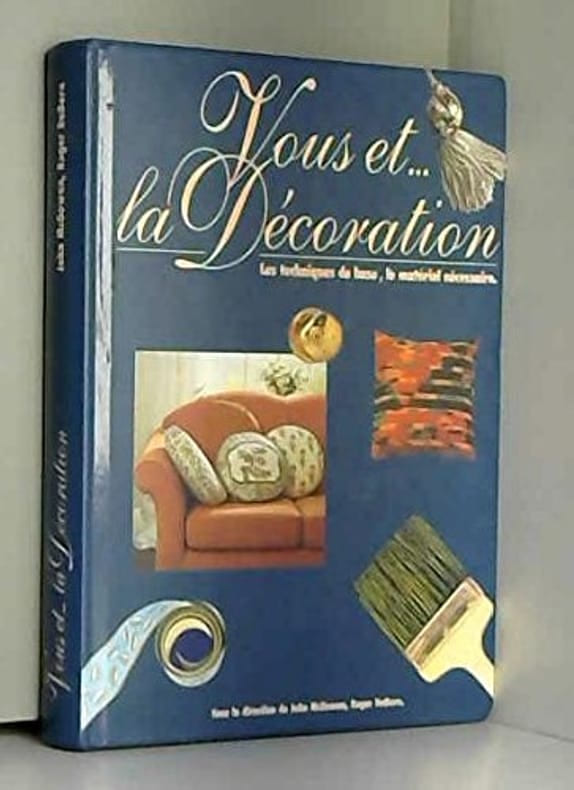
France Loisirs 1994 240 pages in8. 1994. Relié. 240 pages.
Reference : 61374
ISBN : 9782724277357
MERCI DE LIRE JUSQU'A LA FIN!!! Le livre présente des traces d'usure et de stockage mais reste en très bon état d'ensemble. Expedié depuis la France dans un emballage adapté
Bookseller's contact details
Démons et Merveilles
M. Christophe Ravignot
contact@demons-et-merveilles.com
07 54 32 44 40
Payment mode

Sale conditions
Rapidité d'envoi Tous nos articles sont expédiés le jour même de la confirmation de la commande Soin de l'emballage Un soin particulier est apporté à l'emballage, vos objets voyagent en toute sécurité. A votre écoute Si toutefois un incident devait survenir lors de l'acheminement de votre paquet, n'hésitez pas à nous contacter, nous mettrons tout en oeuvre pour vous satisfaire, en vous proposant un retour, un remboursement ou toute autre soluton à votre convenance. Professionnalisme Les livres que nous vendons sont pour la plupart des livres anciens, nous tâchons d'être le plus objectif possible quant à leur état.
5 book(s) with the same title
[Bofa Gus ] - - Valsien Albert,Kams Francis - Guitton Jean
Reference : 72033
(1920)
Journal-manuel de Peintures appliquées à la décoration des monuments, appartements, magasins, etc.
Paris, Morel, 1873-1874. 1 vol. in-folio, (45,5 x 32 cm) ; deux fois 48 pp. et XXIV pl. en couleurs. Reliure en demi-basane brune, dos lisse orné de faux-nerfs dorés, titre et date dorés. Frottements, usures aux coins et aux coupes, coiffe inférieure arrachée sur la moitié du caisson inférieur. Reliure fragile, les feuillets se détachent en partie haute. Rousseurs éparses.
"Bois, marbres, lettres, attributs, imitations de moulures, etc." 23e et 24e années complètes de cette belle publication mensuelle consacrée à la peinture de décor. Chaque numéro se compose de 4 pages et de 2 planches en chromolithographie. Pierre Chabat (1827-1892), directeur de cette publication, était préparateur de cours de constructions civiles au Conservatoire national des Arts et Métiers et professeur à l'École centrale d'Architecture. Il a été architecte au service de plusieurs compagnies de chemins de fer. Thèmes abordés dans l'année 1873 : Marbre jaspe brun (brèche dorée, africain fleuri), Plafond (rue du Parc Royal), Cheminée, Bordures, Salon persan, Vestibule, Bois (tamarin, houx, amarante, racine d'orme), Frises, Salle à manger (fenêtre du presbytère de L'Isle-Adam), Frises (papier peint), Fumoir, Alphabet (lettres), Marbre (brèche dorée), Carrelage, Solives (plafond, rue du Parc Royal), Décoration (arcature), Salon persan (décoration d'un dessus de cheminée en faïence), Alphabet, Attributs, Décoration à Pompéi, Décoration (croix de la crypte de Saint-Pierre de Montrouge), Alphabet, Attributs, Frise. Thèmes abordés dans l'année 1874 : Marbre (fleur de pêcher), Alphabet, Décoration, Frises (arabesques XIIIe siècle), Chêne de Botany-Bay, Motifs divers (fragments), Décoration, Alphabet, Décoration, Arabesques (XIIIe siècle), Salle de bain (hôtel de M. Millaud), Ornements divers (fragments d'étoffes), Marbre vert clair de Suède, Alphabet, Porte (décoration d'un salon), Frises (fragments tirés d'un manuscrit), Attribut, Coins et frises, Décoration d'une cheminée (château de Fontaine-Étoupefour, Calvados), Fragments de décoration (frises tirées d'un manuscrit), Bois d'amourette (mouchetée d'Amérique), Vestibule, Vestibule, Alphabet.
GRAMMAIRE des ARTS DECORATIFS Décoration intérieure de la Maison.
Henri Laurens, Editeur Paris S.D. In-4 ( 280 X 190 mm ) de 302 pages, percaline framboise, dos lisse, tête dorée. Ornée de 255 gravure. Bon exemplaire.
La DECORATION CULINAIRE pas à pas. Comment décorer les plats.
Celiv Paris 1995 In-4 carré ( 285 X 225 mm ) de 48 pages, cartonnage illustré en couleurs sous jaquette illustrée à l'identique. Très nombreuses photographies en couleurs dans le texte. Très bel exemplaire.
Image fournie par le vendeurDes Livres Modernes qu'il convient d'acquérir. L'art et l'engouement - La Bibliofolie contemporaine - Les procédés de décoration.
Edouard Rouveyre Paris 1891 In-12 broché ( 190x120 mm ) de 100 pages sous couverture brune rempliée et ornée de dorures et sous cristal imprimé.Orné d'illustrations hors-texte et sous serpente de Berne Bellecour, Delort, Giacomelli, Le Blant, Lhermitte, Leloir, Mesplès, Poirson, Roux, Ruvaux, Vierge et Toudouze.Exemplaire n° 621 sur Vélin teinté.Bel ex-libris à l'étiquette collée en page de garde.

