 Write to the booksellers
Wade Miller
On Liquid
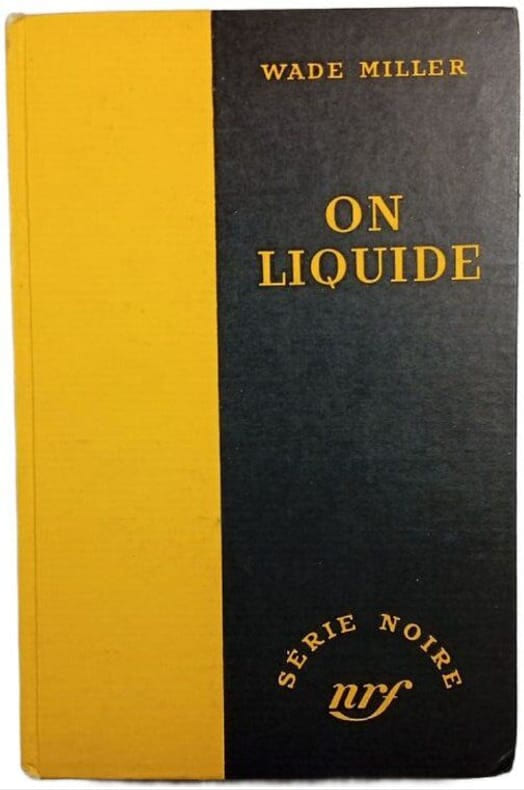
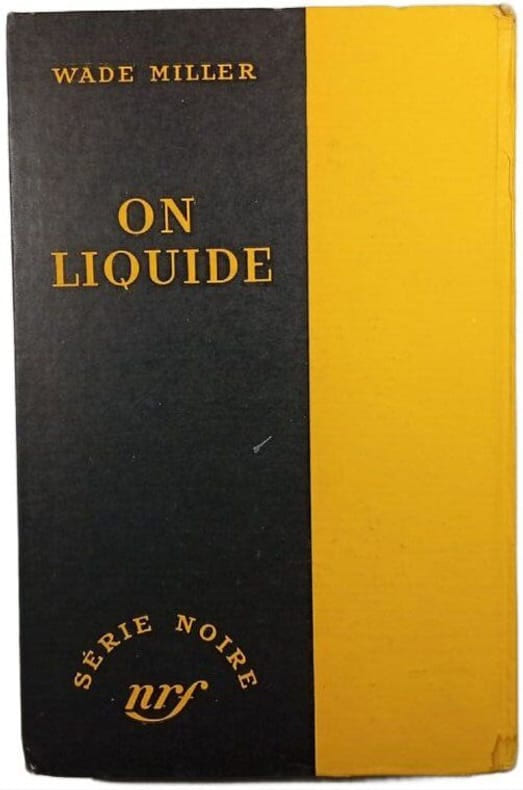
NRF Sans date.
Reference : 500373504
Bon état
Bookseller's contact details
Démons et Merveilles
M. Christophe Ravignot
contact@demons-et-merveilles.com
07 54 32 44 40
Payment mode

Sale conditions
Rapidité d'envoi Tous nos articles sont expédiés le jour même de la confirmation de la commande Soin de l'emballage Un soin particulier est apporté à l'emballage, vos objets voyagent en toute sécurité. A votre écoute Si toutefois un incident devait survenir lors de l'acheminement de votre paquet, n'hésitez pas à nous contacter, nous mettrons tout en oeuvre pour vous satisfaire, en vous proposant un retour, un remboursement ou toute autre soluton à votre convenance. Professionnalisme Les livres que nous vendons sont pour la plupart des livres anciens, nous tâchons d'être le plus objectif possible quant à leur état.
5 book(s) with the same title
Viscosity of liquid Helium below the lambda-point [Kapitza] (+) Flow of liquid Helium II [J. F. Allen & A. D. Misener] [The volume also contain the following papers: New phenomena connected with heat flow in liquid Helium II [J. F. Allen & H. Jones] (... - [THE DISCOVERY OF SUPERFLUIDITY]
London, Macmillian and Co, 1938. Royal8vo. In contemporary half cloth with white paper title-label pasted on to spine. In: ""Nature"", January - June, 1939, Vol. 141, entire volume offered. Stamp to front free end-paper and title-page, otherwise fine and clean copy. P. 74"" P. 75. [Entire volume: LXIV, 1156 pp.].
First publication of these two seminal papers which constitutes one of the most significant discoveries in 20th century physics. It ushered a golden period of low-temperature physics and created a new research field within physics which was later to be called quantum liquids. Both paper described a hitherto unknown state of matter: superfluidity of matter. The two discoveries were made independently, Kapitza's paper superseding Allen and Misener's by two weeks. Both studies reported that liquid helium flowed with almost no measurable viscosity below the transition temperature of 2.18 K.""Although the discovery of superfluidity stands as one of the most significant in physics in the 20th century, it was to be 40 years before the Royal Swedish Academy of Sciences honoured this seminal discovery with a Nobel prize - an exceptionally long interval. In 1978 Kapitza, by then 84, was given half of that year's Nobel Prize for Physics with a somewhat vague citation reading ""for his basic inventions and discoveries in the area of low-temperature physics"". The other half did not go to Allen and Misener. Today, science popularizers generally give sole credit for the discovery of superfluidity to Kapitza."" (Physics world, University of Toronto.). ""Kapitza observed that He II flowed between two closely spaced parallel plates extremely rapidly compared to He I, for the same pressure difference. This result, published in Nature on 8 January 1938, showed unambiguously that here was a new and mysterious kind of liquid - one with almost no viscosity. On the page facing Kapitza's one-page paper was another by the young Canadian physicists Jack Allen and Donald Misener, with essentially equivalent results on helium flow on long capillary tubes. It was submitted two weeks after Kapitza's, but both papers are the standard reference for the discovery of superfluidity"". (Griffin, A Century of Nature, 2003, p. 52).While investigating the thermal conductivity of liquid helium, Kapitsa measured the flow as the fluid flows through a gap between two discs into a surrounding bath. Above the lambda point, there was little flow, but below the lambda temperature, the liquid flowed with such great ease that Kapitsa drew an analogy with superconductors. It was a liquid of zero viscosity. He discovered the phenomenon in 1937 and published a paper about it in Nature in January 1938. He wrote: ""The helium below the lambda point enters a special state that might be called a ‘superfluid.’"" (DSB).Today the theory behind superfluidity is widely used within a broad variety of different subject such as spectroscopic and in high-precision devices as gyroscopes which allow the measurement of some theoretically predicted gravitational effects. In 1999, a type of superfluid was used to trap light and greatly reduce its speed. Light was passed through a Bose-Einstein condensed gas of sodium (superfluid) and found to be slowed to 17 m/s from its normal speed of 299,792,458 metres per second.Brandt, The Harvest of a Century, Pp. 254-7.

Viscosity of liquid Helium below the lambda-point [Kapitza] (+) Flow of liquid Helium II [J. F. Allen & A. D. Misener] [The volume also contain the following papers: New phenomena connected with heat flow in liquid Helium II [J. F. Allen & H. Jones] (... - [THE DISCOVERY OF SUPERFLUIDITY]
New York, Macmillian and Co, 1938. Royal8vo. In publisher's pictorial cloth with the original wrappers [in the back]. Gilt lettering and Nature's logo to spine and front board. Entire issue of ""Nature"", January - June, 1938, Vol. 141. ""Emmanuel College"" in gilt lettering to spine and two library stamps to title-page and first index page. Two small white paper labels pasted on to spine and a small tear to top of spine. Very slight wear to extremities, otherwise a very fine and clean copy. Rare in the publisher's binding. P. 74"" P. 75. [Entire volume: LXIV, 1156 + VIII, IV, VIII, VIII, XVI, VIII, VIII, XVI, VIII, XII, VIII, XII, XII, IV, IV, VIII, XII, VIII, VIII, VIII, VIII, XII, VIII, IV, XVI, CCLX (Advertisements).
First publication of these two seminal papers which constitutes one of the most significant discovery in 20th century physics. It ushered a golden period of low-temperature physics and created a new research field within physics which was later to be called quantum liquids. Both paper described a hitherto unknown state of matter: superfluidity of matter. The two discoveries were made independently, Kapitza's paper superseding Allen and Misener's by two weeks. Both studies reported that liquid helium flowed with almost no measurable viscosity below the transition temperature of 2.18 K.""Although the discovery of superfluidity stands as one of the most significant in physics in the 20th century, it was to be 40 years before the Royal Swedish Academy of Sciences honoured this seminal discovery with a Nobel prize - an exceptionally long interval. In 1978 Kapitza, by then 84, was given half of that year's Nobel Prize for Physics with a somewhat vague citation reading ""for his basic inventions and discoveries in the area of low-temperature physics"". The other half did not go to Allen and Misener. Today, science popularizers generally give sole credit for the discovery of superfluidity to Kapitza."" (Physics world, University of Toronto.). ""Kapitza observed that He II flowed between two closely spaced parallel plates extremely rapidly compared to He I, for the same pressure difference. This result, published in Nature on 8 January 1938, showed unambiguously that here was a new and mysterious kind of liquid - one with almost no viscosity. On the page facing Kapitza's one-page paper was another by the young Canadian physicists Jack Allen and Donald Misener, with essentially equivalent results on helium flow on long capillary tubes. It was submitted two weeks after Kapitza's, but both papers are the standard reference for the discovery of superfluidity"". (Griffin, A Century of Nature, 2003, p. 52).While investigating the thermal conductivity of liquid helium, Kapitsa measured the flow as the fluid flows through a gap between two discs into a surrounding bath. Above the lambda point, there was little flow, but below the lambda temperature, the liquid flowed with such great ease that Kapitsa drew an analogy with superconductors. It was a liquid of zero viscosity. He discovered the phenomenon in 1937 and published a paper about it in Nature in January 1938. He wrote: ""The helium below the lambda point enters a special state that might be called a ‘superfluid.’"" (DSB).Today the theory behind superfluidity is widely used within a broad variety of different subject such as spectroscopic and in high-precision devices as gyroscopes which allow the measurement of some theoretically predicted gravitational effects. In 1999, a type of superfluid was used to trap light and greatly reduce its speed. Light was passed through a Bose-Einstein condensed gas of sodium (superfluid) and found to be slowed to 17 m/s from its normal speed of 299,792,458 metres per second.Brandt, The Harvest of a Century, Pp. 254-7.
Liquid-Propellant Rocket Development (with 11 plates). - [THE WORLD'S FIRST LIQUID-FUELED ROCKET]
Washington, The Smithsonian Institution, 1936. 8vo. In recent red full cloth with gilt lettering to front board. Published as part of ""Smithsonian Miscellaneous Collections, Volume 95, Number 3, Publication 3381"". A fine and clean copy. (2), 10 pp. + 11 photographic plates.
First edition of Goddard's paper on liquid-fueled rocket development. Goddard is credited with creating and building the world's first liquid-fueled rocket and is often referred to as the man who ushered in the Space Age (Pendray, Rocket Development). By temperament and training Goddard was not a team worker, yet he laid the foundation from which team workers could launch men to the moon"" (DSB). Goddard was secretive about his research and only published two papers"" ""A Method of Reaching Extreme Altitudes"" (1919) and the present. Goddard launched the first liquid-fuel rocket on 16 March 1926 near Auburn, Mass. The ten-foot rocket, nicknamed ""Nell"" reached an altitude of 41 feet, traveled a distance of 184 feet and landed 2.5 seconds after lift-off in a cabbage patch. ""Although his list of firsts in rocketry was distuguished, Goddard was eventually surpassed by teams of rocket research and development experts elsewhere, particularly in Germany."" (DSB).""Like the Russian hero Konstantin Tsiolkovsky and the German pioneer Hermann Oberth, Goddard worked out the theory of rocket propulsion independently [...] Having explored the mathematical practicality of rocketry since 1906 and the experimental workability of reaction engines in laboratory vacuum tests since 1912, Goddard began to accumulate ideas for probing beyond the Earth's stratosphere. His first two patents in 1914, for a liquid-fuel gun rocket and a multistage step rocket, let to some modest recognition and financial support from the Smithsonian Institution [...] With an eye toward patentability of demonstrated systems and with the aid of no more than a handful of technicians, Goddard achieved a series of workable liquid-fuel flights starting in 1926. Through the patronage of Charles A. Lindbergh, the Daniel and Florence Guggenheim Foundation, and the Carnegie and Smithsonian institutions, the Goddards and their small staff were able to move near Roswell, New Mexico. There, during most of the 1930s, Goddard demonstrated, despite many failures in his systematic static and flight tests, progressively more sophisticated experimental boosters and payloads, reaching speeds of 700 miles per hour and altitudes above 8000 feet in several test flights"" (DSB).
Liquid-Propellant Rocket Development (with 11 plates). - [THE WORLD'S FIRST LIQUID-FUELED ROCKET]
Washington, The Smithsonian Institution, 1936. 8vo. In recent red full cloth with gilt lettering to front board. Published as part of ""Smithsonian Miscellaneous Collections, Volume 95, Number 3, Publication 3381"". A fine and clean copy. (2), 10 pp. + 11 photographic plates.
First edition of Goddard's paper on liquid-fueled rocket development. Goddard is credited with creating and building the world's first liquid-fueled rocket and is often referred to as the man who ushered in the Space Age (Pendray, Rocket Development). By temperament and training Goddard was not a team worker, yet he laid the foundation from which team workers could launch men to the moon"" (DSB). Goddard was secretive about his research and only published two papers"" ""A Method of Reaching Extreme Altitudes"" (1919) and the present. Goddard launched the first liquid-fuel rocket on 16 March 1926 near Auburn, Mass. The ten-foot rocket, nicknamed ""Nell"" reached an altitude of 41 feet, traveled a distance of 184 feet and landed 2.5 seconds after lift-off in a cabbage patch. ""Although his list of firsts in rocketry was distuguished, Goddard was eventually surpassed by teams of rocket research and development experts elsewhere, particularly in Germany."" (DSB).""Like the Russian hero Konstantin Tsiolkovsky and the German pioneer Hermann Oberth, Goddard worked out the theory of rocket propulsion independently [...] Having explored the mathematical practicality of rocketry since 1906 and the experimental workability of reaction engines in laboratory vacuum tests since 1912, Goddard began to accumulate ideas for probing beyond the Earth's stratosphere. His first two patents in 1914, for a liquid-fuel gun rocket and a multistage step rocket, let to some modest recognition and financial support from the Smithsonian Institution [...] With an eye toward patentability of demonstrated systems and with the aid of no more than a handful of technicians, Goddard achieved a series of workable liquid-fuel flights starting in 1926. Through the patronage of Charles A. Lindbergh, the Daniel and Florence Guggenheim Foundation, and the Carnegie and Smithsonian institutions, the Goddards and their small staff were able to move near Roswell, New Mexico. There, during most of the 1930s, Goddard demonstrated, despite many failures in his systematic static and flight tests, progressively more sophisticated experimental boosters and payloads, reaching speeds of 700 miles per hour and altitudes above 8000 feet in several test flights"" (DSB).
Reference : alb607f981166852f3d
Eckert Paul. From Pinnacle Liquid 6 to Avid Liquid 7. Professional video editin
Eckert Paul. From Pinnacle Liquid 6 to Avid Liquid 7. Professional video editing In Russian /Ekert Pol. Ot Pinnacle Liquid 6 k Avid Liquid 7. Professionalnyy videomonta Series: Quick Pro M. DQM Press 2007. You are welcome to reach out to us for a detailed description of the copies currently available. Delivery of this book may take longer than usual including extended processing and pre-shipping time, no expedited shipping is available. Please advise us if you have a set date or a deadline to receive your order.SKUalb607f981166852f3d

