Write to the booksellers
Michael Stewart
Keynes
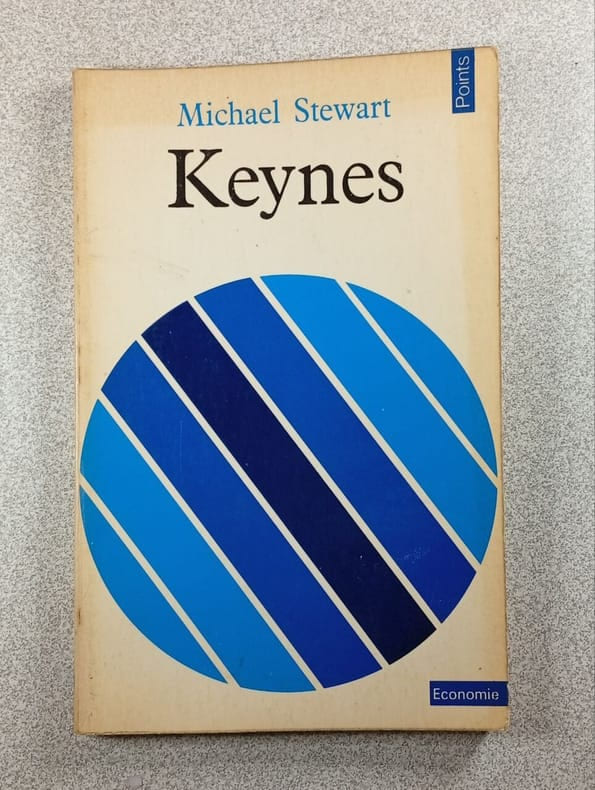
Points Sans date.
Reference : 500319531
Bon état
Bookseller's contact details
Démons et Merveilles
M. Christophe Ravignot
contact@demons-et-merveilles.com
07 54 32 44 40
Payment mode

Sale conditions
Rapidité d'envoi Tous nos articles sont expédiés le jour même de la confirmation de la commande Soin de l'emballage Un soin particulier est apporté à l'emballage, vos objets voyagent en toute sécurité. A votre écoute Si toutefois un incident devait survenir lors de l'acheminement de votre paquet, n'hésitez pas à nous contacter, nous mettrons tout en oeuvre pour vous satisfaire, en vous proposant un retour, un remboursement ou toute autre soluton à votre convenance. Professionnalisme Les livres que nous vendons sont pour la plupart des livres anciens, nous tâchons d'être le plus objectif possible quant à leur état.
5 book(s) with the same title
William Blake's Laocoön, A Last Testament, With Related Works: On Homer's Poetry and On Virgil, The Ghost of Abel by Geoffrey Keynes.
London, Trianon Press for the William Blake Trust, 1976. 4to. Orig. full morocco. In the orig. matching slicase. Spine with gilt lettering. 62 pp. Frontispiece (self-portrait of Blake) and 11 plates, reproduced in collotype in the workshops of Trianon Press. ""This is a special copy No. XI"", signed by Geoffrey Keynes. ""32 copies numbered I-XXXII, bound in full morocco, printed on Lana rag paper and signed by the author.""
First edition of Blake's Laocoön A Last Testament.

Keynes J. Keynes. Kejns Dzh. M. Ekonomicheskie posledstviya valyutnoj politiki
"In Russian. Short description: Keynes J. Keynes. Keynes JM The Economic Consequences of Mr. Churchill's Monetary Policy. With a preface by G.I. Lomova M.-L. Central Printing Department of the Supreme Council of National Economy-USSR 1925 44 p. Moscow, Leningrad: Central Printing Department of the Supreme Council of National Economy-USSR, 1925. In 1925, the eminent economic theorist John Maynard Keynes urged the Chancellor of the Exchequer, the great Winston Churchill, not to introduce the gold standard in Great Britain. However, contrary to the recommendations, Churchill decided to return to the gold standard. Keynes followed this with a pamphlet titled The Economic Consequences of Mr. Churchill's Monetary Policy, which predicted that such a decision would lead to economic overvaluation and chronic unemployment. Keynes was right. In 1931, six years later, Great Britain abandoned the gold standard, while it had already managed to damage the country's economy. John Maynard Keynes (1883-1946) - an outstanding English economist; since 1920 - professor at Cambridge. He made a Keynesian revolution in the economy with the book The General Theory of Employment, Interest and Money (1936). In his theories, he developed the ideas of regulated state intervention in the market economy. Keynes's ideas to no small extent helped the developed countries of the West to emerge from the Great Depression of the 1930s. Please feel free to contact us for a detailed description of the copies available. SKUMS002184"
Keynes J. Keynes. Kejns Dzh. Kejns. Predmet i metod politicheskoj ekonomii, 189
In Russian. Short description: Keynes J. Keynes. The Subject and Method of Political Economy, 1899. Moscow: Printing house of I. A. Balandin, 1899. The Scope and Method of Political Economy is a book by the English economist John Nevil Keynes, published in 1891. John. N. Keynes notes in the book that political economy does not derive any rules of conduct, but only provides the results of its research to the services of legislators and social reformers. The result of the analysis carried out in the book was the allocation of positive and normative components in the structure of economic science. Please feel free to contact us for a detailed description of the copies available. SKUMS002173
William Blake's Laocoön, A Last Testament, With Related Works: On Homer's Poetry and On Virgil, The Ghost of Abel by Geoffrey Keynes.
London, Trianon Press for the William Blake Trust, 1976. 4to. Orig. half morocco. Spine with gilt lettering. 62 pp. Frontispiece (self-portrait of Blake) and 11 plates, reproduced in collotype in the workshops of Trianon Press. No. 202 of 380 copies. Clean and fine.
First edition of Blake's Laocoön A Last Testament.
A Treatise on Probability. (The Collected Writings of John Maynard Keynes Volume VIII).
London, Macmillian, (1973). Royal 8vo. Original cloth. XII,514 pp.