 Write to the booksellers
Lawrence Gowing
Matisse
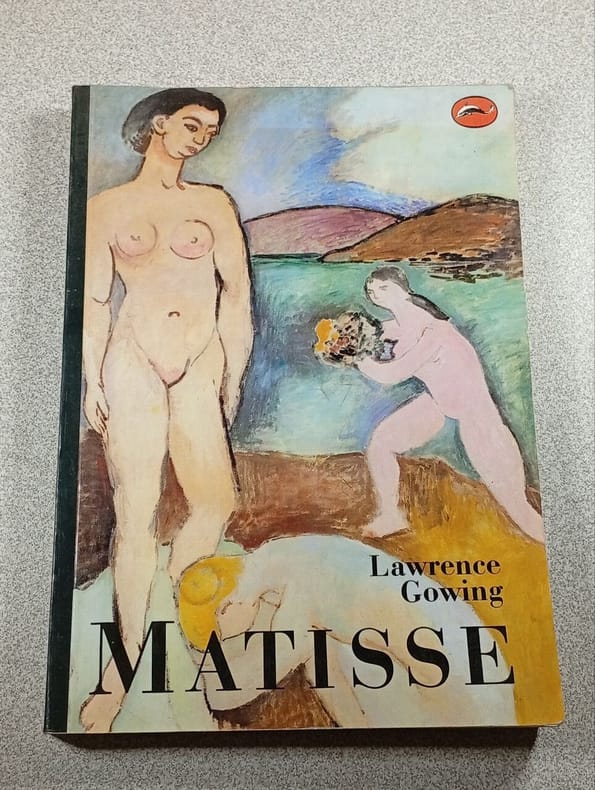
Sans date.
Reference : 500296148
Bon état
Bookseller's contact details
Démons et Merveilles
M. Christophe Ravignot
contact@demons-et-merveilles.com
07 54 32 44 40
Payment mode

Sale conditions
Rapidité d'envoi Tous nos articles sont expédiés le jour même de la confirmation de la commande Soin de l'emballage Un soin particulier est apporté à l'emballage, vos objets voyagent en toute sécurité. A votre écoute Si toutefois un incident devait survenir lors de l'acheminement de votre paquet, n'hésitez pas à nous contacter, nous mettrons tout en oeuvre pour vous satisfaire, en vous proposant un retour, un remboursement ou toute autre soluton à votre convenance. Professionnalisme Les livres que nous vendons sont pour la plupart des livres anciens, nous tâchons d'être le plus objectif possible quant à leur état.
5 book(s) with the same title
Henri Matisse Cut-outs
Taschen 1994 96 pages In-8. 1994. cartonné. 96 pages. Illustrations en noir et en couleurs
Très bon état
Les Modernes et La Tradition. Cézanne Courbet Giacometti Matisse Monet Picasso Pollock Proust
Paris nrf Gallimard (Coll. "L'infini") 1990 276 pages in-8. 1990. broché. 276 pages. In-8 (204x140 mm) 276 pages. Livre broché sous jaquette illustrée. Cézanne Courbet Giacometti Matisse Monet Picasso Pollock Proust. A noter deux petites coupures au dos de la jaquette et un cachet de bibliothèque à la page de titre sinon bon état. Poids : 320 gr
Reference : WWL-462
MATISSE: Dessins dans la Collection. Nice. Musee Matisse.
Paris, Maeght, 1992.IN4 toile editeur, 368 pp. with 185 monochrome illustrations. 4to, cloth.
bon etat Remise de 20% pour toutes commandes supérieures à 200 €
Catalogue de l’exposition au Musée Matisse Nice du 7 mai au 8 septembre 2025.
Reference : 34249
ISBN : 9782382032251
Matisse. Méditerranée(s).
<p><meta charset="utf-8"><span>Cet ouvrage est publié à l’occasion de l’exposition «</span><em><strong>Matisse Méditerranée(s)</strong><span></span></em><span>», présentée au Musée Matisse Nice du 7 mai au 8 septembre 2025.</span></p><p>«<span></span><em>Comme importance c’est la Méditerranée. Moi qui ne la connaissais pas, qui suis un homme du Nord, c’est la Méditerranée qui m’a le plus frappé.</em><span></span>» Henri Matisse</p><p>La Méditerranée a exercé sur Matisse une fascination continue de sa première visite de la Corse en 1898 à sa fréquentation ininterrompue de Nice entre 1917 et 1954, en passant par de nombreux voyages à la découverte de l’Algérie, de l’Espagne, de l’Italie et, bien sûr, du Maroc.<br>De l’aveu même de Matisse, le bassin méditerranéen, baigné d’une lumière qui l’émerveille, est déterminant pour son œuvre, tant dans l’expérimentation d’un nouveau langage que cet environnement lui permet de développer que dans la tradition picturale à laquelle il se rattache ; bien plus encore, dans la médiation qu’il lui offre avec l’Orient et les cultures anciennes.<br>En effet, Matisse, qui cherche à exprimer sa perception personnelle du paysage, entretient un rapport conceptuel avec la mer et avec la Méditerranée en particulier : une mer constituée d’espaces vécus, sensibles, rêvés ou fantasmés. Cette « machine à fabriquer de la civilisation », comme l’appelle Paul Valéry (premier directeur du Centre universitaire méditerranéen créé à Nice en 1933), devient, pour le peintre, le lieu d’intenses recherches chromatiques et plastiques, celui de la découverte de nouveaux motifs. Elle est surtout, au-delà des évidences et des lieux communs, « un très vieux carrefour » dont Matisse a été un témoin et un acteur, où – selon les termes de Fernand Braudel – « tout a conflué […] ».</p> Paris, 2025 InFine 216 p., 202 ill., cartonnage éditeur 23,5 x 27
Neuf

