 Write to the booksellers
Carl Van Doren
Benjamin Franklin
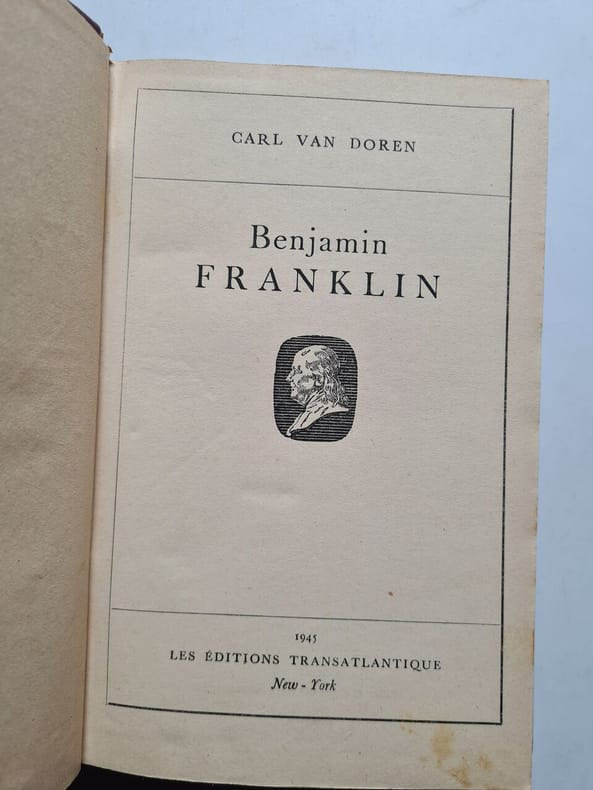
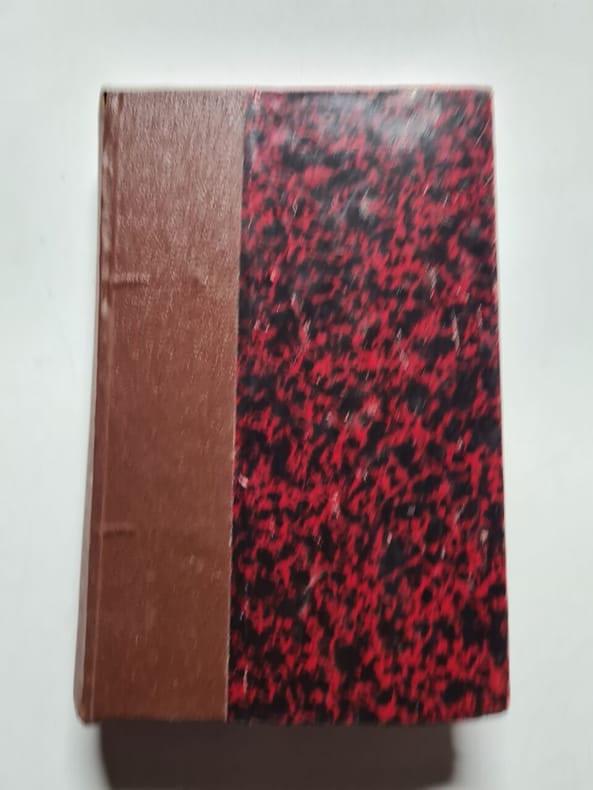
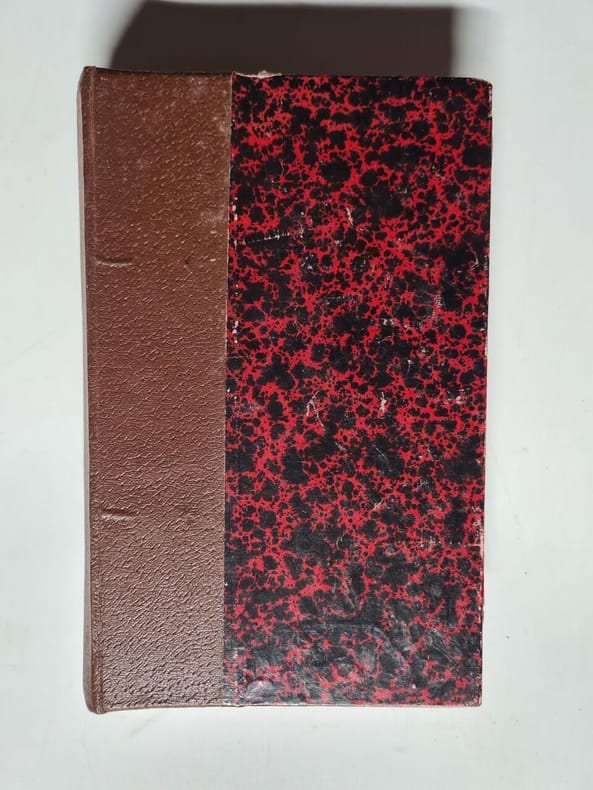
Sans date.
Reference : 500253378
Etat correct
Bookseller's contact details
Démons et Merveilles
M. Christophe Ravignot
contact@demons-et-merveilles.com
07 54 32 44 40
Payment mode

Sale conditions
Rapidité d'envoi Tous nos articles sont expédiés le jour même de la confirmation de la commande Soin de l'emballage Un soin particulier est apporté à l'emballage, vos objets voyagent en toute sécurité. A votre écoute Si toutefois un incident devait survenir lors de l'acheminement de votre paquet, n'hésitez pas à nous contacter, nous mettrons tout en oeuvre pour vous satisfaire, en vous proposant un retour, un remboursement ou toute autre soluton à votre convenance. Professionnalisme Les livres que nous vendons sont pour la plupart des livres anciens, nous tâchons d'être le plus objectif possible quant à leur état.
5 book(s) with the same title
The Americanization of Benjamin Franklin
Penguin Publishing Group 2005 320 pages 14 1x21 5x2cm. 2005. Broché. 320 pages.
Très bon état
A Letter from Mr. Franklin to Mr. Peter Collinson, F.R.S. concerning the Effects of Lightening. Philadelphia, June 20, 1751. Read Nov. 14, 1751. (+) A Letter of Benjamin Franklin, Esq: to Mr. Peter Collinson, F.R.S. concerning an electrical Kite. Phil... - [THE KITE-LETTER - RECORDING THE MOST FAMOUS ELECTRICAL EXPERIMENT]
London, C. Davis, 1753. 4to. Without wrappers. Extracted from ""Philosophical Transactions"", vol. 47. Including title-page of volume. Title-page with repair to inner margin. Pp. 289-91"" pp. 565-70.
First appearance of both papers, one of them being the milestone paper in which Franklin describes his lightning experiment and proves what he had already conjectured, that lightening is an electrical discharge. Both of the present papers were to become part of his famous work ""Experiments and Observations on Electricity.."" assembled by his friend Peter Collinson, to whom the papers were addressed. The famous letter was also published in the ""Gentleman's Magazine"" for 1752.""Franklin was the first American scientist to achieve an international reputation, with his work on electricity... The most dramatic result of Franklin's researches was the proof that lightening is really an electrical phenomenon. Others had made such a suggestion before him - even Newton himself - but it was he who provided the experimental proof. In 1752 he flew a kite in a thunderstorm and attached a key to its string. From this he collected electrical charges in a Leiden jar and showed that atmospheric and frictional or machine-made electricity are the same. He went on to propose the fixing of iron rods at the top of buildings, masts of ships, etc., from which he conducted the electric charges they collected from lightening into the wet subsoil - the invention of the lightening conductor.""His reputation as a scientist was immediately established by the publication of the results of his researches in a series of letters addressed to Peter Collinson, a London merchant and naturalist, in 1751"" and the Experiments and Observations [ which collected all the Collinson letters not just those offered here ] remains the most important scientific book of eighteenth-century America."" (PMM 199).""Later, Franklin devised a second experiment to test the electrification of clouds (the first was the sentry-box experiment), one which has become more popularly known: the lightning kite. Franklin reported his experiments to Collison in a letter of October 1752 (the paper offered), written after Franklin had read ""in the public papers from Europe, of the success of the Philadelphia -Experiment for drawing the electric fire from clouds by means of pointed rods of iron erected on high buildings..."" Actually, Franklin appears to have flown his electrical kite prior to having learned of Dalibard's successful execution of the sentry-box experiment. The KITE LETTER, published in the ""Philosophical Transactions"", referred to the erection of lighetning rods on public buildings in Philadelphia. The lightening experiment caused Franklin's name to become known throughout Europe to the public at large and not merely to men of science. Joseph Priestly, in his ""History...of Electricity"", characterized the experimental discovery that the lightening discharge is an electrical phenomenon as ""THE GREATEST, PERHAPS, SINCE THE TIME OF NEWTON"".....the discoveries made in the summer of 1752 will make it memorable in the history of electricity,"" William Watson wrote in 1753. ""These have opened a new field to philosophers, and have given them room to hope, that what they have learned before in their museums, they may apply, with more propriety than they have hitherto could have done, in illustrating the nature and effects of thunder"" a phenomenon hitherto almost inaccessible to their inquiries.""(DSB V, pp. 134-35).The volume offered contains a series of other notable papers: T. Simpson (mathematics), Thomas Debenham (medicine), James Parsons (Phocae Marinae, the long-necked seal), W. Watson (the sex of flowers), Francis Blake (steem-engine), William Watson (An Account of Mr. Benjamin Franklin's Treatise, lately published, Experiments and Observations on Electricity...""pp. 202-211),Dunthorne (on comets), William Watson (""An Account of the Phaenomena of Electricity in vacuo"", pp. 362-376), J. Smeaton (Air-pump), Richard Brooke (surgery), Abbe Nollet (electricity from the clouds), W. Watson (electrical experiments in England upon Thunder-Clouds), etc. etc.

Correspondance inédite et secrète du docteur B. Franklin, Ministre plénipotentiaire des États-Unis d'Amérique près la Cour de France, depuis l'année 1753 jusqu'en 1790 (...). Publiée pour la première fois, en France, avec des notes, additions, etc.. Suivi de : Correspondance choisie de Benjamin Franklin, traduite de l'anglais. Édition publiée par W. T. Franklin son petit-fils, propriétaire et éditeur de ses oeuvres posthumes
2 ouvrages du même auteur parus à la même date : Paris, Janet Père, 1817, 2 tomes en 2 vol. in 8 de VI-542 pp., 1 portrait de B. Frankin par Jamet en frontispice et un fac-simile d'écriture sur une page dépl.; Paris, Treuttel et Würtz, Londres H. Colburne, 1 vol. in 8 de (4)-480 pp. XXXI-(1)-409 pp.-(1) p. d'errata, 1 portrait de B. Franklin en front., rel. d'ép. uniforme pour les 3 volumes, demi-veau brun, dos lisses ornés de fleurons et double-filets dorés, bon ex.
Intéressante réunion de cette correspondance de Benjamin Franklin, ici en édition originale française pour les 2 ouvrages. Le 1er ouvrage est en 3 parties : 1. Les Mémoires de sa Vie Privée; 2. Les Causes Premières de la Révolution d'Amérique; 3. L'Histoire des Diverses Négociations entre L'Angleterre, la France et les États-Unis. Le 2e ouvrage de correspondance choisie a été publié par le petit-fils de Benjamin Franklin en réaction aux 2 volumes publiés chez Jamet, qu'il désaprouvait.
[Jean-Baptiste Nini] - Margolis, Richard
Reference : 120779
(2015)
ISBN : 9780934352123
Benjamin Franklin in Terra Cotta. Portrait Medallions by Jean-Baptiste Nini at the Chateau of Chaumont
Margolis, Richard: Benjamin Franklin in Terra Cotta. Portrait Medallions by Jean-Baptiste Nini at the Chateau of Chaumont. 2015. 232 page, fully illustrated in colour. Hardback. 34 x 26cms. In the late 1770s Jean-Baptiste Nini created a series of terra cotta portrait medallions at the Chateau de Chaumont. Amongst them were portraits of Benjamin Franklin, who was in France in 1776 on a critical diplomatic mission. This volume describes Nini's earliest plaster medallions and moulds, followed by a detailed catalogue of those in terra cotta, including a few of the frequently encountered aftercasts. All the Franklin portraits are illustrated. Includes an annotated bilbiography.
In the late 1770s Jean-Baptiste Nini created a series of terra cotta portrait medallions at the Chateau de Chaumont. Amongst them were portraits of Benjamin Franklin, who was in France in 1776 on a critical diplomatic mission. This volume describes Nini's earliest plaster medallions and moulds, followed by a detailed catalogue of those in terra cotta, including a few of the frequently encountered aftercasts. All the Franklin portraits are illustrated. Includes an annotated bilbiography. Text in English
EXPÉRIENCES ET OBSERVATIONS SUR L'ÉLECTRICITÉ faites à Philadelphie en Amérique par M. Benjamin Franklin; & communiquées dans plusieurs lettres à M. P. Collinson de la Société royale de Londres. Traduites de l'Anglois
Chez Durand, Paris, 1756.. in 12 (17x10,5). 2 volumes reliures plein veau fauve de l'époque, dos à nerfs ornés, pièces de titre et de tomaison de cuir beige , 245 pages avec 1 planche gravée dépliante, et 349 pages avec 1 planche gravée dépliante, Seconde édition française revue, corrigée et augmentée. Bel exemplaire , dans une reliure parfaite , interieur parfait etat , photos sur demande
Ray vitrine galerie

