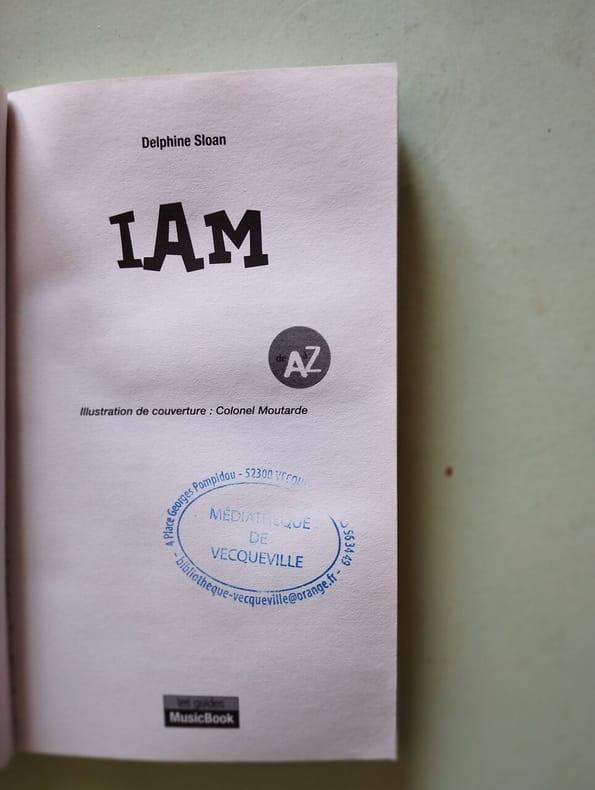
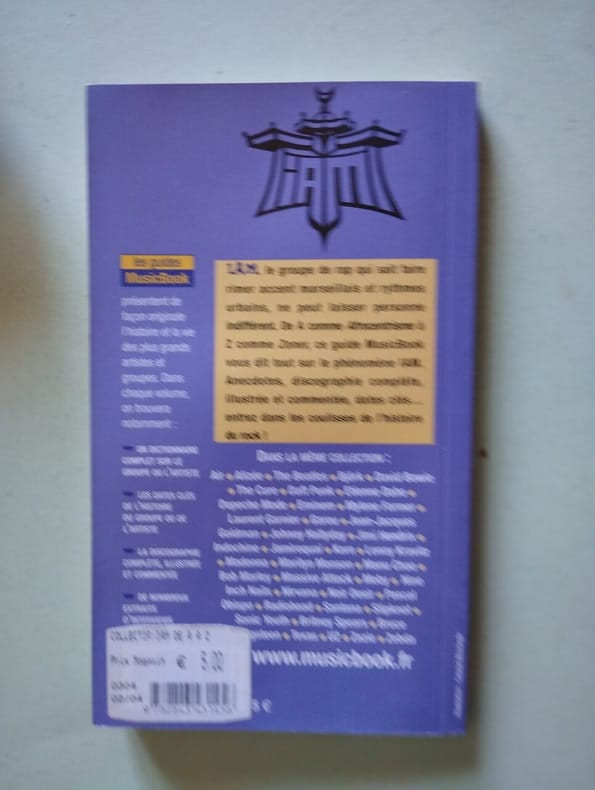
Editions L'Express 2003 1x18x11cm. 2003. mass_market.
Reference : 500249301
ISBN : 9782843431456
Bon état
Démons et Merveilles
M. Christophe Ravignot
contact@demons-et-merveilles.com
07 54 32 44 40
Rapidité d'envoi Tous nos articles sont expédiés le jour même de la confirmation de la commande Soin de l'emballage Un soin particulier est apporté à l'emballage, vos objets voyagent en toute sécurité. A votre écoute Si toutefois un incident devait survenir lors de l'acheminement de votre paquet, n'hésitez pas à nous contacter, nous mettrons tout en oeuvre pour vous satisfaire, en vous proposant un retour, un remboursement ou toute autre soluton à votre convenance. Professionnalisme Les livres que nous vendons sont pour la plupart des livres anciens, nous tâchons d'être le plus objectif possible quant à leur état.
"(CRABBE, PETRUS (PIERRE) & LAURENTIUS SURIUS). - CHURCH COUNCIL.
Reference : 43705
(1567)
Coloniae Agrippinae (Köln), Geruuinum Calenium & Haeredes Iohannis Quientely, 1567. Folio. Bound in a contemp. full calf, raised bands, rebacked preserving most of the old spine, compartments with small vignettes in gold. Gilt lineborders to covers. An oval gilt decoration to middle of both covers. Some scratches. A repair to one corner and a small part of frontcover. Titlepage with large woodcut device. (4),1003 pp. Printed in two columns. Many fine initials in woodcut. Internally fine. This volume comes from the library of the Antoninian munks at the L'Eglise de Saint Antoine in Montferrand "", inscribed on the titlepage ""Ex Libris domus sti (Sancti) Antonij Montisferandi"" Catalogo inscriptus"" and ""e......No.4""
First edition of the fourth volume of Crabbe and Surius's classic work in which are printed ""The Acts of the Councils"".Adams C: 2772. - Short-Title German 1455-1600, Councils, p. 225.
Per Ioannem Heruagium Basilae 1549 P. OVIDII NASONIS poetae Sulmonensis Opera quae vocantur Amatoria, cum doctorum virorum commentarijs partim hucusque etiam alibi editis, partim iam primùm adiectis. His accesserunt Iacobi Micylli annotationes longe doctissimae. [...] Eiusdem Iacobi Micylli locorum aliquot ex Ouidiana Metamorphosi Retractatio. Cum locuplete rerum & verborum in hisce omnibus memorabilium indice.- Relié à la suite:P. OVIDII NASONIS metamorphosens libri quindecim cum commentariis raphaelis regis. Adiectis etiam Annotationibus Iacobi Micylli nunc primum in lucem editis, cum locupletifsimo praeterae in haec omnia indice. Basilae, Per Ioannem Heruagium, 1543.2 ouvrages reliés en 1 volume in-folio ( 365 X 230 mm ) de ( 16 )- 528-( 32 ) pages et ( 28 )-355-( 2 ) pages, pleine basane fauve racinée, dos à nerfs orné de fleurons et palettes dorés, pièce de titre de maroquin bronze ( Reliure du début du XIXe siècle ). Belle marque d'imprimeur au verso du dernier feuillet, bel exemplaire.
Leiden (Lugduni Batavorum), Ex officina Ioannis Maire, 1643.
8vo. 390,(1 corrigenda),(1 blank) p. Vellum. 8vo. 16.5 cm. (Ref: Breugelmans 1643:10; Graesse 6,249; Berghman 704; Rahir 1920; Ebert 20118; Brunet 6, no. 10665; cf. Willems 558) (Details: 5 thongs laced through the joints. Woodcut printer's mark of Maire on the title, depicting a farmer who stamps a shovel into the ground; above his head the motto 'fac et spera'. Page 1-280: Funus Linguae Hellenisticae, page 281-390: Ossilegium Hellenisticae) (Condition: Vellum age-toned. One gathering foxed) (Note: The French scholar Claude de Saumaise, latinized Claudius Salmasius, 1588-1653, was a prolific author, and he distinguished himself in his editions as a textual critic and erudite commentator. He was easy to get along with, but haughty and murderous on paper. In 1623 he was appointed as the successor of Scaliger at the University of Leiden, a city he was going to hate. This Funus linguae Hellenisticae of 1643 is a stage in the ongoing quarrel between the Leyden professors Daniel Heinsius, once the favourite of Scaliger, and Salmasius. When Heinsius published his Sacrae Exercitationes ad Novum Testamentum in 1639 Salmasius saw an opportunity to take 'revenge on the man he viewed as the leader of the coterie opposing him at Leiden'. (P.R. Sellin, 'Daniel Heinsius and Stuart England', Leiden/Oxford 1968, p. 43) In the preface of his De Modo Usurarum of 1639 he ridiculed Heinsius' description of the koinê as 'lingua Hellenistica'. A flurry of polemics followed. In this quarrel the printer Maire sided with Salmasius in his attempts to destroy Heinsius' integrity. (Sellin p. 47) With his De lingua Hellenistica et origine ac dialectis graecae linguae of 1643 Salmasius mounted a full-scale assault on Heinsius position on the koinê, followed in the same year by a still fiercer attack, De Hellenistica commentarius, controversiam de linguae hellenistica decidens and this anonymously published attack on his colleague, the Funus Linguae Hellenisticae. In it Salmasius contended that the language of the Greek Scriptures was not a separate dialect, but the ordinary Greek of his time. (Sandys, A History of Classical Scholarhip, N.Y., 1964, volume 2, 284/86) Concerning the De Hellenistica commentarius, which was published by Elzevier, and the Funus Linguae Latinae, both written by Salmasius, we quote part of an excellent note of Willems, p. 138, no. 558: 'On appelait Hellénistes les Juifs dispersés parmi les Grecs, surtout ceux qui habitaient Alexandrie et parlaient habituellement le grec. Partant de là, certains savants, à l'exemple de Daniel Heinsius, dans son Aristarchus sacer s'étaient crus autorisés désigner sous le nom d'hellénistique le langage, mêlé d'expressions et de tours de phrases hébraïques, qui était usité parmi ces mêmes Juifs, et dans lequel sont écrits la version des Septante et le Nouveau Testament. Saumaise, qui trouvait l'expression impropre, composa ce gros volume (De Hellenistica commentarius) contre ceux qu'il appelle les Hellénisticaires, et notamment contre Daniel Heinsius, quoique celui-ci ne soit pas nominativement désigné. Il n'en resta pas là; car dès la même année il donna encore le Funus linguae hellenisticae, suivi de l'Ossilegium hellenisticae, Lugd. Bat., J. Maire, 1643. L'auteur a beau jeu pour démontrer que le terme d'hellénistique est inconnu à toute l'antiquité, que cette langue ne constitue pas à proprement parler un dialecte spécial, qu'il n'y a en grec que quatre dialectes, ou cinq si l'on y comprend la langue commune , &c. A cet égard son livre est plein de vues nouvelles et ingénieuses, dont les grammairiens ont fait leur profit. Mais le fait que les livres saints sont écrits en un idiome dont les mots sont grecs et la phrase hébraïque, n'en subsiste pas moins, et Saumaise en convient. (...) Quoi qu'il en soit, le mot qui échauffait si fort la bile de Saumaise a fait fortune, car les récents linguistes Matthiae, Kühner &c n'ont pas fait difficulté de l'admettre') (Provenance: On the front pastedown in pencil: 'J. v. Dijck') (Collation: A-2A8, 2B4 (leaf 2B4 verso blank)) (Photographs on request)
N.pl. (Geneva), (Jacob Stoer for Gaspard de Hus), 1574.
8vo. (IV),663,(1 blank) p. Vellum. 18 cm (Ref: GLN-2523; USTC 450676; cf. Smitskamp's 'The Scaliger collection' no. 146; Brunet 5,179; Graesse 6/289; Ebert 20452) (Details: Back with 4 raised bands. Woodcut printer's mark on the title, depicting two men who are planting and watering young trees; above them, in a cloud, the divine Tetragrammaton, a 4-letter Hebrew word, the name of the biblical God of Israel, Yahweh. Printed in italics. Volume 1 only, containing the poetry of Julius Caesar Scaliger: 'Apiculae, p. 1; Nemesis, p. 59; Teretismata, ubi Satyrae, p. 76; Nova Epigrammata, p. 113; Farrago, p. 150; Thaumantia, p. 224; Arae Fracastoreae, p. 256; Nymphae indigenae, p. 272; Adamantij Catulli tumulus, p. 391; Heroes, p. 307; Archilochus, p. 329; Hipponax, p. 385; Sidera, p. 458; Lacrymae, p. 526; Aenigmata, p. 546; Urbes, p. 582; Logogriphi, p. 614; Manes Catulliani, p. 634. Lacking the second volume with poetry of his son Josephus Justus Scaliger) (Condition: Vellum soiled and age-toned. Owner's inscription on the front flyleaf. Old stamp on the title, depicting the Holy Cross, on which rests the Crown of thornes; the monogram C.S. is written across its standard. A name erased on the title. Paper yellowing. On page 578 has been erased with black ink a 6 lines poem called 'Fratres monachi, iterum', 3 elegiac couplets directed against monks, who are compared to pigs. Volume 1 only, containing the poetry of Julius Caesar Scaliger only, and lacking the second volume with poetry of his son Josephus Justus Scaliger) (Note: The greatest contribution of the classical scholar of Italian origin Julius Caesar Scaliger (Giulio Bordone della Scala), 1484-1558, to the history of classical scholarship is his brilliant son Josephus Justus Scaliger. In 1524 Julius Caesar Scaliger moved to France where he became physician to bishop Antonio della Rovere of Agen, and where his son Joseph Justus was born in 1540, the same year in which his 'De causis linguae latinae libri tredecim' was published. This book is among his most important philological works. Scaliger published collections of his Neo-Latin poetry in 1533 and 1546. He considered the mastery of Latin composition not as a pastime, but as the scholar's most valuable skill. In 1574 his son Josephus Justus produced a new edition of his father's collected poetry during his stay at Geneva, where he took refuge because of the French wars of religion and St. Bartholomew's Day Massacre (1572). Here he delivered public lectures and tutored students, and met fellow humanists, Beza, Henricus Stephanus et alii, all interested in or writing Neo-Latin poetry.) (Provenance: On the front flyleaf: 'Ad usum D. Romanus Merighij Camald.sis'. This is Don Romanus Merighius (Romano Merighi), born near Imola in 1658, head (procurator generalis) of the Camaldolese Order, the 'Ordo Camaldulensium', a monastic community that traces its lineage to a monastic movement begun by Saint Romuald. Their name is derived from the Holy Hermitage, Sacro Eremo, Camaldoli, near Arezzo. Because of the colour of their habit they are called 'White Benedictines'. Romanus was a theologian, but he also earned fame as a prominent vernacular poet. He is known for the Idyll in Toscan 'Nesso e Logilde'. He died in 1737. His portrait can be found via Google, search for "Porträtsammlung" and "ÖNB", then Schnellsuche: "Merighi". A useful article on Merighi in 'Centifolium Camaldulense, Sive Notatia Scriptorum Camaldulensium', by M. Ziegelbaur, Venice 1750, p. 69/71) (Collation: *4, a-z8, A-S8, T4 (leaf T4 verso blank)
N.pl. (Geneva), Apud Petrum Santandreanum (Pierre de Saint-André), 1591.
8vo. 3 parts in 1: (VIII),663,(1 blank); 336; 70,(1 errata),(1 blank) p. Calf, end 19th century. 17 cm (Ref: GLN-2264; USTC no. 450529; Smitskamp's 'The Scaliger collection' no. 147; cf. Brunet 5,179; cf. Graesse 6/289 & & 6,444; cf. Hoffmann 3,425; Ebert 20452) (Details: Printed in italics. Some signs of censorship in the text. Nice binding. Gilt panelled back with 5 raised bands. Boards with triple fillet gilt borders and an oval gilt ornament. Edges of the boards and the turn-ins gilt. All edges gilt. Marbled endpapers. 'Veritas' woodcut printer's device on the title, depicting a woman, the naked truth, seated on a cubus, holding a radiant sun in her right hand. In her left hand she holds an opened book and a palm leaf. Her feet rest on the globe; the garland of fruit which surrounds her shows a motto in Greek: 'Alêtheia Pandamatôr', i.e. 'Allmighty Truth'. 2 red/yellow/blue book ribbons. Each of the 3 parts has a title-page of its own. Part 1 contains: Apiculae, p. 1; Nemesis, p. 59; Teretismata, Satyra, p. 76; Nova Epigrammata, p. 113; Farrago, p. 150; Thaumantia, p. 224; Arae Fracastoreae, p. 256; Nymphae indigenae, p. 272; Adamantij Catulli tumulus, p. 391; Heroes, p. 307; Archilochus, p. 339; Hipponax, p. 385; Sidera, p. 458; Lacrymae, p. 526; Aenigmata, p. 546; Urbes, p. 582; Logogriphi, p. 614; Manes Catulliani, p. 634. Part 2 contains: Ata, p. 3; Hymni, p. 79; Epidorpidum libri octo, p. 98; De Regnorum eversionibus, p. 324; Part 3 contains a Latin translation of the Ajax of Sophocles by the son of Julius Caesar, Josephus Justus Scaliger, and concludes with 20 pages epigrammata composed by junior) (Condition: Some slight wear to the binding. Oval stamp cut out of the first 2 title-pages, but skillfully repaired. In old ink 'Expurgata' written on the title page. Paper yellowing, sometimes browning. Occasionally a word, or a line, or sometimes a complete poem has been made illegible with ink stripes by a censuring cleric. Scaliger's Poemata figured in the Catholic 'Index librorum prohibitorum'. This 'Index' of forbidden books contained publications that were banned by the Catholic Church, because they were deemed heretical, anti-clerical or immoral. The censoring sometimes came down to the erasing or cutting out of names, or passages, or the removal of leaves, even complete chapters by catholic librarians. Such a librarian must have written, after having completed the job, at the foot of the title-page, 'Expurgata') (Note: The classical scholar Julius Caesar Scaliger (Giulio Bordone della Scala), 1484-1558, was of Italian origin. In 1524 he moved to France where he became physician to bishop Antonio della Rovere of Agen, and where his brilliant son Joseph Juste was born in 1540, the same year in which his 'De causis linguae latinae libri tredecim' was published. This book is among his most important philological works. Another work of fundamental importance is his 'Poetices libri septem' (1561), a manual for the apprentice poet, that became Europe's standard in matters of Neo-Latin poetry for two centuries. Scaliger published collections of his Neo-Latin poetry in 1533 and 1546. He considered the mastery of Latin composition not as a pastime, but as the scholar's most valuable skill. In 1574 his son Joseph Juste (Josephus Justus) produced a new edition of his father's collected poems during his stay at Geneva, where he took refuge because of the French wars of religion and St. Bartholomew's Day Massacre. Here Scaliger jr. delivered public lectures and tutored students, and met fellow humanists, Beza, Henricus Stephanus et alii, all interested in or writing Neo-Latin poetry. This edition of 1591 is a line by line reissue of the edition of 1574. To the edition of his father's poetry the son added a work of himself, the translation of Sophocles' Ajax. This translation was first published in 1573 in Paris with a Greek text and the translation on the facing page. The appropriate medium for the translation of the Ajax was in Scaliger's eyes archaic Latin. 'He used as many arcane or distinctively pre-classical words as possible (...). He dressed ordinary words in primitive spellings (...). And, like the archaic poets, he freely coined new compound words'. (Grafton,A., Joseph Scaliger, a study in the history of scholarship', volume 1, Oxford 1983, p. 114/115) After the Ajax Scaliger jr. added 20 pages with epigrammata, Greek and Latin, also of his own) (Provenance: Before the title have been bound 2 leaves, the first from 1890, the 2nd much older, after 1633. The text of the first manuscript leaf: 'Ce volume, que j'ai acheté aux libraires Mayer et Muller, de Berlin, était alors relié avec un exemplaire du Poemata de J. César Scaliger, de l'édition rarisssime de 1546. L'un et l'autre, ainsi réunis avaient appartenu à une Bibliothèque de Vérone (on le voit à la maculature laissée par le timbre, en tête de la 2e partie). L'un et l'autre portait les suppressions imposées par l'Index. - Voir, à ce sujet, la note italienne écrite ci après, probablement par un religieux du couvent dont la Bibliothèque possédait ces volumes. Dans l'éd. de 1546, beaucoup des pièces biffées ici n'avaient pas été supprimées. R. Dezeimeris, 1890.' The French historian and politician Reinold Dezeimeris, was 'Conservateur' of the 'Bibliothèque municipale' of Bordeaux, and a passionate bibliophile, but most of all he is remembered for his scholarly activities. He devoted many studies to Renaissance authors from his dear city. He participated in an important edition of the 'Essais' of Montaigne, Bordeaux 1870-1873. This title on offer of father and son Scaliger will have caught his attention, because of their connection with Bordeaux. On the authority of Dezeimeris, who must have had sharp eyes, we assume that the removed stamp from the first 2 title-pages belonged to a library at Verona. In the leaf immediately after the second title the dent of the stamp that was cut out of the title is indeed still visible, though hardly legible. (See for much more on Dezeimeris: rfhl.org/pages/historique/bibliophiles-bordelais/reinhold-dezeimeris-1835-1913.html and especially a biography at: saint-blaise-cadillac.eklablog.com/reinhold-dezeimeris-a46642037. Scaliger pretended to be a descendant of the house of La Scala, for hundred and fifty years lords of Verona. Dezeiremis apparantly split up the binding with works of Scaliger that he bought from the famous price-cutting Berlin 'Antiquariat Mayer & Müller'. This fine binding with Scaliger's Poemata of 1591 was probably commissioned by him. The librarian who wrote 'Expurgata' on the title, probably also wrote the text on the leaf bound before the first flyleaf. It is in Italian, and refers to the decree of the Church for the prohibition of Scaliger's works, dated March 19, 1633) (Collation: *4, a-z8, A-S8, T4 (leaf T4 verso blank); Aa-Xx8; AA-DD8, EE4 (leaf EE4 verso blank))