 Write to the booksellers
Ian McEwan
Solar
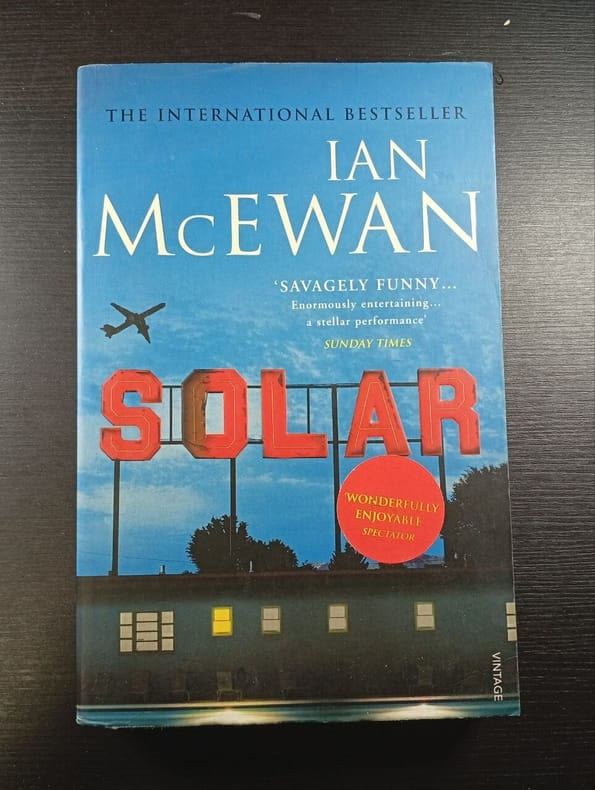
Sans date.
Reference : 500234024
Bon état
Bookseller's contact details
Démons et Merveilles
M. Christophe Ravignot
contact@demons-et-merveilles.com
07 54 32 44 40
Payment mode

Sale conditions
Rapidité d'envoi Tous nos articles sont expédiés le jour même de la confirmation de la commande Soin de l'emballage Un soin particulier est apporté à l'emballage, vos objets voyagent en toute sécurité. A votre écoute Si toutefois un incident devait survenir lors de l'acheminement de votre paquet, n'hésitez pas à nous contacter, nous mettrons tout en oeuvre pour vous satisfaire, en vous proposant un retour, un remboursement ou toute autre soluton à votre convenance. Professionnalisme Les livres que nous vendons sont pour la plupart des livres anciens, nous tâchons d'être le plus objectif possible quant à leur état.
5 book(s) with the same title
( Sherlock Holmes - Pastiches - Littérature en Anglais adaptée au Cinéma ) - August Derleth - Basil Copper - Frank Utpatel - Robert Bloch.
Reference : 31018
(2011)
The Solar Pons Omnibus. ( Tirage unique à 3 031 exemplaires ).
Arkham House Publishers, Inc. 1982. Deux forts volumes, plein bradel paper noir, en pagination continu, pour un total de 1308 pages. Format 21 x 10 cm. Livres glissés sous un coffret bordeaux. Plats et intérieur frais. Dos carrés avec titre argenté. The Solar Pons Omnibus est un recueil de romans policiers de l’auteur August Derleth. Il rassemble l’ensemble des 71 histoires de Solar Pons de Derleth, qui sont des pastiches des contes de Sherlock Holmes d’Arthur Conan Doyle. Les livres ont été édités par Basil Copper, avec une préface de Robert Bloch et des illustrations en noir, hors texte, de Frank Utpatel. Les histoires sont classées selon leur chronologie interne, plutôt que selon la date de leur sortie. Certains fans ayant trouvé ces modifications répréhensibles, un nouveau tirage sera publié en 2000, revenant aux versions précédentes, écartant l’arrangement chronologique en faveur de l’ordre dans lequel les histoires avaient paru dans les volumes originaux de August Derleth. Rare édition originale, notée " first édition ", épuisée, en état superbe, proche du neuf, dont il ne fut tiré que 3 031 exemplaires.D'après le spécialiste de Sherlock Holmes, David Marcum, les 3 films : La Voix de la Terreur, L’Arme Secrète et Sherlock Holmes à Washington, réalisés par John Rawlins et Roy William Neill avec dans les rôles de Sherlock Holmes et du Dr Watson, Basil Rathbone et Nigel Bruce, sortis respectivement en 1942 et 1943 et dans lesquels Holmes et Watson combattent des nazis, seraient en fait, les seuls films jamais réalisés d'après des enquêtes de Solar Pons, mais sous le nom de Holmes.
Vente exclusivement par correspondance. Le libraire ne reçoit, exceptionnellement que sur rendez-vous. Il est préférable de téléphoner avant tout déplacement.Forfait de port pour un livre 10 € sauf si épaisseur supérieure à 3 cm ou valeur supérieure ou égale à 100 €, dans ce cas expédition obligatoire au tarif Colissimo en vigueur. A partir de 2 livres envoi en colissimo obligatoire. Port à la charge de l'acheteur pour le reste du monde.Les Chèques ne sont plus acceptés.Pour destinations extra-planétaire s'adresser à la NASA.Membre du Syndicat Lusitanien Amateurs Morues
La Chaleur solaire et ses applications industrielles. 35 Gravures intercalées dans le texte. - [FOUNDING THE SCIENCE OF SOLAR ENERGY]
Paris, 1869. 8vo. Uncut in the original printed wrappers. Wrappers frayed at edges, a bit soiled, and with some stains. A bit of brownspotting. Last leaves with a, mostly marginal, damp stain. First few leaves a bit frayed at edges. VII, (1), 238 pp. Illustrated.
Scarce first edition of the first book explicitly devoted to solar energy, ""Solar Energy and its Industrial Applications"", which coincided with the unveiling of Mouchot's largest solar steam engine, the so-called ""Sun Engine"", in 1869, which caused a revolution in the development of solar thermal power. His 1869 work constitutes a milestone of what we now call ""green energy"", as it laid the foundation for our understanding of the conversion of solar radiation into mechanical power driven by steam.Auguste Mouchot was a French mathematics teacher, who in the 1860'ies became famous as the designer (and patent-taker) of the first machine that generated electricity with solar thermal energy electricity by the exposure of the sun. Mouchot began his work with solar energy in 1860 after expressing grave concerns about his country's dependence on coal. His work on solar energy and on the development of his sun machine forms the basis for the later developments on solar energy. ""The work of Adams, Ericsson, and Shuman had been directly influenced by the solar conceptions of Augustin Mouchot, a man who arrived on the scene in nineteenth century France at precisely that moment when his ideas were likely to attract the most attention. It was a time when French industrial might was at a peak and her leaders open to new ideas, none more so than her emperor. In 1867, to commemorate the explosion of technology that had accompanied the industrial and artistic carnival over which he had presided for 15 years, France's Napoleon III decided to invite the whole world to an international exposition that he would host in Paris."" (Kryza, The Power of Light, p. 147). ""His initial experiments involved a glass-enclosed, water-filled iron cauldron, in which sunlight passed through a glass cover, heating the water. This simple arrangement boiled water, but it also produced small quantities of steam. Mouchot added a reflector to concentrate additional radiation onto the cauldron, thus increasing the steam output. He succeeded in using his apparatus to operate a small, conventional steam engine. Impressed by Mouchot's device, Emperor Napoleon III offered financial assistance, which Mouchot used to produce refinements to the energy system. Mouchot's work help lay the foundation for our current understanding of the conversion of solar radiation into mechanical power driven by steam.The publication of his book on solar energy, ""La Chaleur solaire et ses Applications industrielles"" (1869), coincided with the unveiling of the largest solar steam engine he had yet built. This engine was displayed in Paris until the city fell under siege during the Franco-Prussian War in 1871, and was not found after the siege ended."" (The Energy Library).

Résultats obtenus dans les essais d'applications industrielles de la chaleaur solaire. [In: ""Comptes Rendus Hebdomadaires des Séances de L'Academie des Sciences"", Tome LXXXI (No.14)]. - [THE SOLAR GENERATOR]
(Paris, Gauthier-Villars), 1875. 4to. The entire issue (vol. 81, nr. 14) of Comptes Rendus present. Unbound, and without wrappers. Very light brownspotting. Pp. 571-574. [Entire issue: pp. (545)- 604].
First printing of the paper in which Mouchot presents his seminal solar generator. Auguste Mouchot was a French mathematics teacher, who in the 1860'ies became famous as the designer (and patent-taker) of the first machine that generated electricity with solar thermal energy electricity by the exposure of the sun. Mouchot began his work with solar energy in 1860 after expressing grave concerns about his country's dependence on coal. His work on solar energy and on the development of his sun machine forms the basis for the later developments on solar energy. ""The work of Adams, Ericsson, and Shuman had been directly influenced by the solar conceptions of Augustin Mouchot, a man who arrived on the scene in nineteenth century France at precisely that moment when his ideas were likely to attract the most attention. It was a time when French industrial might was at a peak and her leaders open to new ideas, none more so than her emperor. In 1867, to commemorate the explosion of technology that had accompanied the industrial and artistic carnival over which he had presided for 15 years, France's Napoleon III decided to invite the whole world to an international exposition that he would host in Paris."" (Kryza, The Power of Light, p. 147). ""His initial experiments involved a glass-enclosed, water-filled iron cauldron, in which sunlight passed through a glass cover, heating the water. This simple arrangement boiled water, but it also produced small quantities of steam. Mouchot added a reflector to concentrate additional radiation onto the cauldron, thus increasing the steam output. He succeeded in using his apparatus to operate a small, conventional steam engine. Impressed by Mouchot's device, Emperor Napoleon III offered financial assistance, which Mouchot used to produce refinements to the energy system. Mouchot's work help lay the foundation for our current understanding of the conversion of solar radiation into mechanical power driven by steam.The publication of his book on solar energy, ""La Chaleur solaire et ses Applications industrielles"" (1869), coincided with the unveiling of the largest solar steam engine he had yet built. This engine was displayed in Paris until the city fell under siege during the Franco-Prussian War in 1871, and was not found after the siege ended.In September 1872, Mouchout received financial assistance from the General Council of Indre-et-Loire to install an experimental solar generator at the Tours library. He presented a paper on the generator to the Academy of Sciences on 4 October 1875, and in December of the same year he presented to the Academy a device he claimed would, in optimal sunshine, provide a steam flow of 140 liters per minute. (The Energy Library).Mouchot is the first author to write explicitly about solar energy and how to convert solar radiation into usable energy, thus laying the foundation for what we now call ""green energy"".
Résultats obtenus dans les essais d'applications industrielles de la chaleaur solaire. [In: ""Comptes Rendus Hebdomadaires des Séances de L'Academie des Sciences"", Tome LXXXI (No.14)]. - [THE SOLAR GENERATOR]
(Paris, Gauthier-Villars), 1875. 4to. No wrappers. In: ""Comptes Rendus Hebdomadaires des Séances de L'Academie des Sciences"", Tome 81, No 14. [Mouchot's paper:] Pp. 571-574. (Entire issue offered). (1), 546-604 pp. Clean and fine.
First printing of the paper in which Mouchot presents his seminal solar generator. Auguste Mouchot was a French mathematics teacher, who in the 1860'ies became famous as the designer (and patent-taker) of the first machine that generated electricity with solar thermal energy electricity by the exposure of the sun. Mouchot began his work with solar energy in 1860 after expressing grave concerns about his country's dependence on coal. His work on solar energy and on the development of his sun machine forms the basis for the later developments on solar energy. ""The work of Adams, Ericsson, and Shuman had been directly influenced by the solar conceptions of Augustin Mouchot, a man who arrived on the scene in nineteenth century France at precisely that moment when his ideas were likely to attract the most attention. It was a time when French industrial might was at a peak and her leaders open to new ideas, none more so than her emperor. In 1867, to commemorate the explosion of technology that had accompanied the industrial and artistic carnival over which he had presided for 15 years, France's Napoleon III decided to invite the whole world to an international exposition that he would host in Paris."" (Kryza, The Power of Light, p. 147). ""His initial experiments involved a glass-enclosed, water-filled iron cauldron, in which sunlight passed through a glass cover, heating the water. This simple arrangement boiled water, but it also produced small quantities of steam. Mouchot added a reflector to concentrate additional radiation onto the cauldron, thus increasing the steam output. He succeeded in using his apparatus to operate a small, conventional steam engine. Impressed by Mouchot's device, Emperor Napoleon III offered financial assistance, which Mouchot used to produce refinements to the energy system. Mouchot's work help lay the foundation for our current understanding of the conversion of solar radiation into mechanical power driven by steam.The publication of his book on solar energy, ""La Chaleur solaire et ses Applications industrielles"" (1869), coincided with the unveiling of the largest solar steam engine he had yet built. This engine was displayed in Paris until the city fell under siege during the Franco-Prussian War in 1871, and was not found after the siege ended.In September 1872, Mouchout received financial assistance from the General Council of Indre-et-Loire to install an experimental solar generator at the Tours library. He presented a paper on the generator to the Academy of Sciences on 4 October 1875, and in December of the same year he presented to the Academy a device he claimed would, in optimal sunshine, provide a steam flow of 140 liters per minute. (The Energy Library).Mouchot is the first author to write explicitly about solar energy and how to convert solar radiation into usable energy, thus laying the foundation for what we now call ""green energy"".
Guide Solar du rugby
1972, Solar, in-8 broché de 446 pages | Etat : état moyen, couverture défraîchie, coins et coiffes usés, le bas de l'ouvrage a pris l'humidité (Ref.: ref82455)
Solar

