 Write to the booksellers
Cendrars
L'or
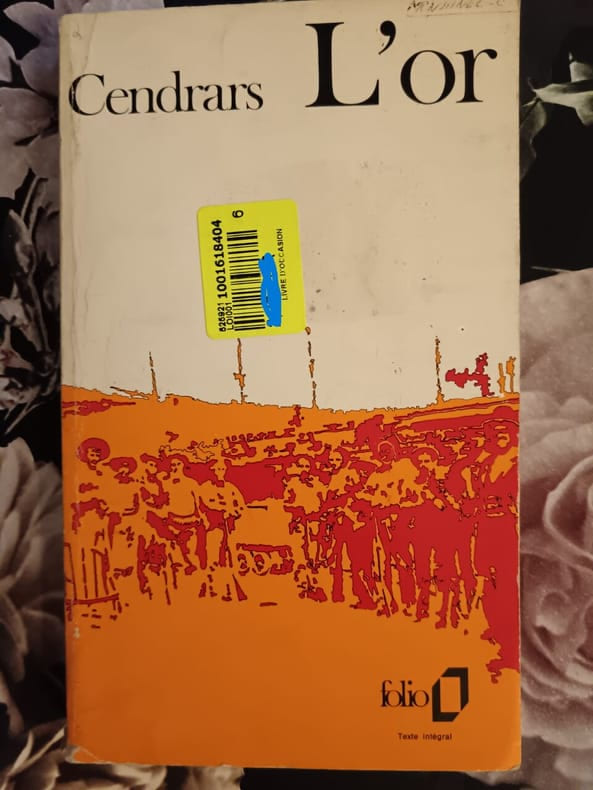
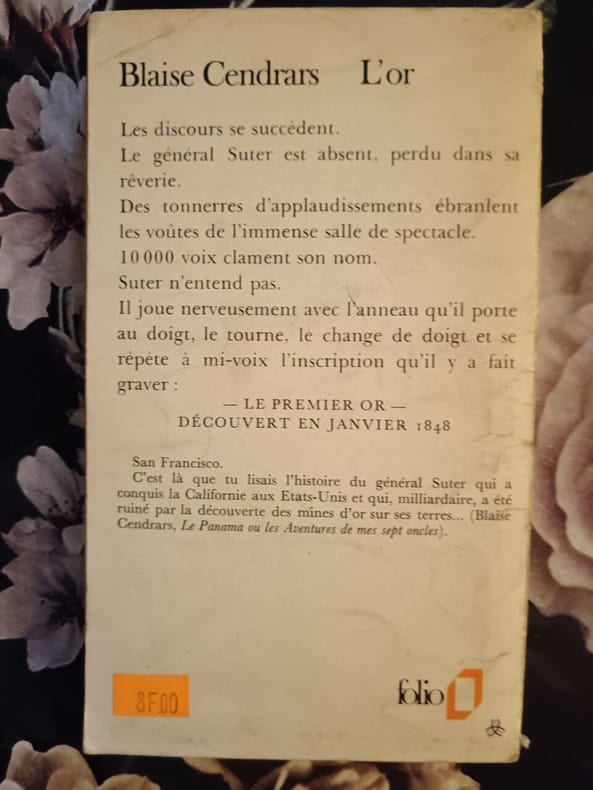
Folio 1960 1960.
Reference : 500140646
Etat correct
Bookseller's contact details
Démons et Merveilles
M. Christophe Ravignot
contact@demons-et-merveilles.com
07 54 32 44 40
Payment mode

Sale conditions
Rapidité d'envoi Tous nos articles sont expédiés le jour même de la confirmation de la commande Soin de l'emballage Un soin particulier est apporté à l'emballage, vos objets voyagent en toute sécurité. A votre écoute Si toutefois un incident devait survenir lors de l'acheminement de votre paquet, n'hésitez pas à nous contacter, nous mettrons tout en oeuvre pour vous satisfaire, en vous proposant un retour, un remboursement ou toute autre soluton à votre convenance. Professionnalisme Les livres que nous vendons sont pour la plupart des livres anciens, nous tâchons d'être le plus objectif possible quant à leur état.
5 book(s) with the same title
Die Eroberung des Nordpols. - Erster Teil: Der Traum des Piloten. Roman. Vorwort von Peter Freuchen. - Zweiter Teil: Die Verwirklichung des Traums.
London, Malik Verlag 1938. Gross-8°. 432 S. mit 22 Photographien und einer Karte auf Tafeln. Originalleinwand.
Hermann 446. - Die letzte Publikation des Malikverlages die in der Tschechoslowakei hergestellt wurde. Im Programm des Verlages irgendwie fremd. - Schnitt angestaubt.

Zwischen neun und neun. Roman.
4. bis 6. Auflage. München, Albert Langen 1918. 8°. 242 S., 1 S. Anzeigen. Originalpappband mit einer Deckelzeichnung von Th.Th. Heine.
Wilpert-G. 3. - Eine der schönsten Einbandillustrationen von Th.Th. HeineDer dritte Roman, geschrieben 1917 während der langen Heilung des 1915 erlittenen Lungendurchschusses an der Front. Perutz wurde zum Leutnant befördert und arbeitete zusammen mit Egon Erwin Kisch im Kriegspressequartier. - Deckel leicht beschabt. Papier zeitbedingt gebräunt. Rücken und Fusssteg im Falz mit Wasserrand.
Künstlerische Erziehung aus eigengesezlicher Kraft.
Gotha, Friedrich Andreas Perthes. 1924. Klein-4°. 8 n.n.S., 72 S. mit 9 farbigen und 29 schwarzen Abbildungen auf Tafeln. Originalhalbleinwandband mit Konstruktivistischer Einbandgestaltung von Moholy-Nagy vom Bauhaus Weimar.
Originalausgabe. Natter (1880 - 1941) war Maler und Illustrator, Lehrer an der Volkshochschule in Jena und Leiter des Kunstvereins. - Einbandkanten mässig beschabt. Schwach stockfleckig. Mit handschriftlichem Besitzvermerk auf den Vorsätzen. Die 2. Auflage von 1931 hatte eine abweichenden Deckelillustration.
Blumen.
Berlin, Oesterheld, 1928. 8°. 224 S., 3 n.n.S.Anzeigen. Originalleinwand mit einer Deckelillustration.
Erste Ausgabe. Lessings philosophisch-poetische Naturbetrachtung, in der die Erscheinungsformen der Blumen zu Gleichnissen für Leben, Seele, Kultur und menschliche Existenz werden. Zusammen mit "Meine Tiere" das 1926 erschien ein früher ökologisch-philosophischer Text. - Einband leicht angestaubt. Fliegender Vorsatz mit privater Widmung.
Jugend auf der Landstrasse Berlin.
1. bis 5. Tausend. Berlin, Bruno Cassirer 1932. 230 S., 1 n.n.S.Anzeige. Roter Originalleinwandband mit gedrucktem Rückenschild.
Erste Ausgabe. Wurde 1933 von den Nationalsozialisten verboten und wurde erst mit der Neuausgabe 2013 unter dem Titel Blutsbrüder zum Kultbuch. Über den Autor ist wenig bekannt, ausser das er als Sozialarbeiter tätig war. Geboren um 1900 finden sich bis heute keine biographischen Hinweise nach 1938. Im Anhang wirbt der Verlag für den gleichzeitig erschienen Bericht aus dem Erwerbslosenheim "Betrogene Jugend" von Albert Lamm. - Buchblock leicht schief gelesen. Fleckenloses, sauberes Exemplar. So schön selten.

