 Write to the booksellers
Remy Pierre-Jean
Don Juan
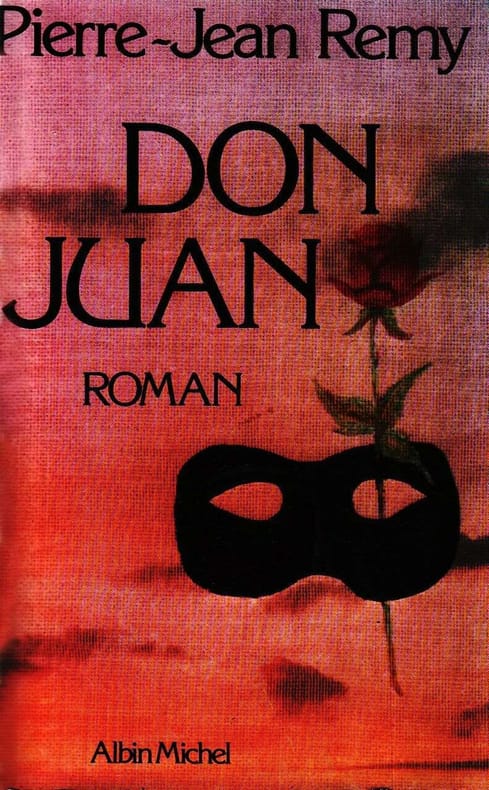
Albin michel 1982 419 pages in8. 1982. broché. 419 pages.
Reference : 500088227
ISBN : 9782226015297
Très bon état - légères marques de lecture et/ou de stockage mais du reste en très bon état- expédié soigneusement depuis la France
Bookseller's contact details
Démons et Merveilles
M. Christophe Ravignot
contact@demons-et-merveilles.com
07 54 32 44 40
Payment mode

Sale conditions
Rapidité d'envoi Tous nos articles sont expédiés le jour même de la confirmation de la commande Soin de l'emballage Un soin particulier est apporté à l'emballage, vos objets voyagent en toute sécurité. A votre écoute Si toutefois un incident devait survenir lors de l'acheminement de votre paquet, n'hésitez pas à nous contacter, nous mettrons tout en oeuvre pour vous satisfaire, en vous proposant un retour, un remboursement ou toute autre soluton à votre convenance. Professionnalisme Les livres que nous vendons sont pour la plupart des livres anciens, nous tâchons d'être le plus objectif possible quant à leur état.
5 book(s) with the same title
LA TABLE RONDE N° 119 - DON JUAN. THÈME DE L’ART UNIVERSEL. HENRY DE MONTHERLANT : Don Juan (Acte I).ORTEGA Y GASSET : La figure de Don Juan.ESTHER VAN LOO : La conversion et la mon du Don Juan historique.JEAN DORESSE : Don Juan
LIBRAIRIE PLON. NOVEMBRE 1957. In-12. Broché. Bon état, Couv. convenable, Dos satisfaisant, Intérieur frais. 199 pages.. . . . Classification Dewey : 70.49-Presse illustrée, magazines, revues
Sommaire : DON JUAN. THÈME DE L’ART UNIVERSEL. HENRY DE MONTHERLANT : Don Juan (Acte I).ORTEGA Y GASSET : La figure de Don Juan.ESTHER VAN LOO : La conversion et la mon du Don Juan historique.JEAN DORESSE : Don Juan, figure d’un siècle ou de toujours ? RENÉ DUPUIS : De la naissance espagnole de Don Juan à sa maturité française (1630-1665).HENRI GOUHIER : L’inhumain Don Juan.RENÉ POMEAU : Beaumarchais, ou le mariage de Don Juan. HENRI GUILLEMIN : Clartés sur le mystère Byron. ANDRÉ MEYNIEUX : Pouchkine et Don Juan. MICHELINE SAUVAGE : L’ombre du séducteur, Kierkegaard et Don Juan.MAURICE PRADINES : Les méprises de l’affectivité. JOSEPH PALAU : Idées pour un Don Juan.SUZANNE LILAR : Deux mythes de l’amour : Tristan et Don Juan.ANDRÉ LE GALL : Don Juan n’est pas l’homme.MARIA LE HARDOUIN : Passage de Don Juan.HENRI D’AMFREVILLE : Don Juan et la démocratisation de l’amour.ROBERT POULET : Un Don Juan en prose.MICHEL DÉON : La postérité de Don Juan.CHRONIQUES parCLAUDE ELSEN — CHRISTIAN CAPRIER ARMAND LUNEL — ALAIN BOSQUET ROGER GRENIER — JEAN ANGLADE JACQUES DE RICAUMONTVérités littéraires, par ANDRÉ THÉRIVE Journal d’un écrivain, par EMMANUEL BERL Classification Dewey : 70.49-Presse illustrée, magazines, revues
DIAPASON N° 244 - Le dossier Don Juan, Mozart et le cinéma, Pour le Don Giovanni de Losey, un personnage de plus : le clavecin, Quelques Don Juan a l'écran, Losey s'explique, Sept personnages en quête d'identité, Don Juan dans le Don Giovanni de Mozart
DIAPASON. NOVEMBRE 1979. In-12. Broché. Bon état, Couv. convenable, Dos satisfaisant, Intérieur frais. 180 pages. Nombreuses illustrations en noir et blanc dans et hors texte.. . . . Classification Dewey : 780-Musique
Sommaire :Le dossier Don Juan, Mozart et le cinéma, Pour le Don Giovanni de Losey, un personnage de plus : le clavecin, Quelques Don Juan a l'écran, Losey s'explique, Sept personnages en quête d'identité, Don Juan dans le Don Giovanni de Mozart, Don Juan et les Dons Juans, Don Giovanni, au disque Classification Dewey : 780-Musique
Revue OBLIQUE, numéro spécial consacré à DON JUAN.
1er et 2e volumes 1981, brochés en un volulme in 4°, 150 et 136 pages ; couverture illustrée.
Introduction - Mythologique - Le Don Juan de Molière - Le Don Giovanni de Mozart - Les autres Don Juan - Un tombeau pour Don Juan - Masson - Quiroga - etc... Orné de nombreuses illustrations. PHOTOS sur DEMANDE. Fermeture du 1er au 23 Août


Phone number : 04 77 32 63 69
Obliques N° 4 et N° 5 : Don Juan - Analyse d'un mythe - Bibliographie - Filmographie - Mythologique - Le Dom Juan de Molière - Le Don Giovanni de Mozart - Bérard - Cassandre - Les autres Don Juan - Un tombeau pour Don Juan - Masson - Quiroga - ... (2 volumes)
1974 N° 4 et N° 5 - 1974 - 2 volumes in-8, brochés couvertures illustrées - 138 + 147 pages - Illustrations et reproductions photographiques en N&B in et hors texte
Bon état - Menus frottements sur les couvertures
Supplément à Don Juan. Cuivres et bois originaux de Gérard Cochet.
Paris Editions du Trianon, coll. "Suppléments à quelques oeuvres célèbres" 1931 1 vol. broché in-12, broché, couverture rempliée, 71 pp. Edition originale illustrée de 4 cuivres hors texte, dont un portrait de Colette en frontispice, et 1 bois gravé de Gérard Cochet. Un des 25 exemplaires de tête numérotés sur Japon impérial enrichis d'une suite des gravures. En belle condition. Colette devait initialement y donner un «Supplément au Traité de l’éducation des filles de Fénelon», en écho sans doute à Mitsou paru en 1919, mais c’est finalement un «Supplément à Don Juan» qu’elle signe et qui constitue le 15e volume de la collection. Outre l’intérêt ancien qu’elle porte au personnage, ce choix est sans doute lié à son nouvel ouvrage, Ces plaisirs…, dont l’écriture est strictement contemporaine. Selon un procédé de recomposition et réécriture qui gouverne toute l’œuvre, Colette fera de son court essai la matière du volume à paraître. Economie bien comprise de la fabrique littéraire: rationnaliser ses efforts et mutualiser les moyens…En écrivant sur don Juan, Colette a conscience de s’attaquer à un mythe que, par ailleurs, elle connaît fort bien. Elle reprend certains motifs traditionnels du personnage (l’obsession du nombre, le narcissisme), en les adaptant à la conception qu'elle s'en fait:« sombre, obstiné, paré de cette misogynie foncière qui plaît tant aux femmes… ». Débarrassé de toute dimension métaphysique, le personnage est également dénué de toute forme de méchanceté. Colette défend l’idée d’un don Juan misogyne et misanthrope. Son originalité réside dans l’interprétation quasi psychologique pour ne pas dire psychanalytique du personnage. Ainsi sa misogynie a pour origine, «l’antipathie d’un sexe pour l’autre (qui) existe en dehors de la névropathie» ou ce qu’elle nomme aussi «l’inimitié originelle». L’homme et la femme sont inégaux dans le plaisir : «Grenier d’abondance de l’homme, la femme se sait à peu près inépuisable ». L’homme est condamné à être «sensuellement exploité» par la femme et don Juan à «une neurasthénie de Danaïde». Colette renverse le lien de domination dans le plaisir et fait de don Juan une victime de son propre mythe. (Notice de Frédéric Maget pour le catalogue de la collection Colette des Clarac)

