 Write to the booksellers
Borch-Jacobsen Mikkel
Freud
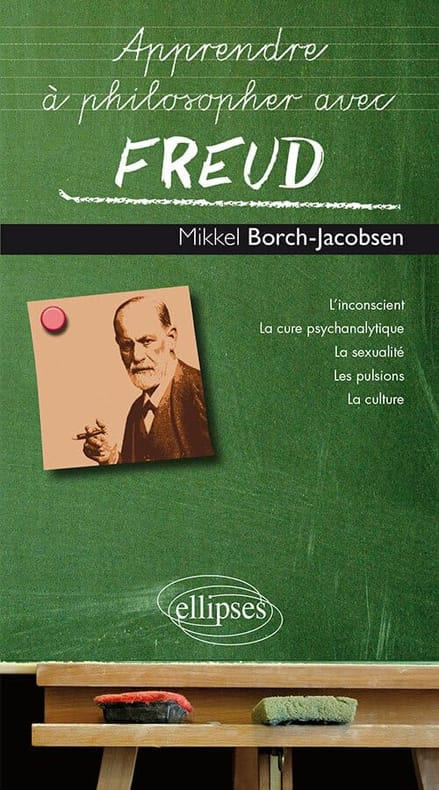
Ellipses 2018 256 pages 10x18x2cm. 2018. Broché. 256 pages.
Reference : 500021062
ISBN : 9782340028197
Comme neuf - L'ouvrage qui n'a jamais été lu pourrait présenter de légères traces de stockage - remis sous blister et expédié soigneusement dans emballage adapté -
Bookseller's contact details
Démons et Merveilles
M. Christophe Ravignot
contact@demons-et-merveilles.com
07 54 32 44 40
Payment mode

Sale conditions
Rapidité d'envoi Tous nos articles sont expédiés le jour même de la confirmation de la commande Soin de l'emballage Un soin particulier est apporté à l'emballage, vos objets voyagent en toute sécurité. A votre écoute Si toutefois un incident devait survenir lors de l'acheminement de votre paquet, n'hésitez pas à nous contacter, nous mettrons tout en oeuvre pour vous satisfaire, en vous proposant un retour, un remboursement ou toute autre soluton à votre convenance. Professionnalisme Les livres que nous vendons sont pour la plupart des livres anciens, nous tâchons d'être le plus objectif possible quant à leur état.
5 book(s) with the same title
Drei Abhandlungen zur Sexualtheorie. - [A SPLENDID COPY OF FREUD'S SECOND MAIN WORK, WITH AN INTERESTING NOTE FROM ANDRÉ GIDE]
Leipzig und Wien, 1905. 8vo. Original printed wrappers. Uncut and unopened. In perfect condition in- as well as ex-ternally. (2), 83 pp. Housed in a full burgundy cloth box with gilt leather title to spine. Inside of box with the book plate of Pierre Bergé. Laid in is a typed letter from André Gide with a four-line handwritten and signed (""André Gide"") note dated ""22 Avril 39"".
Scarce first edition, in impeccable original condition and with an inlaid letter from André Gide, of one of Freud’s most significant works, his seminal Three Essays on the Theory of Sexuality. It is this groundbreaking - and to this day highly controversial - work that lays the foundation for the concepts of penis envy, castration anxiety, and the Oedipus complex, apart from defining the entire theory of childhood sexuality. Together with The Interpretation of Dreams, The Three Essays on the Theory of Sexuality (also sometimes translated as Three Contributions to the Theory of Sex) constitutes the most significant of Freud’s works. It is here that the founder of psychoanalysis advances his theory of sexuality, in particular its relation to childhood, a theory that came to permeate through all of his later writings and that came to define psychoanalysis for decades to come. The book covered three main areas that remain at the heart of Freudian psychoanalysis: sexual perversions, childhood sexuality, and puberty. Die Sexuelle Abirrungen (""The Sexual Aberrations""), the first essay, commences by distinguishing between the sexual object and the sexual aim and tries to define what is “normal” within sexuality – an endeavor that in itself has been the cause of much controversy. Die infantile Sexualität (Infantile Sexuality), the second essay, controversially argues that children have sexual urges, from which adult sexuality only gradually emerges via psychosexual development. Looking at children, Freud identified several forms of infantile sexual emotions, including thumb sucking, autoeroticism, and sibling rivalry. Freud’s descriptions of infantile sexuality were considered outright scandalous and it would be another decade before they were reconized as essential to the understanding of human behavior and development. Freud's discovery of infantile sexuality radically altered the perception of the child from one of idealized innocence to one of a person struggling to achieve control of his or her biological needs and make them acceptable to society through the influence of his or her caregivers (see Fonagay and Target 2003). In Die Ungestaltungen der Pubertät (The Transformations of Puberty), the third essay, Freud formalised the distinction between the “fore-pleasures” of infantile sexuality and the “end-pleasure” of sexual intercourse. He also demonstrated how the adolescent years consolidate sexual identity under the dominance of the genitals. Freud himself considered his “Three Essays” the epitome of his work, in which he linked his theory of the unconscious as put forward in The Interpretation of Dreams and his studies of hysteria by positing sexuality as the driving force of both neuroses (through repression) and perversion. Laid-in is a machine-written letter from André Gide, with a four-line handwritten note to top, signed in full by André Gide and dated 22 of April 1939, five months before Freud dies. The letter is an hommage to Freud, excpressing gratitude and admiration for ""the great prospector, [who] freed himself from the shadows where many hideous ghosts and malevolent larvae lurked"" (translation from French). We do not know who the recipient of the letter was, and though it seems to have been meant for publication, perhaps in a celebratory volume for Freud, it never was. It comes from the collection of Philippe Helaers and was displayed at the 2007 UNESCO exhibition ""Are you a doctor, sir?"", in the honour of Freund. ""We learned of this beautiful letter from André Gide during the preparations for the exhibition, currently presented at Unesco: “Are you a doctor, sir? », organized in tribute to Sigmund Freud under the aegis of the School of the Freudian Cause.… Its owner, Mr Philippe Helaers, acquired it a few years ago in London, without the envelope which could have enlightened us as to its recipient. Was it James Strachey? Leonard Woolf? These are the most plausible hypotheses. The collection of tributes, in which it was to be published, never saw the light of day. Why ? We do not know. Did Freud read it? We don't know that either. In the quest to solve these conundrums, the Journal of André Gide is unfortunately of no help to us. The author of Terrestrial Foods – the only work by Gide listed in Freud’s library – always considered that he had practiced Freudianism without knowing it, in particular in his Corydon. In any case, the awe expressed in this letter clashes with the famous page of his diary, where he describes Freud as “an imbecile of genius”. That was, it is true, the day after his brief experience of psychoanalysis with Eugenia Sokolnicka. In Les Faux Monnayeurs, she is mentioned under the transparent pseudonym of Madame Sophroniska. The allusion to the unequal disciples of the master at the end of the 1939 letter is undoubtedly in allusion to this encounter."" (Translated from French from Dans la cause freudienne 2007). André Gide (1869-1951) was a highly important French author, recipient of the Nobel Prize in Literature, considered ""France's greatest contemporary man of letters"" and ""judged the greatest French writer of this century by the literary cognoscenti"" (The New York Times). Gide's work centres around the reconciliation of freedom and empowerment with moralistic and puritan constraints. He continuously strives to towards intellectual honesty, and his self-exploratory texts are groundbreaking in their search of how to be fully oneself, including owning one's sexual nature, without at the same time betraying one's values. As a self-professed pederast, Freud's seminal ""Three Essays on the Theory of Sexuality"" played a dominant role in his quest to understanding and owning his sexual nature. G&M: 4983 (""Freud opened up a new territoryfor exploration - the unconscious mind. His studies of the sexual instinct explained the reasons for, and suggested the treatment of, various perversions and neurotic conditions"").

Portrait photographique de Sigmund Freud dédicacé par Edmund Engelman
s. d. [1938] | 31.80 x 39.50 cm | une photographie contrecollée sur carton
Portrait photographique original de Sigmund Freud, réalisé par Engelman en 1938, tirage argentique de l'artiste d'après le négatif original retrouvé en 1952. En effet, après la Nuit de Cristal, le jeune photographe juif Edmund Engelman (1907-2000) s'enfuit aux États-Unis laissant derrière lui les précieux mais compromettants négatifs de cette séance photographique clandestine. Il ne les récupérera qu'après la Seconde Guerre mondiale, en 1952, auprès de la fille du psychanalyste, Anna Freud. Envoi autographe signé du photographe Edmund Engelman en marge basse du cliché: «à Nadine Nimier. Cordialement Edmund Engelman.» Nadine Nimier fut l'épouse de l'écrivain Roger Nimier. Elle anima «Les Après-midi de France Culture», émission dans laquelle elle reçut certaines éminences de la psychanalyse notamment Jacques Lacan et Françoise Dolto. C'est le 20 janvier 1980 qu'elle interviewa Edmund Engelman, alors en visite à Paris pour l'exposition de ses photographies à la galerie Erval. Très beau portrait du fondateur de la psychanalyse, réalisé en mai 1938, peu de temps avant son départ de Vienne vers Londres. Cent-six clichés furent réalisés lors de cette visite clandestine d'Engelman à Freud au 19 de la rue Berggasse à Vienne. Parmi celles-ci, on connaît beaucoup de photographies représentant le cabinet et les uvres d'art du psychanalyste, mais l'artiste ne réalisa que quelques portraits du maître. Cette séance photographique fut réalisée à la demande d'August Aichhorn et témoigne des derniers instants du berceau de la psychanalyse, discipline désormais interdite sous le régime nazi: «Le dimanche 13 mars, une séance du comité de direction de la Société Viennoise de Psychanalyse a lieu et deux décisions sont prises: tous les membres de la Société doivent quitter le pays le plus rapidement possible et le siège de la Société devra se trouver à l'endroit où Freud s'installera.» («August Aichhorn et la figure paternelle: fragments biographiques et cliniques» in Recherches en psychanalyse n°1, 2004) Edmund Engelman dans son ouvrage intitulé La Maison de Freud Berggasse 19 Vienne paru en 1979 raconte: «Je me rappelle à la fois ma surexcitation et ma peur, ce matin pluvieux de mai 1938, comme je marchais dans les rues désertes de Vienne en direction du 19, Berggasse. Je transportais mes appareils, mon trépied, mes objectifs et mes pellicules dans une petite mallette qui paraissait s'alourdir à chacun de mes pas. J'étais persuadé que n'importe qui saurait à me voir que j'allais chez le Dr Sigmund Freud, pour accomplir une mission dont les nazis n'auraient guère apprécié la teneur. [...] J'avais peur qu'il n'y eût pas assez de lumière pour bien photographier l'intérieur de la maison de Freud. Recourir au flash ou aux projecteurs était hors de question, puisque la Gestapo maintenait la maison sous surveillance constante. Ce document unique sur l'endroit où Freud avait vécu et travaillé au cours des quarante années passées, il faudrait l'exécuter sans éveiller le moindre soupçon. Je craignais pour ma propre sécurité comme pour la vie des Freud, et ne voulais pas me compromettre par un faux pas, alors qu'ils étaient si près de quitter Vienne sains et saufs. [...] Un week-end de 1933, j'eus le plaisir de rencontrer dans la résidence d'été d'un ami, en dehors de la ville, un certain August Aichhorn qui s'intéressait de près au champ extrêmement controversé de la psychanalyse et était, à ma vive curiosité, un intime du célèbre professeur Freud. [...] Nous fûmes très vite bons amis. [...] Il me confia que Freud, après un terrible harcèlement (perquisition des nazis chez lui, détention de sa fille Anna), avait finalement reçu la permission de partir pour Londres, grâce à l'intervention de hautes personnalités et de diplomates étrangers. Les Freud, me dit-il, se mettraient en route dans les dix jours. Le célèbre appartement et ses bureaux allaient être bouleversés à l'occasion du déménagement et du départ des propriétaires. Nous tom

Über den Ursprung der hinteren Nervenwurzeln im Rückenmarke von Ammocoetes (Petromyzon Planeri). [Offprinted from Sitzb. d. k. Akademie d. Wiss. (Math-Naturwiss. Klasse), Abth. III, vol. 75, 4 Jan. 1877]. - [FREUD'S FIRST PUBLICATION - OFF-PRINT]
(Wien, K.k. Hof- und Staatsdruckerei, 1877). 8vo. In the original orange-brown printed wrappers, uncut and unopened. Near mint. (16), 13, III pp + 1 folded lithographic plate by Schuma, after Freud.
First edition, in the scarce offprint, of Freud's first publication, which documents the early beginnings of the scientific thought that came to found psychoanalysis. In 1873 Freud entered the University of Vienna to study medicine. He chose to study medicine, not because he wanted to be a practitioner, but because he wanted to study the human condition with scientific rigor. In his early career, he modeled himself on Ernst von Brücke. ""He spent an increasing amount of time in Brücke's Physiological Institute from 1876 through 1882. His first studies were on the connection of a large nerve cell (Reissner's cell) that had been discovered in the spinal cord of a primitive genus of fish, and his observations made it possible to fit these cells into an evolutionary scheme."" (D.S.B. V:172).In the background of this task - of studying this nerve cell of a primitive fish - lay a greater question"" a question that arguably became formative for the greatest revolutionizer of the human mind, namely the question about the nervous system of higher animals - including human beings - differing in kind from the lower ones. ""Freud's precise observation revealed that the presence of Reissner cells in the primitive spinal cord was because of the incomplete development of the embryonic neural tube to the periphery, and that this demonstrated an evolutionary continuity between the two. Having successfully solved this problem, he then continued his histological research on nerve cells, but also decided independently to work on crayfish... [h]e was beginning to show himself to be a creative scientist, heuristically positing a conception on the basis of empirical evidence, something that would reappear in his psychoanalytic method..."" (Thomas Dalzell, ""Freud's Schreber Between Psychiatry and Psychoanalysis..."", p. 156). ""Years later Freud found this evolutionary-anatomical parallel to his phychoanalytic findings of important didactic use in his ""Introductory Lectures on Psycho-Analysis."" (Sulloway, ""Freud, Biologist of the mind: Beyond the Psychoanalytic Legend"", p. 268). ""To this vast and exciting field of research [the composition of nerve cells and the question whether the nervous system of higher animals is made up of elements different from those of lower animals] belonged the very modest problem which Brücke put before Freud. In the spinal cord of the Amoecetes (Petromyzon), a genus of fish belonging to the primitive Cyclostomatae, Reissner had discovered a particular kind of cell. ... Brücke wished the histology of these cells clarified. After a few weeks Freud came to him with the quite unexpected discovery that non-myelinated fibres of the posterior (sensory) nerves originated in some of Reissner's cells. Other fibres, probably also sensory, coming from these cells passed behind the central canal to the opposite side of the spinal cord ... Brücke pressed for publication [and] presented the study at the Academy of Sciences meeting of january 4, 1877. It appeared in the January Bulletin of the Academy. It was the first paper of Freud's to be actually published, since the one on his first piece of research, on the eel, did not appear until 3 months later."" (Jones, Life and Work, vol. I, pp. 51 - 53).
Le scénario Freud.
Gallimard, collection Connaissance de l'inconscient, série La psychanalyse et son histoire, 1984. In-8 broché, couverture légèrement défraîchie (quelques traces de plis, dont plis de lecture au dos).
"Dans le courant de l'année 1958, le réalisateur américain John Huston demande à Sartre d'écrire un scénario sur Freud, plus précisément sur ce temps conflictuel de la découverte où Freud, renonçant à l'hypnose, invente la psychanalyse. De ce travail de commande, Sartre va se saisir avec autant d'amusement que de passion. Il remet l'année suivante à Huston un scénario, "gros comme ma cuisse", dira le metteur en scène qui demande remaniements et coupures. Mais la seconde version - on reconnaîtra là un trait de Sartre - est encore plus volumineux. Finalement, Sartre renonce et exige que son nom ne figure pas au générique du film Freud, the Secret Passion, tourné en 1961. Pour écrire son scénario, Sartre lit la biographie de Jones, les Etudes sur l'hystérie, L'interprétation des rêves. Ces lectures transforment l'image, jusqu'alors plutôt négative, qu'il se faisait de Freud. Elles lui révèlent une personnalité contradictoire, violente et retenue, en lutte permanente avec elle-même et l'entourage. Elles lui montrent que la psychanalyse, avant d'être une doctrine, est le produit d'un long travail mené sur soi et d'abord contre soi. Le lecteur sera surpris de la sympathie avec laquelle Freud est ici représenté (et souvent inventé). Il verra aussi comment, loin d'être un simple divertissement, le scénario Freud a été un moment important dans l'oeuvre de Sartre : Les Séquestrés d'Altona, L'Idiot de la famille et aussi Les Mots en dérivent pour une part. Est-ce ici Sartre qui analyse Freud ou Freud qui analyse Sartre ? L'un et l'autre eurent en tout cas une passion commune : l'hystérie féminine. Ils partagent aussi une même interrogation, autour de quoi Sartre construit son scénario : qu'est-ce que le lien de paternité ? "
L'écrit du temps n°6 printemps 1984 - Psychanalyse : moments d'histoire - Jean Louis Baudry, la longue lettre, Freud et la correspondance - Jean Michel Rey, Freud et l'écriture de l'histoire - Elliot Philipp, souvenirs de rencontres avec Freud ...
Les éditions de minuit. 1984. In-8. Broché. Etat d'usage, Couv. légèrement passée, Dos satisfaisant, Papier jauni. 127 pages - couverture jaunie.. . . . Classification Dewey : 70.49-Presse illustrée, magazines, revues
Sommaire : Jean Louis Baudry, la longue lettre, Freud et la correspondance - Jean Michel Rey, Freud et l'écriture de l'histoire - Elliot Philipp, souvenirs de rencontres avec Freud, commentaire par Patrick Lacoste : l'indépendance de l'Inde - Elisabeth Brainin et Isidor J.Kaminer, psychanalyse et national-socialisme présentation et commentaire par Anne Lise Stern - Sigmund Freud, hypnotisme et suggestion 1888-89 - Sigmund Freud, hypnose 1891 présentation et annotation par M.Borch Jakobsen, P.Koeppel et F.Scherrer - Patrick Lacoste, préparations anatomiques en lisant Freud : contribution à la conception des aphasies 1891. Classification Dewey : 70.49-Presse illustrée, magazines, revues

