 Write to the booksellers
Sélection
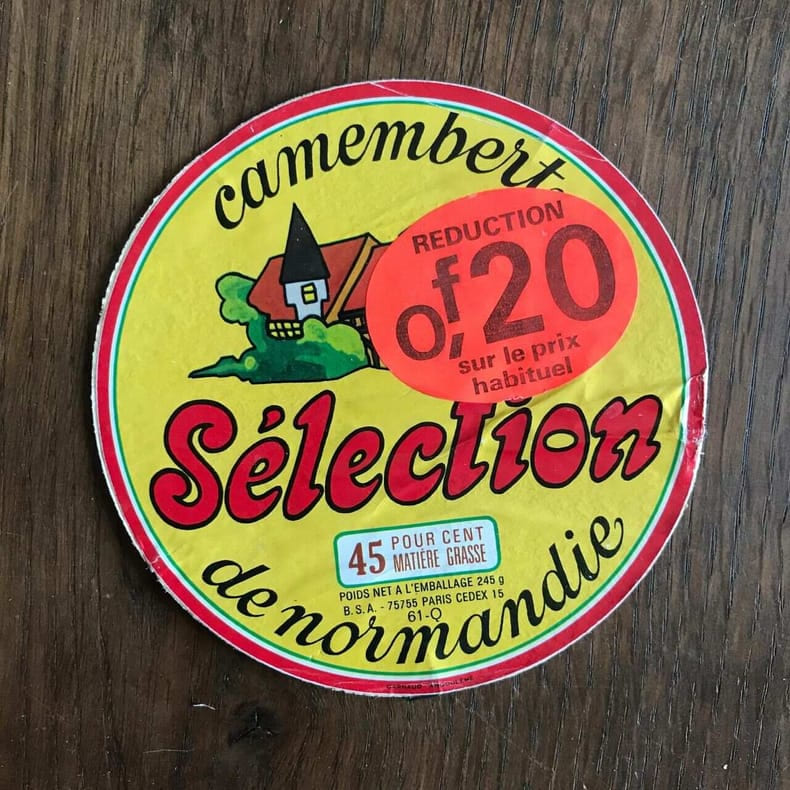
Sans date.
Reference : 500016199
Bon état
Bookseller's contact details
Démons et Merveilles
M. Christophe Ravignot
contact@demons-et-merveilles.com
07 54 32 44 40
Payment mode

Sale conditions
Rapidité d'envoi Tous nos articles sont expédiés le jour même de la confirmation de la commande Soin de l'emballage Un soin particulier est apporté à l'emballage, vos objets voyagent en toute sécurité. A votre écoute Si toutefois un incident devait survenir lors de l'acheminement de votre paquet, n'hésitez pas à nous contacter, nous mettrons tout en oeuvre pour vous satisfaire, en vous proposant un retour, un remboursement ou toute autre soluton à votre convenance. Professionnalisme Les livres que nous vendons sont pour la plupart des livres anciens, nous tâchons d'être le plus objectif possible quant à leur état.
5 book(s) with the same title
Two Essays: One upon Single Vision with Two Eyes" the Other on Dew. A Letter to the Right Hon. Lloyd, Lord Kenyon and an Account of a Female of the White Race of Mankind, Part of whose Skin Resembles that of a Negro (+) An Account of a Female of the W... - [THE FIRST RECOGNIZABLE STATEMENT OF THE THEORY OF NATURAL SELECTION]
London, Archibald Constable and Co, 1818. 8vo. Bound uncut in a nice recent half calf binding with five raised bands with gilt lettering and ornamentation to spine. A very nice and clean copy. (6), (I)-LXXIV, (2), 439, (1) pp.
First appearance of Well's important work, which constitutes the first clear pioneering statement about natural selection. He applied the idea to the origin of different skin colours in human races, but from the context it seems he thought it might be applied more widely. Charles Darwin said: ""[Wells] distinctly recognises the principle of natural selection, and this is the first recognition which has been indicated"". (Darwin, Charles 1866. The origin of species by means of natural selection. 4th and subsequent editions, in the preliminary 'Historical sketch')In 1813, Wells read a paper to the Royal Society of London, occasioned by a white female patient with splotches of dark skin. In his paper, Wells speculated about the origin of skin color variations in humans. He suggested that long ago, there might have arisen in equatorial regions a variety of humans that were better able to resist diseases such as malaria, perhaps aided by darker skin, and they survived where other variations perished. Similarly, lighter-skinned humans might have been variations that were better able to survive in temperate and arctic regions.""Wells' paper was not printed in the Philosophical Transactions, but after he died in 1817, two of his treatises, ""On Single vision with Two Eyes,"" and ""On Dew"", were published posthumously, and Wells' brief ""Account of a white female, part of whose skin resembles that of a negro"" was added on at the very end. No one noticed, certainly not Charles Darwin, who was 9 years old at the time.Time went by, Darwin discovered natural selection on his own in the late 1830s, and he sprang it on the world in On the Origin of Species in 1859. During the year after publication, various readers noticed that certain aspects of Darwinian evolution had been anticipated by such naturalists as Étienne Geoffroy St. Hilaire, Patrick Matthew, and the anonymous author of the Vestiges. So in 1861, for the third edition of the Origin, Darwin added an ""Historical Sketch"" in which he discussed his precursors and to what extent they anticipated his own work (third image). Geoffroy St. Hilaire, Matthew, and the Vestiges all merited a paragraph in the ""Historical Sketch."" But there was still no mention of William Wells.Then, sometime before 1866, an American, Robert Rowley, drew the attention of an Englishman, Charles Loring Brace, to Wells' paper, and Rowley conveyed the information to Darwin. Darwin was apparently impressed. For the fifth edition of the Origin, he revised the ""Historical Sketch"", and he added a paragraph about Wells, in which he commented: ""In this paper he [Wells] distinctly recognises the principle of natural selection, and this is the first recognition which has been indicated."" Darwin also pointed out, quite correctly, that Wells used natural selection only to account for human races, not to explain the origin of species. But still, Wells was the only precursor of natural selection that Darwin took seriously.""( William B. Ashworth, Linda Hall Library)

Les test de selection dévoilés tome 1.
Paris, Editions l'écrit , 1999 ; in-8, 193 pp., br. Pour onnaitre et passer avec succès les test de sélection pour déjouer les pieges de la graphologie.
Pour onnaitre et passer avec succès les test de sélection pour déjouer les pieges de la graphologie.
Les tests de sélection dévoilés.
Paris, L'écrit, 1985 ; in-8, 177 pp., broché (usures). Avec plus de 40 pages d'exercices d'entrainement - pour connaitre et passer avec succes les tests de selection de personnel, pour dejouer les pieges de la graphologie.
Avec plus de 40 pages d'exercices d'entrainement - pour connaitre et passer avec succes les tests de selection de personnel, pour dejouer les pieges de la graphologie.
[REVUE]. SÉLECTION. « Chronique de la vie artistique et littéraire ».
Reference : 12838
SÉLECTION.1923-1924.
Reliure contenant 4 numéros de la 3e année de SÉLECTION (1924 - n° 1, [2, 3, 4]). Seule la couverture du premier numéro a été conservée. 448 pages (pagination continue). Bon état. /// Textes de Paul Neuhuys, E. L. T. Mesens, Marcel Lecomte, Paul Fierens, Robert Goffin, Robert Guiette, Pierre Reverdy, Tristan Tzara, Jean Mollet, Max Jacob, Henry de Montherlant, Valery Larbaud, Jean Cocteau, René Chalupt, Fernand Léger, Léon Duesberg, Georges Marlier, André de Ridder, Pierre-Gustave van Hecke, etc. Reproductions duvres de Picasso, Frans Masereel, James Ensor, Oscar Jespers, H. Campendonck, Paul Cézanne, Hermine David, Jean Crotti, Eekman, Fritz van den Berghe, Marc Chagall, Marie Laurencin, V. Servranckx, etc.
/// SÉLECTION. « Chronique de la vie artistique et littéraire ». Anvers. Directeurs : André de Ridder et Pierre-Gustave van Hecke. Grand in-8° broché. (Aron & Soucy, 934). « Fondée en août 1920 par André de Ridder et P. G. van Hecke, SÉLECTION reçoit dabord le sous-titre de « Bulletin de la vie artistique ». Dès le second numéro de septembre 1920, ce sous-titre devient « Chronique de la vie artistique ». La parution de la revue sinterrompt entre janvier et octobre 1923, puis de nouveau entre octobre 1927 et février 1928. A partir de 1924, des rubriques littéraires sont insérées dans la publication, puis de 1928 à 1933, les numéros deviennent monographiques, consacrés chacun à un artiste particulier. » (Notice empruntée au site web de lI.N.H.A.)
Darwin et l'après-Darwin : Une histoire de l'hypothèse de sélection naturelle
Kimé. 1992. In-12. Broché. Bon état, Couv. convenable, Dos satisfaisant, Intérieur frais. 204 pages augmentées de quelques graphiques en noir et blanc,dans le texte. Ex-libris et tampon de Raymond Patchame.. . . . Classification Dewey : 570-Sciences de la vie
"Table des matières : Wallace et Darwin : enjeux d'un désaccord / Ontologie de la sélection Les objections de Fleeming Jenkin et le dilemne darwinien / Galton : ""hérédite"" / Sélection et régression chez les post-darwiniens : ""Panmixie"" : évolution régressive et sélection naturelle chez August Weismann - La critique galtonienne de la sélection naturelle / Les démonstrations de la sélection naturelle / La Théroei génétaique de la sélection,etc. Classification Dewey : 570-Sciences de la vie"


