 Write to the booksellers
Hailey Arthur
Bank
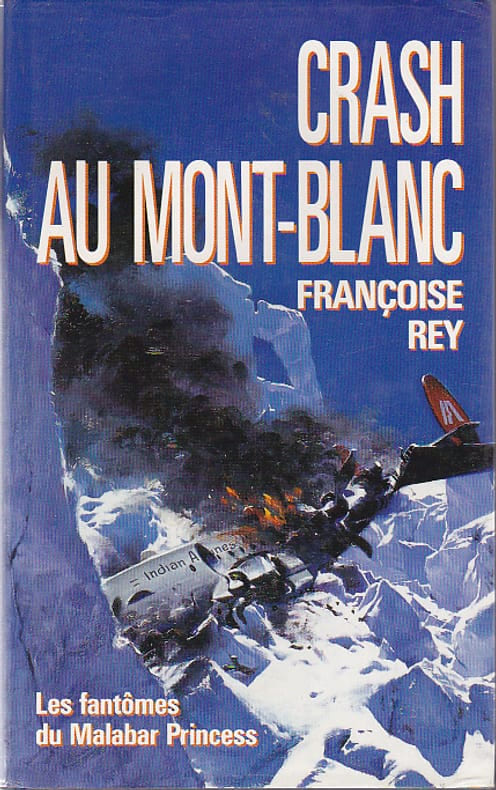
Albin michel / le club français du livre 1975 375 pages in8. 1975. cartonné jaquette. 375 pages. Traduit de Sénès Florence - Illustrations de Jankovics györgy
Reference : 39187
ISBN : 9782724266887
livre de bibliothèque recyclé - couverture plastifiée et étiquette sur dos de tranche de page légères marques de lecture et/ou de stockage mais du reste en bon état. - Envoi rapide et soigné dans une enveloppe à bulle depuis France
Bookseller's contact details
Démons et Merveilles
M. Christophe Ravignot
contact@demons-et-merveilles.com
07 54 32 44 40
Payment mode

Sale conditions
Rapidité d'envoi Tous nos articles sont expédiés le jour même de la confirmation de la commande Soin de l'emballage Un soin particulier est apporté à l'emballage, vos objets voyagent en toute sécurité. A votre écoute Si toutefois un incident devait survenir lors de l'acheminement de votre paquet, n'hésitez pas à nous contacter, nous mettrons tout en oeuvre pour vous satisfaire, en vous proposant un retour, un remboursement ou toute autre soluton à votre convenance. Professionnalisme Les livres que nous vendons sont pour la plupart des livres anciens, nous tâchons d'être le plus objectif possible quant à leur état.
5 book(s) with the same title
[Ann Arbor, Michigan (États-Unis)] - WASHTENAW, BANK OF ; (MORGAN, E. W. ; FELCH, A.)
Reference : 71919
(1834)
[ Bank of Washtenaw banknote : ] The Bank of Washtenaw Will pay on demand Five dollars to ...or bearer at their Banking House in Ann Arbor. Michigan [ Manuscript : Jan 9 1834 or 1836 Signed ] Draper, Toppan, Longacre & Co. Philad. & N.Y.
Obsolete Bank Notes size 19 x 8.1 cm [ Bank of Washtenaw banknote : ] The Bank of Washtenaw Will pay on demand Five dollars to ...or bearer at their Banking House in Ann Arbor. Michigan [ Manuscript : Jan 9 1834 or 1836 Signed ] Draper, Toppan, Longacre & Co. Philad. & N.Y.
The Bank of Washtenaw was established in Ann Arbor, Michigan, by a group of local men—including James Kingsley, Volney Chapin, and William Thompson—at a time when liberal banking laws allowed citizens to open banks with minimal capital. This banknote stands as a direct testament to the U.S. "Free Banking Era," a pre-Civil War period during which private, often loosely regulated banks issued their own paper currency. These institutions—sometimes dubbed "Wildcat banks"—frequently failed during financial crises like the Panic of 1837, leaving their currency worthless (giving rise to the term "Broken Bank Notes"). The note is also historically significant for the high quality of its intaglio printing, executed by the specialist firm Draper, Toppan, Longacre & Co. The chosen imagery—a Native American in a canoe, a harvest scene, and an early steam locomotive—perfectly captures an era torn between the figure of the "noble savage," the agrarian ideal, and the inexorable march of industrial progress. La Bank of Washtenaw a été créée à Ann Arbor (Michigan) par un groupe d'hommes locaux, dont James Kingsley, Volney Chapin et William Thompson, lorsque les lois bancaires libérales ont permis aux citoyens d'ouvrir des banques avec peu de capital. Cette pièce est un témoignage direct de la « Free Banking Era » aux États-Unis, une période précédant la guerre de Sécession durant laquelle des banques privées, souvent peu régulées, émettaient leur propre monnaie papier. Ces établissements, parfois surnommés « Wildcat banks », ont fréquemment fait faillite lors de crises financières comme la panique de 1837, remboursant leur monnaie sans valeur (d'où le terme de « Broken Bank Notes »). L'intérêt documentaire réside également dans la grande qualité de l'impression en taille-douce réalisée par la firme spécialisée Draper, Toppan, Longacre & Co. L'iconographie choisie (un Amérindien en canoë, une scène de moisson, une locomotive à vapeur naissante) illustre parfaitement l'époque, tiraillée entre la figure du bon sauvage, l'idéal agraire et la marche inexorable du progrès industriel. Good copy. Bon exemplaire
Reference : alb15131b9f311906fd
Nizhny Novgorod City Public Bank. A Brief History of the Bank's Fifty Years of O
Nizhny Novgorod City Public Bank. A Brief History of the Bank's Fifty Years of Operation. 1864-1914 In Russian (ask us if in doubt)/Nizhegorodskiy Nikolaevskiy gorodskoy obshchestvennyy bank. Kratkiy ocherk pyatidesyatiletney deyatel'nosti sushchestvovaniya banka. 1864-1914 Short description: In Russian (ask us if in doubt).The essay describes the history of the Bank's establishment and opening its growth and progressive activities in the development of the operation the Bank's own financial operations the Bank's staff and the Management Board. The publication is uniquely placed as a reference material: the Bank's operating statements and balance sheets statements of general and cash flows profits capital growth over 50 years the Bank's maintenance costs balance sheets and so on. We have thousands of titles and often several copies of each title may be available. Please feel free to contact us for a detailed description of the copies available. SKUalb15131b9f311906fd
Octroy for Nationalbanken i Kjøbenhavn paa 90 aar. Louisenlund, den 4de Julii 1818 - [THE CONSTITUTIONAL FOUNDATION OF THE DANISH NATIONAL BANK]
Kjøbenhavn, Schultziske Officin, (1818). 8vo. Without wrappers, with marbled paper backstrip. Nice and clean. 38 pp.
Rare first edition of this grant being the constitutional foundation of the Danish National Bank and the seminal turning point in restoring Denmark’s monetary credibility after years of inflation and instability. By this charter Danmarks Nationalbank (central bank of the Kingdom of Denmark) was formally established as an independent central bank with the exclusive right to issue banknotes and conduct central banking operations. The charter defined both institutional independence and clear objectives. Ownership was placed in private hands - primarily property owners - explicitly to prevent political misuse of the printing press and to separate the bank from both state finances and private interests. “The charter also laid down the bank’s core mandate: to secure a stable monetary system and to promote money circulation in support of production and trade. It legally bound the bank to continue the Rigsbank’s deflationary policy - reducing the volume of banknotes, restoring their silver parity and ultimately making them redeemable in silver. Public destruction of withdrawn notes symbolized this commitment and was intended to rebuild trust. Finally, the charter established a durable governance structure, balancing royal oversight with internal self-recruitment, and formal supervision by a royal bank commissioner. Although the practical effects—silver convertibility and dividends—were delayed until 1845, the Charter of 4 July 1818 was the legal and institutional anchor that made long-term monetary stabilization possible, demonstrating that credibility in money rests on firm rules, independence, and time.” (Abildgren, Danmarks Nationalbank 1818-2018).

Reference : alb4c7bf2958f28668f
Trade-Industrial Bank of the USSR. (Bank for Foreign Trade of the USSR). Notifi
Trade-Industrial Bank of the USSR. (Bank for Foreign Trade of the USSR). Notification of receiving a foreign transfer. In Russian /Torgovo-Promyshlennyy Bank SSSR. (Bank dlya vneshney torgovli SSSR). Uvedomlenie o poluchenii zagranichnogo perevoda. Miropol. On the letterhead of the Commercial and Industrial Bank is an inscription: Bank for Foreign Trade of the USSR. The notice is franked with a stamp 8 from the 10-year series of the October Revolution (Zagorsky # 205). On the back is a typewritten text about Rabbi Nukhim Tversky receiving a valuable package with a $25 stamp. Two distinct postage stamps: Miropol 24.12.1927. We have thousands of titles and often several copies of each title may be available. Please feel free to contact us for a detailed description of the copies available. SKUalb4c7bf2958f28668f.
Reference : alb8beb542ab7de6f0f
Bugrov A.V. State Bank of 1860 1917 In Russian (ask us if in doubt)./Bugrov A.V. Gosudarstvennyy bank 1860 1917 gg.
Bugrov A.V. State Bank of 1860 1917 In Russian (ask us if in doubt)./Bugrov A.V. Gosudarstvennyy bank 1860 1917 gg. Specific essays are devoted to the elaboration of the banking charter of 1894 the discussion on the problem of its autonomy or independence from the Ministry of Finance the poster campaign of the war loan of 1916 the development of the branch network of the main bank of the empire and the construction of its buildings the officials and employees of the State Bank. This is the first attempt in modern Russian historiography to consider this topic comprehensively and institutionally. The broad scope of the topic and its temporal boundaries (from the emergence to the liquidation of the State Bank) coverage of various aspects of the activities of the main bank of the empire. SKUalb8beb542ab7de6f0f.

