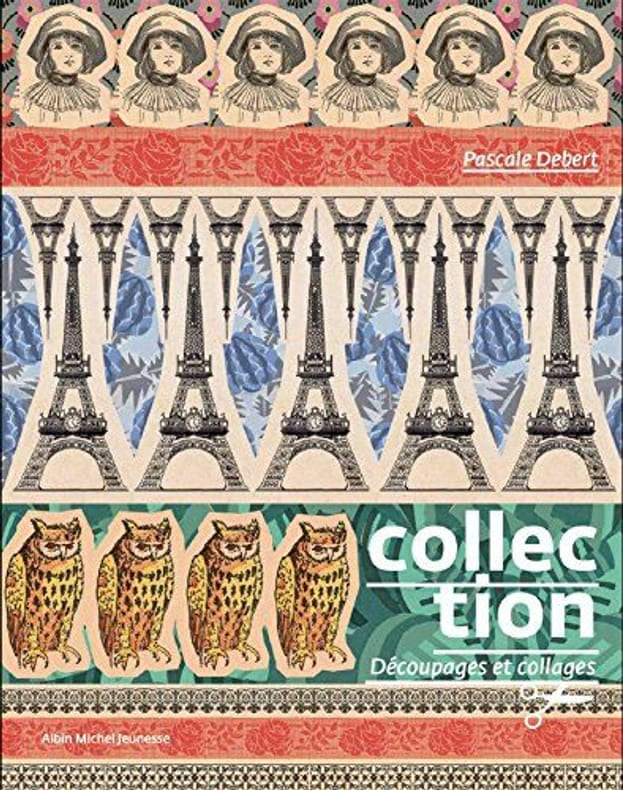
‎Debert Pascale‎
‎Collection‎

‎Albin Michel 2016 76 pages 20x27x1cm. 2016. Broché. 76 pages.‎

Reference : 100066228
ISBN : 9782226325280


‎‎

€9.80 (€9.80 )
Bookseller's contact details

Démons et Merveilles
M. Christophe Ravignot

contact@demons-et-merveilles.com

07 54 32 44 40

Contact bookseller

Payment mode
Cheque
Transfer
Others
Sale conditions

Rapidité d'envoi Tous nos articles sont expédiés le jour même de la confirmation de la commande Soin de l'emballage Un soin particulier est apporté à l'emballage, vos objets voyagent en toute sécurité. A votre écoute Si toutefois un incident devait survenir lors de l'acheminement de votre paquet, n'hésitez pas à nous contacter, nous mettrons tout en oeuvre pour vous satisfaire, en vous proposant un retour, un remboursement ou toute autre soluton à votre convenance. Professionnalisme Les livres que nous vendons sont pour la plupart des livres anciens, nous tâchons d'être le plus objectif possible quant à leur état.

Contact bookseller about this book

Enter these characters to validate your form.
*
Send

5 book(s) with the same title

‎ANDERSEN, HANS CHRISTIAN.‎

Reference : 58519

(1822)

‎A truly splendid and unique collection of 23 Hans Christian Andersen-items that together tell the true story of Andersen's life and sheds light on all aspects of his life and work. The collection is divided into the following (full descriptions belo... - [MAGNIFICENT HANS CHRISTIAN ANDERSEN-COLLECTION]‎

‎(1822) - 1872. ‎


‎With the present Hans Christian Andersen-collection, we have aimed not at an exhaustive collection of ALL of his many writings nor at a LARGE collection, but at an exquisite, chosen collection that tells us the true story of Andersen's life. A collection that enlightens us about both the author and the man Hans Christian Andersen and that sheds light on all aspects of his life and work. A collection that epitomizes quality, scope, and importance, not merely numbers of items nor works that are not particularly important in his life's work. Every one of the 23 items in the present collection has been carefully chosen to represent a certain Aspect of Hans Christian Andersen at a certain time of his life, in an attempt to get as close to the great fairy tale author as possible. The items basically span his entire career - from his first book, published at the age of 17 (and only known in about 10 copies) to an original manuscript poem by the ageing author at the age of 67. The 23 carefully chosen and unique items cover his earliest publications that are of extreme scarcity, his three seminal fairy tale cycles that catapulted him into fame and created the genre of the fairy tale, for which he is now famous world-wide, five magnificent presentation-copies (among them an absolutely magnificent copy of his very first fairy tale, one of the best presentation-copies known) that each give us an insight into the poet Andersen and into his circle of friends, six splendid original letters that are all different in style and content and written from all over the world (among them one of the extremely rare letters known by him written in English, in Latin hand), an original manuscript, which is an extreme scarcity on private hands and something one may never come by again, two books from Andersen's own library, which is extremely rare to find, as only 75 such books are known and almost all of them are in institutional holdings, and finally the three main translations that ensured his fame in the rest of the world: the most important translations into German, English, and French respectively. The collection is divided into the following seven categories, and below follows a short preview and introduction to each. Upon request, a document with full, elaborate descriptions of each item will be provided. 1. Debuts/earliest publications (see also 3.1.)2. The three fairy tale collections/cycles3. Presentation-copies (see also: 2.3.)4. Letters5. Manuscript6. Books from Andersen's library7. The three main translations1. Debuts/earliest publications1.1. Ungdoms-Forsøg / Gjenfærdet ved Palnatokes Grav, en Original Fortælling" og Alfsol, en original Tragoedie. Ungdoms=Forsøg. Kjöbenhavn, [1822]. The extremely rare first printing of Hans Christian Andersen's first book - with facsimiles of the title-page, the contents-leaf and a further four leaves. The book is exceedingly rare. A title-issue appeared in 1827. No more than about ten copies in all of both the first issue and the title-issue are known to exist - only a couple of them are known in private collections, and less than a handful of copies are known outside of Denmark. The present publication, his first book, is of immense importance to Andersen's life and work and is arguably THE most important piece of Anderseniana. 1.2. Ved min Velgører Provst Gutfelds Død. Slagelse, 1823.The extremely rare first printing of the 1823-issues of this slightly obscure newspaper, which contains Hans Christian Andersen's third publication. This exceedingly rare piece of Anderseniana was published when the master of the fairy tale genre was merely 17 years old, namely in February 1823. The present publication constitutes one of the two pieces of publication that are at the epicentre of the coming-to-be of the greatest poet and author to emerge from Danish soil. This little piece is a heartfelt, almost perfectly stylized poem that constitutes an obituary of Hans Christian Andersen's early benefactor, Gutfeld, who was responsible for Collin accepting to be Andersen's benefactor. It was due to Gutfeld and his belief in Andersen that he made it on into the world and was taken seriously enough - at the mere age of 17 - to later be allowed to follow his heart and his life dream - that of writing.1.3. Fodreise fra Holmens Canal til Østpynten af Amager i Aarene 1828 og 1829. Kjöbenhavn, 1829. The rare first edition of Hans Christian Andersen's debut novel, ""Journey on Foot"", here in the extremely scarce original printed wrappers. Andersen himself considered this book his debut and refers to it as ""my first publication"". It came to play a tremendous role in the development of his writing and constitutes one of his most important works. It is the first piece of Andersen that yields any success and the first work for which he gained any recognition. ""It is a well-known fact that Hans Christian Andersen made his début as a writer three times during his youth. The first time he published a book was in 1822, when ""Youthful Attempts"" came out... He was 17 years old, penniless and in need for help, but the main part of the circulation ended up in the paper mill... The second time he made his début was in 1829, when he published ""Journey on Foot from Holmen's Canal to the Eastern Point of Amager"", a book which can hardly be classified as a travel book.. it seems a subtle and humorous arabesque and a literary satire. This book was published in the year after he had left grammar-school and was qualifying for the entrance examination to academic studies at the university. It can rightly be regarded as a key, which enables us to understand the entire development of his later production...2. The three fairy tale-collections2.1. Eventyr fortalte for Børn. (1.-3. Hefte) + Eventyr fortalte for Børn. Ny Samling (1.-3. Hefte). 2 Bind. Kjöbenhavn, 1835-1847. A lovely set of this exceedingly rare collection of Andersen's earliest fairy tales. This legendary fairy tale-collection that created the fairy tale-genre and brought Andersen international fame, consists in six parts that together make up two volumes. As with most of the other few existing copies, the present set is a mixture of issues and likewise has certain wants concerning title-pages, half-titles and tables of contents. ""During Andersen's lifetime 162 of his Fairy Tales were published, but the scarcest and most difficult to obtain are these six little pamphlets. We do not know exactly how many, or how few, copies were printed, but we do know that no copy with all the title pages and tables of contents has ever been offered for sale.""2.2. Nye Eventyr. 2 Bind (5 samlinger). Kjøbenhavn, 1844 - 48.First edition of Hans Christian Andersen's seminal second collection of fairy tales - the publication that made him internationally famous - with all five collections in first issue, also the first, which is of the utmost rarity. It is in this legendary first collection that we find the first printing of ""The Ugly Duckling""(not as is indicated in PMM in his first). The rarity of the first issue of volume 1, collection 1 is legendary. It was published on November 11th 1843 (dated 1844 on the title-page) in a very small number, probably due to the poor sales of Andersen's first fairy tale collection. Against all belief, this first collection sold out within a few days, catapulting Andersen into worldwide fame, and a second issue was published already on December 21st 1843. Thus, only very few copies of the first issue exist, and almost all collections of the ""New fairy Tales"" are bound with the second issue or the third of 1847, meaning that they do not contain the actual first printing of ""The Ugly Duckling"", ""The Nightingale"", ""The Angel"", and ""The Sweethearts"". 2.3. Nye Eventyr og Historier. 3 Series, 10 collections. Kjøbenhavn, 1858-1872.A splendid fully complete copy of Andersen's third fairy tale collection, WITH ALL 10 ISSUES IN FIRST EDITIONS, FIRST ISSUES, ALL IN THE ORIGINAL PRINTED WRAPPERS, AND ONE OF THEM WITH A SIGNED PRESENTATION-INSCRIPTION BY ANDERSEN - WITH 39 FAIRY TALES IN THEIR FIRST PRINTINGS. It is highly uncommon to find all ten issues of the series together, let alone in the original printed wrappers, each of which is a scarcity on their own. To our knowledge, only one other such set exists in a private collection, and that is in far from as fine condition as the present, where all but one of the issues (which does not have the back wrapper) are fully complete with the spines, exactly as issued. 3. Presentation-copies3.1. Digte. Kjöbenhavn, 1830.THE RARE FIRST EDITION - PRESENTATION-COPY, IN THE EXCEEDINGLY SCARCE ORIGINAL PRINTED WRAPPERS - OF ANDERSEN'S THIRD BOOK, CONTAINING HIS FIRST FAIRY TALE. The magnificent presentation-inscription - hitherto unknown and unregistered - is arguably one of the most important Andersen-presentations known to exist. It is inscribed to Henriette Collin, the then fiancée, later wife, of his closest and most important friend, who was more like a brother to him, Edvard Collin. It is one of the very early Andersen-presentations known. This first published collection of Andersen's poetry constitutes Andersen's third published book (at the age of 24) and contains, at the end, the first printing of any of his fairy tales, being also his very first fairy tale ""The Ghost"" (or ""The Spectre""). This is the first time that Andersen uses the term ""Eventyr"" (fairy tale), the term which came to denote the genre for which he received world-wide fame as one of the most important writers of all time. 3.2. Nye Eventyr. Tredie Samling. Kjøbenhavn, 1845.An excellent presentation-copy of the first edition of the third ""collection"" of Andersen's second fairy tale-collection, containing five of his best fairy tales in the first printing - among them the cherished tales ""The Red Shoes"" and ""The Shepherdess and the Chimney-Sweep "". Inscribed copies of Andersen's fairy tales are very rare and extremely sought-after. But the present presentation-copy is even more interesting, as it is inscribed to a fellow author of tales for children - ""The poet Kaalund/ in kind remembrance/ of our first meeting/ the 29th of April 1845/ from the [NEW FAIRY TALES] (the printed half title) 's author."" -in the collection of Andersen's fairy tales that appeared almost simultaneously with Kaalund's renowned ""Tales for Children"" (""Fabler for Børn""). 3.3. Historier. Anden Samling. Kjøbenhavn, 1853.First edition, in splendid condition, with the original printed wrappers, of the second part of Andersen's ""Story""-collection, containing first printings of four of his famous fairy-tales. With a lovely, poetical presentation-inscription to Frederikke Larcher, signed ""H.C. Andersen"", translated as thus: ""I put my bouquet on the board of the stage/ you yourself make the impression of a fresh bouquet"". Frederikke Larcher was a stage actress, and Andersen might have given the little book as a gift upon her last performance.3.4. Nye Eventyr og Historier. Anden Række (første samling). Kjøbenhavn, 1861.An excellent copy, in the original printed, illustrated wrappers, of the separately published first part of the second series of ""Nye Eventyr og Historier"", with a lovely presentation-inscription to the title-page, translating thus ""The splendid, the spirited,/ Mrs. Agentinde Renck/ send this bouquet of stories/ from my garden of poetry this spring/ Most heartfelt and respectfully/ H.C. Andersen."" This splendid volume contains first printings of one of Andersen's most famous, most beloved and most frequently recounted fairy-tales/stories: ""What the Old Man does is Always Right"". Apart from that masterpiece of moral story-telling, the present publication contains five other of Andersen's great stories in first printings.3.5. Da Spanierne var her. Originalt romantisk Lystspil i tre Acter. Kjøbenhavn (Copenhagen), 1865. An excellent copy of the first edition of Andersen's famed play, in the scarce original binding and with a magnificent presentation-inscription to Rudolph Kranold, who at the time was director of the Royal Theatre in Copenhagen. His short reign here (until 1866) coincides exactly with the work on and premiere of one of the plays that was very closest to Andersen's heart, namely ""When the Spanish were Here"", which premiered at the Royal Theatre on April 6, 1865. Reading Andersen's diaries allows us to actually follow the play the entire way through to the stage. It is evident, both from his diaries and from the present presentation-inscription, that the play meant a lot to Andersen. As the inscription indicates, he's anxious that the play not be taken down again and he clearly asks Kranold to take good care of this play that is close to his heart. 4. Letters4.1. Autographed letter, signed in full (""Hans Christian Andersen""), in English, for the Scottish author William Hurton. Dated ""Copenhagen 2 October 1851"".The present letter is of the utmost interest, as it is written in English (in Andersen's own hand!) and also in Latin letters, as opposed the gothic handwriting that Andersen usually uses. Letters and inscriptions in Andersen's Latin hand are of the utmost scarcity. Out of the few known letters in Andersen's hand, we have even fewer letters by him written in English. He made an exception for William Hurton, to whom a few letters have been preserved, demonstrating his reverence for this Scottishman so fascinated by Andersen himself. Almost all of these letters are in institutional holdings, and the present one on private hands is a true scarcity. 4.2. Autographed letter, signed ""H. C. Andersen"", for Frederik Bøgh. Dated ""Basnæs ved Skjelskjør/ den 3 Juli 1862"". 4 pages.This very lengthy letter from Andersen to Frederik Bøgh is interesting in several respects. First of all, Andersen here mentions several of his works: new songs for the revised version of his opera ""The Raven"", proofreading and numerous comments for the ""new edition of Fairy Tales and Stories"", and a brand new fairy tale: ""Finally, I have written a new fairy tale: ""Snowdrop""."" Furthermore, Andersen talks about his health and problems he has with his eye as well as the weather and his impending travel plans. It is clear from the letter that he is very close to his young student friend Bøgh. 4.3. Autographed letter, signed ""H. C. Andersen"", for Frederik Bøgh. Dated ""Tanger I Marokko/ den 8 Nov: 1862."".An absolutely splendid letter with rare observations about Moroccan culture, the people, how they dress and behave, the food, the landscape, etc. It is clear that Tanger, with its ""wild, romantic nature"", its palm trees, its wilderness, the wild boars and hyenas, is very far from the coldness of the North. Andersen's fascination with the ""half naked men"" and women in horrible dress, with the bare headed Moorish Jews in kaftans, ""the naked brown kids that screamed and roared"", and the slaves that carry goods, leaps from the pages of the letter and paint a picture of a place that to a Dane in 1862 must seem oddly fascinating and so different. There is no doubt that this rich culture served as direct inspiration for Andersen's story-writing. 4.4. Autographed letter, signed ""H. C. Andersen"", for Frederik Bøgh. Dated ""Toledo den 6 December 1862"".A splendid letter from Toledo, which Andersen paints so clearly as only he can. ""Toledo is a dead city, but with the life of poetry"", he writes, after having described in detail, to his dear friend back home, the ruins and the melancholy that is Toledo. 4.5. Autographed letter, signed ""H. C. Andersen"", for ""Kjære William"" (i.e. William Melchior). Dated "" Frijsenborg den 27 August/ 1868. "". A lovely, cheerful birthday letter for the young birthday boy William Melchior, who was turning 7 years old. The letter is utterly charming and describes the journey of the birthday letter itself, flying over land and sea, from Jutland to Copenhagen. The letter not only portrays the ease with which Andersen communicates with children, it also constitutes a miniature version of beloved Andersen-stories such as ""Little Tuk"" and ""A Piece of Pearl String"". 4.6. Autographed letter, signed ""H. C. Andersen"", for Frederik Bøgh. Dated "" den 9 Maj 1873"".This Beautiful little letter for Nicolai Bøgh bears witness to the heartfelt bond that Andersen felt towards his young friend. This little gem of a letter is very poetical - most of it is almost like a poem, describing the sun coming through the clouds and liking the clouds to snow and the heaven to Paradise. Furthermore, Andersen mentions his friends' illness, liking him to a bird that needs to be free. Bøgh had fallen ill the previous year, from an illness that would eventually kill him 9 years later, at the mere age of 45. 5. Manuscript5.1. Original handwritten and signed manuscript for a poem entitled ""Stormfloden"" (i.e. The Storm or The Storm Surge). November (22nd), 1872. 1 1/2 handwritten pp.Original manuscripts by Andersen are of the utmost scarcity, and only very few are known on private hands. The present is the manuscript for a poem that Andersen wrote just a couple of years before he died and which was published as the preface to a ""Christmas Present"" by Vilhelm Gregersen in December 1872, just a few weeks after Andersen wrote it. The poem is very dramatic and doomsday-like, but has an uplifting an upbuilding ending. It is inspired by the dramatic storm or storm surge that hit Copenhagen on November 13th, 1872.6. Books from Andersen's Library6.1. F. ANDERSEN, C.J. HANSEN, J.P.E. HARTMANN, P. HEISE and A. WINDING. Ni Fleerstemmige Mandssange. Udgivne af Foreningen ""Fremtiden"". Kjöbenhavn, 1866.Hans Christian Andersen's own copy, with his ownership signature to the bottom of the front wrapper, of this pamphlet of ""Nine Polyphonic Male Songs"". The pamphlet contains nine lovely songs written by the greatest Danish authors of the period, set to music by the most famous Danish musicians of the period. Andersen's contribution is the song ""Hun har mig glemt"" (She Has me Forgotten), which he had printed for the first time in 1854, but in a different version, with different wording. Here, it is set to music by F. Andersen. 6.2. G.h. [GEORG EMIL BETZONICH]. En Kjærligheds-Historie. Fortælling. Kjøbenhavn, 1862.A truly rare example of a book that has belonged to Andersen, with a long presentation-inscription from the author to Hans Christian Andersen to front free end-paper, dated on Andersen's 58th birthday. The author of the novel Georg Emil Betzonich (1829 - 1901) is not a famous author today, nor was he very famous at the time. It is interesting, however, that Andersen kept his book in his library. The book passed to Edvard Collin, who inherited Andersen's entire estate, when Andersen died in 1875, and also Collin kept it. It was sold at the auction of his belongings in 1886.7. The three main Translations7.1. Jugendleben und Träume eines Italienischen Dichters. Nacch H.C. Andersens Dänischen Original: Improvisatoren. Ins Deutsche übertragen von L. Kruse. 2 Theile. Hamburg, August Campe, 1835.The very rare first edition of the first German translation of Andersen's first novel, ""Improvisatoren"", being the first of Andersen's books to be translated into any foreign language. It is fair to say that no other translation before or after was as important to Andersen as the present. Before the work even appeared, Andersen had a list of recipients for the German translation. Among these was Adalbert Chamisso, to whom he wrote in April 1835: ""Here I send you my Italian son" he speaks the German language, so your family can also understand him. I wish that in the great Germany people will be aware of my book and that I may deserve that awareness. That Kruse is introducing me as an author of novels should be somewhat of a recommendation"… For making such an effort of being known outside of little Denmark, I think, I cannot be blamed."" 7.2. Danish Fairy Legends and Tales. (Translated by Caroline Peachey). London, William Pickering (Chiswick), 1846.The very rare first edition - ANDERSEN'S CLOSE FRIEND HENRIETTE SCAVENIUS' (BORN MOLTKE) COPY - of this highly important Andersen-translation, which contains the very first appearance in English of some of Andersen's most famous and beloved fairy tales: ""The Emperor's New Clothes, ""The Nightingale"", ""The Wild Swans"", ""The Buck-Wheat"" and ""The Dustman"", and for the first time we here find the titles ""The Ugly Duckling"" (previously called ""The Ugly Duck"") and ""The Real Princess"" (previously called ""The Princess and the Peas"").7.3. Contes pour les enfants. Traduit du Danois par V. Caralp. Illustrations à deux teintes par Derancourt. Paris, Morizot, (1848).Extremely scarce first edition of the first translations of any of Hans Christian Andersen's fairy tales to appear in French. This first French Andersen-collection constitutes the introduction of Hans Christian Andersen's works in French literature, the introduction of the fairy-tale-genre in France, and a cornerstone in the history French children's literature. ‎

Logo ILAB

Phone number : +45 33 155 335

DKK2,200,000.00 (€294,432.56 )

‎TRUSLEW, N. (& ECKERSBERG).‎

Reference : 60286

(1805)

‎En Samling af Skibe i næsten alle mulige Stillinger i Söen. Udført i Kobber [i.e. A Collection of Ships in almost every Possible Position in the Sea. Executed in Copper]. - [THE CREATION OF THE DANISH SEASCAPE PAINTING]‎

‎Kjöbenhavn, 1805 (-ca. 1807). Queer-folio (binding measuring 25,2 x 32 cm). Bound in a later (ca. 1920'ies), elegant brown full calf binding with gilt ornamentations to spine. Boards with gilt line-frames, gilt rosettes as those on spine and larger gilt corner-decorations. All edges of boards gilt and inner gilt dentelles. Front board with gilt title in the middle. Neatly rebacked. Minor wear to back board and a few smaller stains to front board and spine. Overall very nice. Bound with one of the very scarce printed title-labels. This is for the third issue, dated 1805 (the collection was issued in six issues, all dated between 1805 and 1806. They appeared in blue wrappers with printed title-labels, of which the last number in the year and the number of the issue were left blank to be added in hand, as they are here. Only a few examples of these title-labels have been preserved). All 36 engraved and hand-coloured plates (all measuring 16 x 21 cm) mounted on leaves of thick cardboard-like paper (measuring 24,5 x 31 cm). All images with original handwritten description in Danish underneath. Occasional brownspotting, but overall in very nice condition. ‎


‎Exceedingly scarce collection of all 36 plates that were issued of Truslew’s spectacular “Ships in the Sea”, this being one of three complete copies known. Only two complete copies exist in public institutions (Handels- og Søfartsmuseet at Kronborg and the Danish Royal Collection of Graphic Art), and this is the only known complete copy on private hands. The 36 highly interesting plates that constitute this rare work occupy a central role in the history of Danish art, culture, and in the history of wartime. It is with this work that the tradition of Danish marine art is founded and it is inextricably linked with the name of one of the greatest Danish artists of all time: C.W. Eckersberg (known as “the father of Danish seascape painting”). It is generally accepted that Eckersberg with all likelihood drew the illustrations for Truslews etchings. “Ahead of his major travel to Paris and Rome in 1810-16, he (i.e. Eckersberg) had executed a number of ship portraits that were issued by N. Truslew in 1805 under the title “En samling skibe i næsten alle mulige stillinger i søen 1-6 Hæfte”. It is (a collection of) 36 coloured aquatints that could be engraved after the drawings of Eckersberg”. (Own translation from Danish, from “Den Danske udvikling of marinemaleriet. C.W. Eckersbergs arbejder af maritime karakter”, pp. 10-11). Not much is known about the amateur artist Niels Truslew, who was born in 1762 and was employed for decades in the office of the commercial house of the merchant Niels Ryberg. We know for certain, however, that Eckersberg and Truslew knew each other, and we know that for a while they worked together. It has also been proved beyond doubt that one of Eckersberg’s early watercolours from 1804 is the model for plate nr. V in the present collection. “[T]he role of the young Eckersberg, who became his generation’s most prominent painter, in the creation of the engravings is of considerably (sic) interest. Though it is true that it is not known with certainty just how much Eckersberg was involved, the series is evidence of a Danish background for the famous seascapes which Eckersberg first began to paint in the 1820‘s. In the period after he had done his early watercolour, he had been in Paris as a student of David, and it has been thought that the source of inspiration for Danish sea painting should therefore be found in the south. Truslew’s engravings show, however, that there was a native background for Eckersberg’s seascapes which, at the same time, of course, must be seen in the context of a larger European tradition.” (Møller, Lorentzen & Møller: Niels Truslew – Skibe I Søen 1805. 1979. Pp. 121-22). Apart from its obvious artistic importance, this scarce collection sheds light on a highly important period in Danish history, right between the Battle of Copenhagen (1801) - between Admiral Nelson’s squadrons and the anchored Danish ship blocks – and the bombardment of Copenhagen (1807) by the British. It is a period in which Danish maritime trade blossomed anew under the shelter of neutrality, and a period that saw a dramatic increase in popular interest in maritime subjects. The work is novel in several respects and is not merely a collection of ship portraits as such. It is also not a catalogue of ship types, as one finds in the 18th century, nor a collection meant for students. Truslew portrays the ships in action, and the illustrations are of one or more ships in function, in specific situations. Sometimes they will be exposed to the raging of the elements (it is probably not a coincidence that it is an English ship that is hit by lightening!), but most of them are seen in undramatic, everyday situations. The choice of ships is highly interesting, as it includes both English, American, Russian, French, Dutch, and Swedish ships, as well as Danish. And seeing that the interest lies in portraying contemporary ships, not historical ones, it becomes and important historical source. The American schooner, for instance, alludes to the West Indies. Sweden, France, and Russia are represented by warships, whereas there is not a single English warship. What is also unusual for this type of illustrations of the period, in both Denmark and abroad, is Truslew’s ability to create space around the ships, to put them in perspective and create an overall effect of space. These 36 plates are extremely rare and as mentioned, only two complete copies exist in public institutions. These two known copies vary from each other, however. The plates of the copy at Handels- og Søfartsmuseet has both German and Danish text, and the plates are numbered in the plates. That of the Royal Collection of Graphic Art has the Danish handwritten text under the plates and no numbering, as our copy. It is that copy that is used for the 1979-publication, “Truslew – Skibe i Søen”, which reproduces all of the plates. Our copy confirms exactly to that, with a few small variations: The handwritten text on plate VIII in our copy says “En Brig…” in stead of “En dansk Brig” The colouring of the American flag on plate XXXII varies a bit, as the red stripes are much clearer in our copy The handwritten text on plate XXXVI in our copy reads “anker” in stead of “ankeret”.‎

Logo ILAB

Phone number : +45 33 155 335

DKK180,000.00 (€24,089.94 )

‎"LOCKE, JOHN.‎

Reference : 41467

(1720)

‎A Collection of Several Pieces. Never before printed, or not Extant in his Works. Publish'd by the Author of Life of the evermemorable Mr. John Hales, &c. - [LOCKE'S MAIN WORK ON NATURAL PHILOSOPHY]‎

‎London, J. Bettenham, 1720. 8vo. Nice contemporary English Cambridge-style full calf binding with five raised bands and gilt title-label to spine. Neat minor repair to extremities. A bit of overall wear, but a nice and tight copy. Internally nice and clean with only some occasional soiling that is very light. Engraved title-vignette (36 - i.e. title-page + dedication), XXIV (i.e. ""The Character of Mr. Locke"" by Peter Coste), (2 - i.e. contents), 362, (18 - i.e. index), (4 - i.e. errata + advertisements) pp. + one plate (""The Solar System"").‎


‎First edition of this important collection of hitherto unpublished works by Locke, containing the first printing of his unique work on Natural philosophy ""The Elements of Natural Philosophy"" as well as first printings of other important works. Assisted by Anthony Collins, in 1720 the journalist Pierre Desmaizeaux brought out a new collection of Works and pieces by John Locke that had not previously been published. This collection, ""A Collection of Several Pieces"", came to play a great role in the Locke scholarship, not least in recent times, and not least because it contains the first printing of his ""Elements of Natural Philosophy""The ""Elements of Natural Philosophy"" constitutes Locke's main work in natural philosophy, and it is a work that pas puzzled Locke scholars and readers ever since its appearance. The work seems to need some further explanation"" at a firsthand glance it doesn't look very much like Locke - the greatest of the English philosophers who has so frequently been accused of not understanding the exact sciences and who even encouraged the youth not to learn these but to educate themselves in superficial and useful party-conversation. Thus, numerous attempts have been made to establish the influence that resulted in this educational work of natural science. The two dominating answers to the question of influence are now: Newton and Descartes. It now seems to be fairly commonly recognized that Newton, a personal friend of Locke, even contributed directly to the work. ""When Locke himself at the end of his life came to compose a treatise on natural philosophy for a pupil, we have reason to believe that he obtained the advice and help of the most brilliant scientist of the century, his close friend Isaac Newton. As we shall see, this unique educational work itself, ""The Elements of Natural Philosophy"", belies the myth of Locke the scientific smatterer."" (Axtell, Locke, Newton, and the Elements of Natural Philosophy, p. 244). However, Descartes influence also seems to be obvious"" ""The influence of the ""Principles"" (by Descartes) is also obvious in Locke's posthumously published ""Elements of Natural Philosophy"". There is a striking similarity in the order of exposition, although there are also considerable differences: Locke carefully eschewed Descartes' ""a priori"" metahpysics of nature... We find him rather emphasizing the essential role of experience. For example, Locke introduced Newtonian universal gravitation as follows:... Thus, according to Locke empirical support was necessary to establish the law of nature. Although the exposition looks quite similar to Descartes' ""Principles"", the ""Elements"" in fact contain several anti-Cartesian remarks in favour of the experimental philosophy."" (Aoki, Descartes and Locke on the Nature of Matter. In: Hutton and Schuurmann edt., Studies on Locke, p. 77).""Elements of Natural Philosophy"" was printed in no less than nine times during the 1th century and appeared in both Russian and French during the 18th century as well.The present ""Collection of several Pieces"" furthermore included a collection of letters from Locke to Anthony Collins, ""Remarks upon some of Mr. Norris's Books..."", ""Some Thoughts concerning Reading and Study for a Gentleman..."", and ""Rules of a society..."", all printed here for the first time, as well as an English translation of Coste's Eulogy (""The Character of Mr. Locke"", originally published in French in 1705), and reprints of ""The fundamental Constitutions of Carolina"" and ""A Letter from a person of Quality..."".""Remarks upon some of Mr. Norris's books..."" is the third of Locke's replies to Norris. ""Some thoughts concerning reading and study for a gentleman"" constitutes Locke's reply to Samuel Bold's question, on behalf of a parishioner, on how to create a course of reading and study. ""Rules of a Society"" constitutes the rules that Locke set up for a small group of friends who met once a week to discuss ""useful Knowledge"" and to promote ""Truth and Christian Charity"". Throughout his life Locke created several of these ""societies"", one of which led to his ""An Essay Concerning Human Understanding"", another one being ""The College"" in London after the Revolution.‎

Logo ILAB

Phone number : +45 33 155 335

DKK14,000.00 (€1,873.66 )

‎ZWINGER, THEODOR.‎

Reference : 61212

(1587)

‎Theatrum humanae vitae. 29 parts (all). - [“PERHAPS THE MOST COMPREHENSIVE COLLECTION OF KNOWLEDGE TO BE COMPLIED BY A SINGLE INDIVIDUAL IN THE EARLY MODERN PERIOD”]‎

‎Basel, Eusebius Episcopius, 1586 & 1587. Folio (360 x 225 mm). 29 part uniformly bound in 5 contemporary full calf bindings with 6 raised bands. All bindings with wear and numerous wormholes to boards. All spine-ends chipped and with a bit of loss of leather. Boards with scratches and occassional loss of leather. Internally with light occassional marginal dampstains. Numerous wormtract throughout in all volumes. (40), 1180 pp. (1181)-2196 pp. (2199)-3246 pp." (3247)-4226 pp. (4225)-4230, (1), 4230-4373, (1), (458) pp.‎


‎Third edition of Zwinger’s early and extensive encyclopedic collection attempting to categorize and summarize human knowledge and experience: ""perhaps the most comprehensive collection of knowledge to be compiled by a single individual in the early modern period."" (Helmut Zedelmaier, ""Navigieren im Text-Universum: Theodor Zwingers Theatrum Vitae Humanae). Complete early sets, as here, from the 16th century are rarely found in the trade. The present edition is the third overall edition, the second enlarged edition: “Zwinger’s Theater of Human Life had been issued in one volume in 1565, in enlarged editions of 1571 and 1586 [The present], then by his son in 1604. The arrangement was topical by subject. In 1631 a further enlargement in alphabetical order by Laurens Beyerlinck was published at Cologne in eight doule columned folio volumes.” (Thorndike VIII, p. 271). The work is a fine excample of the Renaissance humanist tradition, emphasizing the collection and organization of knowledge from various fields such as philosophy, medicine, ethics, and natural sciences. Zwinger's work draws upon both classical sources as well as more contemporary knowledge. The 29 parts are divided as follows: Binding 1: 1, Volumen primum Ea quae animi bona atque mala dicuntur. 2, Volumen secundum Ea quae vulgo corporis bona mala´que dicuntur. 3, Volumen tertium Ea quae vulgo fortuita bona mala´que dicuntur. 4, Volumen quartum De habitibus organicis sive facultatibus logicis vulgo dictis h.e. de philosophiae instrumentis. Binding 2: 5, Volumen quintum De philosophicis habitibus theoricis, veri cognitionem potissimum spectantibus. 6, Volumen sextum De philosophicis habitibus practicis ad boni cognitionem simul & possessionem primario conferentibus. 7, Volumen septimum Quo habitus intelligentiae practici, prudentia scilicet, cum suis extremis, calliditate & stultitia. 8, Volumen octavum De fortitudinis, & contrariorum vitiorum, audaciae scilicet & timiditatis, speciebus. Binding 3: 9, Volumen nonum De temperantia & intemperantia circa voluptates corporis. 10 ,Volumen decimum De moderatione & immoderatione circa pecunias & opes quaslibetcunque. 11, Volumen undecimum De moderatione & immoderatione circa gloriam & honores. 12, Volumen duodecimum De moderatione & immoderatione circa iram & vindictam. 13, Volumen decimumtertium De veritatis practicae studio, de simulatione & dissimulatione. 14, Volumen decimumquartum De humanitate & contrariis vitiis, blanditia & morositate. 15, Volumen decimumquintum De urbanitate & contrariis vitiis, scurilitate & rusticitate. 16, Volumen decimumsextum De iustitia religiosa. 17, Volumen decimumseptimum De iniustitia religiosa. Binding 4: 18, Volumen decimumoctavum De iustitia profana. 19. Volumen decimumnonum Iniustitiam profanam distributivam atque correctivam. 20, Volumen vigesimum De mechanicis habitibus. 21, Volumen vigesimumprimum De instrumentis actionum & passionum humanarum. 22, Volumen vigesimumsecundum De beatitudine & miseria humana. 23, Volumen vigesimumtertium De locis humanarum actionum & passionum. 24, Volumen vigesimumquartum De tempore humanas actiones & passiones mensurante. 25, Volumen vigesimumquintum De vita hominis solitaria. 26, Volumen vigesimumsextum Vitam hominis academicam persequens. 27, Volumen vigesimumseptimum Vitam hominis religiosam exponens. Binding 5: 28, Volumen vigesimumoctavum De vita hominis politica. 29, Volumen vigesimumnonum Oeconomicam vitam hominis. [30] Quatuor locupletis indices. Adams Z 215.‎

Logo ILAB

Phone number : +45 33 155 335

DKK35,000.00 (€4,684.15 )

‎"STURLASON, SNORRI (SNORRE STURLASSON / STURLUSON).‎

Reference : 60375

(1697)

‎Heims Kringla/ Eller Snorre Sturlusons Nordländiske Konunga Sagor. Sive Historiae Regum Septentrionalium. Ante secula quinque, patrio sermone antiquo Conscriptae, Quas Ex Manuscriptis Codicibus edidit, Versione gemina, notisque brevioribus, Indici Poë... - [THE EDITIO PRINCEPS OF THE FIRST FULL COLLECTION OF THE ""HEIMSKRINGLA"", THE SAGAS, IN THE ORIGINAL ICELANDIC]‎

‎Stockholm, Literis Wankiwianis, 1697. Folio. 2 contemporary, uniform full vellum bindings with coloured, gilt title- and tome- compartments to spines. Cords showing at inner hinges, but bindings solid and tight. Volume 1 with worn capitals and corners, and gilt compartments quite rubbed. general wear to boards and a stain to back board. Engraved book plate to inside of front board. Two old owner's names to title-page. Ttile-page dusty and with a bit of brownspotting. Otherwise internally in splendid condition, very nice, clean, and fresh. Front board of volume 2 a bit warped and back board with some staining. First two leaves loosening, but still attached, and with some damp staining. Otherwise internally very nice and clean, with just occasional light damp staining. (24), 830"" (2), 486, (128) pp. With the engraved device to the title-page of volume 1. ‎


‎The magnificent editio princeps of Snorre's seminal ""Heimskringla"", his collection of the original sagas of the old Norse kings - beginning with the mythological prehistory going back to Odin and Asgard - printed for the first time in the original Icelandic, accompanied by translations into Swedish and Latin, also being the first translations into these languages. The ""Heimskringla"" constitutes one of the most famous and influential works of medieval Icelandic literature and a cornerstone of Norse mythology. These seminal sagas are of foundational importance not only to Norse mythology and Scandinavian history, however, but also to the medieval history of the Western world in general, famously narrating expeditions to many other European countries, most obviously England (e.g. the famous sacking of Southwark and the Battle of Hastings), but also many other parts of the world, ranging as far as Palestine (the saga of Sigurd the Crusader, where the Norwegian fleet is attacked by Arab Muslim pirates), Constantinople, Syria, and Sicily (the Saga of Harald Hadrada, which narrates his expedition to the East), etc. ""In addition to this, there are early accounts of the western voyages of Erik the Red and Leif the Lucky and the early settlements on ""Vinland"", as the Norsemen called the north-eastern coast of American continent"" and the equally daring eastern voyage of Sigurd the Crusader."" (PMM) ""Although the expeditions of the Norsemen to America were not mentioned in the manuscript copies of Sturluson's sagas, Peringskiöld introduces references to these expeditions in vol. I, pp. 325-348."" (Sabin) ""Snorri's contribution to the literature of Iceland is of inestimable importance. It was he who collected and preserved the great prose ""Edda"" (first published in 1665), which contains, with some tracts on composition and metre of considerable importance, the ""Gylfaginning"". Part mythology and part history, it is this which gives us the earliest version of the story of Aesir and their leader Odin, whose invasion of the North became the religion of Scandinavia. From this were spun the ""Niebelungenlied"" and ""Beowulf"""" ... Even more important than this is Snorri's own contribution, the great collections of the Sagas of the Norse Kings, called the ""Heims Kringla"", first published in full in 1697 in the original Icelandic, with translations into Latin and Swedish, edited by Johan Peringskiöld."" (PMM) A few extracts of the work had been translated into Danish during the 16th and 17th centuries, with a Danish translation appearing in 1633, but the original Icelandic text had not been printed before and appeared for the first time - under the title ""Heimskringla"", which is the first known use of the name - with this magnificent publication, which also contains the first edition of the Latin translation and the first edition of the Swedish translation. The work is sought-after and difficult to come by. Sabin 85484 (""The New York Public Library has a copy of vol. I, but lacks vol. 2. The collation of vol. 2 is supplied from the ""...Catalogue of the Icelandic Collection"" in the Cornell University Library"")Fiske 535PMM 168‎

Logo ILAB

Phone number : +45 33 155 335

DKK80,000.00 (€10,706.64 )
Get it on Google Play Get it on AppStore
The item was added to your cart
You have just added :

-

There are/is 0 item(s) in your cart.
Total : €0.00
(without shipping fees)
What can I do with a user account ?

What can I do with a user account ?

  • All your searches are memorised in your history which allows you to find and redo anterior searches.
  • You may manage a list of your favourite, regular searches.
  • Your preferences (language, search parameters, etc.) are memorised.
  • You may send your search results on your e-mail address without having to fill in each time you need it.
  • Get in touch with booksellers, order books and see previous orders.
  • Publish Events related to books.

And much more that you will discover browsing Livre Rare Book !