 Write to the booksellers
Albert GUILLAUME- Ferdinand BAC- Charles HUARD-
L’ALBUM
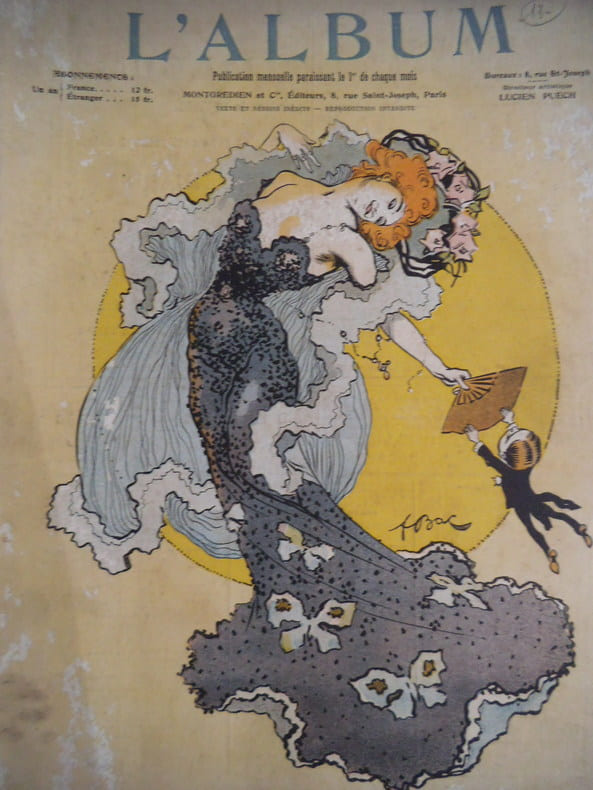
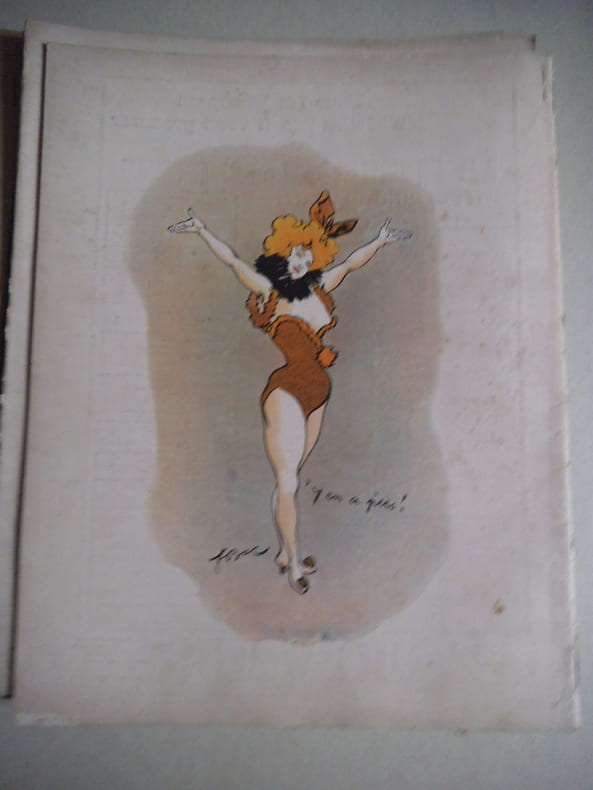
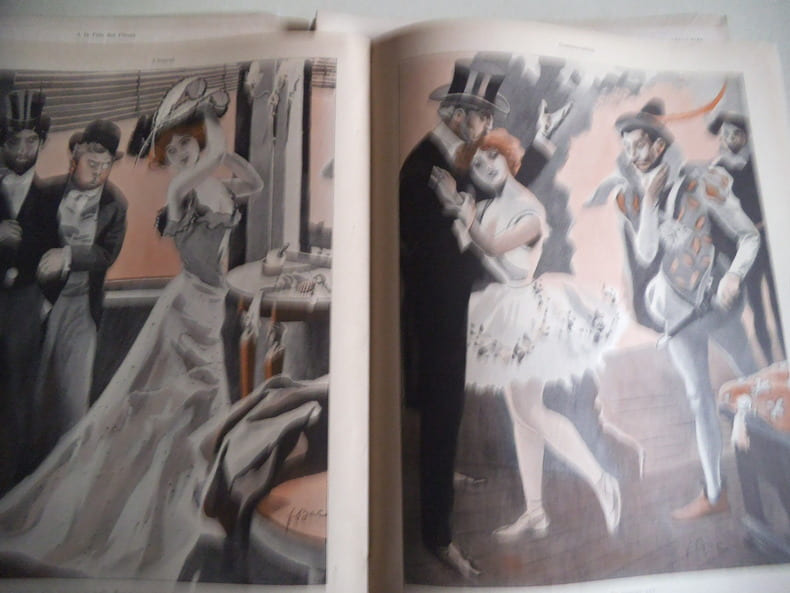
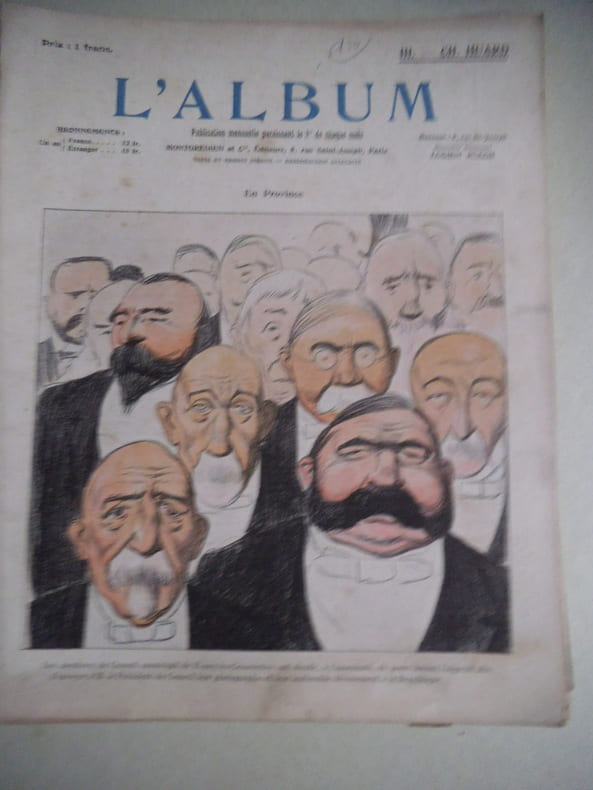
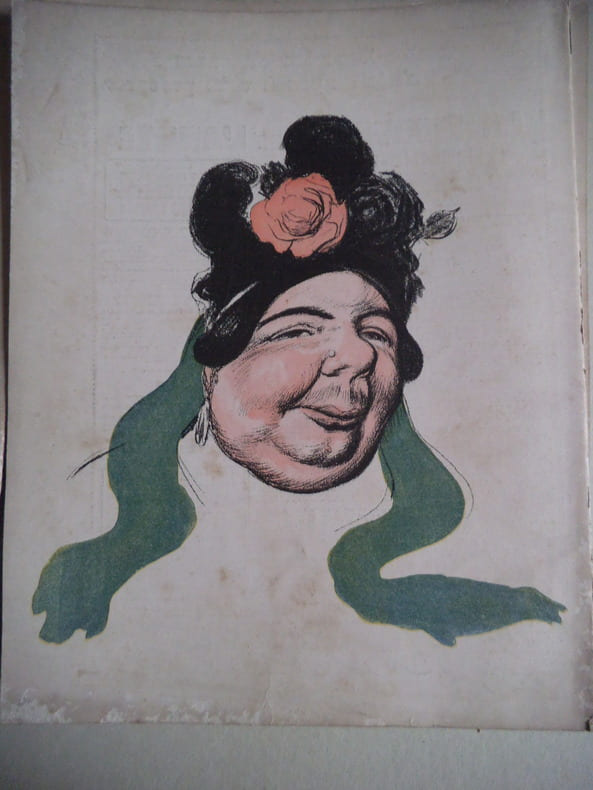
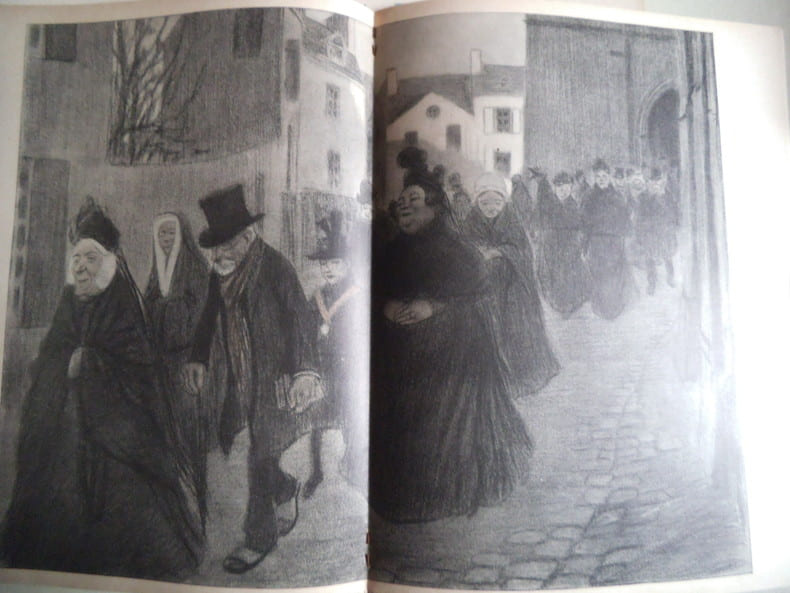
publication mensuelle, paraissant le premier de chaque mois, 20 pages, illustrées en noir et en couleurs, y compris la couverture in 4 broché, couverture illustré en couleurs. Chaque numéro est consacré entièrement à un artiste. Texte de Lucien PUECH. Montgrédien éditeur, Tallandier. Volume II Ferdinand Bac (petits frottements sur le premier plat). Volume III : Charles HUARD (une petite déchirure). chaque volume
Reference : 12682
Bookseller's contact details
Charbonnel
M. Sylvain Charbonnel
2, rue du Champ de Mars
55000 Bar le Duc
France
03 29 79 40 63
Payment mode

Sale conditions
Les commandes se font de préférence par e-mail ou par courrier.Tous les livres proposés sont en bon état sauf indications contraires mentionnées dans la description.Les prix sont nets,port en sus à la charge du destinataire.Les envois,après entente concernant les frais de port pour la France s'effectuent dès réception par chèque bancaire,mandat ou virement bancaire.Pour la zone euro par virement bancaire. Me demander mon RIB-IBAN-BIC.Hors Europe Règlement par carte bancaire accepté uniquement par l'intermédiaire de pay pal,les frais sont à la charge de l'acheteur.Les livres voyagent aux risques et périls du destinataire,l'emballage soigné est gratuit.Afin d'éviter tout litige il est expressément conseillé l'envoi en recommandé.Passé un délai d'une dizaine de jours à partir de la date de commande,les ouvrages non réglés seront remis en vente.
5 book(s) with the same title
L'Armée française. Album annuaire. 1902
État : En très bon état seuls les coins sont un peu émoussés. - Année : 1902 - Format : in 4° - Pages : 100pp env. - Editeur : Plon-Nourrit et Cie - Lieu d'édition : Paris - Type : Cartonnage éditeur illustré - Commander rapidement : https://www.bons-livres.fr/livre/roger-de-beauvoir/3424-l-armee-francaise-album-annuaire-1902?lrb
Toute notre Armée française à la veille de la Grande Guerre par Région militaire, par Corps d'armée et par Division. Annuaire indispensable pour savoir qui commandait à cette époque mais aussi manuel d'instruction patriotique grâce aux nombreux récits et illustrations qui, en regard de chaque organigramme, égayent cet ouvrage. Vous pourrez y lire quelques beaux et nobles récits sur la guerre de 70 et sur la pacification de l'Algérie mais également un panégérique de Victor Hugo patriote ainsi que de belles reproductions des peintres militaires de l'époque.
[Valmonde] - Le Spectacle du Monde (revue) ; Michel de Jaeghere (dir.) ; Valeurs actuelles (revue)
Reference : 44638
(2008)
L'album de l'Année - En perspectives ( Série de 18 vol., de 1989 à 2007, sauf l'album de l'année 2001 ) : 1989 en perspectives ; 1990 en perspectives ; 1991 perspectives 1992 ; 1992 perspectives 1993 ; l'album de l'année 1993 perspectives 1994 ; l'album de l'année 1994 perspectives 1995 ; l'album de l'année 1995 perspectives 1996 ; l'album de l'année 1996 perspectives 1997 ; l'album de l'année 1997 perspectives 1998 ; l'album de l'année 1998 perspectives 1999 ; l'album de l'année 1999 perspectives 2000 ; l'album de l'année 2000 perspectives 2001 ; l'album de l'année 2002 perspectives 2003 ; l'album de l'année 2003 perspectives 2004 ; l'album de l'année 2004 perspectives 2005 ; l'album de l'année 2005 perspectives 2006 ; l'album de l'année 2006 perspectives 2007 ; l'album de l'année 2007 perspectives 2008
18 vol. in-4 cartonnage édit., avec ou sans jaq., sous emboitages cartonnés sauf 2 vol., couv. ill. couleurs, nombreuses ill. couleurs, Le Spectacle du Monde - éditions Valmonde, 1989 à 2008, env. 254 pp. par vol. Liste des volumes de cette série : 1989 en perspectives ; 1990 en perspectives ; 1991 perspectives 1992 ; 1992 perspectives 1993 ; l'album de l'année 1993 perspectives 1994 ; l'album de l'année 1994 perspectives 1995 ; l'album de l'année 1995 perspectives 1996 ; l'album de l'année 1996 perspectives 1997 ; l'album de l'année 1997 perspectives 1998 ; l'album de l'année 1998 perspectives 1999 ; l'album de l'année 1999 perspectives 2000 ; l'album de l'année 2000 perspectives 2001 ; l'album de l'année 2002 perspectives 2003 ; l'album de l'année 2003 perspectives 2004 ; l'album de l'année 2004 perspectives 2005 ; l'album de l'année 2005 perspectives 2006 ; l'album de l'année 2006 perspectives 2007 ; l'album de l'année 2007 perspectives 2008
Très bon état (4 vol. encore sous blister, emboitage très lég. frottés, excellent état pour tous les volumes) pour cette série, qui couvre la période depuis la chute du Mur de Berlin, jusqu'à la crise financière de 2007. Une documentation de référence pour cette période historique. Prix pour l'ensemble. Poids de 25 Kg.
L'Egypte et la Nubie. Grand album monumental, historique, architectural. Reproduction par les procédés inaltérables de la phototypie de cent cinquante vues photographiques par M. Béchard, artiste photographe, comprises depuis Le Caire (Egypte) jusqu'à la 2e cataracte (Nubie). Avec un texte explicatif des monuments d'après nos meilleurs écrivains par M. A. Palmieri.
Paris, Quinsac (phototypie), Chaix (imprimerie), A Palmieri et E. Bechard (éditeurs-propriétaires), 1887. 1887 1 vol. in-plano (480 x 630 mm) de: 10 feuillets doubles de texte donnant : 24 pp numérotées comprenant : faux titre, titre, préface, note de léditeur, lettre dAmrou au calife Omar, explication des planches ; [2] ff : liste des principaux auteurs et table des matières, 4 pp : "Lettres écrites dEgypte et de Nubie en 1828 et 1829 par Champollion le Jeune" numérotées 175 à 177, 1 p bl. ; 150 planches photographiques en collotypie, toutes signées, numérotées et légendées dans les marges. (salissures, léger jaunissement marginal, défauts dusages). En feuilles, sous cartonnage portefeuille à lacets de l'éditeur de demi-toile rouge à coins et couverture avec titre imprimé avec ornements de style égyptien. (salissures et défauts d'usage).
Monumental album comportant 150 phototypes de vues des monuments anciens et modernes de lEgypte et de la vie et des coutumes de ses habitants, ouvrage hors normes dû au célèbre photographe orientaliste Émile Béchard qui fut récompensé par la médaille d'or lors de l'Exposition universelle de Paris de 1878. La fin des campagnes militaires de Bonaparte donne l'accès au Moyen-Orient, permettant aux voyageurs, artistes, archéologues et savants de découvrir ce " nouveau monde " mystérieux. Emile Béchard (1840-1891) fait partie de ces découvreurs. Armé de son appareil photographique, il sillonne l'Egypte et s'installe au Caire où il ouvre un atelier de photographie de 1869 à 1873, associe à Hippolyte Délié (1841-1899). Comme leurs confrères locaux Antonio Beato, Ermé Désiré ou Hippolyte Arnoux, Délié et Béchard photographient les rues des villes et leurs habitants, les monuments et antiquités de l'Égypte, et réalisent des portraits en studio. L'atelier, baptisé « Au jardin de l'Esbékieh », commercialise de nombreuses photos-cartes auprès des touristes. En 1871, Délié et Béchard sollicitent auprès de l'égyptologue Auguste Mariette (1821-1881) l'autorisation de photographier les salles et objets du musée de Boulaq, dont il est le directeur et qu'il a fondé en 1858, en même temps que le Service de conservation des antiquités de l'Égypte. Favorable au projet, Mariette collabore avec eux en choisissant les objets dignes d'intérêt et en écrivant les textes. L'Album du musée de Boulaq, illustré de quarante planches photographiques, paraît en 1872. L'ouvrage, un des premiers en son genre, a contribué à faire connaître l'Égypte pharaonique hors de ses frontières. Homme curieux, Béchard photographie également tout ce qui passe à portée de son objectif, produisant un ensemble photographique d'une telle qualité que ses vues sont présentées à l'Exposition universelle de 1878 à Paris qui gratifie son travail dune médaille d'or. La perfection de ses clichés est extraordinaire pour l'époque et aujourdhui encore on reste en admiration devant cette vision de l'Egypte telle que nous ne la verrons plus jamais. L'ensemble de ces prises de vues est réuni dans le présent « Grand album monumental », coédité en 1887, qui par son succès contribue à faire connaître l'Egypte. Dans sa préface, Béchard indique : « En tête de l'album, nous avons mis une lettre d'Amrou adressée au calife Omar; quoiqu'elle date de plus de douze siècles, c'est encore l'image la plus vraie et la plus simple de l'Égypte, dont l'histoire gigantesque, enfouie dans une série sans fin de siècles, est loin d'être écrite entièrement. « Lettre dAmrou au calife Omar, en lan 642: O prince des fidèles, peins-toi un désert aride et une campagne magnifique au milieu de deux montagnes : voilà l'Egypte. Toutes ses productions et toutes ses richesses, depuis Assouan jusqu'à Mencha, viennent d'un fleuve béni qui coule avec majesté au milieu du pays. Le moment de la crue et la retraite de ses eaux sont aussi réglés par le cours du soleil et de la lune ; il y a une époque de l'année où toutes les sources de l'univers viennent payer à ce roi des fleuves le tribut auquel la Providence les a soumises envers lui. Alors les eaux augmentent, sortent de son lit et couvrent toute la face de l'Égypte pour y déposer le limon productif. Il n'y a plus de communication d'un village à l'autre que par le moyen des barques, aussi nombreuses que les feuilles de palmier. Lorsque, ensuite, arrive le moment où ses eaux cessent d'être nécessaires à la fertilité du sol, le fleuve docile rentre dans les bornes que le destin lui a prescrites, pour laisser recueillir le trésor qu'il a caché dans le sein de la terre » Cet album imposant se distingue par ses points de vue originaux, son souci évident de la composition et de la visibilité des proportions des édifices représentés et également par son procédé dimpression novateur. Il est un des plus importants albums photographiques publié au XIXème siècle consacrés à l'Égypte, uvre majeure d'Emile Béchard, considéré en Égypte comme l'un des plus grands photographes de la fin du XIXème. Ses 150 planches sont imprimées en phototypie par Quinsac chez Chaix, procédé d'impression à l'encre grasse au moyen de gélatine bichromatée et insolée sur plaque de verre, élaboré en 1856 par Louis-Alphonse Poitevin. Cette technique servira plus tard de base à la mise au point de l'héliogravure, ce procédé permettant un rendu à modèle continu non tramé qui donne une meilleure définition de l'image imprimée. Les cent cinquante très belles photographies qui composent cet album forment un témoignage historique inoubliable, accompagnées d'un texte d'introduction explicatif dû à André Palmieri. Dans la liste dune trentaine dauteurs anciens et modernes donnée par les éditeurs Palmery comme source de l« explication des planches » figurent : AMPERE, BELZONI, BRUCE, CHAMPOLLION le Jeune, CORRINGE, CHIPIEZ, DUCAMP, DIODORE DE SICILE, EBERS, FONTANE, FERRY, HUGONNET, HERVÉ, JOMARD, LETRONNE, LAMBERT DE LA CROIX, L'HOTE, MARIETTE, PERROT, HÉRODOTE, PLINE et STRABON. Ce texte débute par lexplication de la planche n°1 : Vue générale du Caire : « El Kahira » en arabe (La victorieuse). « Qui na vu le Caire na vu la monde (Mille et une nuits) La première pierre de la ville du Caire a été posée en l'an 970 de notre ère, par Djaühar, général arabe, instaurateur en Égypte de la dynastie des sultans fatimites [...] La ville forme une sorte de carré oblong, dont la plus grande étendue, du S.-O. au N.-E., est d'environ 4 kilomètres sur 2 kilomètres de large. Sa périphérie est de 24 kilomètres, non compris Boulak et le Vieux-Caire [...] Un canal « Le Khalig, » dérivé du Nil, traverse la ville dans toute sa longueur [] Le Caire renferme 4 grandes Places, 400 Mosquées, 40 Églises chrétiennes, 13 Syna-gogues, 1,300 Okells, 1,200 Cafés, 300 Fontaines et Citernes, 140 Écoles,70 Bains publics. Les Okells sont des édifices fermés, faisant office de Magasins généraux, ou chaque commerçant dépose ses marchandises [] Viennent ensuite : Entrée de la citadelle, mosquée de Mehmet-Ali, rue de Touloum, mosquée Kaïd-Bey, rue souq el-Sylah, tombeau des Kalifes, mosquée El-Hakem, tombeau des Kalifes, vue panoramique du Caire, porte de la victoire, mosquée du Sultan Hassan, tombeaux des Mameluks, rue Mansour-Pacha, intérieur de la mosquée dAmrou, mosquée de Barqouq, le Djebbel- Mokatam, fontaine Sebil-Hallah, Dossay : fête religieuse au Caire, Moucharabieh, le Khalig, Ecole arabe, mosquée et tombeau El-Achraf, fontaine et Ecole, arabe, Cour dune Maison arabe, Rue Seideh-Zeileh, coin du Mokatam, Sakieh, Chadouf, Obélisque dHeliopolis, arbre de la vierge à Matarieh, lavenue de Shoubrah, vue panoramique du Caire, la grande pyramide, ascension de la grande pyramide, descente de la grande pyramide, la grande pyramide vue de lEst, débordement, périodique du Nil, tombeau de Ti, statue de Sesostris, pyramide de Saqqarah, village de Chekh-Abadeh, Girgeh et Qeneh villages arabes, les BeniHassan, Abydos: temple et portrait de Seti, temple de Denderah, forêt de palmiers, obélisque et pylône de Ramsès II, Louqsor, le poème de Pantaour, colonnade du temple-Louqsor, village de Carnac et montagne funéraires, lavenue des sphynx, la porte dEvergete, le temple de Khons- Pylone-porte dEvergete, Karnac: le pylône dHorus, les Pylônes, le lac sacré, ruines et cour du temple, salle Hypostyle, ruines, obélisque de la reine Hatasou, procession des barques sacrées, Medinet Abou: Édifice de Ramses III, colosses, galerie, cour du grand temple, colonnes de léglise Copte, Thèbes: Temple de Ramesseum, colosses brisés, le pylône en ruines, salle Hypostyle, les colosses de Memnon, le temple de Qournah, la vallée des Rois, entrée dun tombeau, Temple dEsneh, Pronaos: temple dEdfou: galerie, pylône, cour, couloir, couronnement du Roi par les déesses; Gebel Silsileh, le temple dOmbos, le port dAssouan, vue de la première Cataracte, lîle de Philoe: Temple dIsis: colonnades et Dromos, Temple hypaetrale, arc de triomphe, vue générale des temples; Léa première cataracte: lîle Beghe, la chasse aux crocodile, le temple de Kerdadeh, le temple de Kalapcheh, le temple de Dandour, le temple de Kircheh, le temple de Dakkeh, Grand temple dIsamboul: la statue de Ramses, le Spheos dHator; vue de la deuxième Cataracte. Béchard achéve ainsi son monumental album : « Comme finale indispensable à cet ouvrage, nous avons reproduit le texte d'une intéressante lettre de Champollion le Jeune datée de Ouadi-Halfa le 1" janvier 1829. C'est en cet endroit que notre illustre el regretté compatriote termina son voyage et c'est là que nous nous sommes également arrêtés »: 9éme des « lettres écrites dEgypte et de Nubie » par Champollion le jeune, Ouadi-Halfa, deuxième cataracte, le janvier 1829. Extrait : « Me voici arrivé fort heureusement au terme extrême de mon voyage ; j'ai devant moi la deuxième cataracte, barrière de granit que le Nil a su vaincre, mais que je ne dépasserai pas. Au-delà existent bien des monuments, mais de peu dimportance : il faudrait d'ailleurs renoncer à nos barques, se jucher sur des chameaux difficiles à trouver, courir des déserts et risquer de mourir de faim ; car vingt-quatre bouches veulent au moins manger comme dix, et les vivres sont déjà fort rares ici : c'est notre biscuit de Syène qui nous a sauvés. Je dois donc arrêter ma course en ligne droite, et virer de bord, pour commencer sérieusement l'exploration de la Nubie et de l'Égypte, dont j'ai une idée générale acquise en montant : mon travail commence réellement aujourdhui, quoique j'aie déjà en portefeuille plus de six cents dessins ; mais il reste tant à faire que j'en suis presque effrayé; toutefois, je présume m'en tirer à mon honneur avec huit mois d'efforts. J'explorerai la Nubie pendant le mois de janvier, et à la mi-février je m'établirai à Thèbes jusqu'au milieu d'août que je redescendrai rapidement le Nil en ne m'arrêtant qu'à Dendérah et à Abydos. Le reste est déjà en portefeuille. Nous reverrons ensuite le Kaire et Alexandrie. [] Le grand temple d'Ibsamboul vaut à lui seul le voyage de la Nubie : c'est une merveille qui serait une fort belle chose même à Thèbes. Le travail que cette excavation a coûté effraie l'imagination. La façade est décorée de quatre colosses assis n'ayant pas moins de soixante et un pieds de hauteur ; tous quatre d'un superbe travail, représentent Ramsès le Grand ; leurs faces sont des portraits et ressemblent aux figures de ce roi qui sont à Memphis, à Thèbes et partout ailleurs. C'est un ouvrage digne de toute admiration. Telle est lentrée ; l'intérieur en est tout à fait digne ; mais c'est une rude épreuve que de le visiter. A notre arrivée, les sables, et les Nubiens qui ont soin de les pousser, avaient fermé l'entrée. Nous la fîmes déblayer ; nous assurâmes le mieux que nous le pûmes le petit passage qu'on avait pratiqué, et nous primes toutes les précautions possibles contre la coulée de ce sable infernal qui, en Égypte comme en Nubie, menace de tout engloutir. Je me déshabillai presque complètement, ne gardant que ma chemise arabe et un caleçon de toile, et me présentai à plat ventre à la petite ouverture d'une porte qui, déblayée, aurait au moins vingt-cinq pieds de hauteur. Je crus me présenter à la bouche d'un four, et me glissant entièrement dans le temple, je me trouvai dans une atmosphère chauffée à 51 degrés ; nous parcourûmes cette étonnante excavation, Rosellini, Ricci, moi et lun de nos Arabes, tenant chacun une bougie à la main. La première salle est soutenue par huit piliers contre lesquels sont adossés autant de colosses de trente pieds chacun, représentant encore Ramses le Grand : sur les parois de cette vaste salle règne une file de grands bas-reliefs historiques, relatifs aux conquêtes du Pharaon en Afrique ; un bas-relief surtout, représentant son char de triomphe, accompagné de groupes de prisonniers nubiens, nègres, etc., de grandeur naturelle, offre une composition de toute beauté et du plus grand effet. Les autres salles, et on en compte seize, abondent en beaux bas-reliefs religieux, offrant des particularités fort curieuses. Le tout est terminé par un sanctuaire au fond duquel sont assises quatre belles statues, bien plus fortes que nature et d'un très bon travail. Ce groupe représentant Amon-Ra, Phré, Phtah, et Ramsès le Grand assis au milieu d'eux, mériterait d'être dessiné de nouveau » Bel exemplaire, sans rousseurs et conservé dans son cartonnage déditeur. 1 vol. in-plano (480 x 630 mm) comprising: 10 double-leaf text sheets resulting in 24 numbered pages, including: half-title, title page, preface, publishers note, Amrous letter to Caliph Omar, and explanations of the plates; [2] ff: list of principal authors and table of contents, 4 pp: Letters written from Egypt and Nubia in 1828 and 1829 by Champollion the Younger numbered 175 to 177, 1 blank p.; 150 collotype photographic plates, all signed, numbered, and captioned in the margins. (stains, slight marginal yellowing, signs of wear). Loose sheets, in the publishers red half-cloth slipcase with laces, corner protectors, and a cover bearing the printed title with Egyptian-style ornamentation. (Stains and signs of wear). A monumental album containing 150 phototypes of ancient and modern monuments in Egypt, as well as scenes of the daily life and customs of its inhabitants; this extraordinary work is the creation of the famous Orientalist photographer Émile Béchard, who was awarded the gold medal at the 1878 Paris Worlds Fair. The end of Bonapartes military campaigns opened up access to the Middle East, allowing travelers, artists, archaeologists, and scholars to discover this mysterious new world. Émile Béchard (18401891) was one of these explorers. Armed with his camera, he traveled throughout Egypt and settled in Cairo, where he opened a photography studio from 1869 to 1873, partnering with Hippolyte Délié (18411899). Like their local colleagues Antonio Beato, Ermé Désiré, and Hippolyte Arnoux, Délié and Béchard photographed city streets and their inhabitants, as well as Egypts monuments and antiquities, and produced studio portraits. The studio, named Au jardin de lEsbékieh, sold numerous photo-postcards to tourists. In 1871, Délié and Béchard sought permission from the Egyptologist Auguste Mariette (18211881) to photograph the rooms and objects of the Boulaq Museum, which he had founded in 1858the same year he established the Egyptian Antiquities Conservation Serviceand of which he was the director. Mariette, supportive of the project, collaborated with them by selecting objects of interest and writing the accompanying texts. The Album of the Boulaq Museum, illustrated with forty photographic plates, was published in 1872. The work, one of the first of its kind, helped introduce Pharaonic Egypt to the world beyond its borders. A curious man, Béchard also photographed everything that came within range of his lens, producing a body of work of such high quality that his images were presented at the 1878 Worlds Fair in Paris, where his work was awarded a gold medal. The perfection of his photographs was extraordinary for the time, and even today we remain in awe of this vision of Egypt as we will never see it again. All of these photographs are brought together in the present Grand album monumental, co-published in 1887, which, through its success, helped to introduce Egypt to the world. In his preface, Béchard writes: At the beginning of the album, we have included a letter from Amrou addressed to Caliph Omar; although it dates back more than twelve centuries, it remains the truest and simplest image of Egypt, whose vast history, buried in an endless succession of centuries, is far from being fully written. Letter from Amrou to Caliph Omar, in the year 642: O Prince of the Faithful, picture for yourself an arid desert and a magnificent countryside between two mountains: this is Egypt. All its produce and all its riches, from Aswan to Mencha, come from a blessed river that flows majestically through the heart of the land. The timing of the flood and the retreat of its waters are also governed by the course of the sun and the moon; there is a time of year when all the springs of the universe come to pay this king of rivers the tribute to which Providence has subjected them. Then the waters rise, overflow their banks, and cover the entire face of Egypt to deposit the fertile silt. There is no longer any communication from one village to another except by means of boats, as numerous as palm leaves. When, subsequently, the time comes when its waters are no longer necessary for the fertility of the soil, the docile river returns to the boundaries that destiny has prescribed for it, to allow the treasure it has hidden in the bosom of the earth to be gathered This impressive album stands out for its original perspectives, its evident attention to composition and the clear proportions of the buildings depicted, as well as for its innovative printing process. It is one of the most significant photographic albums published in the 19th century devoted to Egypt, a major work by Emile Béchard, regarded in Egypt as one of the greatest photographers of the late 19th century. Its 150 plates were printed using the phototype process by Quinsac at Chaix, a printing method employing oil-based ink via bichromate gelatin exposed onto a glass plate, developed in 1856 by Louis-Alphonse Poitevin. This technique would later serve as the basis for the development of heliogravure, a process allowing for a continuous, non-halftone rendering that provides greater definition of the printed image. The one hundred and fifty exquisite photographs that make up this album form an unforgettable historical record, accompanied by an explanatory introductory text by André Palmieri. The list of some thirty ancient and modern authors provided by the publishers Palmery as the source for the explanation of the plates includes: AMPERE, BELZONI, BRUCE, CHAMPOLLION the Younger, CORRINGE, CHIPIEZ, DUCAMP, DIODORE OF SICILY, EBERS, FONTANE, FERRY, HUGONNET, HERVÉ, JOMARD, LETRONNE, LAMBERT DE LA CROIX, L'HOTE, MARIETTE, PERROT, HERODOTUS, PLINY, and STRABO. This text begins with the explanation of Plate No. 1: General View of Cairo: El Kahira in Arabic (The Victorious). He who has not seen Cairo has not seen the world (One Thousand and One Nights). The first stone of the city of Cairo was laid in the year 970 A.D. by Djaühar, an Arab general who established the Fatimid dynasty in Egypt [...] The city forms a sort of oblong square, whose greatest extent, from southwest to northeast, is approximately 4 kilometers long by 2 kilometers wide. Its perimeter is 24 kilometers, not including Boulaq and Old Cairo [...] A canal, Al-Khalig, diverted from the Nile, crosses the city along its entire length [] Cairo contains 4 large squares, 400 mosques, 40 Christian churches, 13 synagogues, 1,300 okells, 1,200 cafés, 300 fountains and cisterns, 140 schools, and 70 public baths. The Okells are enclosed buildings serving as general stores, where each merchant deposits his goods [] Next come: Entrance to the citadel, Mehmet Ali Mosque, Touloum Street, Kaid Bey Mosque, Souq el-Sylah Street, Tomb of the Caliphs, El-Hakem Mosque, Tomb of the Caliphs, panoramic view of Cairo, Gate of Victory, Sultan Hassan Mosque, Tombs of the Mamluks, Mansour Pasha Street, interior of the Amrou Mosque, Barquq Mosque, Djebbel-Mokatam, Sebil-Hallah Fountain, Dossay: religious festival in Cairo, Mashrabiya, the Khalig, Arab School, El-Achraf Mosque and Tomb, fountain and Arab School, Courtyard of an Arab House, Seideh-Zeileh Street, corner of Mokatam, Sakieh, Chadouf, Obelisk of Heliopolis, Virgins Tree in Matarieh, Shoubrah Avenue, panoramic view of Cairo, the Great Pyramid, climbing the Great Pyramid, descending the Great Pyramid, the Great Pyramid viewed from the east, flooding, periodic flooding of the Nile, tomb of Ti, statue of Sesostris, pyramid of Saqqara, village of Chekh-Abadeh, Girgeh and Qeneh Arab villages, the BeniHassan, Abydos: temple and portrait of Seti, temple of Denderah, palm grove, obelisk and pylon of Ramses II, Luxor, the poem of Panthor, colonnade of the Luxor Temple, village of Karnak and funerary mountains, Avenue of the Sphinxes, Gate of Evergete, Temple of KhonsuPylon-Gate of Evergete, Karnak: the Pylon of Horus, the Pylons, the Sacred Lake, ruins and courtyard of the temple, Hypostyle Hall, ruins, obelisk of Queen Hatshepsut, procession of the sacred boats, Medinet Habu: Temple of Ramses III, colossi, gallery, courtyard of the Great Temple, columns of the Coptic church, Thebes: Ramesseum Temple, broken colossi, the ruined pylon, Hypostyle Hall, the Colossi of Memnon, the Temple of Qurnah, the Valley of the Kings, entrance to a tomb, Temple of Esna, Pronaos: Temple of Edfu: gallery, pylon, courtyard, corridor, coronation of the King by the goddesses; Gebel Silsileh, the Temple of Ombos, the port of Aswan, view of the First Cataract, the island of Philae: Temple of Isis: colonnades and Dromos, hypostyle temple, triumphal arch, general view of the temples; Lea, First Cataract: Beghe Island, crocodile hunt, the Temple of Kerdadeh, the Temple of Kalapcheh, the Temple of Dandour, the Temple of Kircheh, the Temple of Dakkeh, Great Temple of Isamboul: the statue of Ramses, the Sphinx of Hathor; view of the Second Cataract. Béchard thus concludes his monumental album: As an essential conclusion to this work, we have reproduced the text of an interesting letter by Champollion the Younger dated from Wadi Halfa on January 1, 1829. It was at this location that our illustrious and late compatriot ended his journey, and it is there that we, too, have stopped: 9th of the Letters Written from Egypt and Nubia by Champollion the Younger, Wadi Halfa, Second Cataract, January 1829. Excerpt: Here I am, having fortunately reached the very end of my journey; before me lies the Second Cataract, a granite barrier that the Nile has managed to overcome, but which I shall not cross. Beyond it there are indeed many monuments, but of little importance: moreover, we would have to abandon our boats, perch on camels that are hard to find, traverse deserts, and risk starving to death; for twenty-four mouths must eat at least as much as ten, and provisions are already very scarce here: it is our Syene biscuit that has saved us. I must therefore halt my straight-line journey and change course, to begin in earnest the exploration of Nubia and Egypt, of which I have gained a general idea on my way up: my work truly begins today, though I already have more than six hundred drawings in my portfolio; but there remains so much to do that I am almost daunted; however, I expect to do myself credit with eight months of effort. I will explore Nubia during the month of January, and in mid-February I will settle in Thebes until mid-August, when I will quickly travel down the Nile, stopping only at Dendera and Abydos. The rest is already in my portfolio. We will then revisit Cairo and Alexandria. [] The great temple of Ibsamboul alone is worth the trip to Nubia: it is a marvel that would be a truly magnificent sight even in Thebes. The labor required for this excavation is beyond imagination. The façade is adorned with four seated colossi no less than sixty-one feet in height; all four superbly crafted, representing Ramses the Great; their faces are portraits and resemble the figures of this king found in Memphis, Thebes, and everywhere else. It is a work worthy of the highest admiration. Such is the entrance; the interior is entirely worthy of it; but visiting it is a grueling ordeal. Upon our arrival, the sand, and the Nubians who are responsible for pushing it, had blocked the entrance. We had it cleared; we secured as best we could the small passage that had been cut through, and we took every possible precaution against the flow of that infernal sand which, in Egypt as in Nubia, threatens to engulf everything. I stripped down almost completely, keeping only my Arab shirt and a pair of linen breeches, and presented myself face down at the small opening of a doorway which, once cleared, would be at least twenty-five feet high. I felt as though I were standing at the mouth of a furnace, and as I slipped fully into the temple, I found myself in an atmosphere heated to 51 degrees; we explored this astonishing excavationRosellini, Ricci, myself, and one of our Arabseach holding a candle in hand. The first hall is supported by eight pillars against which stand an equal number of colossal figures, each thirty feet tall, again representing Ramses the Great: on the walls of this vast hall runs a row of large historical bas-reliefs depicting the Pharaohs conquests in Africa; one bas-relief in particular, depicting his triumphal chariot, accompanied by groups of Nubian and African prisoners, etc., life-sized, offers a composition of great beauty and the greatest effect. The other hallsand there are sixteen of themabound in beautiful religious bas-reliefs, displaying highly curious details. The whole is concluded by a sanctuary at the back of which sit four beautiful statues, much larger than life-size and of very fine workmanship. This group, representing Amun-Ra, Phre, Ptah, and Ramses the Great seated in their midst, would be well worth sketching again A fine copy, free of foxing and preserved in its publishers cardboard slipcase.


Albums N° 7, 9, 13, 14, 15, 16, 17, 18, 19, 20, 21, 22 ou 23. Chaque album:
Argout-Editions. 1985. in-4. Relié. Etat d'usage, Coins frottés, Mors fendus, Intérieur frais. - Album N° 7 : N° 42 (Octobre 1976) au N° 47 (Mars 1977). - Album N° 9 : N° 54 (Novembre 1977) à 59 (Avril 1978). - Album N° 13 : N° 78 (Janvier 1980) à 83 (Juin 1980). - Album N° 14 : N° 84 ( Juillet-Août 1980) à 89 (Janvier 1981). - Album N° 15 : N° 90 (Février 1981) à 95 ( Juillet 1981). - Album N° 16 : N° 96 ( Août 1981) à 101 (Janvier 1982). - Album N° 17 : N° 102 (Février 1982) à 107 (Juillet 1982). - Album N° 18 : N° 108 (Août 1982) à 113 ( Janvier 1983). - Album N° 19 : N° 114 (Février 1983) à 119 (Juillet 1983). - Album N° 20 : N° 120 ( Août 1983) à 125 ( janvier 1984). - Album N° 21 : N° 126 (Février 1984) à 131 ( Juillet 1984). - Album N° 22 : N° 132 (Août 1984) à 137 (Janvier 1985). - Album N° 23 : N° 138 ( Février 1985) à 143 ( Juillet 1985). Paris, Argout-Editions, 1974 à 1985, albums in 4, reliure éditeur illustrée, très nombreuses illustrations en noir et en couleurs, quelques traces d'humidité, 270 pp. environ par volume.... Chaque album pièce ( à préciser lors de la commande) .. . . . Classification Dewey : 355.8-Armes
HM-081 - Lieu d'édition : Paris Classification Dewey : 355.8-Armes
[Album de 36 peintures originales.]
(vers 1820-1830).
Album contenant 36 peintures à l'huile originales du chevalier de Bouffret. 15 montrent des paysages du Dauphiné, 6 de la région parisienne et 3 celle de Tours. Le chevalier de Bouffret, peintre paysagiste, a été actif dans les années 1820 et 1830. Il exposa au salon de Paris en 1812 et 1819 des paysages des environs de Paris et de la Touraine. Une vingtaine de ces peintures sont de grands formats 26 x 34 cm environ, les autres plus petites entre 16,5 x 22,5 cm et 18,5 x 14,5 cm. Presque toutes sont signées et toutes ont été vernies. On joint un album de 60 dessins (crayon et encre) (18,5 x 26,5 cm), non signés, mais du même artiste. Il portent le plus souvent une mention de sa main: "huile", "aquarelle" ou "sépia". On retrouve parmi ses dessins quelques uns des paysages de l'album de peintures. La maison de vente Sotheby's a vendu (14 December 2021) une huile sur toile d'un "château dans un paysage" (24 x 29.9 cm), daté de 1826 très similaire aux peintures de notre album, pour 800 £ (environ 1200 frais inclus). Belle reliure romantique pour l'album de peinture avec l'étiquette et nom doré en queue d'Alphonse Giroux. Actif de 1826 à 1848, Giroux n'était pas relieur mais faisait travailler Thouvenin qui ne travaillait pour cette maison qu'à la condition expresse de ne pas signer ses reliures. Après la disparition de Thouvenin, en janvier 1834, Bauzonnet pris le relais. Sur le premier plat une étiquette "Chevalier de Bouffret" a été apposée postérieurement. L'album de dessins est relié en demi-basane brune (défauts aux coiffes). Deux dessins (lavis d'encre sur papier) de Bouffret figurent dans le catalogue de l'exposition "Grenoble, visions d'une ville", Musée de l'ancien évêché, 2007. Les légendes au crayon sont d'évidence la main de Bouffret. Détails du contenu des albums sur demande. /// In-folio oblong de Chagrin noir, plats décorés d'un grand décor doré à arabesques, tranches dorées. (Reliure de l'époque.) //// Album containing 36 original oil paintings by Chevalier de Bouffret. 15 show landscapes of the Dauphiné, 6 of the Paris region and 3 of Tours. Chevalier de Bouffret, a landscape painter, was active in the 1820s and 1830s. He exhibited landscapes of the Paris region and Touraine at the Paris Salon in 1812 and 1819. Some twenty of these paintings are large, approx. 26 x 34 cm, the others smaller, between 16.5 x 22.5 cm and 18.5 x 14.5 cm. Almost all are signed and all have been varnished. An album of 60 unsigned drawings (pencil and ink) (18.5 x 26.5 cm) by the same artist is joined. In most cases, they bear his handwriting: oil, watercolor or sepia. His drawings include some of the landscapes in the album of paintings. The auction house Sotheby's sold (December 14, 2021) an oil on canvas of a château dans un paysage (24 x 29.9 cm), dated 1826 and very similar to the paintings in our album, for £800 (approx. 1,200 incl. fees). Beautiful romantic binding for the album of paintings with the gilt label and name on the bottom of spine of Alphonse Giroux. Active from 1826 to 1848, Giroux was not a bookbinder, but had Thouvenin work for him on the express condition that he would not sign his bindings. After Thouvenin's death in January 1834, Bauzonnet took over. A Chevalier de Boufflers label has been affixed to the front cover. The album of drawings is bound in brown half-basane (defects to the headpieces). Two drawings (ink wash on paper) by Bouffret are featured in the exhibition catalog Grenoble, visions d'une ville, Musée de l'ancien évêché, 2007. The pencil captions are obviously by Bouffret. List of contents on request.

