 Write to the booksellers
-
Type
Book (1552)
Magazine (26)
-
Latest
Last 3 days (2)
Last month (20)
Last week (1)
-
Century
17th (2)
18th (15)
19th (42)
20th (640)
21st (237)
-
Countries
Belgium (149)
Canada (24)
Côte d'Ivoire (14)
France (1351)
Switzerland (40)
-
Syndicate
ALAC (24)
CLAM (3)
CLAQ (5)
ILAB (509)
NVVA (15)
SLACES (15)
SLAM (466)
La Maison d'Herbe.
Pierre Seghers, Editeur Paris 1953 In-12 ( 190 X 125 mm ) de 57 pages, broché sous couverture ornée d'une vignette, rempliée. Avant-propos par Antoine ADAM. EDITION ORIGINALE. Bel exemplaire enrichi d'un très bel envoi autographe signé de l'auteur à Michel Tapié de Ceyleran.
La Maison d'Herbe.
Pierre Seghers, Editeur Paris 1953 In-12 ( 190 X 125 mm ) de 57 pages, broché sous couverture ornée d'une vignette, rempliée. Avant-propos par Antoine ADAM. EDITION ORIGINALE. Très bel exemplaire.
La Poésie aux yeux de coeur.
Michel Tapié S.L. 1951 In-8 carré ( 230 X 160 mm ) de 49 pages, broché sous couverture imprimée. EDITION ORIGINALE. Petites tâches sur la couverture, bel exemplaire, non coupé.
La SAGA de Lug HALLEWIJN.
Michel Tapié S.L. 1950 In-12 carré ( 165 X 165 mm ) de 77 pages, broché sous couverture imprimée. EDITION ORIGINALE au tirage limité à 720 exemplaires numérotés. Bel exemplaire.
Le sang du soir.
Sanderus S.L. 1970 In-8 ( 210 X 135 mm ) de 63 pages, broché sous couverture imprimée. Préface de René HUYGHE à ces poèmes illustrés par Jos VAN DEN ABEELE. EDITION ORIGINALE. Bel exemplaire enrichi d'un très bel envoi autographe signé de l'auteur à Michel Tapié de Ceyleran.
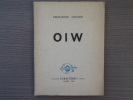
OIW.
Caractères - "Planètes" Paris 1955 In-12 carré ( 190 X 140 mm ) de 69 pages, broché sous couverture imprimée rempliée. EDITION ORIGINALE au tirage limité à 1000 exemplaires. Bel exemplaire
EPHPHETA.
Grassin Paris 1964 In-12 carré ( 190 X 140 mm ) de 44 pages, broché. Edition originale, 1 des 500 exemplaires sur pur vélin. Préface de Michel P. PHILIPPOT. 3 belles sérigraphies originales inédites de LAUQUIN tirées entièrement à la main ( 1 collée sur le premier plat, les 2 autres volantes ). Réalisation de Jean-Pascal LORRIAUX. Bel exemplaire enrichi d'un envoi autographe signé de l'auteur au dédicataire de l'ouvrage, Michel Tapié de Ceyleran.
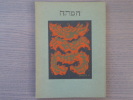
ANTEITE ANTI PAN.
Jean Grassin, Editeur Paris 1961 In-8 oblong "à l'italienne" ( 105 X 270 mm ) de 63 pages, broché sous couverture illustrée. Couverture et prolepse de Jaroslav SERPAN. EDITION ORIGINALE au tirage limité à 400 exemplaires sur vélin alfa. Bel exemplaire.
Esthétique du nu dans le monde.
Paris, Publications Photo-Cinéma, 1964. 20 x 25, sans pagination, 169 illustrations et hors-texte en couleurs, cartonnage d'édition + jaquette, bon état (jaquette légèrement défraîchie).
Deleuze's Modern Baroque. The Fold, Leibniz, the Formless, and the Objectile
, Brepols - Harvey Miller, 2025 Hardback, Pages: 271, Size:220 x 280 mm, Illustrations:19 b/w, 91 col., Language: English. ISBN 9781915487667.
Summary Gilles Deleuze's The Fold (1988) is a vast reflection not only on Leibniz's monadology, but also on the present and future of a new culture informed by a neo-Leibnizian approach to philosophy and the arts. Deleuze's baroque is both a transhistorical epistemic model and an artistic manifesto. It proposes a "way of being" that thrives on a notion of "identity" as inherently manifold, potentially contradictory, open-ended, and contingent on infinity. It also outlines the principles of a contemporary aesthetics that relies on the work and theory of artists as varied as Paul Klee, Jean Dubuffet, and Simon Hanta . In a neo-baroque society, the work of art becomes an objectile, a self-modulating machine able to operate through the input, but without the intervention, of an author. Focusing also on Deleuze and Guattari's What is Philosophy? (1991), this book discusses theoretical questions crucial to artistic debates in the period 1950-1980: art as philosophy; artistic thinking as opposed or germane to philosophical (and scientific) thinking; painting and sculpture as metaphysical operations; the ground as both the origin and negation of art; color as the degree zero of painting; authorless art; and art as infinity. Interwoven with examples of works by Christian Bonnefoi, Fran ois Rouan, Robert Ryman, Martin Barr , and Robert Rauschenberg, these discussions shed light on the complexity of Deleuze's investigations. The final section of the book centers on the reception of American minimalism in 1980s France and on the folding in architecture trend in the United States at the beginning of the 1990s. Here, works by Robert Morris, Carl Andre, Tony Smith, and Donald Judd are scrutinized as "preparatory" to the objectile, and Peter Eisenman's theory and architectural projects in the aftermath of deconstructivism are assessed in light of Deleuze's "fold". TABLE OF CONTENTS Introduction: An Estranged Baroque Chapter One: A Twentieth-Century Monad Chapter Two: The Baroque and its Resurgences Chapter Three: The Logos of the Formless Chapter Four: The Self-Modulating Machine of Art Bibliography Index
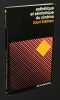
Esthétique et sémiotique du cinéma
Editions sociales Ouvertures Dos carré collé 1977 In-8 (13,5 x 21,5 cm), dos carré collé, 188 pages ; quelques frottements aux plats, petites rousseurs aux tranches, note manuscrite sur la première garde, par ailleurs bon état. Livraison a domicile (La Poste) ou en Mondial Relay sur simple demande.
Le miroir imaginaire. Essai sur la peinture. Traduit du portugais par Annie de Faria.
Bordeaux, L'Escampette, 1994, in 8° broché, 134pp. ; coouverture illustrée en couleurs.
Edition Originale. ...................... Photos sur demande ...................


Phone number : 04 77 32 63 69
Les chansons de Bilitis
1900 Paris, Librairie Charpentier et Fasquelle, Eugène Fasquelle, Editeur - 1900 - In-8, demi-basane, dos à nerfs titré en doré, tranches mouchetées - 356 pages - Edition ornée de 300 gravures et de 24 planches en couleurs hors texte par Notor
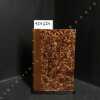
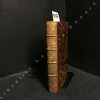
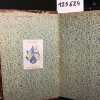
Coins légerement émoussés - Epidermures au dos - Ex-libris collé sur le deuxième plat Bon
Dix Ans d'Art Nouveau - Paul Hankar, Architecte
1991 CFC Edition / Archives d'Architecture Moderne à Bruxelles - MCMXCI (1991) - In-4 broché, couverture illustrée à rabats - 173 pages - Catalogue d'exposition
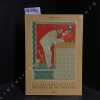
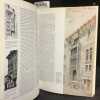
Bon état - Légers frottements - Dos légèrement insolé Bon
Egon Schiele
Relié, 131 pages, paru en 1990 chez Imprimerie des Arts et Manufactures, Paris, très bon état général.
Philosophie de l’art (1912-1914). Premiers écrits sur l’esthétique. Présentation par Rainer Rochlitz. Traduit de l’allemand par Rainer Rochlitz et Alain Pernet.
Paris, Editions Klincksieck, “L’esprit et les formes”, 1981. Un volume in-8°, broché.
[16703]
LUKACS, Georg - MORBOIS, Jean-Pierre (Traduit de l'allemand par)
Reference : 125979
(2015)
ISBN : 9791094512005
De la pauvreté en esprit, suivi de La légende du Roi Midas
2015 Editions la Tempête - 2015 - In-8 broché - 65 pages
Très bon état Très bon

