 Write to the booksellers
22 books for « dialogues d hylas et d... »Edit
-
Century
18th (1)
19th (2)
20th (14)
-
Topics
Berkeley (16)
Ireland (1)
Literature (2)
Philosophy (3)
Psychology (1)
-
Countries
Belgium (2)
Côte d'Ivoire (1)
Denmark (1)
France (18)
-
Syndicate
ILAB (12)
SLAM (11)
Three Dialogues between Hylas and Philonous. The Design of which Is plainly to demonstrate the Reality and Perfection of Humane Knowledge, the Incorporeal Nature of the Soul, and the Immediate Providence of a DEITY: In Opposition to Sceptics and Athei... - [THE PERCEPTUAL RELATIVITY]
London, Printed by G. James, for Henry Clements, 1713. 8vo. Contemporary marbled full calf boards, prettily rebacked in period style with gilt title-label, raised bands and gilt ornamentations to spine. During the re-backing, new end-papers have been inserted, but the original front end-paper , containing old owners' inscriptions, has been preserved and is still withbound. Three old owners' names to title-page, two of them crossed out. The title-page had been repaired at the outer margin, affecting three letters in the last three lines of the subtitle (To open a Method for rendering the/ SCIENCES more easy, useful, and/ compensious), namely the ""he"" in ""the"" and the ""d"" in ""and"" as well as part fo the double-ruled border, which has been drawn up again. The final leaf with a somewhat crode repair causing loss of some words towards the hinge. A small hole in A3, not repaired. A bit of brownspotting, mostly at beginning and end. With its flaws, still and overall acceptable copy of this extremely rare title. (10), 166 pp.
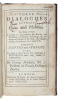
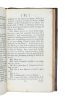
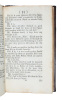
The very scarce first edition of Berkeley's other magnum opus, his great work of metaphysics, second in importance only to his ""Treatise Concerning the Principles of Human Knowledge"" (1710). The present work is not only a popularized version of the ""Treatise"", though it is a fact that it was more widely studied and more easily understood - being written as an almost Platonian dialogue between Hylas (Greek for ""matter"" - thought to be the representative for John Locke) and Philonous (Greek for ""the lover of reason"" - Berkeley's spokesman) - it also constitutes a thorough and elaborated explanation of Berkeley's central ideas and the emergence of many of the principal thoughts that we now associate with him and his anti-materialist philosophy.""In this Treatise, which does not presuppose in the Reader, any Knowledge of what was contained in the former (i.e. the ""Treatise""), it has been my Aim to Introduce the Notions I advance, into the Mind, in the most easy and familiar manner" especially, because they carry with them a great Opposition to the Prejudices of Philosophers, which have so far prevailed against the common Sense and natural Notions of Mankind.If the principles, which I here endeavour to propagate, are admitted true" the Consequences which, I think, evidently flow from thence, are, that Atheism and Scepticism will be utterly destroyed, many intricate Points made plain, great Difficulties solved, several useless Parts of Science retrenched, Speculation referred to Practise, and Men reduced from Paradoxes to common Sense"" (Preface, pp. (7-8)).In the present work, Berkeley, one of the greatest thinkers of early modern philosophy, sets out to alter the direction of philosophy and set straight the boundaries of man's knowledge of himself and the world around him. He seeks to bring back man to common sense and to bring back science and knowledge to that which is essential and factual. In the present work he famously defends the idealism, because of which he is still considered one of the greatest metaphysicians ever. As his ""Treatise"" is remembered today for the famous phrase ""Esse est percipi"" - to be is to be perceived - so his ""Dialogues"" is remembered for the introduction of the perceptual relativity argument (stating that the same object can have different characteristics, e.g. shape, colour, etc., depending on the perspective of the observer, e.g. distance, angle, light, etc.). Furthermore, as Berkeley had used God in the ""Principles"" as the CAUSE or originator of our ideas of sense, in the ""Dialogues"" he brings God a very important step further, stating that our ideas must EXIST IN God when not perceived by us, thus seeing this as the warrant for the continuity of our ideas (God being unchanging). This leap (from claiming that God must cause our ideas to claiming that our ideas must exist in God) that Berkeley thus takes in the ""Dialogues"" is among the most important within his philosophy, guaranteeing continuous existence to physical objects. The work is considered the foremost representative of Berkeley's phenomenalism.""George Berkeley, Bishop of Cloyne, was one of the great philosophers of the early modern period. He was a brilliant critic of his predecessors, particularly Descartes, Malebranche, and Locke. He was a talented metaphysician famous for defending idealism, that is, the view that reality consists exclusively of minds and their ideas. Berkeley's system, while it strikes many as counter-intuitive, is strong and flexible enough to counter most objections. His most-studied works, the Treatise Concerning the Principles of Human Knowledge (Principles, for short) and Three Dialogues between Hylas and Philonous (Dialogues), are beautifully written and dense with the sort of arguments that delight contemporary philosophers. He was also a wide-ranging thinker with interests in religion (which were fundamental to his philosophical motivations), the psychology of vision, mathematics, physics, morals, economics, and medicine. Although many of Berkeley's first readers greeted him with incomprehension, he influenced both Hume and Kant, and is much read (if little followed) in our own day."" (SEP).Berkeley published his first important philosophical work, ""Essay Toward a New Theory of Vision"" in 1709, aged 24. The book was well-received and a second edition came out later that same year. The following year he published ""A Treatise Concerning the Principles of Human Knowledge"" , in which he sought to lay out a complete philosophical system based on the idea that the only existing entities in the world are ideas and the mind that perceives them. The work was not very well received, however. This did not affect his search for truth, though, and he continued the outlay of his philosophical system in his ""Three Dialogues between Hylas and Philonous"", which was printed in 1713. Though neither of the two works were well received and appeared in small numbers, they are by far the most important and enduring of all of his works. The view that he presents in the ""Dialogues"" is that which he called ""immaterialism"" (now ""idealism""). He considered this anti-materialism the perfect answer to and refutation of skepticism and atheism, and his theories later became the foundation of much idealistic philosophy.""Upon the common Principles of Philosophers, we are not assured of the Existence of Things from their being perceived. And we are taught to distinguish their real Nature from that which falls under our Senses. Hence arise Scepticism and Paradoxes. It is not enough, that we see and feel, that we taste and smell a thing. Its true Nature, its absolute external Entity, is still concealed. For, tho it be the Fiction of our own Brain, we have made it inaccessible to all our Faculties. Sense is fallacious, Reason defective. We spend our Lives in doubting of those things which other Men evidently know, and believing those things which they laugh at and despise..."" (Preface, p. (6)).The first edition of this important work is very difficult to find. It was published in an edition together with the ""Treatise"" in 1734, which, though also scarce, is the edition of the work that most libraries and institutions have in their holdings, seeing that the first editions of both works are of even greater scarcity. We have only been able to locate three copies in libraries worldwide.

Dialogues entre Hylas et Philonous, dont le but est de démontrer clairement la réalité & la perfection de l'entendement humain, la nature incorporelle de l'âme et la providence immédiate de la Divinité, contre les sceptiques et les athées et d'ouvrir une méthode pour rendre les sciences plus aisées, plus utiles et plus abrégées. Traduit de l'anglais.
Amsterdam: , 1750 in-12, [4]-xx-288 pages, 3 vignettes gravées en tête des 3 dialogues. Reliure veau d'époque, dos à 5 nerfs, dos orné, coiffes érasées, coins usés, mors fendus en tête et en queue, tranches rouges, bon état intérieur. Ancien cachet et ex-libris manuscrit. Edition originale de la traduction française.
Dialogues entre Hylas et Philonous, dont le but est de démontrer clairement la réalité & la perfection de l'entendement humain, la nature incorporelle de l'âme et la providence immédiate de la Divinité, contre les sceptiques et les athées et d'ouvrir une méthode pour rendre les sciences plus aisées, plus utiles et plus abrégées. Traduit de l'anglais. (Amsterdam: 1750). [M.C.: philosophie]
OEUVRES CHOISIES DE BERKELEY, TOME I, Essai d'une nouvelle théorie de la vision, Dialogues entre Hylas et Philonous
Félix Alcan, Paris. 1895. In-8. Relié. Etat d'usage, Couv. convenable, Dos satisfaisant, Intérieur acceptable. 284 pages. 1er plat de l'ouvrage broché conservé (abîmé). Titre doré sur le dos. Etiquette de code sur la couverture. Quelques tampons et annotations de bibliothèque. Quelques feuillets détachés.. . . . Classification Dewey : 820-Littératures anglaise et anglo-saxonne
Trad. de l'anglais par G. Beaulavon et D. Parodi. Essai d'une nouvelle théorie de la vision. Dialogues entre Hylas et Philonous. Classification Dewey : 820-Littératures anglaise et anglo-saxonne

OEUVRES CHOISIES-TOME II-LES TROIS DIALOGUES ENTRE HYLAS ET PHILONOUS (TEXTE ANGLAIS EN REGARD)-ALCIPHRON (EXTRAITS)-SIRIS (EXTRAITS)
BIBLIOTHEQUE PHILOSOPHIQUE-TRADUCTION, PREFACE ET NOTES DE ANDRE LEROY-300 PAGES-12 CM X 18,5 CM-QUELQUES ANNOTATIONS AU CRAYON PAPIER SUR LES 50 PREMIERES PAGES-(27C)
AUBIER-MONTAIGNE COUVERTURE SOUPLE ETAT BON
Trois dialogues entre Hylas et Philonous - Avec un essai critique sur Berkeley : Le langage de la nature , par Michel Ambacher - Traduit par A. Leroy, avec présentation et commentaires
Broché bon état.Contenu propre . Couverture légèrement érodée . 1970. 236 pages.PHOTOS SUR DEMANDE
Merci de nous contacter à l'avance si vous souhaitez consulter une référence dans notre boutique à Authon-du-Perche.
Dialogues entre Hylas et Philonous
Librairie Félix Alcan Broché 1925 In-12 (12 x 18,8 cm), broché, 200 pages, 1ere édition française ; coiffes frottées, quelques traces et marques d'usage sur les plats, assez bon état général. Livraison a domicile (La Poste) ou en Mondial Relay sur simple demande.
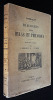
TROIS DIALOGUES ENTRE HYLAS ET PHILONOUS-AVEC UN ESSAI-CRITIQUE SUR BERKELEY: LE LANGAGE DE LA NATURE PAR MICHEL AMBACHER
COLLECTION LA PHILOSOPHIE EN POCHE-TRADUIT PAR A.LEROY, AVEC PRESENTATION, COMMENTAIRES ET PRECEDES D'UN ESSAI CRITIQUE SUR LA PHILOSOPHIE DE BERKELEY-236 PAGES-11,5 CM X 17,5 CM-(19A)
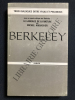
AUBIER MONTAIGNE COUVERTURE SOUPLE ETAT NEUF
Dialogues entre Hylas et Philonous
Librairie Félix Alcan. 1925. In-12. Broché. Etat d'usage, Couv. légèrement passée, Dos plié, Intérieur acceptable. LXV + 200 pages. Annotation au stylo entre page de faux titre.. . . . Classification Dewey : 840.091-XX ème siècle
Traduction de G. Beauvalon et D. Parodi. Classification Dewey : 840.091-XX ème siècle
Three dialogues betweens Hylas and Philonous the defign of which is plainlyto desmonstrate the Reality and Perfection of Humane Knowledge, the Incorporeal Nature of the soul and the Immediate Providence of a Deity in opposition to Sceptics and Atheists
Hackett publishing company. 1979. In-4. Broché. Etat passable, Coins frottés, Dos fané, Intérieur acceptable. 105 pages. Texte en anglais. Notes à l'encre hors texte. Quelques rousseurs. Légères pliures. Dos frotté.. . . . Classification Dewey : 420-Langue anglaise. Anglo-saxon
Introduction par Robert Merrihew Adams. Classification Dewey : 420-Langue anglaise. Anglo-saxon
Bibliothèque philosophique. ŒUVRES CHOISIES. Tome I (cahiers de notes. théorie nouvelle de la vision. principes de la connaissance humaine -texte anglais en regard- obéissance passive -extraits-). Tome II (les trois dialogues entre Hylas et Philonous-texte anglais en regard- Alciphron; Siris-extraits-). Traduction, préface et notes de André Leroy. Paris. Aubier Montaigne. 1960 et 1965.
2 Tomes in 12°. 382.300pp.
Tache sur les deux dernières pages du tome II. Mais bon état.
OEUVRES CHOISIES DE BERKELEY tome II - les trois dialogues entre Hylas et Philonous - Alciphron - Siris
AUBIER EDITIONS MONTAIGNE. 1944. In-4. Broché. Bon état, Couv. convenable, Dos satisfaisant, Intérieur frais. 300 pages. Etiquette de classement sur le dos. Tampon de l'institution de sainte marie sur la page de titre.. . . . Classification Dewey : 840-Littératures des langues romanes. Littérature française
Bibliothèque philosophique. Traduction préface et notes de André Leoy. Classification Dewey : 840-Littératures des langues romanes. Littérature française
OUVRES CHOISIES. I. ESSAI D'UNE NOUVELLE THEORIE DE LA VISION. DIALOGUES ENTRE HYLAS ET PHILONOUS.
FELIX ALCAN. 1895. In-8. Broché. A relier, Couv. défraîchie, Dos abîmé, Intérieur frais. 284 pages. Manques sur les plats et le dos. Premier plat détaché. Cahiers détachés.. . . . Classification Dewey : 820-Littératures anglaise et anglo-saxonne
Traduit de l'anglais pae G. Beaulavon et D. Parodi. Classification Dewey : 820-Littératures anglaise et anglo-saxonne
DIALOGUES ENTRE HYLAS ET PHILONOUS.
FELIX ALCAN. 1925. In-12. Broché. Etat d'usage, Couv. partiel. décollorée, Dos fané, Intérieur frais. 200 pages.. . . . Classification Dewey : 820-Littératures anglaise et anglo-saxonne
Traduction française par G. Beaulavon et D. Parodi. Classification Dewey : 820-Littératures anglaise et anglo-saxonne
OEUVRES CHOISIES DE BERKELEY TOME II - LES TROIS DIALOGUES ENTRE HYLAS ET PHILONOUS, ALCIPHIRON - SIRIS
AUBIER EDITIONS MONTAIGNE. 1951. In-12. Broché. Bon état, Couv. convenable, Dos satisfaisant, Intérieur frais. 300 pages.. . . . Classification Dewey : 800-LITTERATURE (BELLES-LETTRES)
Classification Dewey : 800-LITTERATURE (BELLES-LETTRES)
DIALOGUES ENTRE HYLAS ET PHILONOUS + LES PRINCIPES DE LES CONNAISSANCE HUMAINE. EXEMPLAIRE DE TRAVAIL
ALCAN.. 1925. In-8. Relié. Bon état, Couv. convenable, Dos satisfaisant, Intérieur acceptable. LXIV + 200 + 107 pages. Nombreuses notes au crayon de couleurs dans le texte.. . . . Classification Dewey : 840-Littératures des langues romanes. Littérature française
Classification Dewey : 840-Littératures des langues romanes. Littérature française
OEUVRES CHOISIES DE BERKELEY - TOME II. LES TROIS DIALOGUES ENTRE HYLAS ET PHILONOUS (TEXTE EN ANGLAIS EN REGARD) - ALCIPHRON (EXTRAITS) - SIRIS (EXTRAITS) / BIBLIOTHEQUE PHILOSOPHIQUE.
AUBIER - MONTAIGNE. 1943. In-8. Broché. Bon état, Couv. convenable, Manque en coiffe de pied, Intérieur frais. 300 pages.. . . . Classification Dewey : 820-Littératures anglaise et anglo-saxonne
TRADUCTION, PREFACE ET NOTES DE ANDRE LEROY Classification Dewey : 820-Littératures anglaise et anglo-saxonne
OEUVRES DE BERKELEY - TOME II : Les trois dialogues entre Hylas et Philonous (texte anglais en regard) - Alciphron (extraits) - Siris (extraits).
MONTAIGNE - AUBIER. 1944. In-8. Broché. Bon état, Couv. convenable, Dos abîmé, Intérieur frais. 300 PAGES - Accrocs au dos.. . . . Classification Dewey : 100-PHILOSOPHIE ET DISCIPLINES CONNEXES
Classification Dewey : 100-PHILOSOPHIE ET DISCIPLINES CONNEXES
Dialogues entre Hylas et Philonous.
Couverture souple. Broché. 201 pages. Rousseurs.
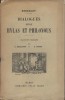
Livre. Traduction française par G. Beaulavon et D. Parodi. Editions Alcan, 1925.
Oeuvres choisies - Essai d'une nouvelle théorie de la vision - Dialogues entre Hylas et Philonous. Traduit de l'anglais par G. Beauvalon et D. Parodi -- PREMIERE EDITION FRANCAISE -- BEL EXEMPLAIRE RELIE
P., Alcan, 1895, un volume in 8 relié en demi-chagrin vert, (4), 28pp., 284pp.
---- PREMIERE EDITION FRANCAISE ---- BEL EXEMPLAIRE**395.K5
Dialogues entre Hylas et Philonous.
Paris, Félix Alcan, 1925, Broché, 200 pages. Bon état.
NB. Les commandes et questions sont traitées dans les 24h, les expéditions reprendront le 7 septembre. Tous les ouvrages de notre catalogue peuvent être consultés et retirés sous quelques jours à Saint-Gilles ou Paris, 5e arr. Merci de nous contacter.
Dialogues entre Hylas et Philonous.
Paris, Félix Alcan, 1925, in-12, Broché, 200 pages. Dos gauchi. Solide ex.
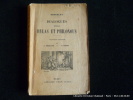
NB. Les commandes et questions sont traitées dans les 24h, les expéditions reprendront le 7 septembre. Tous les ouvrages de notre catalogue peuvent être consultés et retirés sous quelques jours à Saint-Gilles ou Paris, 5e arr. Merci de nous contacter.
DIALOGUES ENTRE HYLAS ET PHILONOUS. Traduction par G. Beaulavon et D. Parodi.
Paris, Librairie Félix Alcan, 1925, in-12 broché, LXV + 200 pp. Couverture usagée, intérieur bon.

