 Write to the booksellers
95 books for « benedictus »Edit
-
Language
Dutch (9)
English (1)
French (83)
Russian (2)
-
Century
17th (1)
19th (9)
20th (26)
21st (7)
-
Countries
Belgium (35)
France (47)
Netherlands (10)
Switzerland (1)
United States of America (2)
-
Syndicate
CLAM (11)
ILAB (47)
SLAM (36)
Topics
- Bach j. s. (1)
- Beethoven ludwig van (3)
- Belgium (7)
- Biography (1)
- Catholicism (1)
- Christianity (1)
- Comic strip (1)
- Ethic (2)
- First edition (1)
- Greek (4)
- Hagiography (4)
- Haydn joseph (1)
- History (3)
- Holland (1)
- Latin (4)
- Liturgy (1)
- Luxembourg (2)
- Monasteries (7)
- Mosaic (1)
- Music (2)
- Nettement alfred (1)
- Nigg walter (1)
- Palestrina (1)
- pharmacy (1)
- Philosophy (3)
- Poetry (1)
- Psychoanalysis (1)
- Public sale (3)
- Religions (9)
- Renouard-laurens (1)
- Scores (8)
- Spinoza (1)
- State (1)
- Trappists (2)
- Vatican city (1)
- Woods & woods’ price lists (1)
Den regel van den Heyligen Vader Benedictus, Abt ende Patriarch der Monincken in den Westen. Nieuws over-geset uyt het Latijn in de Nederduytsche tale, door eenen Religieus van de Abdije van S. Salvator, der Ordere van Cisteaux. Tweeden druck.
Antwerp ('t Antwerpen), By de Wed. vander Hey, op de Meir, in den H. Geest. Met Approbatie, n.d. (ca. 1768)
12mo. 150,(6) p. Calf 12.2 cm (Ref: A. Welkenhuysen, 'Benedicti Regula belgice, over bibliografie van Benedictus-vertalingen en oude drukken van de 'Regel' in het Nederduits', in Zetesis, Album amicorum, door vrienden en collaga's aangeboden aan Prof. Dr. E. de Strycker, Antw., Utrecht, 1954, p. 396-415, especially p. 412-415; Bibl. Cath. Neerl. Impr. 1954, p. 469, no. 1528'; not yet in STCV) (Details: Back with 3 raised bands. Gilt floral motive in the 4 compartments. Engraved printer's mark on the title, depicting the radiant dove of the Holy Ghost amidst clouds) (Condition: Upper corners of the boards abraded. Front flyleaf removed) (Note: Benedictus of Nursia, ca. 480 - ca. 550 A.D., is the Father of western monachism. In 519 he founded on the Monte Casino the Archabbey of the Benedictine Order. Wanting to reform monasticsm he composed ca. 540 his Regula monachorum(Rules for monks), in which he expressed his Ora et Labora-spirituality in 73 chapters. Until this day this Regula exercises influence. 'The Rule is marked by prudence and humanity, and leads by observance and obedience to the perfect following of Christ. It is safeguarded and applied by a patriarchal abbot, chosen by his monks, with full authority, who is directed to take counsel and to care for the individual. The chief task and central act of the community is the Divine Office (opus Dei) which with private prayer, spiritual reading, and work fills the day. All monks must renounce private ownership, though the monastery may own property; the regime is austere but not exacting' (L. Dysinger, St. John's Seminary, Camarillo, online article). The first translation of the Regula into Dutch dates from 1373, (OiN p. 122). The oldest printed Dutch translation appeared in Bruges in 1625, and was produced by Hendrik vanden Zype, since 1616 abbott of S. Andries neffens Brugghe, primarily, it seems, for the female followers of Benedictus in Bruges. There was in that time an open conflict in Bruges between the bischop and the abbess of the Benedictinesses. The aim of this translation seems to have been to put the Benedictinesses of Bruges in their place. In the dedication of the1625 edition we are told that it was made ad utilitatem et commoditatem Religiosarum Benedictinarum. In 1629 a new updated version of this translation was published in Douai (in the North of France), a catholic bulwark of the Contrareformation against the spreading of the protestantism in the Low Countries. This edition was probably also produced for the Benedictinesses, but now of Douai, for on the title is a citation of the Church Father Athanasius, Logos sôtêrias pros tên parthenon. A new translation of the Regula appeared in 1694 in Antwerp. The Flemish latinist Andries Welkenhuysen has compared the translation of 1625 with the one of 1694 and concluded that the translation was not new at all, but that the anonymous Religieus van de Abdije van S. Salvator, der Ordere van Cisteaux (Cistercian monk of the Abbey of S. Salvator) mentioned on the title simply made an aggiornamento of the edition of Bruges. This edition of 1694 was used for a second edition which was published by the widow Vander Hey in Antwerp in 1768. There is no date on the title. Welkenhuysen finds, that this second edition is, apart from some orthographica identical with that one of 1694. It even repeats the approbatio of 1694 at the end. The date of publication of this second edition is between 1747, the year that Coenraad Ignatius vander Hey died, and his wife took over, and 1772, the year the widow died. Welkenhuysen has compared all the books printed by the widow vander Hey concerning (the wear of) the typeface, the printer's mark, and the bibliographic address. He found that the widow used the copper engraving of the printer's mark of this book, the dove of the Holy Ghost, only for 3 books, 2 times in 1756, and 1 time for this undated book. The exact same wording of the imprint, 't Antwerpen, by de Wed. vander Hey, op de Meir, in den H. Geest' occurs only once, in an edition of 1768. Therefore Welkenhuysen dates this book ca. 1768. This book seems to be rare. We located only one copy in a Dutch library (erroneously dated 1694), a copy in the University Library of Gent and 2 copies in the University Library of Leuven. There is not yet a copy recorded in STCV or Beledimar) (Collation: A-F12 G6) (Photographs on request)
( Bandes Dessinées ) - Paul Cuvelier - Benedictus Boélan - Jacques Van Melkebeke.
Reference : 20272
(2014)
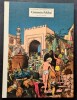
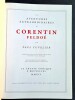
Les Aventures extraordinaires de Corentin Feldoé par Paul Cuvelier. Adaptation de texte original, Benedictus Boélan. Reproduction fidèle des dessins de l'artiste. ( Tirage unique à 1000 exemplaires numérotés, avec belle dédicace de Benedictus Boélan ).
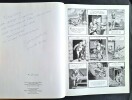
Editions La Crypte Tonique 2014. Grand in-4 cartonnage éditeur de 84 pages au format 40 x 30 cm. Couverture illustrée. Dos rond avec titre. Plats et intérieur frais, malgré d'infimes tassements et microscopiques frottis aux coins. Comprend l'album : Les aventures extraordinaires de Corentin Feldoé, avec reproduction fidèle des dessins en noir et blanc de l’artiste, et ce avec l'approbation et privilège des ayants droit. En fin d'ouvrage on trouve 8 hors textes couleur et 8 pages de making off. Couverture, dessins de Paul Cuvelier sur scénario de Jacques Van Melkebeke, avec adaptation du texte original par Benedictus Boélan. Un 1000 exemplaires numérotés ( n° 18 ), seul tirage, après 55 hors commerce. Rare édition originale, totalement épuisée, en superbe état général. Précieux exemplaire, enrichi d'une très belle dédicace, autographe, signée et datée de Benedictus Boélan.
Vente exclusivement par correspondance. Le libraire ne reçoit, exceptionnellement que sur rendez-vous. Il est préférable de téléphoner avant tout déplacement.Forfait de port pour un livre 10 € sauf si épaisseur supérieure à 3 cm ou valeur supérieure ou égale à 100 €, dans ce cas expédition obligatoire au tarif Colissimo en vigueur. A partir de 2 livres envoi en colissimo obligatoire. Port à la charge de l'acheteur pour le reste du monde.Les Chèques ne sont plus acceptés.Pour destinations extra-planétaire s'adresser à la NASA.Membre du Syndicat Lusitanien Amateurs Morues
Benedictus en zijn tijd. De vader van de westerse monniken. (Met een essay van Walter Nigg, 50 kleurenfoto's van Helmuth Nils-Loose, uittreksels uit de Benedictus-vita in het tweede boek van de Dialogen van Gregorius de Grote en uit de kloosterregel van Benedictus. Vrij vertaald en bewerkt door Th.C. Madder)
Antwerpen, Amsterdam, Uitgeverij De Nederlandsche Boekhandel, 1980.
115,5 p., illustrations. Cloth 24.5x21.5 cm (Including dustjacket)
Den Reghel vanden Heylighen vaeder Benedictus met achtenvichtich leeringen tot oprechter ootmoedicheyt beschreve door eenen verlichten Religieux vander Order van Cisteaux
Douay [Douai], Geeraert Pinchon 1629 [18] + 258 + [2] + 62 + [10] pp., 11x7cm., contemporary intact overlapping vellum binding, blanco endpapers missing, text in Latin, text is clean and bright, good condition, cfr. Bibl. Catholica Neerlandica Impessa 8050, R119484
Regel van den H. Benedictus, uit het Latyn in het Nederduitsch vertaeld
Brussel, Goemaere 1858 123pp., 16cm., ingebonden in modernere gecart. band, tekst is helder, goede staat, R117209
PINDAROU PERIODOS. Pindari Olympia, Pythia, Nemea, Isthmia. Johannes Benedictus, medicinae doctor, & in Salmuriensi Academia Regia linguae Graecae Professor, ad metri rationem, variorum exemplarium fidem, scholiastae ad verisimiles coniecturas directionem, totum authorem innumeris mendis repurgavit. Metaphrasi recognita, latina paraphrasi addita, poeticis & obscuris phrasibus graeca prosa declaratis; denique adiectis rerum & verborum brevibus & sufficientibus commentariis, arduum eiusdem sensum explanavit. Editio purissma, cum indice locupletissimo.
Saumur, (Salmurii), Ex typis Petri Piededii, 1620.
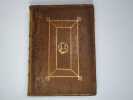
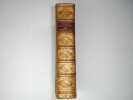
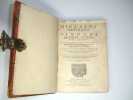
4to. (XVI),756,(recte 750),(56 index) p. Calf 24 cm (Ref: Gerber p. 5; Rico p. 13; Hoffmann 3,99; Schweiger 1,235; Dibdin 2,288; Moss 2,410: 'a very good and critical edition'; Brunet 4,659; Graesse 5,294; Ebert 16864) (Details: The Greek text is accompanied by a Latin paraphrasis on the left and a Latin translation on the right. Back with 5 raised bands, elaborately gilt & expertly rebacked in antique style (in the 19th century?). Boards with gilt fillet borders, having also 2 double fillet gilt rectangles, and a gilt coat of arms in the center. 19th century marbled endpapers. Woodcut ornament on the title. Edges dyed red) (Condition: Binding worn at the extremes. Edges of the boards chafed. Corners bumped. Leather on the boards crackled. Strip of 1 cm cut from upper margin of the title, and repaired with a new strip. A few old ink marginalia) (Note: A quarter of the works of the Greek poet Pindar, ca. 518-438 B.C., survives, his four books of 'epinicia', named after the Great Games, the Olympian, Pythian, Nemean and Isthmian. Pindar wrote eulogistic hymns to celebrate a victory in athletics, boxing and horse racing. Praised in a magnificent way are the victor, his family, the native city. 'Each ode draws from a variety of historical, cultural, and mythological sources. The highly allusive manner by which this material is presented is complemented by an equally rich repertoire of metrical patterns from epic, Doric, and Aeolic systems'. (The Classical tradition, Cambridge Mass., 2010, p. 729) 'Extended similes and difficult metaphors, intricate syntax and rapid narration, far-reaching digressions and bold disruptions' result in grandiose, but also obscure, enigmatic and sometimes seemingly awkward poetry. Already in antiquity the comic playwright Aristophanes presented in the 'Aves' Pindaric poetry as foolish, pretentious and embarrassing. The Hellenistic poets Callimachus and Theocritus wrote poetry under his influence. The Roman poet Horace thought him grandiose and sublime. Pindar's influence on European literature is great. The great number of editions in Greek, and Latin translations of Pindar's odes that were printed in the 16th century are an indication of a continuous and widespread humanist interest. Pindar was, with the Roman poet Horace, the chief classical model for modern formal lyric poetry. The lyric poets of the Renaissance borrowed first of all thematic material from Pindar. It brought a nobler and graver spirit. 'They enriched their language on the model of Pindar's and Horace's odes, taking it father away from plain prose and from conventional folk-song phraseology. And in their eagerness to rival the classics, they made their own lyrics more dignified, less colloquial and song-like (...) more ceremonial and hymn-like'. (G. Highet, 'The classical tradition', Oxford 1978, p. 230) The 'loudest and boldest answer to the challenge of Pindar's style and reputation came from France', beginning with Pierre de Ronsard, born 1524. Ronsard wanted to be the French Pindar, introducing the Pindaric ode into the vernacular literature of France. He, together with his poetic friends 'were the energy and the material, of the group of poets who rebelled against the traditional standards of French poetry and proclaimed revolution in ideals and techniques. They called themselves the Pléiade, after the group of seven stars which join their light into a single glow'. (Op. cit. (Highet) p. 231) Their work amounted to a closer synthesis between French and Greco-Latin literature, and was the annunciation of a new trend in French, and European literature. Many of Pindar's gnomic maximes and punctuated statements, containing elements of traditional wisdom, were collected in Renaissance anthologies of 'sententiae', for example in Erasmus's Adagia. Already the first full Latin translation of Pindar (1528) indexed all the gnomes according to moral lessons. 'The sententious Pindar (...) provided the Humanists of the Reformation with pithy statements of moral instruction and wordly advice, which ensured the poet's place in pedagogical circles. Moreover, as a source of proverbial wisdom, Pindar was elevated nearly to the status of biblical Salomon. (...) The sheer variety of Pindarically influenced traditions -the political ode and the personal, the religious hymn and the song of genius, the freely aimless and the rigorously concise- all serve as a testament not only to Pindar's versatility, but also to his rich potential to inspire'. (The Classical tradition, Cambridge Mass., 2010, p. 729/30) For Filelfo, Pontano, Cowley, Dryden Pindar was a model for political encomium, and there are quite a number of imitators of Pindar in European literature. The French author Voltaire made the witty remark that Pindar wrote verses that no one understood, and everyone had to admire. This Pindar edition of 1620, produced by the scholar Jean Benoist, or Johannes Benedictus, (died 1664) is based on the edition of Wittenberg of 1616 by the German scholar Erasmus Schmi(e)d(t), or Schmidius, 1570-1637, who was the first truly important Pindaric scholar, and according to Dibdin the 'eruditorum Pindari facile princeps'. Benoist was a doctor of medecin, and, it is said, of German origin. He was appointed on the recommandation of the great Greek scholar Isaac Casaubon the King's professor of Greek at the protestant Academy of Saumur. A year before Benoist had published in Saumur an edition of Lucian, also with his Latin translation. His Latin translations leaves however, according to Hutton, much to be desired. (J. Hutton, 'The Greek Anthology in France', Ithaca, N.Y., 1946, p.176/77) The commentary of Benoist on the other hand is excellent, for many philological, historical and mythological problems are explained in a sagacious manner. The text also contains many valuable readings from other earlier works, and there are excerpts of scholia. 'Benedictus contributed 23 emendations, 4 of which are printed and 2 mentioned in the Snell-Maehler Teubner edition on 1980'. (Gerber,D.E., 'Emendations in the Odes of Pindar', in 'Pindar', Entretien sur l'Antiquité Classique XXXI', p. 9) (Provenance: On the boards the gilt coat of arms of John Henry Gurney. This might be John Henry Gurney Sr., 1819-1890, who was an English banker, amateur ornithologist, and Liberal Party politician, or his son John Henry Gurney Jr., 1848-1922, who was an ornithologist. (See for them Wikipedia)) (Collation: a4, e4, A-5I4, 5K2 (minus the blank leaves 2H2 (p. 243/44), minus leaf 3P3 (p. 485/86), and minus leaf 4N3 (p. 653/54); the pagination seems irregular, owing to the removal of these 3 blank leaves)) (Photographs on request)
Benedictus Pater Europae 480-1980 [2 volumes] I: Vijftiende eeuwfeest van de H. Benedictus van Nursia in de Benelux, II:
Dendermonde, Sint-Pieters- & Paulusabdij 1980 Volledig in 2 volumes: 113 + xxviii,149 pp., tekst in het Nederlands, 30cm., gecart. banden, tekst in typoscript, goede staat, gewicht: 2kg., H117687
Benedictus en zijn tijd - de vader van de Westerse monniken (met een essay van W.Nigg, uittreksels uit de Benedictus-vita in het 2e boek van Gregorius de Grote en uit de kloosterregel van Benedictus)
, Antwerpen/Amsterdam, De Nederlandsche Boekhandel 1980, 120pp.met 50 kleurenfoto's (door H.Nils Loose), stempeltje, gecart.band, H23878
Reference : alb591ec1bff4fcf3bb
Benedictus D. New stories about Winnie the Pooh. Return to the Enchanted Forest
Benedictus D. New stories about Winnie the Pooh. Return to the Enchanted Forest. In Russian /Benediktus D. Novye istorii pro Vinni-Pukha. Vozvrashchenie v Zacharovannyy Les. Moscow: Astrel, 2012. 224 p., il. You are welcome to reach out to us for a detailed description of the copies currently available. Delivery of this book may take longer than usual including extended processing and pre-shipping time, no expedited shipping is available. Please advise us if you have a set date or a deadline to receive your order.SKUalb591ec1bff4fcf3bb
Benedictus Pater Europae
Antwerpen 1980 Mercatorfonds Hardcover As New
Langue: néerlandais. Benedictus Pater Europae 325 x 270 mm, couverture rigide avec jaquette et boîte coulissante, 477 pages, en très bon état, comme neuf

Reference : alb90e53f7d1973ee7f
Benedictus David. New stories about Winnie the Pooh. Return to the Enchanted Fo
Benedictus David. New stories about Winnie the Pooh. Return to the Enchanted Forest. In Russian /Benediktus Devid. Novye istorii pro Vinni-Pukha. Vozvrashchenie v Zacharovannyy Les. In Russian. Artist M. Burgess, M. Ast, Astrel. 2010. 206s. We have thousands of titles and often several copies of each title may be available. Please feel free to contact us for a detailed description of the copies available. SKUalb90e53f7d1973ee7f
Dom Benedictus van Haeften Proost van Affligem 1588 - 1648. Bijdrage tot de studie van het kloosterleven in de Zuidelijke Nederlanden.
2. Brussels, treatise Nr. 106 of the Royal Belgian Acadamy, 1983, 26 x 18 cm, 242 pp , bibliography. Sewn, orig. stiff wrapper. Text in Dutch. Boek in het Nederlands.
Benedictus Pater Europae 480-1980 [2 volumes] I: Quinzième centenaire de la naissance de saint Benoit de Nurie au Benelux, II: Les monastères francophones au Benelux
Dendermonde, Sint-Pieters- & Paulusabdij 1980 Complet en 2 tomes, 120 + 129pp., texte en français, 29cm., reliures cart., texte en typoscript, bon état, poids: 1.5kg., H117686
Reglementen van de Orde der Cisterciënzers van de Strenge Onderhouding, voorafgegaan van den Regel van den H. Benedictus, van de Carta Caritatis en de Constituties uitgegeven door het Algemeen Kapittel van 1926
Westmalle, Drukkerij van de Orde der Cisterciënzers van de strenge onderhouding 1928 515pp., 20cm., gecart. band, binding van enkele pagina's is wat fragiel, verder in goede staat, R117765
DE VOGUE Adelbertus O.S.B. (& HERMANS Vincent O.C.S.O., samenvatting)
Reference : R117566
(1977)
De Regel van Sint Benedictus. Doctrinaire en spirituele commentaar
Achel, 1977 50pp., 21cm., gebroch., met enkele handgeschrevenn tekstcorrecties, R117566
Reglementen der leekebroeders van de Orde der Cisterciënsers van de strenge onderhouding, voorafgegaan van den regel van den H. Benedictus en de Constituties uitgegeven door het algemeen kapittel van 1927
Westmalle, Drukkerij van de orde der Cisterciensers van de strenge onderhouding 1929 391pp., 21cm., gecart. band, goede staat, R117569
Reference : WWL-1018
4 ouvrages en 1 volume : Odes sacrées tirées des psaumes I, LXXIII, LXXVIII et LXXIX, en forme de paraphrases, appliquées aux malheurs de la révolution [suivi de] Discours prononcé par M. Le comte de Marcellus, à la société des bonnes lettres, à Paris, dans la séance du 16 mars 1821, avant d'y lire son ode sacrée, tirée du psaume II [suivi de] traduction paraphrasée du cantique du Saint vieillard Siméon, appliquée à la naissance de son altesse royale Mgr le duc de Bordeaux [suivi de] Traduction paraphrase?e, en forme d'ode sacre?e, du cantique Benedictus, applique?e au bapteme de Son Altesse Royale. Mgr le duc de Bordeaux.
Marie-Louis Auguste de Martin du Tyrac, comte de Marcellus, 4 ouvrages en 1 volume : Odes sacrées tirées des psaumes I, LXXIII, LXXVIII et LXXIX, en forme de paraphrases, appliquées aux malheurs de la révolution [suivi de] Discours prononcé par M. Le comte de Marcellus, à la société des bonnes lettres, à Paris, dans la séance du 16 mars 1821, avant d'y lire son ode sacrée, tirée du psaume II [suivi de] traduction paraphrasée du cantique du Saint vieillard Siméon, appliquée à la naissance de son altesse royale Mgr le duc de Bordeaux [suivi de] Traduction paraphrase?e, en forme d'ode sacre?e, du cantique Benedictus, applique?e au bapteme de Son Altesse Royale. Mgr le duc de Bordeaux. Paris, Le Clere, 1820-1821. In-8, 22p, 13p, 14p & 8p. Ensemble de très rares plaquettes du comte de Marcellus, provenant de sa bibliothèque personnelle (château de Marcellus), réunissant 4 oeuvres publiées en 1820 et 1821 par Le Clere. La troisième, bien que publiée sans titre (juste un faux-titre), est clairement publiée par Le Clere aussi. Demi-basane d'époque, dos lisse, fleurons. Mors supérieur fendu sur la moitié de la hauteur. Plaquettes rares.

Verhandeling over den oorsprong, beteekenis en voorregten der Medalie of Kruis van den H.Benedictus
Brugge, Herreboudt 1865 vi + 146pp.+ 2 ills., omslag wat slijtage (rug hersteld), tekst in mooie staat, zeldzaam, R31911
Sint-Benedictus 480-1980
Brugge, Abdij Sint-Godelieve 1980 95pp. rijkelijk geïll., linnen band met stofwikkel, 27cm., goede staat, H47796
Paus Benedictus XV. Zijn leven en roemrijk pontificaat (21 nov. 1854 - 22 jan. 1922), naar de beste bronnen bewerkt door J. Corver
Bergen-op-zoom, Priesters van het heilig hart 1922 264pp.geïll. + frontispice, 23cm., stempeltje, luttele roestvlekjes, R72680
Sint-Pietersabdij, 25 October 1980. Benedictus en zijn Monniken in de Nederlanden. 3 vols.
"0. In-8°, 3 vols, 276 pp ; 386 pp; 427 pp; genaaid, orig. omslagen."
[Loeanrd Van Matt] - Hilfish Stephan O.S.B., vetaling De Lange Daniel
Reference : 006056
(1960)
Benedictus
Brugge 1960 Desclée De Brouwer et Cie Soft cover
Langue: néerlandais. Bénédictus, couverture souple, 24 x 17 cm, 247 pages, de nombreuses photos, en bon état [Cette description peut avoir été traduite par une IA.]
Benedictus en zijn monniken in de Nederlanden :Benedictus in de Nederlanden tentoonstellingscatalogus
Gent 1980 centrum voor kunst en cultuur Sint-Pietersabdij Gent Trade Paperback 1st Edition Signed by Author(s)
Langue: néerlandais. Benoît et ses moines dans les Pays-Bas : catalogue d'exposition Benoît dans les Pays-Bas, exposition du 25 octobre 1980 au 4 janvier 1981 au centre d'art et de culture de l'abbaye Saint-Pierre de Gand, ville de Gand, 250 x 175 mm, couverture souple, 277 pages en très bon état [Cette description peut avoir été traduite par une IA.]

