 Write to the booksellers
-
Century
20th (25)
21st (7)
-
Countries
Belgium (2)
France (38)
-
Syndicate
ILAB (2)
SLAM (2)
Murder Cocktail. Le Jaguar.
1955 Editions Sogedide - 1955 - In-12, broché - 180 p.
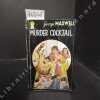
Bon état - Dos légèrement gauchi et présentant des plis de lecture - Légers plis et frottements sur la couverture
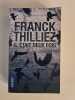
Et ce sont les chats qui tombèrent
Hachette Littératures 2007 382 pages 13 2x3x19 8cm. 2007. Broché. 382 pages.
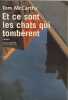
Très bon état
Le roi des aulnes
Gallimard 1981 395 pages in8. 1981. broché. 395 pages. Le Roi des Aulnes est un roman complexe de Michel Tournier récompensé par le prix Goncourt à l'unanimité. Il suit le parcours d'Abel Tiffauges un personnage aux obsessions dérangeantes notamment pour les enfants et explore les recoins sombres de l'âme humaine dans le contexte de la Seconde Guerre mondiale revisitant le mythe de l'Ogre
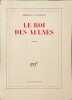
Bon état
L'avare
Larousse Sans date. L'Avare de Molière est une comédie en cinq actes et en prose créée en 1668 qui met en scène Harpagon un riche vieillard obsédé par son or. La pièce explore les conflits familiaux et les quiproquos amoureux autour du vol de sa cassette et se conclut par un dénouement heureux où les couples peuvent s'unir


Bon état
The Girl in a Swing
Allen Lane 1980 in8. 1980. Cartonné. Le roman raconte l'histoire d'Alan Desland un antiquaire anglais solitaire et socialement maladroit dont la vie est bouleversée lorsqu'il rencontre une femme mystérieuse et belle nommée Katarina (ou Karin) lors d'un voyage à Copenhague. Leur mariage idyllique dans un village anglais tranquille est peu à peu envahi par une horreur subtile et surnaturelle explorant les thèmes du désir de l'obsession et des conséquences de céder à nos pulsions les plus sombres
Bon Etat intérieur propre
Y A T Il Un Francais Dans La Salle
Fleuve noir / San antonio 1980 414 pages in8. 1980. broché. 414 pages. Le roman suit le Président Tumelat un grand leader politique français dont la vie bascule après la mort de son oncle. Il détient un homme captif entretient une relation trouble avec lui et se retrouve au cœur d'une histoire de chantage qui mêle politique et amour. Frédéric Dard y fait pour la première fois la jonction avec l'univers de San-Antonio
Très bon état
Je ne peux pas m'arrêter de laver, vérifier, compter. Mieux vivre avec un TOC.
Coll. "Guide pour s'aider soi-même", Paris, Odile Jacob, 2000, in-8, br., 355 pp. bibliographie, index, Comment vivre mieux avec un TOC ( trouble obsessionnel compulsif) grace à ce livre. Des questions mais surtout des réponses. Bon état
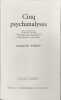
Cinq psychanalyses
Presses Universitaires de France 1977 422 pages in8. 1977. Broché couverture rempliée. 422 pages. Cinq psychanalyses est un recueil de cinq études de cas célèbres de Sigmund Freud : Dora Le Petit Hans L'Homme aux Rats L'Homme aux Loups et Le Président Schreber. Chaque cas illustre une notion clé de la psychanalyse (hystérie phobie obsession castration paranoïa). Publié d'abord en allemand puis en français en 1935 cet ouvrage a marqué des générations de thérapeutes et d'étudiants par sa puissance narrative
Bon état
Pas de tête pour son oreiller...
1953 Editions Presses de la Cité, Collection "Un Mystère", n°118 - 1953 - In-12, broché, couverture illustrée - 221 p.
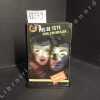
Bon état - Menus frottements sur la couverture
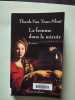
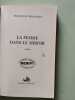
La femme dans le miroir
Robert Laffont 2010 2010. Adrien un homme hanté par la mort récente de sa femme découvre sur une toile contemporaine le visage d'une femme qui se reflète dans le miroir d'une vanité peinte au XVIIe siècle. Cette énigme le pousse à se demander comment une femme du XVIIe siècle a pu servir de modèle à un peintre du XXe siècle déclenchant une quête mêlant mystère art et temporalités entrelacées
Bom estado
Il était deux fois
Pocket 2021 597 pages 11x17 8x2 9cm. 2021. pocket_book. 597 pages.

Bon état
La grande chasse au requin. L'ancien testament gonzo
1980 - broché - Editions Les Humanoïdes Associés - Collection Speed 17, dirigée par Philippe Manoeuvre, N° 13 - Achevé d'imprimer le 4e trimestre 1980. Dépot légal janvier 1981 - In-8 (20,5 x 13,5 cm) broché - 384 pages - Quelques photographies en noir et blanc - ISBN : 27316-0087-X - Traduction de Philippe DELAMARE, Françoise GRASSIN et Iawa TATE
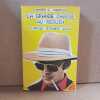
Bon état - Quelques frottements sur la couverture
King Solomon's Carpet
Penguin Books Ltd 1991 368 pages 18x11x3cm. 1991. broché. 368 pages. Le roman suit les habitants marginaux d'une maison délabrée surplombant la ligne de métro Jubilee à Londres où Jarvis Stringer compile une histoire obsessionnelle et secrète du métro londonien. Il explore les vies entrelacées de passagers ordinaires d'amateurs du métro de pickpockets et d'autres personnages qui gravitent autour du réseau souterrain créant une intrigue psychologique complexe sur les aspects sombres de la vie urbaine
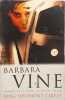
Etat correct intérieur trés propre
L'Argent et L'Inconscient - Étude d'une Obsession.
Robert Laffont In-8, broché, couverture rempliée souple glacée ill ( piles de monnaies et personnes dessus ) 346 pages, ensemble fané intègre et solide.
Bon Etat Mise à jour du Samedi 27 Juin 2026. Paiement PayPal immédiat, Mondial Relay pour : France, Allemagne, Autriche, Belgique, Espagne, Italie, Portugal, Luxembourg, Pays-Bas, Pologne (Communiquer votre point ou locker si connu). Une participation supplémentaire peut être demandée pour les colis lourds hors France où les envois compris entre 5 et 25 kg sont dégressifs : 2 à 4 kilogrammes - 7.99 / 5 à 10 kg - 15.99 / 15 -25 kg - 25.99. Certaines de nos collections ( Vian, Céline, Camus (...) peuvent être expédiées en Franco de port. Pour linternational hors Europe (Suisse, Canada, Japon, Etats-Unis, les frais dexpéditions peuvent varier selon le poids (mise à jour : 1 juin 2026).
Fools' Journey. A Myth of Obsession in Northern Renaissance Art,
Turnhout, Brepols, 2009 Hardback, XVII+226 p., 152 b/w ill. + 8 colour ill., 220 x 280 mm. ISBN 9782503526126.
Tracing the evolution of the newly emerging iconographical patterns of fools and folly, this book sheds light on the original and innovative invention that was an exclusive creation of northern Renaissance art and culture. The novel theme of the fools' journey, as expressed mainly through prints in Germany and later in the Netherlands in the sixteenth century is revealed as an ironical paraphrase, parodying the well established Christian topos, the Pilgrimage of Life or the Pilgrimage of the Human Soul, which offered the believer the opportunity to travel on the road toward redemption. The new mythical image of the fools' journey, however, confronts the contemporary reader/viewer with the image of the fool on his voyage that leads him, instead, to his doomed fate, thereby reflecting a pessimistic world-view. The newly emerging visual vocabulary is considered in relation to analogical contemporary didactic and satirical theatrical performances such as the rederijkers plays, the sotties, and also carnival processions. Proposing a new reading of Sebastian Brant's The Ship of Fools (Das Narrenschiff, Basel 1494), a landmark in the new iconography of the allegorical journey, this study recognizes as well the power of the visual image employed in the woodcuts-illustrations accompanying the treatise as a tool of moral teaching, used as a means of influencing the larger urban audience for whom word and image were sometimes interchangeable. Concomitantly, the divergence between verbal expression and visual language may be seen to define the inherent codes of the visual expressions. It is precisely the gap between literary sources and visualization, the very moment when visual vocabulary crystallizes, and image departs from word creating its own autonomous expression and language, that attracts our attention. The range and diversity of visual material related to the fools' journey topos, addresses a wide spectrum of audiences. This study also takes into consideration the strategies of communicating meanings and values to various publics. Addressing the wider urban public that was not necessarily lettered, notably women, illustrated-books and images were envisaged first of all as didactic tools. In accordance, the painters-engravers attended their public with rather simple visual elaborations that could be easily deciphered. Paintings, drawings, and prints intended for highly cultivated elite circles of urban society, among them works by Albrecht Durer and Hieronymus Bosch, demanded greater intellectual involvement on the part of the beholder, challenging the sophisticated viewer to re-create a meaningful ensemble out of the various scenes and motifs presented within complex compositions. Languages: English.

