 Write to the booksellers
-
Type
Book (5662)
Magazine (65)
-
Latest
Last 24h (2)
Last 3 days (4)
Last month (881)
Last week (6)
-
Language
Dutch (1)
English (1)
French (5723)
Italian (1)
Latin (1)
-
Century
16th (9)
17th (3)
18th (46)
19th (364)
20th (1570)
21st (1222)
-
Countries
Belgium (651)
Canada (29)
Côte d'Ivoire (5)
Denmark (1)
France (4653)
Germany (1)
Greece (1)
Netherlands (1)
Switzerland (385)
-
Syndicate
ALAC (29)
CLAM (1)
CLAQ (2)
ILAB (1235)
SLAM (1194)
Tristan. La merveilleuse histoire de Tristan et Iseut et de leurs folles amours, restituée en son ensemble et nouvellement écrite dans l'esprit des grands conteurs d'autrefois. 4ème édition.
P.,Gallimard, NRF, sans date (1941), in 12 broché, 242 pages ; petit manque en tête du dos, avec traces de scotch.
PHOTOS sur DEMANDE. ...................... Photos sur demande ...................


Phone number : 04 77 32 63 69
[Ad Mame et Cie] - MASON NEALE, J. ; WEBB Benjamin ; BOURASSE, Abbé J.-J. ; V.O.
Reference : 61495
(1847)
Du Symbolisme dans les Eglises du Moyen-Age [ Edition originale de la traduction ]
Traduit de l'anglais par M. V. O., avec une introduction, des additions et des notes, par M. l'Abbé J.-J. Bourassé, 1 vol. in-8 cartonnage romantique pleine percaline bleu nuit, dos et plats richement orné, toutes tranches dorées, Ad Mame et Cie, Tours, 1847, 404 pp.
![Du Symbolisme dans les Eglises du Moyen-Age [ Edition originale de la traduction ]. MASON NEALE, J. ; WEBB Benjamin ; BOURASSE, Abbé J.-J. ; V.O.](https://static.livre-rare-book.com/pictures/CDL/61495_thumb.jpg)
![Du Symbolisme dans les Eglises du Moyen-Age [ Edition originale de la traduction ]. MASON NEALE, J. ; WEBB Benjamin ; BOURASSE, Abbé J.-J. ; V.O.](https://static.livre-rare-book.com/pictures/CDL/61495_2_thumb.jpg)
![Du Symbolisme dans les Eglises du Moyen-Age [ Edition originale de la traduction ]. MASON NEALE, J. ; WEBB Benjamin ; BOURASSE, Abbé J.-J. ; V.O.](https://static.livre-rare-book.com/pictures/CDL/61495_3_thumb.jpg)
Bel exemplaire de cette très belle reliure romantique.
Saint Jean Baptiste dans l’art.Ouvrage orné de 152 héliogravures.Coll. “Art et Paysages”.
Paris, B. Arthaud 1957, 220x170mm, 186pages, broché. Jaquette illustrée. Petites déchirures à la jaquette, sinon très bon état.Ex libris de possesseur sur la page de garde.
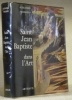
Pour un paiement via PayPal, veuillez nous en faire la demande et nous vous enverrons une facture PayPal
Storia della spiritualità italiana - TOME I
Roma Edizione di Storia e Letteratura 1978 in12. 1978. Broché.

Très Bon Etat intérieur propre bonne tenue
L'affaire du labo
Casterman 2004 110 pages 11 8x1 2x16 4cm. 2004. Relié. 110 pages.
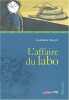
Bon état - . quelques marques de lecture et/ou de stodckage sur couverture et coins mais du reste en bon état - envoi rapide et soigné dans enveloppe à bulles depuis france
Notre-Dame du Cédon (Pavie) [ Edition originale ]
1 brochure in-8, Imprimerie Cocharaux, Auch, 1917, 18 pp.
![Notre-Dame du Cédon (Pavie) [ Edition originale ]. MASTRON, J. de](https://static.livre-rare-book.com/pictures/CDL/62737_2_thumb.jpg)
![Notre-Dame du Cédon (Pavie) [ Edition originale ]. MASTRON, J. de](https://static.livre-rare-book.com/pictures/CDL/62737_3_thumb.jpg)
![Notre-Dame du Cédon (Pavie) [ Edition originale ]. MASTRON, J. de](https://static.livre-rare-book.com/pictures/CDL/62737_4_thumb.jpg)
Rare exemplaire de l'édition originale de cette étude savante consacrée à la petite chapelle de Notre-Dame du Cédon, sur la commune de Pavie, dans le Gers. On raconte que la statue de la vierge du Cédon (datée du XIIe ou XIIIe siècles) aurait été découverte par un boeuf, au pied d'un ormeau et non loin de la chapelle, mais l'auteur signale que l'abbé Segrestan, curé avant la Révolution, n'en fait pas mention. La chapelle actuelle fut édifiée "en 1836 sur l'emplacement où s'élevait jadis une antique chapelle remontant au XVIe siècle, et détruite sous la Révolution". Bon exemplaire.
L'INCAPACITE DU PRODIGUE.
Paris Arthur Rousseau 1913. In-8 broché 215pp. Envoi de l'auteur.
Etude par un avocat au Barreau de Marseille: le prodigue et la législation romaine, médiévale; les actes défendus par la lois, recherche de l'acte permis au prodigue, sanctions de l'incapacité du prodigue, le prodigue et le conflit des lois, comparaisons avec l'Angleterre et l'Italie0 (885)
Atlas Du Moyen Âge
Oxford et Amsterdam Editions Du Fanal 1986 GRAND In-8 240 pp
Bon Bon État Cart. Éditeur
Les faux Diogènes. Extrait de "Byzantion", T.XXII (1952).
Bruxelles, 1953, plaquette in 8° brochée, paginée 133 à 150.
PHOTOS sur DEMANDE. ...................... Photos sur demande ...................
Phone number : 04 77 32 63 69
Chronica Lausannensis Chartularii.
Novicastri (Neuchâtel), Excudit Petitpierre 1840, 250x165mm, VIII- 81pages, cartonnage de l’éditeur. Quelques rousseurs. Bon état.
une carte dépliante de l’Evêché, Pour un paiement via PayPal, veuillez nous en faire la demande et nous vous enverrons une facture PayPal
Histoire de la Seigneurie de Valangin jusqu’à sa réunion à la directe en 1592.
Neuchâtel, James Attinger 1852, 225x140mm, VII - 355pages, broché. Timbre de possesseur sur la couverture supérieure, autrement bon état.
un arbre généalogique dépliant, Pour un paiement via PayPal, veuillez nous en faire la demande et nous vous enverrons une facture PayPal
Vivre aujourd'hui la Quête arthurienne. Traduit de l'anglais par Jean-Philippe Schlumberger.
St-Jean-de-Braye, Dangles, 1991, in 8° broché, 160 pages ; bibliographie et index in-fine ; couverture illustrée en couleurs.
...................... Photos sur demande ...................
Phone number : 04 77 32 63 69
La tempête de Shakespeare. Introduction de Jacques Copeau.
Paris, Editions R.-A. Corrêa 1932, 190x145mm, 193pages, broché. Bel exemplaire. Edition originale sur papier Alfa, numéroté n.° 69 / 76.
Pour un paiement via PayPal, veuillez nous en faire la demande et nous vous enverrons une facture PayPal
Légendes et contes du Moyen Âge
U. Hatier 1936 190 pages in12. 1936. reliure editeur. 190 pages. Légendes et contes du Moyen Âge est un manuel scolaire publié par Hatier en 1936 destiné aux classes de 6e et 5e. Il présente une sélection de textes médiévaux comme "Le Vilain Mire" "La Housse partie" et "Les Perdris" avec une préface de Ch.-M. Des Granges et des illustrations de P. Robiquet
État correct intérieur qui a pris l'humidité ne génant en rien la lecture de l'ouvrage
et le petit dit
Edl 2001 16 pages 16 8x1x20 2cm. 2001. Relié. 16 pages. Dans cet album un petit personnage et quatre animaux se trouvent trop à l'étroit dans un livre. Le petit demande à ses amis de se pousser ce qui déclenche une réflexion sur le désir d'avoir toute la place pour soi tout en conciliant solitude et amitié

Bon état
Roger, ou la Fidélité du Breton, histoire du XIIe siècle,
1846 TOURS,PORNIN ,1846,IN12 cartonnage dec ed.,frontispice,174p.
trés rare,bon etat Remise de 20% pour toutes commandes supérieures à 200 €
LE GRAND SIECLE L'Europe de 1598 à 1715
Relié avec jaquette - 15,5 x 24 - 290 pp - année 1972 - Editions Fayard - illustrations - collection l'Aventure des civilisations , les grandes etudes historiques -
ANTHROLOGIE HISTOIR PHILOSOPHIE LITTERATURE PARADES
La justice criminelle du Magistrat de Valenciennes au moyen-âge
A Picard et fils , Paris 1904
Bon état Ouvrage broché, légers manques sur les plats ( sans grande incidence) sur laspect du livre. texte en parfait état. histoire droit justice moyen age valenciennes nord - largeur/hauteur : 16,5x25 cm - poids : 740 g - nombre de pages : 314 p. - langue : Français
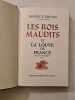
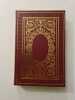
Les Rois Maudits VI La Louve de France
Editions Cremille & Famot Sans date. Ce cinquième tome de la fresque historique 'Les Rois maudits' de Maurice Druon se déroule au XIVe siècle entre le procès des Templiers et les débuts de la guerre de Cent Ans. Il met en scène la vengeance de Mahaut contre Isabelle surnommée la Louve de France et prépare son expulsion de France
Bon état
Le fer dans le monde
Payot 1942 269 pages in8. 1942. broché. 269 pages. Ouvrage de Maurice Lecerf publié en 1942 par Payot qui étudie la production et l'utilisation du fer à travers le monde avec un focus particulier sur les techniques médiévales et leur persistance dans certaines régions d'Afrique au XXe siècle
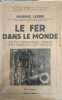
Etat correct
Le monde et son histoire - le monde antique T1 et 2
BORDAS LAFFONT 1965 IN8. 1965. reliure editeur pleine toile. 2 volume(s). Cet ouvrage en deux volumes dirigé et en partie écrit par Maurice Meuleau couvre l'histoire du monde antique et les débuts du Moyen Âge. Il traite de l'Égypte ancienne de Rome de la Grèce des mondes barbares de Byzance et de l'Islam avec des cartes une chronologie et un index. Le style est sérieux et factuel sans romance et s'adresse à un public généraliste souhaitant compléter ses connaissances
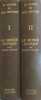
Bon état tranches de têtes légèrement salies ensemble trés propre

