 Write to the booksellers
-
Type
Book (1669)
Engraving (1)
Magazine (55)
Old papers (1)
-
Latest
Last 24h (8)
Last 3 days (3)
Last month (31)
-
Language
Dutch (1)
English (6)
French (1717)
Italian (1)
Portuguese (1)
-
Century
16th (1)
17th (4)
18th (40)
19th (152)
20th (692)
21st (61)
-
Countries
Belgium (205)
Canada (1)
China (4)
Côte d'Ivoire (69)
Denmark (234)
France (1091)
Switzerland (122)
-
Syndicate
ALAC (1)
CLAM (5)
ILAB (635)
NVVA (44)
SLACES (44)
SLAM (350)
Navigateurs des mers du sud
Editions du Musée d'ethnographie Genéve 1988. Petit in 4 carré,broché de 198 p. Couverture bleue illustrée,titre orange. Trois cartes dépliantes en début de volume. Très nombreuses illustrations en n. et b principalement des objets anciens et des reproductions de bateaux chaque fois en regard d'une page de texte.
Etat neuf
Living Field. Monograph and Models Concerning Human's Social Design, Based on the Mbotgote in Malakula Island, Vanuatu.
2012 xiii, 261 p., num. figs & col. photographs, 4to, paperbound. UMUT Monograph 3. New copy.
"Sous-Continent Indien. Collection : Peuples du monde entier; races, rites et coutumes des hommes."
Paris, Alpha/Laffont, 1980. 23 x 30, 120 pp., très nombreuses illustrations en couleurs (et en N/B), cartes en couleurs, cartonnage d'édition imprimé, très bon état.
175 ans d'ethnographie à Neuchâtel. Exposition au Musée d'ethnographie de Neuchâtel.
Neuchâtel, Musée d'ethnographie 1967, in-8vo, 318 p., ill., planches en noir, brochure originale.

(SLACES, NVVA)
Phone number : 41 (0)26 3223808
Au Sahara. Arts et Symboles.
Neuchatel, Baconniére, (1958). 4to. Orig. full cloth with dusjjacket. 408 pp. Profusely illustrated with textillustr., plates and colourplates. Fine and clean.
Au Sahara: Les hommes et leurs outils.
Neuchâtel, A la Baconnière, 1955, in-4to, 110 p., rich. ill. de photogr. noir/blanc, reliure en toile, couverture ill. montée, pièce de titre en cuir noir doré, bel exemplaire. bien relilé.
(SLACES, NVVA)
Phone number : 41 (0)26 3223808
La main de l'homme. Essai sur la dimension humaine.
Neuchâtel, Musée d'Ethnographie, 1963. In-8°, 116p. Broché, couverture illustrée.
Catalohue de l'exposition qui s'est tenue au MEN de 23 juin au31 décembre 1963. Importante iconographie. Bon exemplaire.
L'objet témoin. Les références d'une civilisation par l'objet.
Neuchâtel, Ides et Calendes, 1975. In-4° carré, 330p. Reliure pleine toile d'éditeur, sous jaquette illustrée.
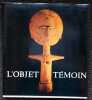
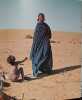
Avec 480 illustrations, dont 40 hors texte en couleurs. Exemplaire en parfaite condition.
L’objet témoin. Les références d’une civilisation par l’objet.
Neuchâtel, Ides et Calendes 1975, 290x260mm, 330pages, reliure d'éditeur sous jaquette. Bel exemplaire.
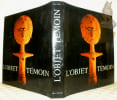
photos couleurs et n/b, richement illustré, Pour un paiement via PayPal, veuillez nous en faire la demande et nous vous enverrons une facture PayPal
Milouka l'esquimau.
Lausanne, Payot, 1941. In-8°, 127p. Broché, couverture illustrée.
Illustré de 8 photographie h-texte de l'auteur.
Sahara bijoux et techniques. Gouaches et dessins de Hans Erni. Dessins des objets ethnographiques Walter Hugentobler.
Neuchâtel, Editions de La Baconnière 1982 278x230mm, 507pages, reliure d'éditeur sous jaquette. Etat neuf.
Pour un paiement via PayPal, veuillez nous en faire la demande et nous vous enverrons une facture PayPal
GABUS Jean Avec 112 dessins de Walter Hugentobler et 48 photographies en couleurs.
Reference : 146766
(1962)
Parures et bijoux dans le monde.
Couverture rigide. Reliure de l'éditeur. 120 pages. Reliure fendue et recollée.
Livre. Avec 112 dessins de Walter Hugentobler et 48 photographies en couleurs. Avanti club, Neuchatel, 1962.
Visa pour la préhistoire. Shangrila, la vallée perdue de Nouvelle-Guinée. Photographies de Tony Saulnier-Ciolkowski.
1956 P., Albin Michel, 1956, in 8° broché, 269 pages ; non coupé ; jaquette illustrée en couleurs. Bel exemplaire.
...................... Photos sur demande ...................

Phone number : 04 77 32 63 69
Archives suisses d’anthropolgie générale (Anthropologie - Archéologie - Ethnographie). Volumes 1-48.
Geneve, Association Archives Suisse Generale, 1914/15-1984/86 1914/15 - 1984/86 in-8vo, Pas de publications dans les années 1923 -1927. Il était publié irréguliairement comme 'Bulletin du Centre Genevois d'Anthropologie'.. brochures originaux, richement illustré.
Suspended between 1923-1927 and 1942-1944. Continued irregular as 'Bulletin du Centre Genevois d'Anthropologie'.
(SLACES, NVVA)
Phone number : 41 (0)26 3223808
Etude ethnoarchéologique des traditions céramiques du pays dogon. Rapport des missions décembre 1998 et février 2000.
Genève, Dép. d'Anthropologie et d'écologie de l'Univ. de Genève, 2001. In-4 broché, 117-16 pp., nbr. cartes et fig. en noir dans le texte, la plupart à pleine page in fine, bibliographie.
Etat de neuf. - Frais de port : -France 5,7 € -U.E. 8 € -Monde (z B : 12 €) (z C : 22 €)
Nomades et paysans d'Afrique noire occidentale.
Nancy, 1963. In-8 br., 242 pp, 30 fig. in-texte, 4 planches d'illustrations photographiques.
Annales de l'Est, Mémoire N° 23. Qques piqures très éparses, très bonne condition, non coupé. -
Danske Silkebroderede Lærredsduge fra 16. og 17. århundrede. Med særligt henblik på de grafiske forbilleder.
København, Dansk Videnskabs Forlag A/S, 1961. 4to. Originalt mønstret papbind. En smule slitage ved kapitæler, ellers et pænt og friskt eksemplar. 496 pp.
Doktordisputats.
Afrikanisches Gold
M nchen, Prestel, 1989 hardcover, Leineneinband, schutzumschlag, 246 Seiten mit 225 Abbildungen, davon 196 in Farbe, 30.5 x 24 cm. *Wie Neu. ISBN 9783791309132.
Afrikanisches Gold. Schmuck, Insignien und Amulette aus Ghana, Mali, dem Senegal und von der Elfenbeink ste. Aus der Sammlung Barbier-Mueller
Lempad IMPRESSIONS OF LEMPAD MONOGRAPH
, Picton Publishing, 2014 hardcover with dusjacket Format : 265 x 340 MM, number of pages 334, with nice photographs in color: English text fine condition !! ISBN 9789073187825.
The deeper you go in understanding his art works, the more the passion becomes febrile. What a complete artist he was, everything he touched ,architecture, sculpture, drawings, reliefs, had that magic or divine inspiration called Taksu among the Balinese which gave all his work a very special dimension. The geniality of the artist is reflected in his drawings in very particular features: the purity of line, the distribution of the space, the expression of the characters or the living plants and trees which seem to vibrate with real life. Everything spans with life and magic and the observer is immediately captured by the talent and spirit behind. Whatever he made, he caught the soul of the theme, weather an action, a creature , a cloud , the mud in the rice fields or even an inanimate object such as the ?sarongs?, the traditional Balinese garment which he makes them look almost palpable ,reflecting the animist principle that everything ?has a soul or ethos?.When one observes the family shrine sculpture portraying the different generations (Il. n ?.) with his self portrait in the right bottom corner , one perceives the love he put into it , the piece shines in front of our eyes !It is full of beauty and positive energy transmitting accurately the way he felt about his family. This work could stand next to the Mona Lisa and they would be smiling in harmony. Or the young soul mask he created while watching his grand daughter which is in itself the description of beauty and youth but also the representation of the fine half Yin of the Balinese microcosm .This mask can be considered one of the most touching works by the Master. Likewise the perfect rhythm found in the dancers in the ?Dance Lesson? where harmony, movement and teaching skill are fully achieved at the same time that technical perfection thus making out of it an outstanding masterpiece. He was obviously creating in a state of trance or meditation where he became the channel for the cosmic or spiritual energy. This ability, only found in great artists allowed him to take whatever material and transform it in to a great work of art .His free spirit guided him in the adventure of creating new models for the future Balinese generations. His intention full of generosity was to satisfy the gods as well as to teach his family, friends and colleagues.Lempad ,the person, was a simple man who always wore just a ?sarong ? and ate light as holly people do. His eyes, the mirror of the soul, would spark with intelligence and wisdom until the very last day of his long life. He had a strong character but was a balanced person with firmly rooted spiritual principles who would advise his grandchildren not to move when an earthquake was under way since he believed in fate and considered that when God wanted to take one s life, he just did. Likewise his father, he was born and brought up to be an Undagi , a figure who in the Balinese culture is some how ?sacred ?and assumed as such by all the community but which does not imply to have a privileged status since the spiritual world is constantly intermingled with the daily routines . There is no vanity or ego , of course no commercial intention since the act of creating is strictly related to the spiritual world following Animist ,Hinduist and Buddhist principles. And yet, Lempad was an unusual Undagi who always kept his own personal style ,more free and universal, very modern from the conceptual and the formal point of view which he applied in many of his works except for those commanded to him for certain specific temple needs. One only has to look at the family shrines in his first house in Bedulu and the second one in Ubud to discern that pure simple line associated with Majapahait style which he combines with a surprisingly modern and original touch shown on the way volumes are combined.(See Family Shrine in Bedulu)This is also clearly shown in the Temple Gate at Pura Merajan in Pengalasan which unfinished abstraction of the classical Bhoma head reminds us of the style of the catalan architect/sculptor Gaudi, who also combined abstract figures within the architecture as in La Pedrera building in Barcelona. Gaudi could somehow be considered the equivalent of an Undagi in the western world ;the last work commissioned to him by the Estate and one of hs most important works if not the most, was actually the Christian Temple of ?La Sagrada Familia?. The Wilmana figures that surround the Gods meeting Hall in the Temple of Pura Pengastulan is another good example of Lempad s originality.He plays with the double reading concept so they become masks when they are turned upside down , as Indonesian primitive sculptors used to do. The same rule applies to the Pan and Men Brayut sculptures that flank the entrance of the Palace Sareng Kandin Delodan which are depicted with very atypical austronesian facial features. Lempad left many of his works incomplete but unlike Balinese in general who tend to leave architectural creations unfinished since for them newness is equivalent to sacredness and sometimes it take ages until they have the means to do it , Lempad ?s tendency was wholly intentional since he seem to enjoy the aesthetical look of the unfinished.Equally important if not more, was the didactic function involved since it was a subtle way to teach the art of carving to future generations (See masks, Brayut sculpture, architectural elements pgs?. )and,overall, his principles would never allow him to continue his work when the inspiration was no longer present.If we believe our informants,another possible reason in the back of Lempad s mind was that the incomplete pieces could not be requested by the palace since ,?they remained to be finished ?.Lempad s first drawings were probably sketches for atchitectural elements in temples (see ilus S39A.) and did not start to draw on proper drawing paper until he was in his middle age. The first sketch books seems to have been given to him by the German Russian artist Walter Spies who was very impressed when seeing some of his sketches.At the beginning of his drawing period, the scenes were inspired on the Ramayana and Mahabarata Hindu ?Javanese fables , classic in a sense, which slowly evolved in a more free style drawings reflecting daily life , a feature seldom seen in Balinese art with exceptional cases such as the Yeh Pulu ancient reliefs in Bedulu which he saw during his childhood and would later on become a source of inspiration. The clean line flowing with firm and precise rhythm that applies in both drawings and sculptures is one of the main characteristics that distinguishes his work.This multi talented artist had an important role in the artistic scene that took place in Ubud in the 1930s and connected with the foreign circle of artists such as Walter Spies, Rudolf Bonnet or Miguel Covarubias who saw in Lempad a sort of universality and openness that was to create the Lempad legend. Everyone went to him for exchange of information and saw in him the medium or bridge from traditional to Modern Balinese Art. Most probably, Lempad, who was very humble person in essence never thought in the idea of having a book dedicated to him since in those days and in contrast to the western world, personal success was not an objective in Balinese culture but was left aside in benefit of the community .Nevetheless ,it has been a privilege for us who love and promote art in the world, to work on the first book ever dedicated to I Gusti Nyoman Lempad , a timeless master with balinese soul but universal mind whose work ,we consider, deserves to be known as part of the World Artistic Heritage .
Moissons du désert - Utilisation des ressources naturelles au Sahara central
Ibis Press, 2000, in-8 br. (17,5 x 25), 160 p., photographies de l'auteur, dessins, couverture à rabats, bon état.
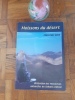
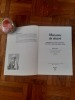
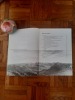
Ce livre fait le point sur l'utilisation par les Touaregs des ressources naturelles au Sahara central. Comment survivaient les Sahariens quand la sécheresse, les fléaux naturels ou les guerres les réduisaient à la famine ? Leur connaissance de la nature leur permettait de tirer profit des moindres moyens susceptibles de sauver leur vie, ne serait-ce que quelques jours ou quelques mois. L'auteur nous décrit minutieusement tout ce qui pouvait calmer la faim au Sahara central : minuscules graines récoltées sur toutes sortes de plantes, ou dans les fourmilières, consommation de feuilles, de petits fruits, de racines, de gommes voire même d'argile ou de vieux os broyés en poudre. Voir le sommaire sur la photo jointe.
Codex Perez. Maya-Tzental.
Point Loma, 1909. 24 x 13 cm. Comprend la reproduction en fac-similé du codex, 1 feuille pliée en accordéon (24 pp.) reproduction dessinée du codex; un fac-similé de la reproduction photographique réalisée à Paris en 1864, une feuille pliée en accordéon (22 pages) , et 20 feuilles de planches non numérotées avec des diagrammes des glyphes accompagnés de cartes de diagrammes vierges avec un tableau des clés plié avec symboles. Le codex original est constitué d'une bande mesurant 140 x 24 cm, pliée à 24 x 14 cm, comprenant 11 feuilles peintes recto-verso. À l'origine, le codex était censé comprendre 12 feuilles (24 pages), mais une feuille a été perdue.Le Codex Peresianus a été acquis par la Bibliothèque royale (aujourd'hui Bibliothèque nationale de France) en 1832. Il aurait été découvert par Léon Rosny dans une boîte de la Bibliothèque nationale vers 1859 et aurait été mentionné dans un article de José Pérez publié en 1859. dans un journal édité par Léon Rosny. Le fac-similé du codex a été inséré dans des pochettes attachées à des planches de bois peintes à la main, décorées d'argent, de feuilles d'or et de coquilles d'ormeau incrustées. Les planches de bois ne sont plus attachées ensemble. Sinon bel exemplaire. Il s'agit d'une édition privée non mise dans le commerce et imprimée à 57 exemplaires. Exemplaire n°54. Rarissime voir introuvable.
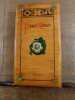
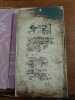
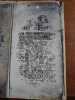
William Edmond Gates (8 décembre 1863 - 24 avril 1940) est un mayaliste américain. La plupart de ses recherches se sont concentrées sur les hiéroglyphes de la langue maya.
Le Pays de Cama. Un ancien Etat côtier du Gabon et ses origines
Karthala - C.R.A, 1981, in-8 br. (2ax16), 269 p., coll. "Histoire africaine", préface de Jean Ping, planches photos h.-t. et ill. in-t. (11 fig.), 3 cartes, bon état.
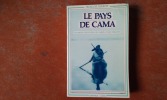
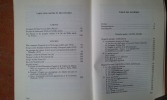
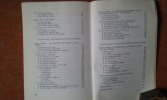
Ce travail de thèse de 3ème cycle apporte une contribution originale sur les origines historiques du royaume Nkomi et éclaire une période méconnue de l'histoire du Gabon. Voir le sommaire sur photos jointes.
The Santal Khuts. Contribution to animistic research.
Oslo, London, 1960. Small 4to. Orig. full cloth with d/j. (8),218 pp., textillustrations. Clean and fine.
LES FALI DE NGOUTCHOUMI.
, Oosterhout, Anthropological, 1969., Broche, couverture d' editeur illustre en couleur, 16x24cm, 272pp, illustre n/b.
Montagnards du Nord - Cameroun.
Os Cafres. Seus Usos e Costumes.
Lisboa: Depositária: Livraria Rodrigues, 1944 in-8, 156-(1), 28 illustrations. Broché, couverture un peu défraîchie, pliure affectant les pages 133 à 146 et le 2ème plat de couverture, tache sur la pages 135, autrement bon état.
Os Cafres. Seus Usos e Costumes. (Lisboa: Depositária: Livraria Rodrigues, 1944) [M.C.: Afrique noire, Mozambique, ethnographie]

