 Write to the booksellers
-
Type
Book (378)
Magazine (41)
-
Latest
Last 24h (1)
Last 3 days (1)
Last month (2)
Last week (1)
-
Language
English (1)
French (418)
-
Century
17th (1)
18th (11)
19th (47)
20th (128)
21st (23)
-
Countries
Belgium (16)
Canada (4)
Denmark (1)
France (382)
Switzerland (16)
-
Syndicate
ALAC (4)
ILAB (135)
NVVA (13)
SLACES (13)
SLAM (117)
SOLUTION DU PROBLÈME DE LA POPULATION ET DE LA SUBSISTANCE, soumise a un médecin dans une série de lettres
Paris Librairie Etrangère et Orientale de Girard Frères 1842 in 8 (22x14) 1 volume broché, couverture imprimée (défraichie et jaunie, petits manques de papier sur le dos), faux-titre, titre [1, table] 336 pages. Première édition (first edition). Rare. Bon exemplaire ( Photographies sur demande / We can send pictures of this book on simple request )
La France illustrée
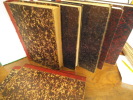
La France illustrée en six volumes in 8 demi-cuir rouge à nerfs, titre fers doré, filets dorés. (reliures légèrement différentes) Jules ROUFF éditeur Octobre 1883. Sans les cartes. Nombreuses vues de villes, hors texte Figures dans le texte. Dont Alsace Lorraine.( La France illustrée supplément.) Livraisons 1 à 16, 120pages. Illustrations, cartes. A la suite : Colonies anciennes Etablissements français de l’Inde, Asie, Cochinchine française, protectorat de l’Annam et du Tonkin 32 pages. un volume. Colonies françaises en Afrique 32 pages. La Réunion, l’île Bourbon, Madagascar, Mayotte et Nossi Bé. Guyane, Martinique Guadeloupe, et dépendance 46 pages. Iles Saint Pierre et Miquelon, Océanie, Nouvelle Calédonie, Ile Madagascar, Tahiti, 18 pages. La Seine en un volume : Introduction CXXVIII ; 192 pages illustrées, texte sur 2 colonnes.


Essai sur le principe de population 1
Flammarion, "GF" n° 708, 1992, 480 pages sous couv. illustrée. Traduit de l'anglais par P. et G. Prevost. Edition de Jean-Paul Maréchal.
Essai sur le principe de population
Paris, éditions Gonthier (Seghers) 1964, 240 pp, in-12 - Bibliothèque Médiations
Bibliothèque Médiations publiée sous la direction de Jean-Louis Ferrier. Bon exemplaire
Essai sur le principe de population (...). Traduction par Éric Vilquin.
In-8, pleine toile éditeur sous jaquette imprimée, 166 p. Paris, I.N.E.D., 1980.
Avant-propos par Jacques Dupâquier, avertissement et traduction par Éric Vilquin. Exemplaire à l'état de neuf.


Essai sur le principe de population (...); traduit de l'anglais par M. P. et G. Prévost (de Genève), précédé d'une introduction par M. Rossi, et d'une notice sur la vie et les ouvrages de l'auteur par Charles Comte, avec les notes des traducteurs et de nouvelles notes par M. Joseph Garnier.
1845 Grand in-8, demi-chagrin de l'époque, dos lisse orné, lx, 684, (1) p., rousseurs, cachets, portrait frontispice. Paris, Guillaumin, 1845.
L'une des éditions anciennes de référence.Mors fendus.
Versuch über die Bedingung und die Folgen der Volksvermehrung, aus dem Englischen von Dr. F.H. Hegewisch. 2 Theile.
Altona, J.F. Hammerich, 1807. Contemp. hcalf. Gilt spine, titlelabel in leather (letters worn). Light wear to top of spine and corners. Spine rubbed. Some wear to edges of covers. A stamp on title-page. XVI, 368" VIII, 358, (2) pp. A few leaves in the first quire disbound. Scattered brownspots and a few marginal underlinings on the first 20 leaves.


Rare first German edition of this political and economic classic, which constitutes Malthus' first major publication and his main work, because of which he is considered the father of demography and one of the main sources of inspiration for Darwin and Wallace. It is the first translation of the ""Principle on Population"" into any language, and it influenced German politics tremendously.The first edition was printed anonymously in London in 1798, and in 1803 the second edition, which, also according to Malthus himself, can be said to constitute a new work, appeared"" -the great quarto edition from 1803 is thoroughly revised and much enlarged, the title has been changed and Malthus' name appears on the title-page for the first time, it is on this edition that all the preceding editions are based, and in consequence also the early translations. All the later editions were minor revisions of the second one. In 1806 the third edition appeared, and as soon as 1807 the first German one, which is translated from the revised third edition (""Die gegenwärtige Uebersetzung ist nach der dritten Ausgabe, Oktav, London 1806. Die Quartausgabe ist minder vollständig"", Vorwort, p. V). New revisions of the text kept appearing till the sixth edition in 1826. The book, then as now, is considered highly controversial, and it has influenced all demographers ever since, as well as being of immense importance to the study of economic theory and genetic inheritance. ""The ""Essay"" was highly influential in the progress of thought in the early nineteenth-century Europe.... ""Parson"" Malthus, as Cobbett dubbed him, was for many, a monster and his views were often grossly misinterpreted.... But his influence on social policy, whether for good or evil, was considerable. The Malthusian theory of population came at the right time to harden the existing feeling against the Poor Laws and Malthus was a leading spirit behind the Poor Law Amendment Act of 1834."" (PMM 251).Thomas Robert Malthus (1766-1834), called the ""enfant terrible"" of the economists, was an English demographer, statistician and political economist, who is best known for his groundbreaking views on population growth, presented in his ""Essays on the Principle of Population"", which is based on his own prediction that population would outrun food supply, causing poverty and starvation. Among other things this caused the legislation, which lowered the population of the poor in England. Malthus actually turned political, economic and social thought upside down with this work, which has caused him to be considered one of the 100 most influential persons in history (Hart, The 100: A Ranking of the most Influential Persons in History, 1978). Of course, he was condemned by Marx and Engels, and opposed by the socialists universally, but the work was of immense impact on not only politics, economics, social sciences etc, but also on natural sciences. ""Later in the ""Origin of Species"" he [Darwin] wrote that the struggle for existence ""is the doctrine of Malthus applied with manifold force to the whole animal and vegetable kingdoms"" for in this case there can be no artificial increase of food, and no prudential restraint from marriage"" [p. 63]. Alfred Russel Wallace, who arrived at a worked-out formulation of the theory of evolution at almost precisely the same time as Darwin, acknowledged that ""perhaps the most important book I read was Malthus's ""Principles of Population"" (My Life, p. 232). Although there were four decennial censuses before Malthus' death, he did not himself analyze the data, although he did influence Lambert Quetelet and Pierre Verhulst, who made precise statistical studies on growth of populations in developed countries and showed how the early exponential growth changed to an S curve."" (DSB, IX, p. 69). As Malthus realized that his theories were not satisfactorily presented or sufficiently demonstrated in the first edition from 1798, he travelled for three years through Europe gleaning statistics, and then published the second edition in 1803. Among other places he travelled through Northern Germany, and his detailed diaries of these journeys provided him with some of the evidence necessary for the development of his theory on population growth. The observational information that he gathered on his travels in Europe were crucial to the development of his theories, which also means that the work is of great interest for other European countries, and not only Britain. ""In 1819 the Royal Society elected Malthus to a fellowship. He was also a member of the French Institute and the Berlin Academy, and a founding member of the Statistical Society (1834)."" (DSB, IX, p. 67). Printing and the Mind of Man 251 (first edition).
Luçon et Palouan
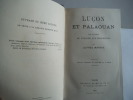
six années de voyages aux Philipines.In12 demi-chagrin vert foncé à nerfs, titre, fers dorés, filets à froid charnière intérieure toile verte. Faux-titre,titre,VI,406 pages, 68 gravures,1 carte dépliante.(Deux annoncées)Paris Hachette & Cie 1887,édition originale très bon état. Perak, Manille, Binangonan, la laguna, Tayabas, le pasig, presqu’île de boiols, le marinduque


Les principes de la méthode statistique avec quelques applications aux sciences naturelles et à la science des affaires.
Grand in-8, pleine toile (qqs f. lég. débrochés), xi, 807 p. Paris, Félix Alcan, 1930.
Édition originale. 50 figures dans le texte. Charnière intérieure fendue.
Etudes sur la Civilisation Française. La Société mérovingienne
P., Bouillon, 1899, in-8, VIII+356pp. Tome premier seul, le second volume intitulé "Le culte des saints sous les Mérovingiens" manque broché, petit manque en bas du dos
L'industrialisation de l'Europe occidentale (1880-1970)
1998 Edition de l'Association pour le Développement de l'Histoire Economique (ADHE), collection "Histoire économique" - 1998 - In-8, broché - 378 pages


Bon état - Petit pli de lecture au dos - Coins légèrement émoussés ,
Military Geography of Moesia Inferior. Terrain, Logistics, Strategy
, Brepols, 2026 Hardback, Pages: 267, Size:216 x 280 mm, Illustrations:90 b/w, 56 col., 1 tables b/w., Language: English. ISBN 9782503620909.
Summary This volume explores the military geography of the Roman province of Moesia Inferior during the first three centuries CE, shedding light on the strategic interplay between geography, culture, and military organization along the 'Limes', the Empire's frontier along the Lower Danube. Drawing on archaeological, historical, and environmental data, it examines how the activities of the Roman army, including settlement patterns, defensive architecture, and logistical networks, were influenced by terrain, resources, and pre-existing cultural dynamics. The analysis also sheds light on the logistical capabilities of the Roman army, the role played by the frontier garrisons, and the evolving strategy of Rome in capturing, securing, and developing the region. Central to the volume is a comprehensive site gazetteer that reveals how the clustering of settlements and fortifications was heavily dependent on the natural environment, and its impact on both economy and strategy with the region. By situating military geography within broader socio-political and environmental contexts, the book contributes to a deeper understanding of Roman frontier policy, provincial development, and the lived experience of imperial borderlands. TABLE OF CONTENTS List of Illustrations Foreword 1. Introduction Scope and Methods Research Status and Site Preservation Chronology Terminology Military Geography 2. History of the Region The Augustan Era Reign of Tiberius Reigns of Caligula and Claudius Reign of Nero Reign of Vespasian Reign of Domitian Reign of Trajan Province Frontiers From the Severans to the Third-Century Crisis 3. Geography of the Region General Characteristics The Danube Terraces and Plains 4. Logistics The term and its Scope in the Military Geography of Moesia Inferior Logistics in the Roman Army The Evidence of the Written Sources Army Logistics in Moesia Inferior Reconnaissance and Intelligence Army Personnel and Civilians Engaged in Logistics Strategy toward Indigenous Peoples Taxes Romanization? Urban Centers Pontic Cities Cities of the Provincial Interior The Smaller Settlements: canabae, vici, and villae Municipium and colonia Trade and Resources Infrastructure and Transportation Army Administration Towards Late Antiquity Recapitulation 5. Topography of the Lower Moesian Limes Microregions Section 1. Lom - Harlec Section 2. Orjahovo - Gigen Section 3. Guljanci - Nikopol Section 4. Belene - Krivina Section 5. Batin - Ruse Section 6. Marten - Tutrakan Section 7. Dunavec - Silistra Section 8. Dervent - Cernavod? Section 9. Seimeni - Turcoaia Section 10. M?cin - Isaccea Section 11. Tulcea - Dunav??u de Sus Summary 6. Strategy The Early Years: An Offensive Line? Beyond the Yantra Less Prominent Fortifications: Bridgeheads, Watchtowers and Linear Barriers Consolidation after the Dacian Wars of Trajan Towards Late Antiquity The Roman River Frontier in Practice Trouble with the Dacians Barbarian on the Frontier Historical Parallels Strategy in Moesia, Strategy of the Empire? 7. Epilogue Abbreviations Works Cited Index
Un siècle de travail des femmes en France. 1901 - 2011
2012 - broché - Editions La Découverte - 2012 - In-8 (24 x 15,5 cm) broché - 229 pages - ISBN : 9782707145710
Bon état
La population par H. Barré, J. Bourrilly, P. Masson Troisième partie: Le sol et les habitants. Tome XIII: La population par H. Barré, J. Bourrilly, P. Masson.
Marseille Archives départementales des Bouches du Rhône 1921 In-4 de XV-513 pp., br.,
Avec 14 planches hors texte.Les Bouches du Rhône.Encyclopédie départementale publiée par le Conseil Général avec le concours de la ville de Marseille et de la chambre de commerce.
Géographie de la Bretagne- Tome 1 Les conditions géographiques générales + Tome 2 Economie et population
PUHON 1950 in8. 1950. Broché. 2 volume(s). Cet ouvrage de Maurice Le Lannou propose une analyse géographique complète de la Bretagne divisée en deux tomes : le premier traite des conditions géographiques générales (nature histoire de l'installation humaine) le second aborde l'économie et la population (antécédents économiques économie actuelle pays et problèmes bretons)
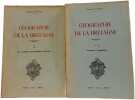
Bon Etat couverture légèrement tachée pages non coupées intérieur propre
Petite histoire de nos fêtes en France
Maxilivres 2021 1 pages 22 4x28 8x1 6cm. 2021. Broché. 1 pages.

Très bon état - L'ouvrage qui n'a jamais été lu peut présenter de légères traces de stockage mais est du reste en très bon état. envoi rapide et soigné dans un emballage adapté depuis France
Petite histoire de nos fêtes en France
Maxilivres 2021 1 pages 22 4x28 8x1 6cm. 2021. Broché. 1 pages.

Bon état
Petite histoire de nos fêtes en France
Maxilivres 2021 1 pages 22 4x28 8x1 6cm. 2021. Broché. 1 pages.

Très bon état
Petite histoire de nos fêtes en France
Maxilivres 2021 1 pages 22 4x28 8x1 6cm. 2021. Broché. 1 pages.

Etat correct
Petite histoire de nos fêtes en France
Maxilivres 2021 1 pages 22 4x28 8x1 6cm. 2021. Broché. 1 pages.

Bon état
Petite histoire de nos fêtes en France
Maxilivres 2021 1 pages 22 4x28 8x1 6cm. 2021. Broché. 1 pages.

Très bon état
Petite histoire de nos fêtes en France
Maxilivres 2021 1 pages 22 4x28 8x1 6cm. 2021. Broché. 1 pages.

Très bon état
Petite histoire de nos fêtes en France
Maxilivres 2021 1 pages 22 4x28 8x1 6cm. 2021. Broché. 1 pages.

Très bon état
DENOMBREMENT DU ROYAUME PAR GENERALITEZ, ELECTIONS, PAROISSES ET FEUX, où l’on trouvera sur chaque lieu, les Archevêchez, Evêchez, Universitez, Parlemens, Chambres des comptes, Cours des aydes, Cours & Hôtels des Monnoyes, Bureaux des Finances, Maîtrises des Eaux & Forêts, Capitaineries des Chasses, Amirautez, Présidiaux, Bailliages, Sénéchaussées, Prévôtez, Vicomtez, Châtellenies, Vigueries, Juges-Consuls, Maréchaussées & autres Justices Royales: Les Bureaux des droits des Aydes, Gabelles et Greniers à sel, Douannes et Traittes Foraines: Les lieues de distance de Paris aux autres Villes du Royaume, par M. *** Employé dans les finances.
Claude-Marin Saugrain, Paris 1709
Un volume fort in 12°, reliure cuir en veau de l’époque, dos à 5 nerfs, 5 caissons avec motifs dorés, un 6ème avec un piéce de titre en maroquin brun clair. Cet ouvrage contient deux tomes en un volume. Tome 1 : un Avertissement (V) suivi d’une « Explication des mots abrégez en cet ouvrage’ (2ff), puis d’une « Table des Généralitez et Elections » du premier tome (4ff.), puis du texte principal: « DENOMBREMENT DU ROYAUME par Généralitez, Elections, Paroisses et Feux » ( pp.1-408). Vient ensuite le Tome second: «Table des Généralitez et Elections du tome second » et «Approbation et Privilèges » (V), puis le texte principal: « DENOMBREMENT DU ROYAUME par Généralitez, Elections, Paroisses et Feux » (pp.1-342). Il s’agit de l’édition originale. Dans son avertissement, l’éditeur-libraire, Charles SAUGRAIN, ou son auteur Mr M***,écrivent : « Cet ouvrage paroitra sans doute aussi utile que nouveau. En effet il y a si longtemps qu’il est souhaité du public & que l’on le demande (même avec empressement) que l’on se persuade en quelque façon qu’il en sera agréablement reçu… On a cru ne pouvoir mieux (l’) exécuter qu’en détaillant le Royaume par Généralitez, les Généralitéz par Elections, les Elections par Paroisses & les Paroisses par Feux. Pour cet effet, l’on s’est servi des mémoires de Messieurs les Intendants & Commissaires départis par Sa Majesté dans les Provinces pour l’éxécution de ses ordres, & des Etats qui contiennent les dépendances de leurs Intendances, comme des instructions dont onne peut douter de la justesse & de la fidélité. ». Notre exemplaire est bien compact, sans accident notable à la reliure. En dépit de la mention répétée du nom d’un des anciens possesseurs sur les deux premières pages de garde ( un certain Mr Pasqueraye du Bordage), et en dépit également, d’une légère trace de mouillure à l’angle des 3 premières pages,notre exemplaire peut être dit en ETAT SATISFAISANT.
Tableau de Paris
Amsterdam, se, 1782-83, 4 volumes in-8 (19,5x12cm), xvi-403pp., 411pp., 409pp.-414pp., demi veau époque, dos lisse, manque au dos, frottements, coiffes absentes, coins usés, page de titre tome 3 détachée, intérieur propre.

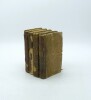
Édition en grande partie originale. Après la première édition en 2 volumes en 1781 à Neufchâtel, Mercier porte cette édition à 4 volumes en 1782, elle sera augmentée en 1783 puis en 1789. Mercier, observateur infatigable et attentif aux détails du quotidien, dresse dans son Tableau de Paris une chronique foisonnante de la capitale à la veille de la Révolution. L’ouvrage rassemble une série de billets brefs, souvent ironiques ou satiriques, abordant sans hiérarchie des thèmes très divers : partisans du luxe, milice, greniers, cafés, faux-cheveux, loueurs de livres, ponts, persiflage, ou encore l’homme aux soixante millions. Cet ensemble compose un tableau mouvant de la vie parisienne, dont l’esprit annonce certains recueils satiriques du siècle suivant, comme Le Diable à Paris. Le Tableau de Paris demeure l’un des témoignages les plus précis et les plus vivants de la société française de la fin du XVIIIe siècle, saisi par un écrivain pleinement représentatif de la curiosité des Lumières. Ch-1A

