Previous 1 ... 320 321 322 323 ... 324 325 326 327 328 329 330 ... 331 Next Exact page number ? OK

‎"WARMING, EUG.‎

Reference : 62376

(1892)

‎Lagoa Santa. Et Bidrag til den biologiske Plantegeografi. Med en Fortegnelse over Lagoa Santas Hvirveldyr. Avec résumé français.‎

‎Kjøbenhavn, Bianco Lunos Kgl Hof-Bogtrykkeri, 1892. 4to. In a nice later half calf binding with gilt lettering to spine. In ""Det Kongelige Danske Videnskabernes Selskab"". A nice and clean copy. (6), 159-488 pp. + 1 plate. ‎


‎First edition of Warming’s work on the 1863–1866 expedition to Lagoa Santa in Minas Gerais, Brazil, where he assisted the renowned Danish paleontologist Peter Wilhelm Lund (1801–1880), often called “the father of Brazilian paleontology.” In this seminal study, Warming documented the local flora and analyzed plant adaptations to the harsh conditions of the Cerrado biome such as drought and fire. The publication remains a landmark in the history of ecological research. Johannes Eugenius Warming (1841–1924), commonly known as Eugen Warming, was a pioneering Danish botanist widely recognized as one of the founding figures of modern ecology. He authored the first textbook on plant ecology in 1895, introduced the first university course in the subject, and helped define the scope and content of ecological science. In 1975, ecologist R. J. Goodland asserted: “If one individual can be singled out to be honoured as the founder of ecology, Warming should gain precedence” (""The Tropical Origin of Ecology: Eugen Warming's Jubilee""). Warming wrote a number of textbooks on botany, plant geography and ecology, which were translated to several languages and were immensely influential at their time and later. Most important were “Plantesamfund and Haandbog i den systematiske Botanik”.‎

Logo ILAB

Phone number : +45 33 155 335

DKK850.00 (€114.00 )

‎"WARMING, EUG.‎

Reference : 62378

(1896)

‎Lehrbuch der Ökologischen Pflanzengeographie Eine Einführung in die Kenntnis der Pflanzenvereine (...) Deutsche, vom Verfasser genehmigte, durchgesehene und vermehrte Ausgabe von Dr. Emil Knoblauch. - [FIRST GERMAN TRANSLATION]‎

‎Berlin, Gebrüder Borntraeger, 1896. 8vo. In contemporary half cloth,. Light wear to extremities, otherwise a nice and clean copy. XII, 412 pp.‎


‎First German translation of the founding work on Plant ecology and Plant communities. ""Warming was the founder of plant ecology. The term ""ecology"", first used by Haeckel in 1866, was introduced into botany by H. reiter in 1885M but is was Warming who made ecology a preferred field of activity for many botanists. In ""Plantesamfund"" (1895) - (the work offered) - he formulated the program of his research: ""To answer the question: Why each species has its own habit and habitat, why the species congregate to form definitive communities, and why these have a characteristic physiognomy."". The book created an enormous senstaion as a new attempt at grouping and characterizing the plant communities - a new phytogeographical term by which Warming meant a group of species forming a physiognomically well-defined unity, such as a meadow. In all essentials the species of a community are subject to the same external conditions arising from the ecological factors. These factors are of a fundamental importence to the ecology ofthe individual plant and the plant community. Considering water to be the most importent factor, Warming divided plant communities into four types: hydrophytic, xerophytic, halophytic, and mesophytic.""(DSB XIV, p. 181). “It was Warming, in an 1895 Danish botanical textbook called Plantesamfund (Plant Communities), who defined the nature of the discipline. He pointed out that organisms, plant and animal, live in highly developed communities, the tenure of which depends on such things as temperature, rainfall, soil constitution, elevation, and countless other factors. He noted that communities change over time, moving toward what he called ""climax"" communities, which will remain dominant until conditions change. But he also advised that conditions will change, through wildfire, or floods, or man-made alterations, and that such changes are often irreversible, so that a forest turned into grassland will seldom revert to a forest community again.” (Linda Hall)‎

Logo ILAB

Phone number : +45 33 155 335

DKK450.00 (€60.35 )

‎"WARMING, EUG.‎

Reference : 62390

(1913)

‎Observations sur la Valeur Systematique de L'Ovule.‎

‎København, Bianco Luno, 1913. 4to. Bound with the original printed wrappers in recent blank cardboard-boards. Offprint from ""Mindeskrift for Japetus Steenstrup - Arbejder fra den botaniske Have i København. nr. 73"". Fine and clean. 45 pp. ‎


‎Offprint. Johannes Eugenius Warming (1841–1924), commonly known as Eugen Warming, was a pioneering Danish botanist widely recognized as one of the founding figures of modern ecology. He authored the first textbook on plant ecology in 1895, introduced the first university course in the subject, and helped define the scope and content of ecological science. In 1975, ecologist R. J. Goodland asserted: “If one individual can be singled out to be honoured as the founder of ecology, Warming should gain precedence” (""The Tropical Origin of Ecology: Eugen Warming's Jubilee""). Warming wrote a number of textbooks on botany, plant geography and ecology, which were translated to several languages and were immensely influential at their time and later. Most important were “Plantesamfund and Haandbog i den systematiske Botanik”.‎

Logo ILAB

Phone number : +45 33 155 335

DKK400.00 (€53.65 )

‎"WARMING, EUG. ‎

Reference : 62469

(1909)

‎Oecology of Plants, an Introduction to the Study of Plant Communities. - [FOUNDING PLANT ECOLOGY.]‎

‎Oxford, Clarendon Press, 1909. Large8vo. In contemporary full cloth with gilt lettering to spine. Ex-libris pasted on to pasted dowbn front end-paper. Light wear to extremities and hinges a bit weak. Internally nice and clean. XI, (1), 422 pp.‎


‎First English translation the founding work on Plant ecology and Plant communities. “It was Warming, in an 1895 Danish botanical textbook called Plantesamfund (Plant Communities), who defined the nature of the discipline. He pointed out that organisms, plant and animal, live in highly developed communities, the tenure of which depends on such things as temperature, rainfall, soil constitution, elevation, and countless other factors. He noted that communities change over time, moving toward what he called ""climax"" communities, which will remain dominant until conditions change. But he also advised that conditions will change, through wildfire, or floods, or man-made alterations, and that such changes are often irreversible, so that a forest turned into grassland will seldom revert to a forest community again.” (Linda Hall) ""Warming was the founder of plant ecology. The term ""ecology"", first used by Haeckel in 1866, was introduced into botany by H. reiter in 1885M but is was Warming who made ecology a preferred field of activity for many botanists. In ""Plantesamfund"" (1895) - (the work offered) - he formulated the program of his research: ""To answer the question: Why each species has its own habit and habitat, why the species congregate to form definitive communities, and why these have a characteristic physiognomy."". The book created an enormous senstaion as a new attempt at grouping and characterizing the plant communities - a new phytogeographical term by which Warming meant a group of species forming a physiognomically well-defined unity, such as a meadow. In all essentials the species of a community are subject to the same external conditions arising from the ecological factors. These factors are of a fundamental importence to the ecology ofthe individual plant and the plant community. Considering water to be the most importent factor, Warming divided plant communities into four types: hydrophytic, xerophytic, halophytic, and mesophytic.""(DSB XIV, p. 181).‎

Logo ILAB

Phone number : +45 33 155 335

DKK800.00 (€107.30 )

‎WARMING, EUG.‎

Reference : 62522

(1908)

‎Om planterigets livsformer.‎

‎Kjøbenhavn, Gad, 1908. Large8vo. In contemporary half cloth. Light wear to spine and previous owner's name in pencil to title-page, otherwise a nice and clean copy. (4), 86 pp.‎


‎First edition of this work in which Warming further developed his system he first introduced in 1896. Here, he presented a hierarchical system in which he first divided plants into heterotrophs and autotrophs. He then subdivided the autotrophs into aquatic plants and terrestrial plants, which were again divided into different types.‎

Logo ILAB

Phone number : +45 33 155 335

DKK400.00 (€53.65 )

‎WARMING, EUG.‎

Reference : 62588

(1908)

‎Om planterigets livsformer.‎

‎Kjøbenhavn, Gad, 1908. Large8vo. In contemporary full cloth with the original printed front wrapper printed on to front board. A nice and clean copy. (4), 86 pp.‎


‎First edition of this work in which Warming further developed his system he first introduced in 1896. Here, he presented a hierarchical system in which he first divided plants into heterotrophs and autotrophs. He then subdivided the autotrophs into aquatic plants and terrestrial plants, which were again divided into different types.‎

Logo ILAB

Phone number : +45 33 155 335

DKK450.00 (€60.35 )

‎"WARMING, EUG.‎

Reference : 62501

(1879)

‎Om Planteæggets og dets enkelte deles rette homologier.‎

‎Copenhagen, 1879. 8vo. Bound with the original blank wrappers in recent full cloth. Offprint from ""Botanisk Tidsskrift"". First and last leaves brownpostted, otherwise nice and clean. Pp. (1), 32-56, (1) pp. ‎


Logo ILAB

Phone number : +45 33 155 335

DKK600.00 (€80.47 )

‎"WARMING, EUG.‎

Reference : 62419

(1884)

‎Om Skudbygning, Overvintring og Foryngelse.‎

‎(København, 1884). 8vo. In a recent half cloth binding. Nice and clean. 105 pp.‎


‎Rare first edition of Warming's first attempt in life-form classification. The work is considered foundational for later developments in plant ecological morphology and life-form classification, and it laid important groundwork for Warming’s more famous 1895 textbook ""Plantesamfund"" which helped establish ecology as a scientific discipline. The classification was based on his meticulous observations while raising wild plants from seed in the Copenhagen Botanical Garden. Fourteen informal groups were recognized, based on longevity of the plant, power of vegetative propagation, duration of tillers, hypogeous or epigeous type of shoots, mode of wintering and degree and mode of branching of rhizomes. Johannes Eugenius Warming (1841–1924), commonly known as Eugen Warming, was a pioneering Danish botanist widely recognized as one of the founding figures of modern ecology. He authored the first textbook on plant ecology in 1895, introduced the first university course in the subject, and helped define the scope and content of ecological science. In 1975, ecologist R. J. Goodland asserted: “If one individual can be singled out to be honoured as the founder of ecology, Warming should gain precedence” (""The Tropical Origin of Ecology: Eugen Warming's Jubilee""). Warming wrote a number of textbooks on botany, plant geography and ecology, which were translated to several languages and were immensely influential at their time and later. Most important were “Plantesamfund and Haandbog i den systematiske Botanik”.‎

Logo ILAB

Phone number : +45 33 155 335

DKK1,200.00 (€160.95 )

‎"WARMING, EUG.‎

Reference : 62375

(1895)

‎Plantesamfund. Grundtræk af den økologiske Plantegeografi. - [FOUNDING PLANT ECOLOGY - PRESENTATION-COPY]‎

‎Kjøbenhavn, Philipsen, 1895. 8vo. Bound with the original printed front-wrapper in contemporary half calf with gilt lettering to spine. Front free end-paper with previous owner's name (G. Sarauw). With author's presentation inscription to title-page: ""Hr. Cand. Sarauw / med venskabelig Hilsen / fra Forfatteren"". Withbound is a 15 line letter from Warming: ""19.4.95 / Kære Hr. Sarauw / Medfølgende vilde jeg ikke / blot gjerne have / anmeldt i Bot. Centralblad., men ogsaa kritiseret privat af / Dem (De må også / gjerne gøre det offentligt / det er ikke det jeg mener) / da jeg antager, at De / har meget at indvende / og jeg gjerne vil have Bogen / korrigeret før jeg [?] den. Venligst Hilsen / Eug Warming"". (i.e. English: """"19. 4. 1895 / Dear Mr. Sarauw / the enclosed I would not only wish to have reviewed in Botanisk Centralblad, but also privately criticized by you (you are of course also welcome to do so publicly—that’s not what I mean), since I assume that you have many objections and I would very much like to have the book corrected before I [?] it. Kind regards / Eug. Warming"").Light wear to extremities, otherwise a very nice and clean copy. VII, (1), 335 pp. ‎


‎A magnificent presentation-copy of the first edition of this milestone in the history of ecology, being the first textbook of ecological plant geography ever published and the work that established ecology as a formal scientific discipline. The present copy is inscribed by Warming to G. Sarauw, a Danish-Swedish botanist and archaeologist known for his pioneering interdisciplinary work. Inserted between the front wrapper and the title-page is furthermore a 1-page autograph letter from letter from Warming to Sarauw asking him to criticize and help correct the work before it is published. The letter reveals Warming’s intellectual humility and his scientific approach of peer engagement prior to more formal discussions - not merely seeking publicity or endorsement, but genuinely inviting criticism from a respected peer. The recipient, Sarauw, was a fellow botanist trained in the natural sciences who would later gain fame for his archaeological work at Maglemose, but at the time he was a close colleague within the Danish scientific community. Warming’s ”Plantesamfund” established ecology as a formal scientific discipline on the interaction between organisms and their environment long before the term “ecology” gained general acceptance. The work summed up decades of Warming’s own field research in Brazil, Denmark and Greenland and articulated a structured and comparative approach to vegetation types, ecological adaptations and habitat conditions. Grouping of plants understood not merely taxonomically, but functionally and in relation to their environment, was groundbreaking, marking a decisive turn in botanical science and laying the groundwork for all modern ecology. Biologist R. J. Goodland wrote in 1975: “If one individual can be singled out to be honoured as the founder of ecology, Warming should gain precedence”. (Goodland, R.J. The tropical origin of ecology: Eugen Warming’s jubilee.p. 240-245). “In ""Plantesamfund"" (1895) - (the work offered) - he formulated the program of his research: ""To answer the question: Why each species has its own habit and habitat, why the species congregate to form definitive communities, and why these have a characteristic physiognomy."". The book created an enormous sensation as a new attempt at grouping and characterizing the plant communities - a new phytogeographical term by which Warming meant a group of species forming a physiognomically well-defined unity, such as a meadow. In all essentials the species of a community are subject to the same external conditions arising from the ecological factors. These factors are of a fundamental importance to the ecology ofthe individual plant and the plant community. Considering water to be the most important factor, Warming divided plant communities into four types: hydrophytic, xerophytic, halophytic, and mesophytic."" (DSB XIV, p. 181). In the late 19th century a new interest in nature and the complicated interplay between different species and types arose: “This interest in the influence of the environment on plants gave rise to the new field of ecology, pioneered by the Danish professor Eugen Warming (Warming 1895). Warming’s work had wide-reaching impact. British botanist Arthur Tansley was drawn to ecology after reading Plantesamfund (Warming 1895), commenting: “I well remember working through it with enthusiasm in 1898 and going out into the field to see how far one could match the plant communities Warming had described for Denmark in the English countryside. ….” Tansley would later state that: “Though the organisms may claim our prime interest, when we are trying to think fundamentally, we cannot separate them from their special environments, with which they form one physical system” (1935).” (Mabberly, A Cultural History of Plants in the Nineteenth Century, p99) The work was quickly translated into German, French, English Russian, and Polish, and especially the German translation from 1896 became immensely influential, especially in Britain and North America directly inspiring leading ecologists like Arthur Tansley, Henry Chandler Cowles and Frederic Clements. Even today, Warming’s work continues to be read and is widely regarded as the foundational text of the subject, often viewed as the “bible” of ecological science. ‎

Logo ILAB

Phone number : +45 33 155 335

DKK38,000.00 (€5,096.63 )

‎"WARMING, EUG.‎

Reference : 62500

(1877)

‎Smaa Biologiske og Morfologiske Bidrag. (Offprint from ""Botanisk Tidsskrift"").‎

‎Copenhagen, 1877. 8vo. In recent full cloth. Offprint from ""Botanisk Tidsskrift"". First ande last leaves brownpostted, otherwise nice and clean. Pp. (1), 52-130‎


Logo ILAB

Phone number : +45 33 155 335

DKK600.00 (€80.47 )

‎"WARMING, EUG.‎

Reference : 62531

(1876)

‎Smaa Biologiske og Morfologiske Bidrag. (Offprint from ""Botanisk tidsskrift""). - [PRESENTATION-COPY]‎

‎(Kjøbenhavn), 1876. 8vo. Bound with the original blank wrappers in recent black full cloth. With author's presentation to front free end-paper: ""Hr. Seminarelev / H. Mortensen / fra Forf."") (i. e. English: ""Student / H. Mortensen / from the author""). Front wrapper with annotations. Ocassional brownspotting throughout. Offprint from ""Botanisk tidsskrift"", 3 række, 1 bind. (1), 84-110 pp.‎


‎Presentation copy of this offprint of Warming’s early work. In 1877, he began publishing the present work in the Botanical Journal. As the title suggests, he presented not only morphological observations but also details on the life conditions of various, mostly Danish, plants, including their development from seed, shoot structure, rhizome formation, and flower biology. He planned to one day compile these studies into a complete natural history of native flowering plants, but never accomplished it. (See Kolderup-Rosenvinge, Eug. Warming). Johannes Eugenius Warming (1841–1924), commonly known as Eugen Warming, was a pioneering Danish botanist widely recognized as one of the founding figures of modern ecology. He authored the first textbook on plant ecology in 1895, introduced the first university course in the subject, and helped define the scope and content of ecological science. In 1975, ecologist R. J. Goodland asserted: “If one individual can be singled out to be honoured as the founder of ecology, Warming should gain precedence” (""The Tropical Origin of Ecology: Eugen Warming's Jubilee""). Warming wrote a number of textbooks on botany, plant geography and ecology, which were translated to several languages and were immensely influential at their time and later. Most important were “Plantesamfund and Haandbog i den systematiske Botanik”.‎

Logo ILAB

Phone number : +45 33 155 335

DKK1,200.00 (€160.95 )

‎"WARMING, EUG.‎

Reference : 62510

(1916)

‎Undersøgelser og Betragtninger over Cycadeerne [1877] (+) Bidrag til Cycadeernes Naturhistorie [1879] (+) Om Bygningen og den formodede Bestøvningsmaade af nogle grønlandske Blomster [1886] (+) Note sur le genre Hydrostachys [1891] (+) Note sur la bio...‎

‎Kjøbenhavn, Bianco Luno, 1877 - 1916. 8vo. Bound with the original printed wrappers in a recent half calf binding with gilt lettering to spine. In ""Oversigt over det Kongelige Danske Videnskabernes Selskabs Forhandlinger"". A very nice and clean copy. ‎


‎Interisting sammelband containing nine publications by Warming. ‎

Logo ILAB

Phone number : +45 33 155 335

DKK1,200.00 (€160.95 )

‎"WARMING, EUG.‎

Reference : 62389

(1923)

‎Økologiens Grundformer. ‎

‎København, Bianco Luno, 1923. 4to. Bound with the original printed wrappers in recent blank cardboard-boards. In ""D. Kgl. Danske Videnskabernes Selskab Skr. 8 Række"". Fine and clean. (3), 122-187 pp.‎


‎First edition. Johannes Eugenius Warming (1841–1924), commonly known as Eugen Warming, was a pioneering Danish botanist widely recognized as one of the founding figures of modern ecology. He authored the first textbook on plant ecology in 1895, introduced the first university course in the subject, and helped define the scope and content of ecological science. In 1975, ecologist R. J. Goodland asserted: “If one individual can be singled out to be honoured as the founder of ecology, Warming should gain precedence” (""The Tropical Origin of Ecology: Eugen Warming's Jubilee""). Warming wrote a number of textbooks on botany, plant geography and ecology, which were translated to several languages and were immensely influential at their time and later. Most important were “Plantesamfund and Haandbog i den systematiske Botanik”.‎

Logo ILAB

Phone number : +45 33 155 335

DKK400.00 (€53.65 )

‎"WARMING, EUGEN.‎

Reference : 62420

(1872)

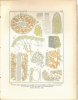
‎Forgreningsforhold hos Fanerogamerne, betragtede med særligt Hensyn til Kløvning af Vækstpunktet. (In: ""Videnskabernes Selskabs Skrifter"") - [WARMING'S DOCTORAL DISSERTATION]‎

‎Kjøbenhavn, Bianco Luno, 1872. 4to. Bound with the original printed wrappers in a recent cardboard-binding. In ""Videnskabernes Selskabs Skrifter"" Nat.Vid. og Math. Afd. Femte Række, Bd.5, 10. Bd.:1. 171, (1), L pp. + 11 plates. ‎


‎Rare first edition of Warming’s pricewinning work which stands as one of the earliest and most significant contributions to the study of plant morphology in Denmark. Submitted as his doctoral dissertation at the University of Copenhagen, this work laid the groundwork for Warming’s later, more famous contributions to ecology and plant geography. Yet, in its own right, “Forgreningsforhold” is a highly influential study that reflects the scientific rigor of a botanist ahead of his time.In this monograph, Warming investigates the structural and developmental principles underlying the branching patterns of phanerogams - seed-bearing plants that include both gymnosperms and angiosperms. Johannes Eugenius Warming (1841–1924), commonly known as Eugen Warming, was a pioneering Danish botanist widely recognized as one of the founding figures of modern ecology. He authored the first textbook on plant ecology in 1895, introduced the first university course in the subject, and helped define the scope and content of ecological science. In 1975, ecologist R. J. Goodland asserted: “If one individual can be singled out to be honoured as the founder of ecology, Warming should gain precedence” (""The Tropical Origin of Ecology: Eugen Warming's Jubilee""). Warming wrote a number of textbooks on botany, plant geography and ecology, which were translated to several languages and were immensely influential at their time and later. Most important were “Plantesamfund and Haandbog i den systematiske Botanik”.‎

Logo ILAB

Phone number : +45 33 155 335

DKK1,800.00 (€241.42 )

‎"WARMING, EUG. (+) FERRI, MARIO.‎

Reference : 62421

(1973)

‎Lagoa Santa: A Vegetacao de Cerrados Brasileiros. - [PRESENTATION-COPY]‎

‎Belo Horizonte, 1973. Large8vo. Bound with the original printed wrappers in recent half calf. With author's presenation inscription: ""On the occasion of the celebration of the / 50th anniversary of the death of Eugen Warming / who founded the science of Ecology / in Brazil, in 1863 - 1866, I present this work as a token of appreciation from / the Brazilian ecologists / Copenhagen / 16.9.1974 / Mario Guimaraes Ferri / Mario Ferri"". A nice and clean copy. (12), 362, (24) pp.‎


‎First Portugese translation – with the translator’s presentation inscription - of Warming’s pioneering ecological study based on Warming’s fieldwork in Brazil during the 1860s. It represents one of the first systematic attempts to understand vegetation not merely through taxonomy but in relation to environment, function and adaptation. Translator Ferri (1918 – 1985) pioneered field work in Plant Ecology in Brazil. His PhD thesis was one of the first scientific works of an experimental nature in the study of ecology of the vegetation of the cerrados. Warming spent several years (1863–1866) in the region of Lagoa Santa in the state of Minas Gerais, assisting the paleontologist Peter Wilhelm Lund, considered the father of the paleontology of Brazil.During this time, he undertook detailed observations of the local flora, particularly the cerrado vegetation—Brazil’s savanna biome. Unlike many of his contemporaries, Warming did not limit himself to cataloguing species. Instead, he explored how plants interacted with their environment: how they survived drought, coped with fire, and responded to poor soils. His focus on the functional aspects of vegetation-structure, life-form, and adaptation was deeply innovative and helped lay the groundwork for what would later become the discipline of ecology.‎

Logo ILAB

Phone number : +45 33 155 335

DKK1,000.00 (€134.12 )

‎"WARMING, EUG. (+) GRAEBNER, P. ‎

Reference : 62407

(1918)

‎Lehrbuch der ökologischen Pflanzengeographie. Dritte umgearbeitete Auflage. Illustrierte Ausgabe. - [PRESENTATION-COPY]‎

‎Berlin, Borntraeger, 1918. Large8vo. Bound with the original six front wrappers (bound in the back) in full black cloth with gilt lettering to spine. With author's presentation inscription to title-page: ""Hr Mag. Hjalmar Jensen / med Hjertelig Hilsen / og tak / fra Forfatteren"" (i.e. English: ""Mr. Mag. Hjalmar Jensen / with kind regards / and thanks / from the author""). Damp stain to upper margin of first and last leaves, otherwise a nice and clean copy. VIII, 988, 64 pp. ‎


‎Third German edition, presentation copy, of the founding work on Plant ecology and Plant communities. The present copy was given by Warming to Hjalmar Jensen (1865–1948) a Danish botanist. He studied natural history and geography, worked at the University of Copenhagen and an agricultural station in Karlsruhe and spent several years on tobacco plantations in Java. In 1922 he became a lecturer in microbiology at the Royal Veterinary and Agricultural University in Copenhagen, where he was made professor in 1933. ""Warming was the founder of plant ecology. The term ""ecology"", first used by Haeckel in 1866, was introduced into botany by H. reiter in 1885M but is was Warming who made ecology a preferred field of activity for many botanists. In ""Plantesamfund"" (1895) - (the work offered) - he formulated the program of his research: ""To answer the question: Why each species has its own habit and habitat, why the species congregate to form definitive communities, and why these have a characteristic physiognomy."". The book created an enormous senstaion as a new attempt at grouping and characterizing the plant communities - a new phytogeographical term by which Warming meant a group of species forming a physiognomically well-defined unity, such as a meadow. In all essentials the species of a community are subject to the same external conditions arising from the ecological factors. These factors are of a fundamental importence to the ecology ofthe individual plant and the plant community. Considering water to be the most importent factor, Warming divided plant communities into four types: hydrophytic, xerophytic, halophytic, and mesophytic.""(DSB XIV, p. 181). “It was Warming, in an 1895 Danish botanical textbook called Plantesamfund (Plant Communities), who defined the nature of the discipline. He pointed out that organisms, plant and animal, live in highly developed communities, the tenure of which depends on such things as temperature, rainfall, soil constitution, elevation, and countless other factors. He noted that communities change over time, moving toward what he called ""climax"" communities, which will remain dominant until conditions change. But he also advised that conditions will change, through wildfire, or floods, or man-made alterations, and that such changes are often irreversible, so that a forest turned into grassland will seldom revert to a forest community again.” (Linda Hall)‎

Logo ILAB

Phone number : +45 33 155 335

DKK1,800.00 (€241.42 )

‎WARMING, EUG. (+) JOHANNSEN, W. ‎

Reference : 62483

(1895)

‎Den Almindelige Botanik. Tredie Fuldstændig omarbejdede og forøgede udgave. ‎

‎Kjøbenhavn, Philipsens Forlag, 1895. 8vo. Bound in a nice recent half calf with gilt lettering to spine. Previous owner's name (Einar Larsen, Danish botanist) to top of title-page. With numerous pencil-underlignings throughout. (8), 595, (1) pp.‎


‎Third expanded edition with annotations by Danish botanist Einar Larsen. ‎

Logo ILAB

Phone number : +45 33 155 335

DKK400.00 (€53.65 )

‎WARMING, EUG. (+) JUNGERSEN, HECTOR et al. ‎

Reference : 62426

(1914)

‎Mindeskrift i anledning af hundredaaret for Japetus Steenstrups fødsel. 2 vols. ‎

‎København, Bianco Luno, 1914 4to. Two volumes uniformly bound with the original printed wrappers in later full cloth with gilt lettering to spines. A nice and clean copy. ‎


‎Memorial publication on the occasion of the hundredth anniversary of Japetus Steenstrup's birth. Johannes Japetus Smith Steenstrup (1813 – 1897) was a Danish zoologist, biologist and professor.‎

Logo ILAB

Phone number : +45 33 155 335

DKK1,000.00 (€134.12 )

‎"WARMING EUR.‎

Reference : 62406

(1920)

‎Caryophyllaceae (In ""The Stureture and Biology of Arctic Flowering Plants"", reprinted from ""Meddelelser om Grønland, Vol. XXXVII"").‎

‎(København), 1920. 8vo. Bound in a nice recent half calf with gilt lettering to spine. In ""The Stureture and Biology of Arctic Flowering Plants"", reprinted from ""Meddelelser om Grønland, Vol. XXXVII""). A fine and clean copy. (3), 232-342 pp.‎


Logo ILAB

Phone number : +45 33 155 335

DKK600.00 (€80.47 )

‎"WARMING EUR. (+) HANSTEIN, JOHANNES et al. ‎

Reference : 62391

(1872)

‎Untersuchungen über Pollen bildende Phyllome und Kaulome (in ""Botanische Abhandlungen Aus Dem Gebiet Der Morphologie Und Physiologie"". Zweiter Band, Heft 1 - 4 & Dritter Band, Heft 1.‎

‎Bonn, Adolph Marcus, 1872. 8vo. In contemporary half calf. Wear to spine and a few scratches to boards. Library labels and stamp to pasted down front end-paper and front free end-paper. Internally nice and clean. (4), 77 pp. + 5 plates" (4), 90 pp. + 6 plates (4), 136, (2) pp. + 4 plates VII, (1), 119 pp. + 6 plates (4), II, 92 pp. + 8 plates. ‎


Logo ILAB

Phone number : +45 33 155 335

DKK650.00 (€87.18 )

‎WARMING-JOHANSSEN.‎

Reference : 44713

(1909)

‎Lehrbuch dr allgemeinen Botanik. Nach der Vierten Dänischen Ausgabe übersetzt und herausgegeben von E.P. Meinecke. Mit 610 Textabbildungen.‎

‎Berlin, Borntraeger, 1909. Lex8vo. Orig. full cloth, richly gilt. VI,668 pp. Fine and clean.‎


Logo ILAB

Phone number : +45 33 155 335

DKK400.00 (€53.65 )

‎Wartenweiler, A.‎

Reference : BP11929

(1918)

‎Beiträge zur Systematik und Biologie einiger Plasmopara-Arten.‎

‎1918 56 p., 12 figs, 3 pls, stapled. Thesis (also published in: Annales Mycologici).‎


Hermann L. Strack - Loguivy Plougras

Phone number : +33-679439230

EUR20.00 (€20.00 )

‎Wartmann, B. u. Schlatter, Th.:‎

Reference : 25020AB

(1881)

‎Kritische Uebersicht über die Gefässpflanzen der Kantone St. Gallen und Appenzell.‎

‎St. Gallen, St. Gallen, 1881 / 1888. 12°. (4) 568 S. Orig.-Halblederband (leicht berieben).‎


‎Mit vereinzelten Farbanstreichungen. Seiten durchgehend leicht gebräunt und vereinzelt stockfleckig.‎

EOS Buchantiquariat Benz - CH-8001 Zürich
Logo ILAB

Phone number : 41 (0)44 261 57 50

CHF60.00 (€64.31 )

‎Wartmann, Jakob:‎

Reference : 53281BB

(1847)

‎St. Gallische Flora für Anfänger und Freunde der Botanik.‎

‎St. Gallen, Verlag von Scheitlin und Zollikofer. 1847. 8°. IV, 267 S., 1 S. Berichtigungen. Pappband der Zeit.‎


‎Pritzel 9999. - Originalausgabe. - Seltene Lokalflora. - Einband stark bestossen und berieben, vor allem am Rücken. Name auf Vorsatz. Durchgehend fleckig, stellenweise stärker.‎

Logo ILAB

Phone number : +41 313 123 711

CHF80.00 (€85.75 )

‎WATERBOLK, HARM TJALLING.‎

Reference : 24929

(1954)

Logo ILAB

Phone number : +45 33 155 335

DKK200.00 (€26.82 )
Previous 1 ... 320 321 322 323 ... 324 325 326 327 328 329 330 ... 331 Next Exact page number ? OK
Get it on Google Play Get it on AppStore
Botany
The item was added to your cart
You have just added :

-

There are/is 0 item(s) in your cart.
Total : €0.00
(without shipping fees)
What can I do with a user account ?

What can I do with a user account ?

  • All your searches are memorised in your history which allows you to find and redo anterior searches.
  • You may manage a list of your favourite, regular searches.
  • Your preferences (language, search parameters, etc.) are memorised.
  • You may send your search results on your e-mail address without having to fill in each time you need it.
  • Get in touch with booksellers, order books and see previous orders.
  • Publish Events related to books.

And much more that you will discover browsing Livre Rare Book !