 Write to the booksellers
-
Type
Autograph (1)
Book (2532)
Drawings (1)
Magazine (54)
Photographs (2)
-
Latest
Last 24h (7)
Last 3 days (2)
Last month (42)
Last week (32)
-
Language
English (2)
French (2586)
Italian (2)
-
Century
17th (2)
18th (35)
19th (262)
20th (1034)
21st (49)
-
Countries
Belgium (353)
Brazil (1)
Canada (9)
Côte d'Ivoire (6)
Denmark (213)
France (1691)
Switzerland (317)
-
Syndicate
ALAC (9)
CLAM (1)
CLAQ (1)
ILAB (753)
NVVA (135)
SLACES (135)
SLAM (367)
Etudes de La Nature
Paris, Imprimerie Crapelet chez Deterville. An XII. 5 vol.in-8 avec 10 planches en taille-douce. Frontispice de Moreau Le Jeune. Reliure de l'époque, veau blond marbré avec dos très précieux et pièce de titre et de tomaison. Tranches marbrées. Bel état.

Hasard et certitude / le transformisme devant la biologie actuelle - 2e éd. avec suppléments et note sur les rapports de la science et de la philosophie
Saint-Edeme 1972 in8. 1972. Broché.
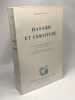
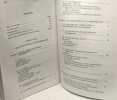
couverture ternie dos creusé intérieur propre cependant traces de scotch dans l'intérieur des plats
Hasard et certitude. Le transformisme devant la biologie actuelle
Editions Scientifiques Saint - Edme. 1972 In-8 broché 21,4 cm sur 13,5. XXXVI I+ 454 pages. Couverture défraîchie dos passé avec plis de lecture, intérieur propre. État correct d’occasion.
Etat correct d’occasion
Des Groupes sanguins aux Empreintes Génétiques
Paris Flammarion 1998 in-16° Collection " Dominos ". - Les groupes sanguins expriment l'écriture des gènes , les empreintes génétiques sont l'image des gènes eux-mêmes . Ils constituent en quelque sorte une carte d'identité et montrent que chacun d'entre nous est un être unique - Schémas , photographie en noir et blanc . Biologie .- 128 p. , 250 gr.
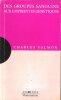
Couverture souple Très Bon État .
Diacides - extrait du traité de chimie organique tome X
Masson et cie 1939 in8. 1939. Broché.
Mauvais état présence de mouillures dos abîmé livre jauni
[Rueff et Cie] - SALOMONSEN, Dr. C.-J. [ SALOMONSEN, Carl-Julius (1849-1924) ]
Reference : 31150
(1891)
Technique élémentaire de Bactériologie.
Traduit par le Dr. Ray Durand-Fardel, avec 74 figures dans le texte, 1 vol. in-12 cartonnage pleine percaline verte éditeur, Rueff et Cie, Paris, 1891, 216 pp.
![Technique élémentaire de Bactériologie.. SALOMONSEN, Dr. C.-J. [ SALOMONSEN, Carl-Julius (1849-1924) ]](https://static.livre-rare-book.com/pictures/CDL/31150_thumb.jpg)
![Technique élémentaire de Bactériologie.. SALOMONSEN, Dr. C.-J. [ SALOMONSEN, Carl-Julius (1849-1924) ]](https://static.livre-rare-book.com/pictures/CDL/31150_2_thumb.jpg)
![Technique élémentaire de Bactériologie.. SALOMONSEN, Dr. C.-J. [ SALOMONSEN, Carl-Julius (1849-1924) ]](https://static.livre-rare-book.com/pictures/CDL/31150_3_thumb.jpg)
Bon état (annotation au plat sup, qq. rouss.) Traduction française peu courante de l'ouvrage Ledetraad i Bakteriologisk Teknik. L'auteur était un médecin danois (diplmé en 1871), qui commença à s'intéresser à la bactériologie, dans la cadre de son travail dans les hôpitaux de Copenhague. Ses publications sur la putréfaction du sang furent remarqués en particulier par Robert Koch (Allemagne) et Louis Pasteur, qu'il rencontra tous les deux. Ce fut lui qui introduit la bactériologie, comme discipline scientique, dans son pays. En 1893, il devint professeur de pathologie à 'Université de Copenhague.
LE GRAND LIVRE DES ANIMAUX DE BUFFON
Paris La Renaissance du Livre 2002 un volume grand in-4°, 215 pp. Reliure éditeur sous jaquette illustrée. Nombreuses reproductions en noir et blanc et en couleurs.
Über das Grosse und das Schöne in der Natur. (nur:) 3. Stück.
Leipzig, Weygandsche Buchhandlung, 1782, gr. in-8°, 240 S., unbeschnitten, fleckiger Pappband.
Aus dem Inhalt: Dass man auch das kleine und unsichtbare in der Natur studieren müsse / Weise Einrichtungen der Natur / In ganzen Ländern: Der Schwarzwald; die Thiere, Tannen, Kineholz, Fische / Der Spreewald / Spinnen in Osnabrück / Insel Capria / Elba / In der Menschenwelt: Schwangerschaft / Seltsame Triebe und Gelüste schaden doch nicht allemal / Vom Gesicht der Kinder / Allerlei Erfindungen des Menschen / Gute Einflüsse der aus Frankreich vertriebenen Protestanten / Luther / Unter den Thieren / Vierfüssige Thiere / Vögel / Amphibien / Fische / Insekten / Würmer / Im Pflanzenreich / Im Mineralreich / Im Wasser u.a.

(SLACES, NVVA)
Phone number : 41 (0)26 3223808
La cellule.
Couverture rigide. Cartonnage de l'éditeur. 210 pages.
Livre. Editions Quillet (Collection : Encyclopédie illustrée des actualités scientifiques), Vers 1923.
La cellule
Quillet, Encyclopédie illustrée des Actualités Scientifiques, 1923 12 x 19, 210 pp., 119 figures, cartonnage, éditeur, Bon état
"Généralités concernant la cellule. Origine de la vie: doctrines anciennes et modernes. - Les constituants de la cellule, sa division; la cellule végétale. - La cellule chez les protozoaires, métazoaires. - Les différents types cellulaires. Variations dyna"
[Extrait des mémoires de l'Académie des Sciences] - SAUVAGEAU, Camille
Reference : 31173
(1917)
Recherches sur les Laminaires des Côtes de France.
1 vol. in-4 br., Extrait des mémoires de l'Académie des Sciences, [ Bordeaux ], 1917 [ 1918 ], 240 pp., nomb. ill. dans le texte
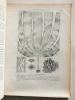
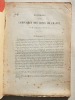
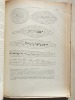
Etat moyen (sans couv. d'origine ni page de titre, brochage amateur postérieur) pour cette rare édition originale.
Les précipitations dans le Bassin du Kivu et dans les Zones limitrophes du Fossé tectonique (Afrique centrale équatoriale). Communication préliminaire
Bruxelles, Librairie Falk fils 1933 108pp.avec 28 ills. (figures, cartes, plans, croquis) + 16 diagrammes hors-texte + 10 planches hors-texte, 30cm., dans la série "Institut Royal Colonial Belge, section des sciences naturelles et médicales, mémoires, collection in-4o" tome 2 fascicule 2, br.orig., bon état
An Evolutionary Survey of the Plant Kingdom. London, Glasgow, 1965.
Small 4to. Orig. full cloth with dustjacket. XI,658 pp. Richly textillustr.
Alienation
Allen & unwin 1971 286 pages 13x2 54x19 81cm. 1971. Broché. 286 pages.
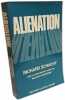
Bon Etat couverture un peu défraîchie intérieur propre
La physionomie chez l'homme et chez les animaux,
dans ses rapports avec l'expression des émotions et des sentiments. P.Baillière 1887. In-8 (22/14cm).VIII-445 pages. Broché. (décousu) petit manque de papier sur la couverture.
154 figures dans le texte. Bon état du texte (mérite une reliure).
Evolution. Vorträge anlässlich der Jahresversammlung vom 11. bis 14. Oktober 1973 zu Halle (Saale).
Halle (Saale), 1975. Lex8vo. Orig. full cloth. 668 pp., Illustr.
Fortsatte Forsög for at bestemme Den Mængde Kulsyre, et Menneske udaander i 24 Timer .
Kjöbenhavn, Bianco Luno, 1845. 4to. In contemporary (original?) blue boards. Offprint from ""Kgl Danske Videnskabernes Selskabs Natur-Videnskabelige og Mathematiske Afhandlinger. 11te Deel"". Fine and clean. 28 pp.

Offprint of Scharling's paper in which he seeks to determine the amount of carbon dioxide a person exhales in 24 hours.
Eine neue art der gattung trogophloeus mannh. nebst einer bestimmungstabelle der aus Nord-- und Mitteleuropa bekannt gewordenen arten dieser gattung - EXTAIT
Helsingfors 1937 p97-119 pages in8. 1937. Agrafé. p97-119 pages.
bon état intérieur propre p97-119
Neue arten der gattungen leptusa kr. und sipalia muls. rey aus dem museo civico di storia naturale di trieste / ESTRATTO EXTRAIT
Fratelli pagano 1957 in8. 1957. Broché.
p53-60
Neue staphyliniden ausportugal (Col.) - p. 98-141
Insituto espanol de entomologia 1951 p. 98-141 pages in8. 1951. Agrafé. p. 98-141 pages.
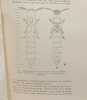
Couverture défraîchie intérieur prorpe extrait p. 98-141
Zoologische studien in West-Griechenland - VIII. Teil staphylinidae (Col.) EXTRAIT p.363-432
Springer-Velag 1958 in8. 1958. Broché.
proche du très bon état intérieur propre bonne tenue
The origin of Terrestrial Vertebrates. Transl. from the Russian. N.Y., London, 1968.
Orig. full cloth with dustjacket. XXI,314 pp. Richly illustr.
Wörterbuch Biologie. Mit Abbildungen.
Leipzig, Alfred Kröner 1912, 235x155mm, VIII - 581Seiten, Verlegereinband.
Pour un paiement via PayPal, veuillez nous en faire la demande et nous vous enverrons une facture PayPal
Die evolutionstheorie das grundproblem der modernen biologie -- EDITION ORIGINALE
Berlin, Deutscher Bauernverlag, 1951, un volume in 8 relié en cartonnage éditeur, 141pp., 6 portraits hors texte (Lyssenko, Lamarck, Darwin, Haeckel, Timirjasew, Mitschurin)
---- EDITION ORIGINALE ---- Zur geschichte des Evolutionsgedankens (K.F. Wolff, J.B. Lamarck, C. Darwin, Die Wetschätzung des darwinisms durch Marx und Engels, E. Haeckel...) - Einige Hauptprobleme der modernen biologie (Organismus und Umwelt, Die Veränderlichkeit in Reich der Organismen...) - etc**4696/A7AR

