Write to the booksellers
-
Type
Autograph (1)
Book (2773)
Drawings (1)
Magazine (54)
Photographs (2)
-
Latest
Last 3 days (33)
Last month (42)
Last week (1)
-
Language
English (2)
French (2827)
Italian (2)
-
Century
17th (2)
18th (35)
19th (265)
20th (1094)
21st (72)
-
Countries
Belgium (353)
Brazil (1)
Canada (9)
Côte d'Ivoire (6)
Denmark (213)
France (1939)
Switzerland (310)
-
Syndicate
ALAC (9)
CLAM (1)
CLAQ (1)
ILAB (944)
NVVA (135)
SLACES (135)
SLAM (558)
"L'alimentation minérale équilibrée des végétaux : théorie, méthodologie, applications; tome 1 : L'alimentation sur milieux dépourvus de fertilité naturelle."
Wetteren (Belgique), Universa, 1961. 16 x 25, 286 pp., 137 figures, 4 planches, reliure pleine toile, bon état (annotations au cryon gris sur la page de garde arrière).
tome 1 seul.
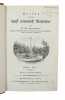
Forsøg til en dansk oeconomisk Plantelære. 1.-2. Deel (1. Del i 3. oplag - 2. Del i 1. oplag).
København, 1821 - 1837. 8vo. I to samtidige halvlæderbind. Rygge med slitage. False på bind 2 gået op. Indvendig en smule bruplettet. XII,1042(4),990 pp. + 2 kobberstukne plancher.

A study of Meadow-Crop Diseases in New York. A thesis.
No place, Cornell University no year, about 1930, 230x160mm, 139pages, paperback. Book in good condition.
28 b/w figures, tables, Pour un paiement via PayPal, veuillez nous en faire la demande et nous vous enverrons une facture PayPal
Embryologie.
Couverture souple. Broché. 184 pages.
Livre. Editions Hermann (Collection : Méthodes), 1967.
La matière, sa vie et ses transformations.
Couverture souple. Broché. 318 pages. Papier bruni. Couverture légèrement défraîchie.
Livre. Préface de E. Bouty. Editions Armand Colin, 1919.
Force et Cause
Paris Flammarion 1920 In-12 250 pp, Bibliothèque de Philosophie scientifique, illustrations N&B
Bon Broché à raba
Nature et Science Naturelle
Paris Flammarion In-12 301 pp, Bibliothèque de Philosophie scientifique, illustrations N&B, dos légèrement frotté. Cachets de Bib. discrets
Correct Demi Basane Modeste
Handleiding tot eene algemeene kennis van den aardbol, tot nut en vergenoegen en ter verheerlijking van den schepper. Een leerboek voor den middenstand
Groningen, J.B. Wolters 1842 xvi + 336pp., 23cm., lichtgecart. band uit de tijd, met ex-libris met wapenschild van F.H.M. Ouwerling, tekst helder met slechts sporadische roestplekjes, goede staat, W96242
The biology of Hydra and of some other coelenterates
Miami Press 1961 in8. 1961. Cartonné jaquette.
livre en bon état intérieur propre bords jaquette frottés
Field-Ion Microscopy.
New York, Plenum Press 1968, 235x160mm, XIV - 244pages, editor's binding. Book in good condition.

Pour un paiement via PayPal, veuillez nous en faire la demande et nous vous enverrons une facture PayPal
Biologie et écologie de la vigne.
186 figures dont 7 en couleurs et 86 tableaux. Lausanne, Éditions Payot & Paris, Technique et Documentation, 1986. Grand in-8 (23x16,5cm) cartonnage éditeur imprimé et illustré. 371pp.
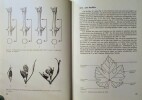
Bon état
[Hugo de VRIES] - BLARINGHEM (Louis) - BERTRAND (P.) - GUERIN (P.) - STOMPS (Th. J.).-
Reference : 59696
Hérédité, mutation et évolution. L'oeuvre de Hugo de Vries présentée au Palais de la découverte (exposition internationale 1937).
P., Masson, 1937, in 8° broché, 95 pages.
PHOTOS sur DEMANDE. ...................... Photos sur demande ...................


Phone number : 04 77 32 63 69
Contribution à l'étude des Rhizopodes de Bretagne. Les Cyphoderia de la Vallée du Gouedic, en Saint-Brieuc.
1943 Paris, Paul Lechevalier Editeur, 1943 ; grand in-8, broché, couverture crème illustrée d'une vignette en noir contrecollée au 1er plat, titre en brun dos muet ; 143pp. et 13 planches photographiques hors texte.
Quelques piqûres à la couverture, intérieur très frais. ( GrDD2)
Les Cyphoderia de la Vallée du Gouëdic, en Saint-Brieuc. Contribution à l'étude des Rhizopodes de Bretagne.
1 vol. in-8 br., Paul Lechevalier, Paris, 1943, 143 pp. et XIII planches hors texte
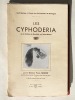
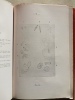
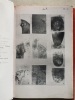
Etat très satisfaisant (des annotations) pour cet exemplaire accompagné d'un commentaire manuscrit de l'ouvrage, rédigé par un spécialiste girondin des rhizopodes. Peu courant.
A Study Guide to Chemical Principles
W.A. Benjamin 1970 in8. 1970. Broché.
Bon état cependant couverture défraîchie ternissures intérieur propre
Essais d'un biologiste
1946 Paris, Stock, 1946, In douze, 290 pp, broché,
Annotations au crayon. Traduit par Jules Castier.
Soviet Genetics and World Science. Lysenko and the Measuring of Heredity.
London, Chatto and Windus, 1949. Orig. full cloth with dustjacket. X,245 pp. Fine and clean.
First edition.
L'écrevisse. Introduction à l'étude de la zoologie -- PREMIERE EDITION FRANCAISE
P., Baillière, 1880, un volume in 8 relié en pleine toile éditeur, (rousseurs), 1 frontispice, 11pp., 260pp., 82 figures dans le texte
---- PREMIERE EDITION FRANCAISE ---- "Un pionnier dans l'enseignement pratique de la biologie" ---- "Professeur de zoologie au Collège royal des mines, puis professeur de physiologie et d'anatomie comparée au Collège royal des chirurgiens de Londres, ami de Darwin, T.H. Huxley défendit vigoureusement la théorie de l'évolution. Il fut un pionnier dans l'enseignement pratique de la biologie. Parmi ses oeuvres principales citons... une monographie de l'écrevisse" ---- DSB VI pp. 589/597**2745/A6DE
Cours élémentaire et pratique de biologie. Bibliothèque biologique internationale.
Paris, Octave Doin, 1884. 12 x 19, 387 pp., reliure carton, mauvais état (cachets du Collège jésuite Saint Stanislas à Mons, reliure sans dos).
Traduit sur la dernière édition anglaise par F. Prieur.
De la place de l'homme dans la nature ( et suivi d'un compte rendu des travaux anthropologiques du congrès international d'anthropologie et d'archéologie préhistoriques tenu à Paris, session de 1867, par le dr. E. Dally)
Paris, J.-B. Baillière 1868 xx + 368pp. avec 68 figures dans le texte, 1e édition française, reliure cart. (dos en cuir brun avec titre doré, charnière supérieure partiellement cassée et restaurée, plats marbrés), feuilles de garde marbrées, 22cm., texte frais, bon état, F100377
Cours élémentaire et pratique de biologie traduit sur la dernière édition anglaise par F. Prieur -- PREMIERE EDITION FRANCAISE
P., Doin, 1884, un volume in 8 relié en demi-basane marron, dos orné de fers dorés (reliure de l'époque), (rousseurs), 13pp., 387pp., demi-basane marron, dos orné de fers dorés, (rousseurs)
---- PREMIERE EDITION FRANCAISE ---- "As offshoots of his teaching and often based on his lectures series, Huxley wrote several textbooks...". (DSB VI p. 596) ---- Globules blancs du sang - Bactéries - Moisissures - Fougères - Hydre d'eau douce - ETC**2749/A3
Obituary Notices of Fellows Deceased. [Charles Darwin]. - [HUXLEY'S OBITUARY OF DARWIN]
London, Harrison and Sons, 1888. 8vo. In later full blue cloth with gilt lettering to spine. In ""Proceedings of the Royal Society of London"", vol. XLIV. Entire volume offered. Soiling to extremities, endges of front board torn and upper front hindge with small tear. Library label pasted on to front free end-paper. Vague blindstamp to title-page of volume. Internally fine and clean. [Darwin's orbituary""] I-XXV pp. [Entire volume: viii, 464, XXXV, (1) pp.].
![Obituary Notices of Fellows Deceased. [Charles Darwin]. - [HUXLEY'S OBITUARY OF DARWIN]. "HUXLEY, THOMAS HENRY.](https://static.livre-rare-book.com/pictures/LLX/57931_1_thumb.jpg)
![Obituary Notices of Fellows Deceased. [Charles Darwin]. - [HUXLEY'S OBITUARY OF DARWIN]. "HUXLEY, THOMAS HENRY.](https://static.livre-rare-book.com/pictures/LLX/57931_2_thumb.jpg)
First appearance of Huxley's famous obituary of Darwin. ""While Huxley was composing this and other expositions of technical education in the late 1880s, he was also writing an obituary notice on Darwin for the Proceedings of the Royal Society. Though he undertook this piece in 1883, he did not complete it until five years later. In letters to Foster and Hooker in early 1888, Huxley remarked that he was still rereading Origin of Species, trying to separate the ""substance"" of the theory from its ""accidents,"" with the aim of warding off a generation of ""hostile comments and would-be improvements."". Even though he had written at least a half-dozen abstracts of the work and was reading it, he said, ""for the nth time,"" he was ""getting along slowly"" and finding it ""one of the most difficult books to exhaust that ever was written."" At this juncture in his life, it seemed that Huxley had difficulty concluding what he had always concluded previously about Darwin's theory: that its points of central importance were the facts of variation, the Malthusian principle of overpopulation, and its consequence, universal struggle. As Huxley finally came around to saying once again the obituary article , it was immaterial how organisms differed from each other or why."" (White, Thomas Huxley: Making the 'Man of Science, P. 152)Darwin-Online A344.
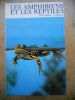
Les amphibiens et les reptiles
Lausanne, editions rencontres, collection "La grande encyclopedie de la nature", volume n.10, 1971. Format 17x27 cm, reliure toilee sous jaquette illustree, 383 pages. Tres bon etat.