 Write to the booksellers
-
Type
Autograph (1)
Book (2525)
Drawings (1)
Magazine (54)
Photographs (2)
-
Latest
Last month (77)
Last week (1)
-
Language
English (2)
French (2579)
Italian (2)
-
Century
17th (2)
18th (35)
19th (256)
20th (1003)
21st (72)
-
Countries
Belgium (352)
Brazil (1)
Canada (9)
Côte d'Ivoire (6)
Denmark (213)
France (1694)
Switzerland (308)
-
Syndicate
ALAC (9)
CLAM (1)
CLAQ (1)
ILAB (754)
NVVA (133)
SLACES (133)
SLAM (370)
Coprologie parasitaire et fonctionnelle.
Couverture rigide. Reliure toile. 370 pages.
Livre. Préfaces de J.-J. Dubarry et R. Pautrizel. Imprimerie E. Drouillard, 1973.
Piotr Kowalski
1988 Editions Fernand Hazan - Collection "Monotypes" dirigée par Maïten Bouisset - 1988 - In-4, cartonnage illustré sous rhodoïd - 127 pages - Ouvrage tiré à 2000 exemplaires, constituant l'édition originale - Nombreuses illustrations en couleurs et en N&B, in et hors texte, dans l'ouvrage
Bon état - Frottements sur les coins et les coiffes du cartonnage et du rhodoïd avec de petites déchirures aux coins et aux coiffes Bon
Traité d'embryologie et d'organogénie comparées.
Paris, Librairie J.-B. Baillière et Fils, 1883 et 1885. 2 forts vol. au format in-8 (223 x 147 mm) de 1 f. bl., xxxii - 567 pp. et 1 f. bl. ; 1 f. bl., xi - 740 pp. et 1 f. bl. Reliures uniformes de l'époque de demi-chagrin maroquiné carmin, dos à nerfs ornés de filets gras en noir, larges fleurons dorés, titre doré, tomaison dorée, tranches mouchetées.
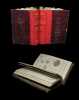
Edition originale de la traduction française ; agrémentés de très nombreuses figures dans le texte. Ensemble complet des deux volumes le constituant ; sous agréables reliures du temps. ''Disciple de l'école transformiste, Balfour sait l'importance de données que l'embryologie peut fournir à l'histoire de la filiation des êtres et lui demande de nous éclairer sur la généalogie des formes animales.'' Coupes élimées. Quelques frottements épars affectant le papier marbré des plats. Très rares rousseurs dans le texte. Du reste, très belle condition. Peu courant.
Traité d'embryologie et d'organogénie comparées - Tome premier - Histoire de l'oeuf - Embryologie des invertébrés + Traité d'embryologie et d'organogénie comparées - Tome second - Embryologie des vertébrés - Organogénie.
Paris, Librairie J.-B. Baillière et fils, 1883 - 1885 1 volume ( = 2 tomes) In-8° (14 x 22,1cm) Reliure demi-basane d'époque; auteur-titre dorés au dos, orné de 7 bandes de doubles filets dorés; gardes marbrées. 2 tomes reliés en 1 volume: XXXII + 567p., 296 vignettes in texte; et XI + 740p., 444 vignettes in texte.
Traduction "avec l'autorisation de l'auteur", par les zoologistes Henry-Albert ROBIN (1858-1884) et François MOCQUARD (1834-1917), de "A Treatise on Comparative Embryology", important traité publié en 1880-1881 par l'embryologiste britannique Francis Maitland BALFOUR (1851-1882); 296 + 444 vignettes in texte; en introduction "F.-M Balfour, sa vie et ses travaux" par Henry-Albert ROBIN et liste de ses publications; bibliographies. Exemplaire bien complet des 2 tomes, relié (mais extérieurement assez vilain !). Reliure salie et très frottée (cuir rugueux; ors du dos très estompés); rousseurs - la plupart pâles, parfois soutenues - et quelques taches dans le 2nd tome.
Über die Chromosomen der Tachea (Helix) hortensis, Tachea austriaca und sogenannten einseitigen Bastarde T. hortensis T. austriaca. Mit einer Figur im Text und einer Tafeln. S.A. aus Archiv für Zellforschung.
Leipzig - Berlin, Wilhelm Engelmann 1913, 230x155mm, 18Seiten, broschiert.
Pour un paiement via PayPal, veuillez nous en faire la demande et nous vous enverrons une facture PayPal
Les conditions du sol et la croissance des plantes. Traduit sur la quatrième édition anglaise par Georges Matisse. Illustré de 32 figures et 4 planches hors-texte.
P., Flammarion, sans date (1924), in 8° broché, 465 pages ; illustrations ; papier bruni ; couverture défraichie.
...................... Photos sur demande ...................


Phone number : 04 77 32 63 69
Contribution à l'étude du peuplement Thecamoebien des sols calcimorphes. Thèse présentée à la Faculté des Sciences de l'Université de Toulouse, soutenue le 28 avril 1969 pour obtenir le grade de Docteur de Spécialité : Biologie Animale (Ecologie)
1 vol. in-4 br., Toulouse, 1969, 181 pp. avec nombreux tableaux dépliants
Etat très satisfaisant (qq. annotations sur couv.)
Friesche en Marker schedels - Bijdrage tot de kennis van de anthropologie der bevolking in Nederland
Losco, 1912 272pp. Met 37 figuren in tekst + 4 zw/w platen buiten tekst & 2 uitvouwbare platen + 3pp. stellingen, 24cm., gebroch., Doctoraal proefschrift (Universiteit van Amsterdam), stempetje op chterzijde titelblad, tekst helder, N110312
Nouveaux élémens de la science de l'homme
P., Goujon, 1806, 2 volumes in 8 reliés en pleine basane racinée de l'époque (reliures de l'époque), (quelques rousseurs, une coiffe émoussée), T.1 : (4), 304pp., 238pp., T.2 : (2), 339pp., 244pp.
---- Seconde édition REVUE ET CONSIDERABLEM:ENT AUGMENTEE (UN VOLUME) - BON EXEMPLAIRE ---- "The author herein states those principles for which he is now best remembered, that is, that the "VITAL PRINCIPLE" (a term he introduced) is the basis of the phenomenon of life, and every abnormality of function of normal life - or of his "vital principle" - constitutes disease". (Heirs of Hippocrates N° 1012 1st ed.) ---- Garrison p. 364 - DSB I pp. 478/479**251.D4
Lamarck ou le mythe du précurseur.
Seuil, 1979, in-8°, 186 pp, un portrait, biblio, broché, couv. illustré, bon état
Désormais les frais d'envoi sont de 6 € seulement pour les livres jusqu'à 1 kg (colissimo suivi), pour la France métropolitaine.
PRÉCIS DE PSYCHIATRIE. Clinique - Psychophysiologie - Thérapeutique
Paris Masson & Cie, Editeurs 1950 in 8 (20x14) 1 volume reliure toilée rouge de l'éditeur, dos et plats supérieur titrés, XXIII et 641 pages [1], avec 108 figures dans le texte. Collection de précis médicaux. Bel exemplaire ( Photographies sur demande / We can send pictures of this book on simple request )
Très bon Reliure
Mendels Vererbungstheorien. Aus dem Englischen übersetzt von Alma Winckler. Mit einem Begleitwort von R. von Wettstein sowie 41 Abbildungen im Text und 6 Tafeln und 3 Portrats von Mendel.
Leipzig und Berlin, B.G. Teubner, 1914. Orig. hcloth. Spine with gilt lettering. Portrait as frontisp. X,375 pp., 2 portraits, textillustr. and 6 colourplates (4 double-page). Fine and clean.
First German edition of this classic work in biology. The English original was issued 1902. Bateson rediscovered Mendel's papers on heredity and republished them at the end of this work. - Garrison & Morton: 244 (the English ed.)
On some Variations of Cardium edule apparently Correlated to the Conditions of Life.
(London, Harrisn and Sons, 1890). 4to. No wrappers as extracted from ""Philosophical Transactions"", 1889, Vol. 180 - Series B. Pp. 297-330 and 1 chromolithographed plate. Fine and clean.
First printing of an importent paper in Bateson's scientific career as it deals with central problems in evolutionary theory, the problem of variations. Bateson favours discontinous variations instead of the Darwinian gradual adaptation. Bateson is also famous to for his rediscovery of Mendel's hereditary laws, which he proved holds for animals as well of plants.
La vie des poissons.
P., Stock, 1967, in 8° broché, 155 pages ; couverture illustrée ; illustrations hors-texte.
...................... Photos sur demande ...................
Phone number : 04 77 32 63 69
Naturgeschichte für das Volk. Ein Buch für Schule und Haus, zur Verbreitung der Erkenntnis Gottes aus seinen Werken. Mit 208 in den Text eingedruckten (Holzschnitt-) Abbildungen.
Luzern, Xaver Meyer, 1837, in-8°, X + 596 S. + dazu 8 lose S. ‘Kurze Gebrauchsanleitung...' datiert April 1838, leicht stockfleckig, Locker. Halbleinenband, etwas fleckig, Ecken und Kanten berieben.
Das Werk wurde mit besond. Rücksicht auf die deutsche Schweiz abgefasst. Das sehr reiche Abbildugsmateriel bietet zu allen Bereichen gute Darstellungen. Die Tatsache, dass das Werk viele Tiere und Pflanzen enthält, wie z.B. der Lämmergeier (S. 478 f) oder der Luchs (S. 537 f), macht es zu einem wertvollen Vergleichungswerk gegenüber die Werke aus neuerer Zeit. Der Verfasser war Professor der Naturgeschichte in Luzern.
(SLACES, NVVA)
Phone number : 41 (0)26 3223808
Die Naturwissenschaften. ´Grundriss der Algemeinen Bildung´, 2.
Zürich, Emil Frei, 1949, gr. in-8°, Frontispiz (Erni) + 528 S., reich illustriert in-Text und auf Tafeln, Original-Leinenband, OU.
Facharbeiter: Gaston Borel, Knut Eckner, W.M. Halford, Ernst Magnus, Paul Mathesius, Hermann Matzke. Inhalt: Universum, Himmelskunde, Atomphysik, Mathematik, Organischen, Wesen des menschen, Wirtschaftsleben, Technik.
(SLACES, NVVA)
Phone number : 41 (0)26 3223808
Philosophie des sciences - ARTICLES ORIGINAUX DE BETH (E.W.), FEYS (R.), GONSETH (F.) & MULLER (G.H.), DESTOUCHES (J.L.), PIVETEAU (J.)
P., Hermann, 1950, un volume in 8 broché, couverture imprimée, 162pp.
---- EDITION ORIGINALE ---- ARTICLES ORIGINAUX DE : BETH (E.W.). Decision problems of logic and mathematics - FEYS (R.). Logistique - GONSETH (F.) & MULLER (G.H.). Philosophie mathématique - DESTOUCHES (J.L.). Physique moderne et philosophie - PIVETEAU (J.). Philosophie biologique**7195.O7AR
The Mechanism of Pancreatic Secretion. (Seventeen Figures in the Text). - [FOUNDING THE SCIENCE OF ENDOCRINOLOGY.]
(London), Journal of Physiology, 1902. Offprint from the Journal of Pysiology. Vol. XXVIII. No. 5, 1902. Pp. (325-) 353, 17 textfigs. Small staples in inner margin, also sewn. A very small stain in lower blank margin.
![The Mechanism of Pancreatic Secretion. (Seventeen Figures in the Text). - [FOUNDING THE SCIENCE OF ENDOCRINOLOGY.]. "BAYLISS, W.M. & E. H. STARLING.](https://static.livre-rare-book.com/pictures/LLX/49680_1_thumb.jpg)
First edition of the scarce offprint of the paper that fully described the discovery of the first hormone, a milestone in the history of physiology and medicine. The discovery was announced in the Proccedings of the Royal Society in Janauary 1902, on 2 pages. The offered item constitutes the first printing of the paper in full, in which the authors described their milestone discovery, which introduced an entirely new field in physiology and medicine, namely the discovery of the FIRST HORMONE, which they named ""Secretin"". A few years later Sterling coined the word 'hormone' (1905) from the Greek 'hormon', meaning to exite or set into motion. Up until Baylis' and Starlings' discovery, it was thought that the glands, here specifically the pancreas, were controlled by the nerves (e.g. Pavlov and others), but Bayliss and Sterling discovered that the intestine was in fact signaling the pancreas, thereby presenting a COMPLETELY NEW MECHANISM involving a new kind of body or substance functioning as a chemical messenger. ""If nerves are the sprinters of biology, Bayliss & Starling had discovered the marathon runners. In doing so, they also founded the science of hormones, called endocrinology"" (Alan Lightman ""The Discoveries"", p. 34 ff). ""With the discovery of hormones, Bayliss & Starling had found the internal command and control centers - and in this, their discovery was much larger than a new communication system. The mechanism of response and control was chemical: atoms and molecules. Now, with hormones, there was a mechanism for a living thing to regulate itself. Furthermore, with hormones, an organism could not only be studied, but also controlled from the outside... Never had the living body come closer to a machine, a self-regulating machine governed not only by physics, but also by chemistry. And not only a machine, but a machine that we humans could willfully control. At the start of the new century, we still have not come to terms with the implications of this idea."" (Alan Lightman).Parkinson ""Breakthroughs"", 1902 B. - Leicester ""Source Book in Chemistry 1900-1950"", pp. 312-13.
"BAYLISS, W.M. (WILLIAM MADDOCK) & ERNEST H. STARLING. - THE CHEMICAL MESSINGER.
Reference : 49361
(1904)
The Chemical Regulation of the Secretory process. (Croonian Lecture).
London, Harrison and Sons, 1904. 8vo. Later full buckram. Spine with gilt lettering. In: ""Proceedings of the Royal Society"", Vol. 73. VIII,548 pp. a. 11 plates. (Entire volume offered). Bayliss & Starling's paper: pp. 310-322. A stamp to edges, otherwise clean.
First printing of this paper in which they developed the theory of hormonal control of the internal secretion, a milestone discovery by Bayliss and Starling in 1902, which introduced a quite new field in physiology and medicine, the discovery of the FIRST HORMONE, which the they named ""Secretin"". They here tries to find out how this new body could be decribed chemically, and one of the conclusions were ""It is not precipitated by tannic acid, thus excluding bodies of alkaloid nature as well as di-amido compounds. This evidence, slight thought it is, points to secretin being a body of relatively small molecular weight and not a colloid. It may be compared to the active principle of the suprarenal glands, adrenalin, which has been obtained in a crystallic form and the cemical constitution of which has been approximately determined...""(p. 314-15).Garrison & Morton: 1121.
Biological receptor mechanisms (Symposia of the Society for experimental biology n°XVI)
Cambridge University Press Society for experimental biology Reliure d'éditeur 1962 In-8 (16x25 cm), reliure percaline verte d'éditeur, titre, tomaison et éditeur dorés au dos, 372 pages, préface par J. W. L. Beament, prologue de J. W. S. Pringle, ouvrage collectif, schémas dans le texte ; annotation en page de garde, très bon état. Livraison a domicile (La Poste) ou en Mondial Relay sur simple demande.
"Le microscope et ses applications. Section du biologiste; Encyclopédie scientifique des aides-mémoires."
Paris, Gauthier-Villars et Fils/G. Masson, 1893. 12 x 19, 240 pp., 38 figures, reliure d'édition percaline bleue, bon état.
Guide de l'élève et du praticien pour les travaux pratiques de MICROGRAPHIE comprenant la technique et les applications du microscope à l'histologie végétale, à la physiologie, à la clinique, à l'hygiène et à la médecine légale -- EDITION ORIGINALE -- BON EXEMPLAIRE
P., Masson, 1880; un volume in 8 relié en demi-chagrin noir (reliure de l'époque), (quelques rousseurs), 8pp., 904pp., 570 figures dans le texte, demi-chagrin vert
---- EDITION ORIGINALE ---- BON EXEMPLAIRE ---- Des microscopes et de leur emploi - Du sang au point de vue microscopique - Du pus - Des sédiments de l'urine - Du lait au point de vue microscopique - Des parasites - Corpuscules et miasmes de l'air - etc**304.B5DE
Glaucomes.
Paris, Japperenard - chez l’auteur 1987, 245x200mm, 488pages, reliure d'éditeur. Bel exemplaire.
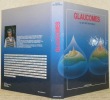
photos couleurs et n/b, Pour un paiement via PayPal, veuillez nous en faire la demande et nous vous enverrons une facture PayPal
Normal pressure glaucomas. Glaucomes à pression normale.
Angers, Japperenard - chez l’auteur 1990, 245x200mm, 256pages, reliure d'éditeur. Bel exemplaire.
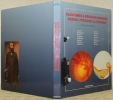
photos couleurs et n/b, Pour un paiement via PayPal, veuillez nous en faire la demande et nous vous enverrons une facture PayPal
Eléments d' Anatomie générale,
ou description de tous les genres d'organes qui composent le corps humain. Paris, Béchet. 1823. In-8 (21x12). XII-728 pages. Reliure inexistante.
Sommaire du cours d' anatomie que lauteur a professé une dizaine d'années. En tête de chaque chapitre, une histoire abrégée des principales découvertes faites sur le système d'organes, qui en est le sujet. Bon état du texte, mais reliure inexistante.

