 Write to the booksellers
-
Type
Art print (2)
Autograph (4)
Book (33660)
Magazine (146)
Manuscript (3)
Maps (1)
Photographs (8)
-
Latest
Last 24h (1)
Last 3 days (14)
Last month (191)
Last week (111)
-
Language
Chinese (1)
Dutch (3)
English (108)
French (33572)
German (9)
Greek (1)
Italian (112)
Japanese (1)
Latin (5)
Polish (1)
Portuguese (4)
Russian (3)
Spanish (3)
Swedish (1)
-
Century
16th (32)
17th (77)
18th (570)
19th (4302)
20th (11263)
21st (1705)
-
Countries
Belgium (7839)
Brazil (14)
Canada (11)
Côte d'Ivoire (35)
Denmark (146)
France (24513)
Germany (9)
Greece (3)
Netherlands (1)
Switzerland (1253)
-
Syndicate
ALAC (11)
CLAM (15)
CLAQ (3)
CNE (19)
ILAB (13900)
NVVA (532)
SLACES (531)
SLAM (13117)
SNCAO (64)
Dirk Braeckman - No Denial, No Explanation
Antwerp, Tim Van Laere, 2023 Hardcover, 88 pages, Illustrated., Quadrilingual: English, Dutch, French, Italian .*New. ISBN 9789464004366.
Tim Van Laere Gallery presents No Denial, No Explanation, a new solo exhibition by internationally acclaimed artist Dirk Braeckman. Dirk Braeckman is celebrated for his stilled, enigmatic visual language?one that continuously questions, suspends, and redefines the photographic medium. His austere, often monochromatic images oppose the velocity and superficiality of today?s visual overload. They urge the viewer to slow down, to look more attentively, and to embrace ambiguity. For Braeckman, the essence of photography lies not in the moment of capture, but in the entire process?from the initial shot to the final image. With this approach, he engages with photography through a painterly lens, emphasizing the process of image construction. His works are not straightforward reproductions of reality, they are carefully altered, marked, deconstructed, and recomposed by the artist. As a result, the viewer doesn?t just get a glimpse through Braeckman?s lens, but feels his physical presence within each work.
Ben Sledsens : Under The Tree Distant Sea.
, Tim Van Laere Books , 2022 Hardcover, 96 pages, ENG./ NL./FR. edition, 255 x 205 x 15 mm, *NEW, illustrated in colors. ISBN 9789464004182.
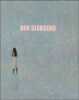
Wanneer men het werk van Ben Sledsens bespreekt, wordt het woord utopia vaak in de mond genomen om de wereld te beschrijven die hij in zijn schilderijen weergeeft. Ook de kunstenaar zelf zegt over zijn werken dat ze een utopia voorstellen waarin hij zelf zou willen leven. Als we echter goed kijken naar het oeuvre dat Sledsens in de loop der jaren heeft gecre erd, merk je echter dat zijn wereld niet enkel is opgebouwd uit optimistische verhalen, noch is zijn ?utopia? een suggestie voor een perfecte samenleving. Het is ook geen kritiek of satire; de kunstenaar herbergt geen enkele ambitie om via zijn werken een sociale of politieke boodschap uit te dragen. De wereld die Sledsens in zijn schilderijen weergeeft is dus niet het product van zijn ongenoegen met onze werkelijkheid; zijn utopia is elders ontstaan.
Katrien Vandermarliere (hoofdredacteur), Tom Avermaete, Lieven De Boeck
Reference : 62738
JAARBOEK ARCHITECTUUR VLAANDEREN 2002-2003 : (editie 2004)
, Ministerie van de Vlaamse Gemeenschap, 2004 Hardcover, 224 pag. NL, 310 x 230 x 25 mm, als Nieuw, illustraties / afb. in kleur / z/w. ISBN 9789080778740.
Het Jaarboek Architectuur Vlaanderen verscheen in 2004 voor de zesde maal, en voor het eerst als uitgave van het Vlaams Architectuurinstituut. Het Jaarboek biedt een tweejaarlijks overzicht van de recente ontwikkelingen in de architectuur in Vlaanderen. De editie 2004 stelt een selectie van 15 gebouwen voor aan de hand van heldere projectbeschrijvingen en uitgebreid beeldmateriaal. Het boek wordt aangevuld met een aantal artikels rondom thema?s die via de ingezonden projecten naar boven kwamen drijven. Zo bespreekt Akos Morav nszky aan de hand van het Brugse Concertgebouw de vorming van identiteit als het resultaat van een veelzijdige en complexe historische constructie. Wouter Davidts biedt een confronterende doorlichting van de culturele infrastructuur in Vlaanderen van de laatste 10 jaar. William Mann gaat in op stedelijk wonen met landelijke kwaliteit of de relativiteit van dichtheid, en Tom Avermaete voert een pleidooi voor het architectuurontwerp als een vorm van (stads)onderzoek. Traditioneel bevat het boek verder een overzicht van publicaties, tentoonstellingen, lezingen, wedstrijden en architectuurprijzen. Door dit alles is het jaarboek een waardevolle bron van informatie en vormt het een aanzet voor de ontwikkeling van het architectuurdebat in Vlaanderen.
Studie van een jonge vrouw Een bijzondere blik in het atelier van Michaelina Wautier (1604-1689)
Antwerp, Phoebus Focus XIX, 2020 Paperback, 102 pages, 21,1 x 14,1 x 1,1 cm. Illustrated. Text in NL. ISBN 9789082746761.
Phoebus Focus 19 - Studie van een jonge vrouw Een bijzondere blik in het atelier van Michaelina Wautier (1604-1689)
Study of a Young Woman An exceptional glimpse into Michaelina Wautiers studio (1604-1689)
Antwerp, Phoebus Focus XIX, 2020 Paperback, 102 pages, 21,1 x 14,1 x 1,1 cm. Illustrated. Text in NL. ISBN 9789082746778.
Phoebus Focus 19 - Study of a Young Woman An exceptional glimpse into Michaelina Wautier's studio (1604-1689)
Netherlandish and French Paintings 1400?1480 Critical Catalogue
, Imhof verlag, 2024 hardcover, Size 24 30 cm, 608 pages, 497 colour and 142 b/w illustrations, English text. ISBN 9783731913191.
Netherlandish and French Paintings 1400?1480 Critical Catalogue The Berlin Gem ldegalerie houses an internationally outstanding collection of early Netherlandish and French paintings. This scholarly catalogue is dedicated to the works of the pioneer generation, i.e. those artists who began their career in or before the second third of the fifteenth century. In 52 entries, 69 individual paintings are discussed. All the important masters of the period are represented, many of them with major works ? such as the Madonna in the Church by Jan van Eyck, the Miraflores Altarpiece by Rogier van der Weyden, the donor panel of tienne Chevalier by Jean Fouquet, the only known painting by the early Dutch master Albert van Ouwater or the Montforte Altarpiece by Hugo van der Goes. The individual entries are based on art-historical and technological investigations and were written in an interdisciplinary collaboration. This richly illustrated publication presents a wealth of new insights into both the well-known works, and panels that had received less attention in former times.
Rubens
, K nemann, 2017 Hardcover, 264 pages, 19 x 19 cm, German/English/spanish/Dutch/French. ISBN 9783741919992.
Rubens - Rubens
Katrin Kogman-Appel, Elisheva Baumgarten, Elisabeth Hollender, Ephraim Shoham-Steiner (eds)
Reference : 63153
Perception and Awareness: Artefacts and Imageries in Medieval European Jewish Cultures
, Brepols, 2024 Paperback, 360 pages, Size:216 x 280 mm, Illustrations:57 b/w, 65 col., 1 tables b/w., Language: English. ISBN 9782503583945.
Summary What did the world look like for Jews living in medieval Europe? How did they perceive and make use of the elements of their daily life, from items on the street to religious iconography within holy spaces ? in particular synagogues and at the exterior of churches ? and profane elements from the home? And how did they experience the visual and material cultures of their non-Jewish neighbours? These questions form the core of this volume, which explores pre-modern Jewish approaches to images and material objects from a variety of perspectives. From clothing to manuscripts, and from lighting devices to the understanding of the invisible, the chapters gathered together in this multifaceted volume combine analyses of images and artefacts together with in-depth analyses of texts to offer fresh insights into the visual cultures that informed the world of European Jews in the Middle Ages. TABLE OF CONTENTS Preface and Acknowledgements List of Illustrations Introduction Elisheva Baumgarten, Elisabeth Hollender, Katrin Kogman-Appel, and Ephraim Shoham-Steiner Part One: The Perception of the Visual, the Material, and the Tangible in Shared Public Spaces 1. The Writing on the Wall ? A Mahzor, a Bimah, and a Privilege. A Look at Social Processes in the 13th-Century Jewish Community of Cologne Ephraim Shoham-Steiner 2. Illuminations: Lights, Identities, and the Society of Spectacle in the Late Middle Ages Eleazar Gutwirth 3. Materialization of Memoria Memory and Remembrance of Benefactors in Building Inscriptions in Medieval Ashkenaz Rainer Josef Barzen 4. Differing Perceptions of Church Garments and Worship Implements in the Writings and Thought of the Tosafists Ephraim Kanarfogel 5. Not Black and White Clothes and Difference in Medieval Ashkenaz Elisheva Baumgarten Part Two: Utilizing the Faculties of Visual Means 6. Jewish Chivalry in Late Medieval Illuminated Manuscripts Sara Offenberg 7. The Handling of Diagrams in Medieval Scientific Manuscript Transmission The Sefer ha-mar?im le-Eqlides and its First Proposition Sabine Arndt 8. Non-Verbal Aspects of Astrolabe Knowledge (Fifteenth- to Eighteenth-Century Hebrew Manuscripts) Josefina Rodr guez-Arribas 9. Artifacts that Desire Medieval Perspectives Kalman P. Bland (OBM) 10.The Agency of Images The Temple Vessels in Hebrew Bibles from Roussillon (c. 1300) Katrin Kogman-Appel 11.Visualizing the Invisible: Portrayals of Elijah the Prophet in Fifteenth-Century Ashkenazi Haggadot Chana Shaham-Rosby 12.Visualizing Divine Communication in Medieval Jewish Art Shulamit Laderman Index About the Authors
Premodern Jewish Books, their Makers and Readers in an Era of Media Change
, Brepols, 2024 Hardback, 464 pages, Size:216 x 280 mm, Illustrations:106 col., Language: English. ISBN 9782503604633.
Summary This volume brings together studies about books as artefacts within transitional zones. The history of the book from the handwritten to the printed medium is understood as a process marked by innovation and social change, but also by disorientation and bewilderment. The journey of a book from production to use was determined by a complex set of factors: communication among authors, makers of books, patrons, and readership; the emergence of publishers; and decisions to be made concerning production and publication. These factors underwent tremendous changes during the fifteenth and sixteenth centuries owing to the spread of printing and the rise of Humanism in Europe. Particular focus is put on the physical evidence of books, both handwritten and printed, and what it can tell us about a book's production and its reception. TABLE OF CONTENTS Introduction Katrin Kogman-Appel and Ilona Steimann Part One: Media Change Chapter 1: Changes in Bookmaking: Joel ben Simeon's Manuscripts in the Transition from Customized to Mass Production? Rodica?Herlo-Lukowski Chapter 2: Joel ben Simeon in Transition Evelyn M. Cohen Chapter 3: Jewish Books between Portugal to the Early Sefardi Diaspora.? D bora Marques de Matos Chapter 4: The Emergence of the Printing Self: Egodocuments and Micro-Egodocuments in Jewish Paratexts from Manuscript to Print Avriel Bar-Levav Chapter 5: From Manuscript to Print and Back Again. Two Case Studies in Late Sixteenth-Century Jewish Book Culture Pavel Sl dek Chapter 6: Lishmah Qedushat Sefer Torah or the Impossibility of Printing a Kosher Torah Scroll from Rabbinic Perspectives Annett Martini Part Two: The Craft of Editing Chapter 7: The 1514 'Grace after Meals and Sabbath Hymns and Qiddush' and the Experimental Beginnings of Woodcut Illustrations in Prague Sarit Shalev-Eyni Chapter 8: Hayyim Shahor and Jewish Life in Sixteenth-Century Ashkenaz Lucia Raspe Chapter 9: Of Roots and Signs: Printing Ashkenazi Responsa in Sixteenth-Century Venice Tamara Morsel-Eisenberg Part Three: Reading Chapter 10: The Masorete and His Readers: A Relationship Obscured Now Rediscovered Dalia-Ruth Halperin Chapter 11: Early Hebrew Printing and the Quality of Reading: A Praxeological Study Hanna Liss Chapter 12: Hegemonies of Reading. Layout, Materiality, and Authorship in Early Hebrew Prints Federico Dal Bo ? Part Four: Confiscation and Destruction Chapter 14: Burning the Talmud. Before and After Print David Stern Chapter 15: The Bookless Talmud and the Talmud Book: The Loss of Books in the Medieval and Early Modern World? Yakov Z. Mayer ? Part Five: Christian Collections Chapter 16: A Medieval Hebrew Psalter with Latin Glosses (MS Paris, BnF h breu 113) and Its Cambridge Connection ? Judith Olszowy-Schlanger Chapter 17: A Forced Journey between Two Faiths. The Hebrew Manuscripts of the University of Vienna Ilona Steimann? Chapter 18: 'Ben Hacane Liber qui dicitur Pelia'. Egidio da Viterbo's Kabbalistic Excerpts Saverio Campanini? Chapter 19: Alfonso de Zamora and Hebrew Manuscripts on Grammar and Exegesis in Sixteenth-Century Spain Javier del Barco Chapter 20: On the Beginnings of Christian Hebraist Bibliography in the Sixteenth Century Maximilian de Moli re Manuscript Index General Index
As it is Done, 57 Contemplations
, MER Paper Kunsthalle, Gebonden, Hardcover 24X16cm, 144 pages met prachtige illustraties. ISBN 9789490693787.
Een bloemlezing van pijnlijke banaliteiten. Een beeldverhaal zonder begin en eind. Getekend en geschreven door Katrin Lohmann, actrice en maakster. Graphic short-stories portraying people beyond revolt. An anthology of distressing trivialities. Sketched by Katrin Lohmann.
Friedrich Kunath : New Ballads
, Tim Van Laere Books, 2021, 2021 80 pagina's, illustraties in kleur, 25,5 x 20,5 cm, hardcover, Duits/Engels/Frans. ISBN 9789464004083.
The universe of Friedrich Kunath is carefully balanced around dichotomies. His paintings address the greater questions in life, bringing viewers into a disruptive state of searching for meaning in life while realizing the ridiculousness of this quest. The artist?s personal journey from East to West Berlin and on to his new-found home in Los Angeles presented him with a wide variety of source material ranging from the canon of art history and German philosophy to the idiom of kitsch and the make-believe world of Hollywood and LA. Many of these materials are impacted by two poles ? the culture of wisdom and pop culture ? to the point of obsession and even, at times, systematization. Dealing with such universal themes of human existence as love, loss, optimism, vulnerability and melancholy, he employs a variety of media, from painting, sculpture, drawing, video and photography to expansive installations, all provided with a tragicomic pathos and dreams of possibilities. In almost every work, there is a tangible realization that the world is a spectacle of unfulfilled dreams in which the rawness of life is fled through the parallel universe of pop culture.
LE REPOS ET L'OUBLI. Essais
Paris Méridiens Klincksieck 1987 in 8 (20,5x14) 1 volume broché, 197 pages. Collection Constantes. Bel exemplaire
Très bon
MICHA L BORREMANS The Acrobat.
, David Zwirner , 2022 PB, 178 x 114 mm, 64 page, ENG edition, illustrated with coloured illustrations. ISBN 9781644230831.
Recalling classical painting, both through technical mastery and choice in subject matter, Borremans's depictions of the surprising and the bizarre invites a second look. Uncanny scenes of figures looking at blurred acrobatic displays, hooded subjects rendered in Rembrandt-esque lighting, or solemn portraits demonstrate Borremans's unique vision. In this recent body of work, Borremans continues to draw the viewer in closer with his intimately scaled paintings of mysterious figures in peculiar arenas. Accessible yet full of rich detail, this pocket-size book features fifteen masterful works offering a mystifying narrative. An illuminating text by Katya Tylevich mines the scenes Borremans sets, conjuring the multidimensionality of the works' emotional power and their unique place in the lineage of art history.
Micha l Borremans: The Monkey
, David Zwirner Books , 2024 softcover, . ISBN 9781644231463.
Presenting the Belgian artist Micha l Borremans?s newest group of psychologically charged paintings, this catalogue highlights his exceptional technical skill, interest in figuration, and innovative approach to mise-en-sc ne. ?Everything is a self-portrait. And now I have been painting monkeys. . . . It?s like making a movie.? ?Micha l Borremans, Interview magazine As a pendant to his acclaimed catalogue The Acrobat, The Monkey showcases seventeen paintings that reveal his interest in exploring surface and artifice. Borremans portrays mysterious sitters?including the titular monkeys, which are glazed toy figurines?and depicts enigmatic scenes that simultaneously invite viewers in and keep them at bay. Katya Tylevich?s insightful commentary delves into the depths of Borremans?s compositions, connecting the themes and motifs in The Monkey to those present in previous bodies of work. Tylevich delves into the complex emotional and art-historical registers at play in the artist?s new paintings and maps the trajectory of his practice, observing other instances of repetition and fabulation across his practice. The publication, featuring this essay alongside beautifully illustrated images of the new paintings, serves as the ideal complement to the artist?s 2024 exhibition at David Zwirner, London
ACCESS POUR WINDOWS 95 POUR LES NULS
SYBEX. 1997. In-8. Broché. Bon état, Couv. convenable, Dos satisfaisant, Intérieur frais. 340 pages. Nombreuses illustrations en gris et blanc, dans le texte. 2 étiquettes en 2ème plat.. . . . Classification Dewey : 500-SCIENCES DE LA NATURE ET MATHEMATIQUES
Classification Dewey : 500-SCIENCES DE LA NATURE ET MATHEMATIQUES


LA METHODE DU CHEMIN CRITIQUE : Application aux programmes de production et d'études de la méthode P.E.R.T. et de ses variantes
DUNOD. 1965. In-8. Broché. Bon état, Couv. convenable, Dos satisfaisant, Intérieur frais. 177 pages. Nombreux schémas et tableaux en noir et blanc,dans le texte.. . . . Classification Dewey : 500-SCIENCES DE LA NATURE ET MATHEMATIQUES
Classification Dewey : 500-SCIENCES DE LA NATURE ET MATHEMATIQUES
"INVITATION A LA RECHERCHE OPERATIONELLE / COLLECTION ""INITIATION AUX NOUVEAUTES DE LA SCIENCE"""
DUNOD. 1970. In-8. Broché. Bon état, Couv. convenable, Dos satisfaisant, Intérieur frais. 295 pages. Nombreux graphqiues et tableaux en noir et blanc,dans et hors texte.. . . . Classification Dewey : 500-SCIENCES DE LA NATURE ET MATHEMATIQUES
Classification Dewey : 500-SCIENCES DE LA NATURE ET MATHEMATIQUES
L'homme d'action et la science - Collection l'univers des connaissances.
Hachette. 1968. In-12. Broché. Etat d'usage, Couv. légèrement passée, Dos satisfaisant, Intérieur acceptable. 256 pages - nombreuses figures en rouge et noir dans et hors texte - couverture jaunie - nombreuses pages désolidarisées.. . . . Classification Dewey : 500-SCIENCES DE LA NATURE ET MATHEMATIQUES
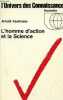
Collection l'univers des connaissances. Classification Dewey : 500-SCIENCES DE LA NATURE ET MATHEMATIQUES
L'HOMME D'ACTION ET LA SCIENCE INTRODUCTION ELEMENTAIRE A LA PRAXEOLOGIE - COLLECTION L'UNIVERS DES CONNAISSANCES N°22.
HACHETTE. 1968. In-8. Broché. Bon état, Couv. convenable, Dos satisfaisant, Intérieur frais. 256 pages - nombreux schémas en couleurs dans le texte.. . . . Classification Dewey : 500-SCIENCES DE LA NATURE ET MATHEMATIQUES
COLLECTION L'UNIVERS DES CONNAISSANCES N°22. Classification Dewey : 500-SCIENCES DE LA NATURE ET MATHEMATIQUES
NOUVELLES LOGIQUES POUR L'INTELLIGENCE ARTIFICIELLE : Logique binaire propositionnelle - Arbre de Horn - Les logiques ternaires - Recherche d'un ordre de résolution - Implications floues - Tables de vérité - etc.
HERMES. 1987. In-8. Relié. Très bon état, Couv. convenable, Dos satisfaisant, Intérieur frais. 298 pages. Nombreux tableaux en noir et blanc,dans le texte. 2 PHOTOS DISPONIBLES.. . . . Classification Dewey : 500-SCIENCES DE LA NATURE ET MATHEMATIQUES
Sommaire : Logique binaire propositionnelle - Arbre de Horn - Les logiques ternaires - Recherche d'un ordre de résolution - Implications floues - Tables de vérité - etc. Classification Dewey : 500-SCIENCES DE LA NATURE ET MATHEMATIQUES
LA METHODE DU CHEMIN CRITIQUE : application aux programmes de production et d'études de la méthode P.E.R.T. et de ses variantes
DUNOD TECHNIQUE. 1974. In-8. Broché. Bon état, Couv. convenable, Dos satisfaisant, Intérieur frais. 181 pages.Nombreux shémas et tableaux en noir et blanc,dans le texte.. . . . Classification Dewey : 500-SCIENCES DE LA NATURE ET MATHEMATIQUES
Classification Dewey : 500-SCIENCES DE LA NATURE ET MATHEMATIQUES
Le coeur à l'ouvrage (Théorie de l'action ménagère)
Nathan 1997 1997, Nathan, Collection Essais & Recherches, série Sciences sociales, in-8 broché de 238 pages, jaquette illustrée de la reproduction d'une affiche de Francis Bernard. Quelle force nous pousse à laver, ranger, frotter sans cesse ? A le faire comme ceci et non comme cela ? Qui dirige notre danse quotidienne avec les mille objets de la maison ? | Etat : Excellent état général sauf une signature sur le 2ème de couverture (Ref.: G606)
L'invention de soi, une théorie de l'identité
Armand Colin 2004 2004, Armand Colin, in-8 broché de 351 pages, collection Individu et société dirigée par François de Singly, couverture illustrée en couleurs. | Etat : Bon état général, jaquette légèrement défraichie (Ref.: ref5650)
Traité de thérapeutique et de matière médicale vétérinaires. Deuxième édition entièrement refaite.
,Paris, Asselin et Houzeau 1892, XI-756 pp., 1 vol. in 8 relié pleine percaline (reliure éditeur)
Journal of The Imperial Fisheries Institute Vol. XXIII, N° 2.On the preservation of the egg and sperm of Oncorchynchus masou.The Optimum temperature of water for hatching of the eggs of trout.On the relation between the temperature and the vitality of spirogyra Sp.
Tokyo, 1927, 260x185mm, 37pages, paperback.

Pour un paiement via PayPal, veuillez nous en faire la demande et nous vous enverrons une facture PayPal

