Write to the booksellers
-
Type
Art prints (2)
Autographs (4)
Books (33204)
Engravings (2)
Magazines (146)
Manuscripts (3)
Maps (1)
Photographs (8)
-
Latest
Last 24h (12)
Last 3 days (15)
Last month (296)
Last week (124)
-
Language
Chinese (1)
Dutch (3)
English (108)
French (33117)
German (11)
Greek (1)
Italian (112)
Japanese (1)
Latin (4)
Polish (1)
Portuguese (4)
Russian (3)
Spanish (3)
Swedish (1)
-
Century
16th (34)
17th (75)
18th (608)
19th (4311)
20th (11102)
21st (1485)
-
Countries
Belgium (7830)
Brazil (14)
Canada (11)
Côte d'Ivoire (35)
Denmark (146)
France (24103)
Germany (9)
Greece (3)
Netherlands (1)
Switzerland (1218)
-
Syndicate
ALAC (11)
CLAM (15)
CLAQ (3)
CNE (18)
ILAB (13863)
NVVA (537)
SLACES (536)
SLAM (13074)
SNCAO (64)
Mathématique moderne, première année primaire, forme B. Collection Nomath.
Bruxelles, Editions Erasme, 1977. 16 x 24, 274 pp., très nombreux exercices, broché, bon état.
La vie à Paris sous le Second Empire et la Troisième République
,Paris, Arts et Métiers Graphiques 1947, 226 pp., 1 vol. in 4 br. couverture rempliee illustree, nombreuses illustrations in et hors-texte en noir . Bon etat.

THE MANIPULATOR issue number twenty-six 1992
, , 1992 XLformat, 70 x 50 cm, pages not numbered, complete. Rare photography magazine. Good condition ISBN 01783556.
THE MANIPULATOR was born in 1984 into a world of analog photography, almost unimaginable today: no cellphones, no internet, no Photoshop, no digital cameras. In those quondam times, it was the cordless phone, the fax machine, the colour-copier and the Apple IIc that defined the technologically-savvy. These were the golden years of independent publishing. The once-rigid separation between commercial and fine-art photography was fast collapsing and some of the most exciting, new work began appearing, not on gallery walls, but in magazine editorials and advertising campaigns. With the drama of photographic aesthetics being played out on so egalitarian a stage, everyone was soon spectator, analyst, arbitrator and fan. THE MANIPULATOR was a champion for photography. The Over-large format had been used on occasions in the past, particularly for picture-heavy publications, but this was the biggest by far (50 cm x 70cm), able to reprint images in gargantuan, poster-like proportions. Its content reflected an obvious bias towards architecture, design, art and photography, but it was also one of the first consumer magazines to start addressing the looming ecological plight facing the world. De-forestation; rising sea-levels; suspect animal-husbandry; acid-rain: these were issues regularly confronted in the pages of The Manipulator, made all the more compelling by the huge pictures that accompanied the articles. Archival photography was another favourite. Hand-tinted images taken in Japanese brothels in the late-1800s; sepia-toned shots of Spanish bull-fighters from the turn of the century; murky photographs from the albums of the Victorian Egyptologists: all found a home in the pages of THE MANIPULATOR. When the USSR began crumbling under the onslaught of Gorbachev?s glasnost, the Novosti archives, which had been closed to the world since the revolution of 1917, were made available for reproduction in a 1989-edition of the magazine. The romance between THE MANIPULATOR and photography would span a full decade. Over the ensuing years, from time to time, ghosts of The Manipulator have been spotted here and there. Naturally, other extra-large format clones followed, but they didn?t hang around for too long. The odd back-issue of THE MANIPULATOR would pop up as part of the set-dressing on a movie, or grace a pop-star?s album cover, or be a prop in some music video, or a feature in some exhibit. Even Helmut Newton admitted to its influence when he published his giant book SUMO. Publishers Wilhelm Moser and David Colby shut things down in 1994 when the U.S. editor, Johno du Plessis, took the decision to return to his native South Africa ? better to end it while the magazine was still cherished and esteemed. To date, they have revived it just once, in collaboration with the photographer Bruce Weber and Babelsberg Film Studios, for a special Berlin issue.
Die Elektrizität ihre Erzeugung und ihre Anwendung in Industrie und Gewerbe. Allgemein verständlich dargestellt.
Leipzig, Spamer, 1893, in-8vo, 640 S. mit 11 Tafeln und 775 Text-Abb., Original ill. Leinenband. Schönes Exemplar.
Fine copy in its orig. ill. cloth. Fully ill. with 775 wood-engravings, folded plates, interesting for the industrial archeology & history. Image disp.

(SLACES, NVVA)
Phone number : 41 (0)26 3223808
Les mystères de l'espace et du temps.
Paris, Payot - Bibliothèque Scientifique, 1956. In-8 broché, 206 pp. Avec 11 gravures. - Mystères sur la terre - Objets volants dans l'espace - Le mystère de la lune - Le mystère de mars - Mystères du soleil et des planètes - Fantômes de l'espace - Parmi les étoiles.
Les propriétés topologiques du plan Euclédien.
P., Gauthier-Villars, 1931, grand in 8° broché, 61 pages.
Forme le fascicule XLV du "Mémorial des Sciences Mathématiques". PHOTOS sur DEMANDE. ...................... Photos sur demande ...................

Phone number : 04 77 32 63 69
Les propriétés topologiques du plan euclidien
P., Gauthier-Villars, 1931, un volume in 8, broché, 60pp.
---- EDITION ORIGINALE**5294/o7ar/CAV.F2
La cuisine italienne . Cuisine en images .
,Paris, Sélection du Reader's Digest 1995, 127 pp., 1 vol. in 4 relié cartonnage éditeur illustré avec jaquette illustrée en couleurs, illustrations in texte en couleurs.
JOS VERDEGEM IN PERSPECTIEF
BE, Artha. Art - Heritage, 2034 HB, 260 x 210 mm, 192 pages, 140 illustraties, NL edition. fine!. ISBN 9789464368215.
Jos Verdegem (1897-1957) groeide op in de Gentse havenwijk in een familie zonder artistieke traditie. Aan de academie, waar hij een opleiding als huisschilder volgde, werd zijn uitzonderlijke tekentalent al snel opgemerkt. Tijdens de Eerste Wereldoorlog werd hij oorlogsvrijwilliger en maakte hij deel uit van de 'Section artistique de l'Arm e', waar beeldende kunstenaars het frontleven vastlegden. Na de oorlog vestigde hij zich in Parijs. Hij vond er onder meer inspiratie in het circusleven, maar vooral in de musea waar hij 'les anciens' bestudeerde. Zijn werk kon er op grote waardering rekenen. Persoonlijke en collectieve tentoonstellingen in Parijse galerijen volgden elkaar in snel tempo op. In 1929 keerde hij terug naar Gent waar hij van 1932 tot aan het einde van Tweede Wereldoorlog leraar was aan de academie. Zijn werk getuigt van een sterke persoonlijkheid, originele visie en een herkenbare stijl. Het (Vlaamse) expressionisme en het animisme dat vele van zijn tijdgenoten aanhingen, wees hij resoluut van hand. Hij ging op zoek naar een eigen realistische vormentaal. Zijn benadering sluit aan bij de fenomenologie, waarbij waarneming leidt tot authentieke subjectieve ervaring. Zijn monumentalisme, ge nspireerd door Rubens, weerspiegelt zijn humanistische overtuigingen. Experimenten met collages, fotografie en diverse materialen, maar ook met vormgeving en kleurgebruik tijdens zijn 'p riode vache' (1946-1953), kenmerken zijn rijke en gevarieerde oeuvre.
JEAN BILQUIN. Monografie.
, Snoeck, 2008 Gebonden, Hardcover, 208 Pagina's met afbeeldingen in kleur. Texte en Francais Nederlands, English. ISBN 9789053496688.
Vertrekkend van acht thema's - de boot, mens en dier, Sisyphus of de last, Orfeus, de benadering, het paradijs en de hemel, moeder en kind, en de stap - geeft deze monografie een boeiend overzicht van bijna 25 jaar werk van de Gentse kunstenaar Jean Bilquin. In zijn werk, dat bestaat uit sculpturen, schilderijen, tekeningen en grafiek, staan het universele en mythologische steeds centraal, maar Bilquin weet deze thema's steeds weer vanuit een andere artistieke invalshoek te benaderen. Van abstractie naar figuratie, van exuberantie naar soberheid, van uitgesproken coloriet naar gedempte tonen, en terug.nnA partir de huit thmes, - le bateau, homme et animal, Sisyphe, Orphe, l'approche, le paradis, mre et enfant, et le pas, - cette monographie propose un passionnant aper?u de l'oeuvre de l'artiste gantois Jean Bilquin, d?velopp?e sur pr?s d'un quart de si?cle. Son oeuvre, constitu?e de sculptures, tableaux, dessins et oeuvres graphiques, est toujours axe sur l'universel et le mythologique, mais, dans le traitement de ces thmes, Bilquin sait modifier ses angles d'approche. De l'abstraction la figuration, de l'exubrance la sobrit, du coloris affirm aux tons assourdis, et vice-versa. Edition nerlandaise avec rsums en fran?ais et en anglaisnnThis book highlights 25 years of work by the Belgian artist Jean Bilquin, by introducing the eight themes that form the basis for the division of his work - the boat, man and beast, Sisyphus or the burden, Orpheus, the approach, paradise and heaven, mother and child, and the step.Of course his work is not limited to these eight categories. They constitute an open rather than a scholarly form of division. Bilquin never developed a single theme in a single style. Although Bilquin always returns to the mythical past to depict the world around him, there is always a multiplicity of approaches in several media - drawings, paintings and sculptures.
Frans Van Praet, De Jaarringen / The Year Rings
, Ludion, 2018 Original publishers paper-covered boards, HB, 295 x 235 mm, 512 p, throughout colour illustrations ENG / NL edition. NIEUW!! ISBN 9789491819780.
Designer, kunstenaar en architect Frans Van Praet (1937) is vooral bekend om de interieurinrichting van het Belgisch Paviljoen op de wereldtentoonstelling in Sevilla (1992) en zijn iconische Sevillazitje. Dit lijvige boek, waarmee Van Praet zijn tachtigste verjaardag viert, bewijst nochtans dat zijn oeuvre heel wat rijker en verscheidener is dan wat het grote publiek van hem kent. Frans Van Praet werd geboren in 1937 in Sint-Amands aan de Schelde. Als jonge man vertoeft hij in het kunstenaarsmilieu rond Galerie De Zwarte Panter. Het is in deze context dat men zijn beeldend werk moet plaatsen: een Vlaams surrealisme, dat al woordspelend knipoogt met beelden. In zijn realisaties komt een boeiende ambiguiteit naar voren: verhalende exuberantie gaat hand in hand met de minder-is-meer-soberheid van het minimalisme. Deze beperking waarin men de meester herkent, is de hoofdlijn die Van Praet volgt wanneer hij gebruiksvoorwerpen ontwerpt. Zo mogelijk bepaalt hij ook graag mee de ruimte waarin de objecten zullen functioneren. Zijn creaties vormen een synthese van het ongewoon utilitaire en het potentieel van het materiaal. Hout is zijn lievelingsmateriaal. Bij doorgezaagd, eeuwenoud hout ziet men de jaarringen - de geschiedenis van het groeiproces. Het Designmuseum Gent zal eind deze lente een tentoonstelling wijden aan Van Praet.
Kaas
, P.N. Van Kampen en Zoon N.V., Gekartonneerd met stofomslag, 74 pagina's, 21 x 13.5 cm, NL. *prima staat.
spoor van de eenhoorn, De geschiedenis van een dier dat niet bestaat.
, Primavera Pers, 2011 Paperback, 232 blz., ca. 103 ill. in kleur. ISBN 9789059971035.
Al eeuwenlang wordt de mens gefascineerd door dieren die alleen in de verbeelding bestaan: fabeldieren als de draak en de feniks. Ook de eenhoorn behoort tot de geestelijke bagage van de moderne mens en onderzoek van de eenhoorntraditie biedt een reeks verrassende ?sleutelgatvisies? op uiteenlopende cultuurperioden en kennisgebieden. Dit boek beschrijft hoe de eenhoorn deel gaat uitmaken van het gedachtegoed van de Griekstalige Mediterrane wereld, zowel in wetenschappelijk als in religieus opzicht. Wetenschap en godsvrucht bepaalden ook het beeld van de eenhoorn in de middeleeuwen. Enerzijds verovert het dier zich een plaats in de zo logie, anderzijds ontwikkelt het eenhoornmotief zich tot een christelijk symbool. Het boek besteedt veel aandacht aan de Arabische wereld en aan de zogenaamde bestiaria of ?dierboeken?. Wanneer halverwege de 19de eeuw het dier definitief naar het rijk der fabelen wordt verwezen, krijgt het een nieuwe rol in de psychologie en esoterie. Het eenhoornmotief in literatuur en kunst is een belangrijk aspect van dit boek.
Orationes Theologicae.
, Laurentii Kellami, 1614 Parchment binding, 17th and 18th century writing on opening pages, 328 pages, 15.5 x 10 cm, LATIN. *good condition, two wormholes.
Orationes Theologicae.
Isaac Israels een artiste-peintre in Parijs
, Scriptum Art, 2025 Hardcover, 160 pages, 70 Illustrations col.ill. 240 x 170 mm. Dutch (NL) ed. NEW. ISBN 9789083450711.
De Hollandse impressionist Isaac Israels reisde regelmatig naar Parijs. Dit boek verhaalt over de invloed van de lichtstad op zijn werk en zijn vriendschappen met kunstenaars en schrijvers in Parijs. Het omvangrijke oeuvre van de schilder Isaac Israels (1865-1934) wordt gekenmerkt door levendige strand- en stadsgezichten, portretten van beroemde actrices en schrijfsters, kermis en circussc nes, scenes met mondaine dames in
Eva Besny , De bevrijde camera
, Hannibal Books, 08-09-2026 Hardback, 304 pages, 28.7 x 23.9 cm, Nederlands. *Nieuw. . ISBN 9789493416901.
Deze uitgave viert de modernistische visie, het maatschappelijk engagement en de blijvende invloed van Eva Besny Eva Besny (1910?2003) behoort tot de meest invloedrijke fotografen van de twintigste eeuw. Geboren in Hongarije, vertrekt ze in 1930 naar Berlijn. Daar ontwikkelt ze een eigen beeldtaal, die modernistische esthetiek versmelt met een diep sociaal bewustzijn. In 1932 verhuist ze naar Nederland, gedwongen door het opkomende fascisme. Een uitzonderlijke gevoeligheid voor ritme, licht en compositie kenmerkt haar werk, dat zich moeiteloos beweegt tussen documentaire- en straatfotografie, architectuur en portretkunst. Dit fotoboek biedt een rijk en veelzijdig overzicht van Besny ?s oeuvre. Iconische beelden staan naast minder bekende parels in deze visuele reis door een bewogen eeuw, waarin thema?s als emancipatie, stedelijk leven en maatschappelijke verandering centraal staan. Deze publicatie verschijnt naar aanleiding van de gelijknamige tentoonstelling in Kunstmuseum Den Haag van 5 september 2026 tot 31 januari 2027. De tentoonstelling is ook te zien tijdens Rencontres de la Photographie d'Arles van 6 juli tot 4 oktober 2027.
Eva Besny , La photographie lib r e
, Hannibal Books, 08-09-2026 Hardback, 304 pages, 28.7 x 23.9 cm, Fran ais. Nouveau. . ISBN 9789493416901.
Cette publication c l bre la vision moderniste, l?engagement social et l?influence durable d?Eva Besny Eva Besny (1910-2003) compte parmi les photographes les plus influentes du xxe si cle. N e en Hongrie, elle part en 1930 pour Berlin et y d veloppe un langage visuel personnel alliant une esth tique moderniste une profonde conscience sociale. En 1932, face la mont e du fascisme, elle s?installe aux Pays-Bas. Son ?uvre, qui volue avec aisance entre architecture, art du portrait ainsi que photographie documentaire et de rue, se distingue par une sensibilit exceptionnelle au rythme, la lumi re et la composition. Ce recueil photographique offre un aper u riche et vari de l??uvre de Besny . Entre images embl matiques et tr sors moins connus, il propose un voyage visuel travers un si cle mouvement , o des th mes comme l? mancipation, la vie urbaine et le changement social occupent une place centrale. Cette publication para t l?occasion de l?exposition ponyme au Kunstmuseum Den Haag, du 5 septembre 2026 au 31 janvier 2027, ainsi que lors des Rencontres de la Photographie d?Arles, du 6 juillet au 4 octobre 2027.
Eva Besny , The Liberated Camera
, Hannibal Books, 08-09-2026 Hardback, 304 pages, 28.7 x 23.9 cm, English. *New. . ISBN 9789493416901.
This publication celebrates the modernist vision, social engagement, and enduring influence of Eva Besny Eva Besny (1910?2003) is one of the most influential photographers of the 20th century. Born in Hungary, she left for Berlin in 1930. There, she developed her own visual language, in which modernist aesthetics combine with a profound social awareness. The rise of fascism in Germany forced her to move to the Netherlands in 1932. Her work is characterized by an exceptional sense of rhythm, light, and composition, seamlessly shifting between street photography, portraiture, documentary photography, and architecture. This catalog offers a rich and versatile overview of Besny ?s life and work. Iconic images stand alongside lesser-known gems in this visual journey through a turbulent century, in which themes such as emancipation, urban life, and social reform take center stage. The publication accompanies the eponymous exhibition at Kunstmuseum Den Haag, on view from September 5, 2026 to January 31, 2027, and at Rencontres de la Photographie d?Arles from July 6 to October 4, 2027.
abdij van Onze-Lieve-Vrouwenpark te Rotselaar
, Homunculus , 2017 Ge llustreerde kartonnen cover, geniet, formaat A5, 78 pp., tekeningen van Marc Cheron, aangevuld met facsimile van oude gravures, veelal in kleur. Telkens met beknopte abdijgeschiedenis, bibliografie en illustratieverantwoording. De nadruk ligt op de heraldiek.
" vrouwenpark"
Atelier Panamarenko, Vondsten uit de Biekorfstraat.
Antwerpen, Panamarenko Collectief, 2007 Gebonden, originele uitgeversomslag, 14x21 cm. oblong, pagina's zonder nummering (+/- 56), rijkelijk geillustreerd met foto's van Wim van Eesbeek. ISBN 9789081234610.
Fraai boekje over de vondsten en voorwerpen uit de werkplaats van Panamarenko.
Cas Oorthuys. Guaranteed Real Dutch Congo
, DUO/DUO 1992, 1992 Hardcover, 166 pagina's, Nederlands, 255 x 255 mm, in goede staat, . ISBN 9789072971111.
Dit fotoboek toont foto's van de fotograaf Cas Oorthuys uit Belgisch Congo. De briljante paginavullende zwart-wit en kleurenfoto's tonen ons de bewoners n een aantal textielen (katoendrukken) eind jaren '50. Deze uitgave is voorzien van een kort voorwoord, waarin de sfeer beschreven wordt waarin de foto's destijds gemaakt zijn, in Nederlands, Frans en Engels, evenals korte locatie-beschrijvingen bij de foto's. Zowel inhoudelijk alsook qua lay-out is er ruim voldoende aandacht aan dit prachtige boek besteed, wat dan ook zeker in het eindresultaat naar voren komt.
Medical medium : la thyroïde. Par Anthony William, Véronique Dumont (Traduction)
Trédaniel ,2019, in-8 de 303 pages ,illustrations in-texte ,broché ,Très bon état , .Isbn : 9782813219121.(3 photos du livre sur mon site https://www.vieuxlivre.fr) .Les frais de port pour la France sont offerts à partir de 25 euros d'achat (Mondial relay ). (colissimo suivi +6,90 ).
Francis Picabia : Catalogue Raisonn Vol. III (1927-1939) English / Francais
, Exhib Intern/ Mercator 2019, 2019 Hardcover, 424 pages, English/Francais, 305 x 260 mm, with illustrations, book in perfect order, with dustjacket, . ISBN 9789462302488.
This third in a planned four-volume catalogue raisonn of works by the French avant-garde artist Francis Picabia (1879-1953) includes paintings and selected drawings dating from mid-1927 through 1939. Innovative collage-paintings and flamboyant figural compositions known as "monsters" that dominated Picabia's output in the mid-1920s gave way, during 1927, to new artistic directions. The most important of these was an exploration of the concept of transparency in many forms, first through the addition of new elements to his own pre-existing works, then through the elaboration of tangled compositions, the so-called "transparencies," superimposing outlined figures, animals, plants, and other motifs of various origins. Picabia's characteristic refusal of consistency of style endured, however, and his production during the period also encompassed imposing representational compositions with firmly contoured and solidly colored forms, thickly painted topographical landscapes, curvilinear abstractions, and, toward the end, photo-based figural paintings foreshadowing his notorious painted nudes of the early 1940s.
Venice Reimagined. The Resurgence of View Painting in Venice after the Fall of the Serenissima between 1797 and 1866
, Brepols - Harvey Miller, 2026 Hardback, 224 pages, Size:240 x 240 mm, Illustrations:186 col., Language: English. ISBN 9781915487711.
Summary This book is the first comprehensive study of Venetian viewscapes painted between 1797, when the Republic of Venice fell to Napoleon's armies, and 1866, the date of the city's annexation into the new Kingdom of Italy. By examining the works of an international array of artists-nearly sixty men and one woman-from Venice and Europe, the U.S. and South America, and studying their art against Venetian political history of the period, I open a vivid panorama onto the artistic response to one of the world's unique cities during foreign occupation, an era of national uprisings and the Industrial Revolution. Departing from Canaletto's and Guardi's viewscapes of the previous century, those of the nineteenth century yield many surprises. Some artists like Richard Bonington depicted old sites but from novel vantage points; Ippolito Caffi and others portrayed neighborhoods never before considered; watercolors of anonymous bridges and small corners of the city by James Holland and William Callow attracted collectors as did their oil paintings of famous monuments; and a number of foreign painters such as Peter Christian Skovgaard and Edward William Cooke ventured into the remote Venetian lagoon to capture its loneliness. Lastly, the advent of the railroad and the invention of photography reshaped the genre after mid-century. Yet despite the popularity through most of the period of what I call depictive views, they began to disappear after c.1870. Questioning why they were replaced by pictorially novel and affectively charged images concludes my book's account of the view tradition in nineteenth-century Venice. TABLE OF CONTENTS Preface Introduction Chapter One: The Beginnings, 1797-c. 1820 Chapter Two: The First Foreigners Arrive, c. 1820-c. 1835 Chapter Three: The 1830s Chapter Four: The Late 1830s into the Mid-'40s: Artists Returning and Artists Arriving for the First Time Chapter Five: Artistic Renewal amidst Revolution and Defeat, c. 1845-c. 1855 Chapter Six: Changing Viewscapes and Changing Styles, 1855-c. 1865-1875 Conclusion Bibliography
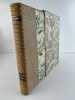
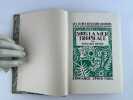
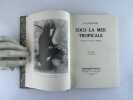
(Sciences naturelles) Sous la mer tropicale. Collection Les livres de la nature illustrés n°1.
Paris Librairie Stock. Delamain et Boutelleau, 1931, in-8(16x22,5cm), 241p. Exemplaire en parfait état. Demi-reliure à bandes dans le goût de l'époque d'une parfaite exécution, pièces de titre, tête dorée, couvertures conservées, étui. Exemplaire sur alfa vergé bouffant d'Houtenin Chalandre. Illustrations en noir.