Write to the booksellers
-
Type
Autograph (4)
Book (32481)
Magazine (146)
Manuscript (3)
Photographs (8)
-
Latest
Last 24h (6)
Last 3 days (12)
Last month (417)
Last week (18)
-
Language
Chinese (1)
Dutch (3)
English (107)
French (32393)
German (9)
Greek (1)
Italian (112)
Japanese (1)
Latin (4)
Polish (1)
Portuguese (4)
Russian (3)
Spanish (3)
-
Century
16th (32)
17th (76)
18th (562)
19th (4288)
20th (11243)
21st (1726)
-
Countries
Belgium (7781)
Brazil (14)
Canada (11)
Côte d'Ivoire (35)
Denmark (145)
France (23390)
Germany (9)
Greece (3)
Netherlands (1)
Switzerland (1253)
-
Syndicate
ALAC (11)
CLAM (15)
CLAQ (3)
CNE (19)
ILAB (13903)
NVVA (532)
SLACES (531)
SLAM (13121)
SNCAO (64)
"Le dossier des problèmes, voyants et astrologues; la longue marche des sorciers, comment devient-on voyant ?, les yeux du miracle, de quoi demain sera-t-il fait ? Collection : Les chemins de l'impossible."
Paris, Albin Michel, 1978. 13 x 21, 237 pp., broché, couverture à rabats, bon état.
LE DOSSIER DES PROPHETES, VOYANTS ET ASTROLOGUES.
ALBIN MICHEL. 1977.. In-12. Broché. Bon état, Couv. convenable, Dos satisfaisant, Intérieur frais. 232 pages. 1ère de couverture illustrée en couleurs. Couverture rempliée.. . . . Classification Dewey : 500-SCIENCES DE LA NATURE ET MATHEMATIQUES
Collection les chemins de l'impossible. Classification Dewey : 500-SCIENCES DE LA NATURE ET MATHEMATIQUES

LA METAPHYSIQUE DE L'ABIOGENESE
Au Mouvement. Non daté. In-12. Broché. Etat d'usage, Couv. convenable, Dos satisfaisant, Intérieur acceptable. Plaquette de 16 pages. Etiquette de code sur le 1er plat.. . . . Classification Dewey : 570-Sciences de la vie
A propos des expériences de Pasteur. Classification Dewey : 570-Sciences de la vie
LA METAPHYSIQUE DE L'ABIOGENESE, A PROPOS DES EXPERIENCES DE PASTEUR
Mouvement des Faits et des Idées. 1930. In-12. Broché. Bon état, Couv. convenable, Dos satisfaisant, Intérieur frais. Plaquette de 16 pages. Etiquette de code sur le 1er plat. Tampons de bibliothèque sur le 1er plat et en page de titre.. . . . Classification Dewey : 570-Sciences de la vie
Extrait du 'Mouvement des Faits et des Idées', avril 1930. Classification Dewey : 570-Sciences de la vie
Critical and Historical Essays, contributed to the Edinburgh Review.
3 volumes in-8, plein veau glacé de l'époque, dos à nerfs ornés de compartiments dorés, pièces de titre et de tomaison de maroquin noir, roulette d'encadrement à froid sur les plats, tranches marbrées (épidermures, défaut aux coif., mors faibles), ix p., (1) f., 585 p. ; (2) f., 611 p. et (2) f., 626 p. London, Longman, Brown, Green, 1852.
Milton, Machiavelli, Hallam, Moore, Boswell, William Pitt, Lord Bacon, Horace Walpole, Madame d'Arblay, etc.Ex-libris gravé. Très bon état intérieur.
La personnalité et l'hérédité
In-4 broché, Librairie scientifique Amédée Legrand, 1932, 292 pp. Exemplaire frotté et écorné, petites déchirures, dos ridé et insolé avec manque à la coiffe inférieure. Fait son âge. Intérieur propre. Nombreuses illustrations. Poids 1 kg. Frais d'envoi 6,80 euros sur la France, 13euros UE et Suisse, 18 euros pour le reste du monde (tarifs de base hors envois suivis).
PLAYDOYER POUR UNE CERTAINE ANORMALITE .
1990 . Gallimard Connaissance de l'inconscient , In 8° br. 222 pp.
Bon exemplaire .
HISTOIRE D'UNE BOUCHEE DE PAIN - lettres à une petite fille sur la vie de l'homme et des animaux
1910 reliure demi-chagrin vert foncé (binding half green shagreen) grand in-octavo, dos 4 nerfs (spine with raised bands) - entre-nerfs à décor géométrique (geometrical decoration) - titre frappé or (gilt title), plats décorés à froid (cover blind-stamping) frottés (covers rubbed), toutes tranches dorées (all edges gilt), illustrations de Lorenz Froelich, 402 pages et 8 pages du catalogue "Education et Récréation - Hetzel" (8 pages of the catalogue of the Bookshop), sans date (deuxième moitiè du dix-neuvième Siècle) à Paris Bibliothèque d'Education et de Récréation J. Hetzel et Compagnie,
Thème (topic) : l'auteur, en ce du dix-neuvième siècle, oscille entre connaissances scientifiques "objectives" et croyances religieuses, et il invite les enfants, en tant que créature de Dieu, à nourrir leur Esprit (nourriture spirituelle) - bon état général (good condition)
HISTOIRE D'UNE BOUCHEE DE PAIN lettres à une petite fille sur la vie de l'homme et des animaux
1900 reliure demi chagrin vert in-seize (binding half green shagreen sextodecimo), dos 4 nerfs - entre-nerfs à fleurons - titre frappé or, tranches jaspées, ex-libris en chiffrage or sur le mors du premier plat, petite tache d'encre bleue en lisière sur les premières pages, légères rousseurs en fin d'ouvrage, 400 pages, sans date (deuxième moitiè du dix-neuvième Siècle) à Paris J. Hetzel Editeur,
Thème : l'auteur, en ce dix-neuvième siècle, oscille entre connaissances scientifiques "objectives" et croyances religieuses, et il invite les enfants, en tant que créature de Dieu, à nourrir leur Esprit (nourriture spirituelle) - septième édition, bon état
HISTOIRE D'UNE BOUCHEE DE PAIN lettres à une petite fille sur la vie de l'homme et des animaux
1910 reliure demi chagrin rouge in-seize (binding half red shagreen sextodecimo), dos 4 nerfs ceints de filets à froid (spine with 4 raised bands encircled of blind-stamping decoration line) - entre-nerfs à double filets or à fleuron au fer évidé et rinceaux (between the raised bands double gilt lines - floweret with hollowed out blocking stamp - with foliages executed in the curved lines) - titre frappé or (gilt title) - filets or en tête et en pied (top and at the foot of spine gilt lines), papier marbré aux plats (cover with marbled paper), marque-page en tissu vert (bookmark in green tissue), toutes tranches jaspées (all marbled edges), pages de garde peignées à motif "veinés sur fond caillouté" (painting endpapers), page de faux-titre (half title page), sans illustration (no illustration), naissances de rousseurs in fine (beginning of the redness marks at rear), sans mouillure (without scar of waterstain), 402 pages, sans date (deuxième moitiè du dix-neuvième Siècle) à Paris Bibliothèque d'Education et de Récréation J. Hetzel 18 rue Jacob,
Thème (topic) : l'auteur, en ce dix-neuvième siècle, oscille entre connaissances scientifiques "objectives" et croyances religieuses, et il invite les enfants, en tant que créature de Dieu, à nourrir leur Esprit (nourriture spirituelle) - très belle reliure en très bel état (very beautiful binding in fine condition)
Histoire d'une bouchée de pain.
Hetzel. Non daté. In-12. Broché. Etat d'usage, Couv. défraîchie, Dos plié, Intérieur bon état. 397 pages. Dos cassé et fané, coiffe en pied abîmée, mors fendus. Ouvrage de la fin du 19° siècle.. . . . Classification Dewey : 570-Sciences de la vie
Lettres à une petite fille sur la vie de l'homme et des animaux. Classification Dewey : 570-Sciences de la vie
Histoire d'une bouchée de pain. Lettres à une petite fille sur la vie de l'homme et des animaux.
Couverture rigide. Reliure demi-chagrin à nerfs. 348 pages. Tranches dorées.

Livre. Editions Hetzel, Fin XIXe. Vers 1900.
Premier amour, derniers rites
Henri Veyrier, coll. « Off » 1977 in-12 broché, 147 pp. Huit nouvelles de l’auteur.
Huit nouvelles de l’auteur. Très bon état d’occasion
La génétique, rêves et réalité
Flammarion Broché Flammarion 1975, In-8 broché. 250 pages. Bon état
Toutes les expéditions sont faites en suivi au-dessus de 25 euros. Expédition quotidienne pour les envois simples, suivis, recommandés ou Colissimo.
La métrologie dans les musées de Province et sa contribution à l'histoire des poids et mesures en France depuis le treizième siècle.
Paris, Revue de la Métrologie Pratique et Légale, 1962. "18 x 26, 512 pp., quelques illustrations en N/B, reliure d'édition carton, bon état (cachet d'ex-propriétaire; 1 léger coup dans le haut de couverture)."
Die Geschichte und die Wurzel des Satzes von der Erhaltung der Arbeit. Vortrag gehalten in der K. Bohm. Gesellschaft der Wissenschaften am 15. Nov. 1871.
Prag, J. G. Calve’sche H. K. Univ.-Buchhandl. (Ottomar Beyer), (Druck von Heinr. Mercy in Prag) 1872, in-8vo, 1 Bl. (Titel) + 58 S., mit 7 Fig. im Text, Original-Broschüre, kl. Randrisse.
Erste Ausgabe. Selten. Ernst Mach, un physicien et philosophe autrichien a eu après sa mort une influence directe sur la formation du cercle de Vienne, représenté légalement par l'Association Ernst-Mach, et ce malgré l'existence d'un certain nombre de divergences entre les positions des positivistes logiques et celles du physicien. Albert Einstein le désigna comme « un précurseur de la théorie de la relativité ». Le principe de Mach est à la base d'expériences de pensée qui ont influencé fortement les réflexions d'Einstein et d'autres physiciens.

(SLACES, NVVA)
Phone number : 41 (0)26 3223808
Grundlinien der Lehre von den Bewegungsempfindungen.
Leipzig, Wilhelm Engelmann, 1875, in-8vo, IV + 127 S. (+1 Inhalt), S. 3 leicht tintenfleckig, Stempel auf Titelblatt, Pappband.
Image disp.
(SLACES, NVVA)
Phone number : 41 (0)26 3223808
Kultur und Mechanik.
Stuttgart, Spemann, 1915. 8vo. In contemporary half cloth with gilt lettering to spine. Previous owner's name to pasted down front end-paper. A nice and clean copy. 86 pp.


First edition.
La Connaissance et l'Erreur. Traduit sur la dernière édition allemande par le Dr. Marcel Dufour. ‘Bibliothèque de philosophie scientifique’.
Paris, Flammarion, 1908, in-8vo, 2 ff., 392 p., pt cachet sur titre ‘Jean-Jacques Pilloud’, reliure en d.-cuir originale, bel exemplaire.
Première édition française. L’originale allemande a été publiée à Leipzig en 1905. Ce célèbre recueil de conférences vulgarise les idées émanant des principaux ouvrages techniques de Mach. On sait que Mach a donné son nom à l’unité de vitesse du son.
(SLACES, NVVA)
Phone number : 41 (0)26 3223808
La mécanique exposé historique et critique de son développement - Nouvelle édition avec portraits.
J.Hermann. 1925. In-8. Broché. Etat d'usage, Couv. convenable, Coiffe en tête abîmée, Papier jauni. IX + 498 pages - quelques portraits en noir et blanc hors texte dont un en frontispice - quelques figures en noir et blanc dans le texte.. . . . Classification Dewey : 500-SCIENCES DE LA NATURE ET MATHEMATIQUES
Ouvrage traduit sur la quatrième édition allemande par Emile Bertrand avec une introduction de Emile Picard. Classification Dewey : 500-SCIENCES DE LA NATURE ET MATHEMATIQUES
Prince - L'art de la guerre
, FLAMMARION, 2008 Sous Emboitage, XXI+413 pages, 19 x 11.5 cm, FR. *Comme neuf. ISBN 3780260409900.
Le Prince - L'art de la guerre
Le Prince suivi de l'Anti- Machiavel de Frédéric II. In troduction et Notes par Raymond Naves. Édition illustrée.-
Paris. Garnier. (Achevé d'imprimer à Bourges le 15 mars 1971. In-12 (118 x 184 mm) dos lisse basane ocre brun, orné or et noir, pièces d'auteur et de titre chagrin rouge, plats jaspés, gardes vertes semées de G majuscules dorés, tête dorée, 3ff. 4 portraits, XXXIX pages d'introduction, 274, (1) pages. Excellent état.
Tulpboek.
Hoorn,, Six Art Promotion / Vind Magazine , 2019 hardcover, 242 pagina's, ge llustreerd met ruim 100 prachtige illustraties . ISBN 9789071056192.
Tijdens de Hollandse bollengekte (1634-1637) werd een tulpencatalogus samengesteld met ruim honderd aquarellen van vermoedelijk Jacob Marrel (1614-1681), met bijbehorende tulpennamen en in de meeste gevallen de waarde. Dit Tulpboek, dat waarschijnlijk ooit toebehoorde aan Nicolaas Tulp, is mogelijk de enige tulpencatalogus uit die periode die compleet is overgebleven. De Collectie Six maakt dit zeldzame Tulpboek voor iedereen bereikbaar met een fraai gebonden publieksuitgave. Met ruim 100 prachtige illustraties van alle tulpen en een drietal hoofdstukken van o.a. Geert Mak, is het een ultiem boek om te hebben of cadeau te geven
Fous d'équations. Les 24 plus belles équations de l’univers.
Paris, Flammarion 2014, 240x170mm, 224pages, broché. Bel exemplaire.
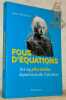
illustré, Pour un paiement via PayPal, veuillez nous en faire la demande et nous vous enverrons une facture PayPal
An account of Sir Isaac Newton's philosophical discoveries
For the Author's Children: an sold by A. Millar, and J. Nourse; G. Hamilton and J. Balfour, and A. Kincaid; J. Barry, and J. Smith, London 1748 In-4 29,5 x 24 cm, plein veau blond époque, dos à nerfs, caissons ornés, filets dorés en coupes, filets à frois sur les plats, , pp 6, liste des abonnés de 20 pages, xx, 392, avec six tableaux dépliants. Rare exemplaire sur grand papier dimensions : 223 mm x 290 mm. Reliure frottée, coiffe de tête arrachée. Brunissures marginales aux premiers et derniers ff., sinon très frais. Ex-don mns. au faux-titre