 Write to the booksellers
-
Type
Art print (2)
Autograph (4)
Book (34194)
Magazine (146)
Manuscript (3)
Maps (1)
Photographs (8)
-
Latest
Last 24h (8)
Last 3 days (5)
Last month (472)
Last week (18)
-
Language
Chinese (1)
Dutch (3)
English (108)
French (34107)
German (9)
Greek (1)
Italian (112)
Japanese (1)
Latin (4)
Polish (1)
Portuguese (4)
Russian (3)
Spanish (3)
Swedish (1)
-
Century
16th (32)
17th (77)
18th (571)
19th (4327)
20th (11259)
21st (1690)
-
Countries
Belgium (7833)
Brazil (14)
Canada (11)
Côte d'Ivoire (35)
Denmark (146)
France (25053)
Germany (9)
Greece (3)
Netherlands (1)
Switzerland (1253)
-
Syndicate
ALAC (11)
CLAM (15)
CLAQ (3)
CNE (19)
ILAB (13976)
NVVA (532)
SLACES (531)
SLAM (13193)
SNCAO (64)
Cuony, X. - Haas, Dr. - Joye, P. - Musy, M. - Plancherel, M. Saugy, M. de.
Reference : 59143
Bulletin de la Société Fribourgeoise des Sciences Naturelles. Compte-rendu 1912-1913. Vol. XXI. Avec 3 graphiques et un portrait.- X. Cuony. La vie autonome d’appreils viscéraux séparés de l’organisme.- Dr. Haas. Dissémination des spores d’u champignon.- Ch. Joye. L’accumulateur Edison.- M. Musy. Les fulgurites artificielles.- M. Plancherel. La machine à calculer.- M. de Saugy. Considérations sur l’évaluation de la puissance d’une voiture automobile.
Fribourg, Fragnière 1913, 210x135mm, 110pages, broché. Bel exemplaire.
Pour un paiement via PayPal, veuillez nous en faire la demande et nous vous enverrons une facture PayPal
Venice Biennale Catalogue Series- Biennale Architettura 2025 Intelligens. Natural. Artificial. Collective.
, Silvana, 2025 Flexibound (Luxe paperback) Dimensions 270 x 210 mm, Illustrations throughout col.ill., 982 Pages, Language English ed. *new. ISBN 9788836661176.
The accompanying catalogue to the 19th International Architecture Exhibition, curated by Carlo Ratti, to be held from 10 May to 23 November 2025 in Venice, is titled Intelligens. Natural. Artificial. Collective. The 19th International Architecture Exhibition, curated by Carlo Ratti, to be held from 10 May to 23 November 2025 in Venice, is titled Intelligens. Natural. Artificial. Collective. The Exhibition, as the Curator himself explains, ?will search for a path forward, proposing that intelligent solutions to pressing problems can take many forms? and ?will present a collection of design proposals and many other experiments, exploring a definition of ?intelligence? as an ability to adapt to the environment with limited resources, knowledge, or power? (Carlo Ratti). The Catalogue is printed in two volumes and follows the Exhibition itinerary accompanying visitors and art lovers through the exhibition spaces of the Giardini and the Arsenale and presenting other projects on display in various locations around the city of Venice and Forte Marghera, in Mestre. Volume I of the Catalogue is dedicated to the International Exhibition, curated by Carlo Ratti. The first pages of the volume open with the statement by President Pietrangelo Buttafuoco and the presentation by the Artistic Director of the Architecture Department Carlo Ratti, and then presents the Circularity Manifesto. Volume I is then divided into two parts. Part one, titled Intelligens, is dedicated to presenting the sections of the International Exhibition, Natural Intelligence, Artificial Intelligence, Collective Intelligence, and Out. Each project on display in the Exhibition is accompanied by a critical text and a rich apparatus of photographs. Part two of the volume, titled Venice as a Living Lab, presents ?a number of special projects that will leverage Venice and the outdoor areas of the Biennale Exhibition venues as a Living Lab, merging interacting forms of intelligence?. The volume is enriched with a series of critical essays and interesting ?Impossible Conversations? that explore the themes of the Exhibition in depth. Volume I ends with the biographies of the participants and a detailed register of the projects on exhibit. The National Participations and the Collateral Events participating in the 19th International Architecture Exhibition are gathered in Volume II and presented with illustrated texts that explore the projects proposed by the National Pavilions and the Collateral Events at the Giardini, the Arsenale and in various spaces throughout Venice.
Poster: Sabena: Service Impeccable
, Plaizier, 2025 Poster, 61 91 cm, herdruk Nieuw.
Poster: Sabena - Service Impeccable
Flemish and Dutch Artists in Early Modern England: Collaboration and Competition, 1460-1680 (Visual Culture in Early Modernity)
, Ashgate2009, 2009 Hardcover with dusjacket 236 pages, ill. ISBN 9780754667124.
By examining their production practices in a variety of genres?including manuscript illustration, glass painting and staining, tapestry manufacture, portrait painting, and engraving?this book explores how Netherlandish artists migrating to England in the early modern period overcame difficulties raised by their outsider status. This study examines, for the first time in this context, the challenges of alien status to artistic production and the effectiveness of cooperation as a countermeasure. The author demonstrates that collaboration was chief among the strategies that these foreigners chose to secure a position in London's changing art market. Curd's exploration of these collaborations primarily follows Pierre Bourdieu's model of "establishment and challenger" in which dominance in a field of cultural production depends upon how much cultural, political, and economic capital can be accumulated and the effectiveness of the strategies used to confront competition. The analysis presented here challenges received opinion that a collaborative work is only a joint effort of artists working together on a single monument by demonstrating that the participation of patrons and middlemen can also shape the final appearance of a work of art. Furthermore, this book shows that the strategic use of collaboration served the goal of competition by helping to establish foreign artists in the London art market and suggests that their coping strategies have implications for the study of immigrant behaviors today.
DE LA NATURE DES SCIENCES MORALES
ou de la raison et de la conscience dans leurs rapports avec la loi et le précepte . 1829 . Paris ,Libr. Dufart , In 8° relié 1/2 percaline verte à la bradel .Pièce de titre rouge .XV ,351 pp.
Voix prophétiques ou signes, apparitions et prédictions modernes
touchant les grands événements de la chrétienté au XIX°siècle et vers l'approche de la fin des temps. 5°édition revue, corrigée et augmentée. Tome second: Prophéties modernes proprement dites. Paris. Victor Palmé. Bruxelles. Vromant. Luxembourg. Bruck. 1872. In-12 (116 x 196mm) couverture imprimée, 720 pages. Couverture un peu salie, surtout le dos, bel état intérieur. Tome second seul, bien complet pour les Prophéties modernes. Rare.
Dorbon, 956 et Caillet I, 2739 s'accordent pour dire qu'il s'agit du plus complet de tous les recueils sur le sujet.
LES IDEES MODERNES SUR LA CONSTITUTION DE LA MATIERE
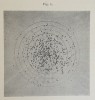
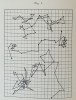
SOCIETE FRANCAISE DE PHYSIQUE COLLECTION DE MEMOIRES RELATIFS A LA PHYSIQUE CONFERENCES FAITES EN 1912 PAR BAUER, BLANC, BLOCH, P.CURIE, DEBIERNE, DUNOYER, LANGEVIN, PERRIN, POINCARE, WEISS. In 8° (250 x 170 mm) relié demi veau époque, dos à 5 nerfs, cachet 370 pp Nicely bound in half dark green leather with mottled green paper-covered boards. Top edges gilt.[iv] 370,[1]pp. Bookplate, previous owner's name in neat blue pencil, a few very slight scuff marks on the leather, else very good plus. Nice copy
Luminescence cristalline.
P., Dunod (Collection "Monographies Dunod" N°24), 1960, in 12 reliure pleine toile de l'éditeur, IX-209 pages.
PHOTOS sur DEMANDE. ...................... Photos sur demande ...................


Phone number : 04 77 32 63 69
MADAME CURIE
Paris Gallimard NRF 1938 in 8 (21x15) 1 volume reliure demi basane havane de l'époque, dos à nerfs soulignés de filets dorés, pièce de titre de maroquin rouge, tête dorée, portrait de Marie Curie en frontispice, 311 pages [2]. Marie Sklodowska-Curie, née Maria Salomea Sklodowska , Varsovie 1867 - Passy 1934, physicienne et chimiste. Bel exemplaire ( Photographies sur demande / We can send pictures of this book on simple request )
Très bon Couverture rigide
MADAME CURIE
Paris Gallimard NRF 1938 in 8 (20,5x14,5) 1 volume reliure toilé bleu turquoise, dos et plat supérieur titrés en lettres dorés, portrait de Marie Curie en frontispice, 311 pages [2], dos légèrement passé. Marie Sklodowska-Curie, née Maria Salomea Sklodowska , Varsovie 1867 - Passy 1934, physicienne et chimiste. Bon exemplaire ( Photographies sur demande / We can send pictures of this book on simple request )
Très bon Couverture rigide
MADAME CURIE
1940 broché in-octavo, dos blanc, non-rogné, illustrations : frontispice-portrait de Madame Curie, 314 pages, 1940 Paris Gallimard,
bon état
Madame CURIE.
broché -11,5x16,5 - 256 pp - sans date - éditions HACHETTE, Paris.Collection " bibliothèque de la jeunesse".
ANTHROLOGIE HISTOIR PHILOSOPHIE LITTERATURE PARADES
Madame Curie.
Gallimard, 1949, in-8°, 348 pp, un portrait photographique de Marie Curie en frontispice, broché, bon état
Remarquable biographie de Marie Curie, au succès colossal. Eve Curie (1904-2007), fille de Pierre et Marie Curie, fut pianiste, puis femme de lettres et diplomate. — "On a scrupule à parler de Marie et de Pierre Curie, après Mme Eve Curie, dont l'admirable livre est universellement connu." (Etienne Dennery, administrateur général de la Bibliothèque Nationale, dans la préface du Catalogue d'exposition Pierre et Marie Curie, p. VII, 1967) — "Il faut lire le très beau livre écrit par Eve Curie sur sa mère." (André Damany, “Pierre Curie, Frédéric Joliot-Curie”, p. 63, 2006) Désormais les frais d'envoi sont de 6 € seulement pour les livres jusqu'à 1 kg (colissimo suivi), pour la France métropolitaine.
MADAME CURIE
Format moyen, couverture souple.304 pages. Portrait en frontispice. Papier jauni. Une expédition par Mondial Relay pourra vous être proposée 1945 NRF Gallimard
Madame Curie
Club du Livre du Mois 1954, in-8 cartonnage toilé blanc de l'éditeur, non paginé, environ 300 p. (très bon état) Tirage limité à 3500 exemplaires numérotés sur Alfa mousse de Navarre. Un classique de la biographie que ce portrait de la grande savante par sa fille.
MARIE CURIE
Paris Gallimard NRF 1938 in 8 (20,5x14) 1 volume reliure demi basane rouge de l'époque, dos à nerfs, portrait en frontispice, 311 pages [2]. Mention de deuxième édition. Marie Sklodowska-Curie, née Maria Salomea Sklodowska , Varsovie 1867 - Passy 1934, physicienne et chimiste. Bel exemplaire ( Photographies sur demande / We can send pictures of this book on simple request )
Très bon Couverture rigide
L'électron positif -- EDITION ORIGINALE -- BEL EXEMPLAIRE
P., Hermann, 1934, un volume in 8 broché, couverture imprimée 27pp., figures dans le texte
---- EDITION ORIGINALE ---- BEL EXEMPLAIRE ---- "The Joliot-Curies found that these high-energy y rays also eject positive electrons...". DSB VII pp. 151/157 (Joliot), 157/159 (I. Curie) **7882.6087/M1(2)-ARB4
Pierre Curie.
Editions Douin, 2020, in-12 à l'italienne, 210 pp, texte entièrement recomposé, broché, couv. illustrée, bon état
Le 19 avril 1906, Pierre Curie meurt en traversant la rue Dauphine, renversé accidentellement par un camion. Suis-je bien placée pour rédiger sa biographie ?, s’est demandé Marie qui a partagé avec son époux le Prix Nobel. Encouragée par le frère de Pierre, elle accepte pourtant cette tâche. Et ainsi se déroulent sous nos yeux les détails d’une personnalité, d’une existence incomparables, illustrées par la description de sa famille, de son enfance, de ses travaux de physique débouchant sur le fardeau de la célébrité. « Pierre Curie naquit le 15 mai 1859, dans une maison située en face du Jardin des Plantes, rue Cuvier, où habitaient ses parents à l’époque où son père travaillait dans les laboratoires du Muséum. » De son enfance à Paris, il garda le souvenir des jours de la Commune, de la bataille sur la barricade tout près de sa maison, de l’ambulance créée par son père pour ramener les blessés. D’intelligence apparemment lente, élevé en dehors de l’école, très amoureux de la nature, c’était un grand jeune homme mince, aux cheveux châtains et aux yeux bleus, d’un aspect timide et réservé. Doté d’une profonde vie intérieure, l’adolescent écrit : « Il faut faire de la vie un rêve et faire d’un rêve une réalité. » Dans le même ordre d’idée, il déclare son amour à sa compagne polonaise en ces termes : « Ce serait une belle chose que de passer la vie l’un près de l’autre hypnotisés dans nos rêves : votre rêve patriotique, notre rêve humanitaire et notre rêve scientifique. » Il sera pendant 22 ans professeur et chercheur à l’École de physique et de chimie de la Ville de Paris. « Nous vivions très unis, confie Marie devenue sa femme, nous intéressant en commun à toutes choses. » Et le rêve devient réalité : la découverte du radium par Pierre Curie. Marie invente le mot radioactivité. Désormais les frais d'envoi sont de 6 € seulement pour les livres jusqu'à 1 kg (colissimo suivi), pour la France métropolitaine.
Radioactivité et phénomènes connexes -- EDITION ORIGINALE -- BON EXEMPLAIRE
P., Chron, circa 1930 un volume in 8, broché, couverture imprimée, (petite déchirure sans manque de papier dans la marge inférieure à deux feuillets), (2), 24pp., 2 tableaux, (1)
---- EDITION ORIGINALE de cet exposé par Marie CURIE de la découverte des radio-éléments, des propriétés des rayons et des transformations radio-actives -- BON EXEMPLAIRE**8267/M1
Traité de Radioactivité.
Paris, Gauthier-Villars, 1910. 2 volumes in 8°, brochés. [2 ff.], XIII, 426 pp. ; [2 ff.], 548 pp. ; portrait de Pierre Curie en frontispice tiré en héliogravure et 7 planches. Remise en vente de l’édition originale avec de nouvelles couvertures : 1936 pour le volume 2, et 1939 pour le premier volume.
« Cet ouvrage représente l'ensemble des leçons qui ont constitué pendant ces dernières années le cours de Radioactivité professé à la Sorbonne. La rédaction de ces leçons a été complétée par quelques développements qui n'avaient pu trouver place dans l'enseignement... Dans ce livre l'exposé des phénomènes de la radioactivité proprement dits a été précédé par un exposé de la théorie des ions gazeux et par un résumé des connaissances les plus importantes sur les rayons cathodiques, les rayons positifs, les rayons Röntgen et les propriétés des particules électrisées en mouvement. Un chapitre a ensuite été consacré à la description des méthodes de mesures. Après la description détaillée de la découverte et de la préparation des substances radioactives, vient l'étude des émanations radioactives et de la radioactivité induite et des radiations émises par les corps radioactifs. Les substances radioactives sont ensuite classées par familles, avec l'étude, pour chacune d'elles de l'ensemble des propriétés et de la nature des transformations radioactives. » (Préface de Marie Curie). Bel exemplaire.
Madame Curie.
P., NRF, Gallimard, 1949, in 8° relié demi-percaline rouge à coins, amateur, plat supérieur de couverture conservé, 349 pages.
PHOTOS sur DEMANDE. ...................... Photos sur demande ...................
Phone number : 04 77 32 63 69
Madame Curie. Leben und Wirken / R. REID: Biographie (1980). 2 Bde zus.
Zürich, Bg. Gutenberg, 1938, in-8°, 408 S. + 6 Bildtafeln, Original-Leinenband.
(SLACES, NVVA)
Phone number : 41 (0)26 3223808
Correspondance Choix de lettres (1905-1934)
Les Editeurs Français Réunis 1974, in-8 broché, 351 p. (livre recouvert d'un plastique transparent, dos un peu gauchi, sinon très bon état) Photos HT. Ces lettres entre la mère et la fille éclairent ces existences vouées à la recherche scientifique.
Correspondance. Choix de lettres (1905-1934). Présentation par Gilette Ziegler.
1974 Paris, Les Editeurs Français Réunis, 1974, in 8° broché, 351 pages ; illustrations hors-texte ; couverture illustrée.
...................... Photos sur demande ...................
Phone number : 04 77 32 63 69

