 Write to the booksellers
-
Type
Art print (2)
Autograph (4)
Book (34051)
Magazine (146)
Manuscript (3)
Maps (1)
Photographs (8)
-
Latest
Last 24h (7)
Last 3 days (16)
Last month (595)
Last week (12)
-
Language
Chinese (1)
Dutch (3)
English (108)
French (33964)
German (9)
Greek (1)
Italian (112)
Japanese (1)
Latin (4)
Polish (1)
Portuguese (4)
Russian (3)
Spanish (3)
Swedish (1)
-
Century
16th (34)
17th (75)
18th (572)
19th (4332)
20th (11265)
21st (1686)
-
Countries
Belgium (7834)
Brazil (14)
Canada (11)
Côte d'Ivoire (35)
Denmark (146)
France (24909)
Germany (9)
Greece (3)
Netherlands (1)
Switzerland (1253)
-
Syndicate
ALAC (11)
CLAM (15)
CLAQ (3)
CNE (18)
ILAB (13871)
NVVA (532)
SLACES (531)
SLAM (13088)
SNCAO (64)
Ma Fille doktor astrophysik
Calmann-Lévy Broché au format 13x20cm env,couverture rouge glacée 245 pages,bon exemplaire.
Bon Etat Mise à jour du Samedi 27 Juin 2026. Paiement PayPal immédiat, Mondial Relay pour : France, Allemagne, Autriche, Belgique, Espagne, Italie, Portugal, Luxembourg, Pays-Bas, Pologne (Communiquer votre point ou locker si connu). Une participation supplémentaire peut être demandée pour les colis lourds hors France où les envois compris entre 5 et 25 kg sont dégressifs : 2 à 4 kilogrammes - 7.99 / 5 à 10 kg - 15.99 / 15 -25 kg - 25.99. Certaines de nos collections ( Vian, Céline, Camus (...) peuvent être expédiées en Franco de port. Pour linternational hors Europe (Suisse, Canada, Japon, Etats-Unis, les frais dexpéditions peuvent varier selon le poids (mise à jour : 1 juin 2026).
Bildwerke vom 9. bis zum 16. Jahrhundert aus Stein, Holz und Ton im Hessischen Landesmuseum Darmstadt
, Reimer verlag 1999, 1999 Hardcover, 559 seiten, Deutsche sprache, 285 x 235 mm, in sehr guten zustand,. ISBN 9783496012047.
PLANTES ET ANIMAUX DANGEREUX / LES PRINCIPALES ESPECES - IDENTIFICATION - MODE D'ACTION DU POISON.
FERNAND NATHAN. 1980. In-12. Broché. Bon état, Couv. convenable, Dos satisfaisant, Intérieur frais. 143 pages augmentées de nombreuse photos en couleurs hors texte dont 1er plat.. . . . Classification Dewey : 500-SCIENCES DE LA NATURE ET MATHEMATIQUES
Classification Dewey : 500-SCIENCES DE LA NATURE ET MATHEMATIQUES


Arquitecturas, ingenieras y culturas del agua.
Gijon, Incuna, 2007. In-8 broché, 529 pp., nbr. fig. et ill. photogr. en noir dans le texte, bibliographies.
Etat de neuf. - Frais de port : -France 8,4 € -U.E. 10 € -Monde (z B : 15 €) (z C : 33 €)
Les lois naturelles de l'enfant
2016, Les Arènes, in-8 broché de 455 pages, Les lois naturelles de l'enfant | Etat : bon état (Ref.: ref95066)
Les arènes
Watercolour for the Absolute Beginner : Great Value with More Than 70 Step-By-Step Exercises
, HarperCollins Publishers 2006, 2006 Paperback, 224 pages, English, 250 x 190 mm, fine copy, lots of illustrations, . ISBN 9780007236060.
If you have ever wanted to learn to paint, but lacked the confidence to start, then Watercolour for the Absolute Beginner is the book for you. With more than 70 simple step-by-step demonstrations and the teaching expertise of three well-known professional artists, this book will teach event the most hesitant of beginners the skills and techniques needed to start painting.
L'édit de Calliste. Etude sur les origines de la pénitence chrétienne
Gabriel Beauchesne Théologie Historique Broché 1914 In-8 (15,5 x 24 cm.), broché, 484 pages ; dos manquant, plats un peu défraîchis, en l'état. Livraison a domicile (La Poste) ou en Mondial Relay sur simple demande.
LES OISEAUX SAUVAGES.
ARMAND COLIN / COLLECTION MON UNIVERS. 1956. In-8. Cartonnage d'éditeurs. Bon état, Couv. convenable, Dos satisfaisant, Intérieur frais. Non paginé. Environ 50 pages. Nombreux dessins en noir et blanc et en couleurs autour du texte de Alexander SEIDEL.. . . . Classification Dewey : 570-Sciences de la vie
Classification Dewey : 570-Sciences de la vie
Les Inventions extraordinaires
Eric Baschet 1981 Iconographie par Baschet & cie - In-8, broché, couverture illustrée à rabats, 125pp. Corps du livre parfait, couverture tachée.
Etat correct d’occasion
Astrologies chinoise, indienne, arabe, hébraïque et occidentales. Collection : Question de, N° 62.
Paris, Albin Michel, 1985. 15 x 23, 252 pp., quelques figures, broché, très bon état.
La magie des élus coëns. Franc-Maçonnerie. Catéchisme des philosophes élus coëns de l'univers. Le fond Z Les manuscrits réservés du Philosophe inconnu publiés par Robert Amadou. Paris. Cariscript. 1990.
Une brochure, 43 p. et Illustrations. Quelques rousseurs en couverture sinon très bon état. Rare.
Phone number : 06.31.29.75.65
La télépathie. Collection : Bilan du mystère, N° 5.
Paris, Grasset, 1958. 12 x 19, 160 pp., quelques illustrations en N/B, broché, très bon état.
Les grands Médiums. Collection : La Tour Saint-Jacques.
Paris, Editions Denoël, 1957. 11 x 18, 261 pp., quelques illustrations en N/B, reliure pleine rexine noire, très bon état.
Reliure très solide et en parfait état.
Anthologie littéraire de l'occultisme.
Paris, René Julliard, 1950. 14 x 19, 365 pp., broché, bon état.
Synoptische studie van meteorologische invloeden op het vertikaal verloop van de brekingsindex voor zeer korte radiogolven.
, Brussel, Paleis der Academien, 1967., Gebrocheerd, originele uitgeversomslag, 18x26cm, 104 p., VII-10 tab., VII-1 fig, als niew!!!!
Verhandelingen van de Koninklijke Vlaamse Academie voor Wetenschappen, Letteren en Schone Kunsten van Belgie. Klasse der Natuurwetenschappen, tweede reeks, n?° 94.
Mémoires sur l'élasticité et la dilatibilité des fluides jusqu'aux très hautes pressions -- EDITION ORIGINALE -- TIRE-A-PART (OFFPRINT) des Annales de chimie et de physique tome 29 -- BEL EEMPLAIRE
P., Gauthier-Villars, 1893; un volume in 8 relié en demi-chagrin marron, dos orné de fers dorés (reliure de l'époque), 140pp., figures dans le texte
---- EDITION ORIGINALE ---- TIRE-A-PART (OFFPRINT) DES ANNALES DE CHIMIE ET DE PHYSIQUE ---- BEL EXEMPLAIRE ---- "AMAGAT's works dealt with fluide statics... They display the isotherms of a number of gases for temperatures between 0 and 100 and for pressures up to slightly more than 400 atmospheres... Without the experimental data contributed by Amagat, many important theoretical works would have been impossible : research on liquids, Tait's kinetic theory of gases, the works of Van Der Waals, the computation of coefficients in Sarrau's formula and Sarrau's application of his formula to oxygen...". (DSB I pp. 128/129)**71/L3
Statues and Busts
, Brepols - Harvey Miller, 2023 Hardback, 448 pages, Size:220 x 285 mm, Illustrations:60 b/w, 268 col., Language(s):English, Italian, Latin. ISBN 9781912554577.
Summary This volume comprises 207 drawings, about half of which are in the Royal Library at Windsor Castle and the rest in the Department of Greece and Rome in the British Museum and numerous public or private collections in the UK and abroad. They depict a wide variety of ancient statues of gods and humans, standing, seated or supine, large and small, whole and fragmentary, mainly of marble but also of bronze, as well as statuettes in marble and alabaster, figurines in bronze and terracotta, both Roman and Etruscan, military trophy groups and phallic sculptures. Also represented are herms, a sizeable series of portrait busts and heads, miniature busts in semi-precious stones and figurative appliqués. Some are wellknown pieces, from the Barberini, Giustiniani, Medici and Pamphilj collections in Rome, but many are unusual and otherwise unrecorded. The drawings were largely commissioned in the 1630s and 1640s from artists such as Pietro Testa and Vincenzo Leonardi, with smaller groups thereafter, the last in the mid-1680s. The assemblage was probably initially intended by Cassiano for publication as a series of prints for the benefit of antiquarian scholars and artists, complementing the larger quantity of drawings of bas-reliefs which Cassiano had begun to assemble from the early 1620s onwards (published in Part A.III) and constituting the core of the Paper Museum in Cassiano's narrower definition of it in 1654 as 'everything good in marbles and bronze which can provide some information about antiquity'.
beste foto's uit de 20e eeuw. De maatschappij van 1918-1990 gevangen in honderden briljante foto's
, Rebo Productions, 1996 Hardcover, 440 pages/pagina's, ENG / NL / FR, 310 x 240 mm, stofomslag, in prima staat, met illustraties / foto's in kleur / z/w. ISBN 9789036611145.
DE BESTE FOTO'S UIT DE 20E EEUW geeft een fotografisch verslag van de periode tussen 1918 en 1990. Hier ziet u de helden, heldinnen, schurken en 'gewone' mensen uit deze periode, vastgelegd zoals de camera ze zag. Hier ziet u hun grote en kleine verdiensten, hun mislukkingen en hun dagelijkse beslommeringen. Hier ziet u opnamen van 1000 momenten 'geschiedenis'.
Bringing the Holy Land Home. The Crusades, Chertsey Abbey, and the Reconstruction of a Medieval Masterpiece
, Brepols - Harvey Miller, 2022 Hardback, 376 pages, Size:240 x 240 mm, Illustrations:136 col., Language: English. ISBN 9781912554942.
Summary A carefully-integrated group of studies begins with the so-called ?Chertsey? ceramic tiles, depicting combat between King Richard the Lionheart and Saladin. Found at Chertsey Abbey not far outside London and admired since the nineteenth century, we present here a new reconstruction of both the tiles and their previously-undeciphered Latin texts. The reconstruction demonstrates not only that the theme of the entire mosaic is the Crusades, but also that the overall appearance of the tiles, when laid as a floor, draws from the composition and iconography of imported Islamic and Byzantine silks. Essays illuminate specific material contexts that similarly witness western Europe's, and particularly England's, engagement with the material culture of the eastern Mediterranean, including ceramics, textiles, relics and reliquaries, metalwork, coins, sculpture, and ivories. TABLE OF CONTENTS CONTRIBUTORS FOREWORD by Michael Wood DIRECTOR'S FOREWORD by Meredith Fluke PREFACE by Amanda Luyster We who were Occidentals have now become Orientals CATALOGUE ESSAYS Amanda Luyster The Chertsey Tiles: Reassembling Fragments of Meaning Suleiman A. Mourad A Clash of Civilizations? Diverse Motivations, Multiple Actors, and the Hidden Richness of Muslim Historical Sources David Nicolle The Crusades: A Short History Euan Roger So Much National Magnificence and National History: The Foundation, Structure, and Fall of Chertsey Abbey Richard A. Leson Epic Sensibilities in French Art of the Crusader Period Cynthia Hahn Re-creating the Holy Land at Home: Relics from the East in England Elizabeth Dosp?l Williams The Mobility of Fabric: Textiles in and around Medieval Eurasia Eva R. HoFFman Crusaders in Jerusalem: Frankish Encounters with Idols, Holy Monuments, and Portable Objects Sarah M. Guérin Oliphants and Elephants: African Ivory in England Scott Redford A Cupbearer Crosses Cultures: Figural Ceramic Traditions of the Eastern Mediterranean Paroma Chatterjee Citizens and Invaders: Encounters with Sculpture in Constantinople during the Fourth Crusaded OBJECTS IN FOCUS Andrea Myers Achi Black Fighters on a Late Antique Textile Sean Gilsdorf St. Menas Pilgrim Flask Nina Masin-Moyer Brooch/Amulet with Inscribed Arabic Seal Nina Masin-Moyer Enkolpion Reliquary Cross Nina Masin-Moyer Chess Piece with King or Vizier Alicia Walker So-called Crusader's Bowl A. L. McClanan Architectural Fragment with Griffin Nina Masin-Moyer Amphora with Confronted Hybrid Figures Meredith Fluke Section of a Cassone Panel with Beasts in Roundels Grace P. Morrissey Lusterware Bowl with Figure Eurydice S. Georganteli Gold Penny of Henry III Nina Masin-Moyer Gemellion with the Arms of the Latin Kingdom of Jerusalem Students From Boston College The Morgan Picture Bible WORKS CITED INDEX
Fernando Gallego and His Workshop: The Altarpiece from Ciudad Rodrigo, Paintings from the Collection of the University of Arizona Museum of Art.
Dallas, Meadows Museum, 2008 Bound, cloth with dustjacket, 360pp., 28.5x25.5cm., ills. in col. and b/w., new. ISBN 9780856676512.
The twenty-six panels of the altarpiece of the cathedral of Ciudad Rodrigo (Castile) rank among the most beautiful and ambitious works by two of Castile?s gifted late medieval painters, Fernando Gallego and the virtually unknown Master Bartolome. Accompanying a major new exhibition of their work, this extensively illustrated volume includes full catalog entries for each of the panels, as well as a collection of essays exploring both their cultural and artistic significance. Ranging in subject matter from the physical life and composition of the altarpiece itself, to Fernando Gallego, the Hispano-Flemish tradition in Spain and millennialism in late fifteenth-century Castile, these essays highlight individual techniques and workshop practices in the context of the cosmopolitan communities of a gothic city.
Matthieu d'Aquasparta. Portrait d'un maître en théologie franciscain au miroir de ses Quodlibets
, Brepols, 2024 Paperback, 433 pages, Size:156 x 234 mm, Language: French. ISBN 9782503609294.
Summary Franciscain d'origine ombrienne, Matthieu d'Aquasparta (v. 1240-1302) est maître en théologie à l'université de Paris au moment de la censure de 1277. Il rejoint ensuite la Curie pontificale en 1279. Doté de talents politiques certains, il est brièvement ministre général de l'ordre franciscain avant d'être créé cardinal par Nicolas IV en 1288. Il obtient la charge de grand pénitencier et devient un soutien fidèle de Boniface VIII. Depuis le début du XXe siècle, la pensée du théologien avait surtout fait l'objet d'études construites à partir de l'édition progressive de ses Questions disputées. Cet ouvrage propose une biographie complète de Matthieu d'Aquasparta au prisme de ses textes universitaires grâce à l'analyse de sa bibliothèque personnelle, de ses manuscrits de travail, légués aux couvent d'Assise et de Todi et de ses Quodlibets, encore inédits. TABLE OF CONTENTS INTRODUCTION CHAPITRE PREMIER. LES ORIGINES ITALIENNES CHAPITRE II. LE CURSUS ÉTUDIANT EN THEOLOGIE CHAPITRE III. LA BIBLIOTHEQUE DU FRANCISCAIN CHAPITRE IV. MAITRE EN THEOLOGIE A PARIS EN 1277 CHAPITRE V. MATTHIEU D'AQUASPARTA FACE AUX DISSENSIONS DOCTRINALES CHAPITRE VI. L'ENSEIGNEMENT À LA CURIE PONTIFICALE CHAPITRE VII. UN FRANCISCAIN AU SERVICE DE LA PAPAUTE CHAPITRE VIII. TRANSMISSION DES TEXTES ET HERITAGE CONCLUSION ANNEXES SOURCES BIBLIOGRAPHIE INDEX
Textiles of the Andes Catalog of Amano Collection
San Francisco, Heian / Dohosha, 1979 Hardcover. Fine in Very Good dustjacket. 248 pages and 200 of which are color plates. In-folio, 43x30cm. ISBN 0893460176.
Textiles of the Andes Catalog of Amano Collection
1ère thèse : COMPARAISONS DES ORGANES DU VOL DANS LA SÉRIE ANIMALE - 2e thèse: Propositions données par la Faculté.
Paris, G. Masson, éditeur, 1885. In-8, bradel, rel. demi-toile à coins brique, dos lisse titré, plats beiges, rel. moderne, 222pp, avec les ff. préliminaires, 8 planches de fig. tirées en lithographie, envoi autographe de l'auteur de cette thèse.
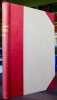
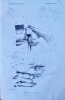
Thèses présentées à la faculté des sciences de Paris; pour obtenir le grade de docteur en, sciences naturelles. Rousseurs sporadiques, bien relié, état intérieur moyen. - Frais de port : -France 7,15 € -U.E. 9 € -Monde (z B : 14 €) (z C : 24 €)
Histoires et légendes de l'Auvergne mystérieuse. Collection : Histoires et Légendes noires.
Paris, Editions Tchou, 1969. 14 x 22, 281 pp., nombreuses illustrations et dessins, reliure d'édition carton imprimé, très bon état.
Textes recueillis et présentés par Louis Amargier.
CARTULAIRE DE TRINQUETAILLE
Aix-en-Provence Publications Universitaires des Lettres & Sciences Humaines d'Aix-en-Provence 1972 in 8 (24x16) 1 volume broché, X et 372 pages, avec une planche dépliante in fine, ex-dono manuscrit au verso de la page de faux-titre. Centre d'études des sociétés méditerranéenne. Bel exemplaire ( Photographies sur demande / We can send pictures of this book on simple request )
Très bon Broché

