 Write to the booksellers
-
Type
Art print (2)
Autograph (4)
Book (34205)
Magazine (146)
Manuscript (3)
Maps (1)
Photographs (8)
-
Latest
Last 24h (9)
Last 3 days (17)
Last month (746)
Last week (12)
-
Language
Chinese (1)
Dutch (3)
English (108)
French (34118)
German (9)
Greek (1)
Italian (112)
Japanese (1)
Latin (4)
Polish (1)
Portuguese (4)
Russian (3)
Spanish (3)
Swedish (1)
-
Century
16th (34)
17th (75)
18th (572)
19th (4343)
20th (11385)
21st (1704)
-
Countries
Belgium (7834)
Brazil (14)
Canada (11)
Côte d'Ivoire (35)
Denmark (146)
France (25063)
Germany (9)
Greece (3)
Netherlands (1)
Switzerland (1253)
-
Syndicate
ALAC (11)
CLAM (15)
CLAQ (3)
CNE (18)
ILAB (13871)
NVVA (532)
SLACES (531)
SLAM (13088)
SNCAO (64)
Afrika Stammeskunst in Urwald und Savanne
Freiburg im Breisgau, Olten, 1980 Original Leineneinband, Schutzumschlag + Box, 331 Seiten, 33 x 26 cm, *GERMAN. *wie neu. ISBN 9783530034202.
Afrika Stammeskunst in Urwald und Savanne
LE GUIDE DU CALCULATEUR D' INTERETS.
, Bruxelles, Typographie et Lithographie E. Gyot, 1880., Relie, demi - veau marbre, plats marbre endommage, piece de titre dore sur maroquin rouge, plats de papier marbre, 15x22cm, 369pp.
Théorie des opérations linéaires -- EDITION ORIGINALE -- BON EXEMPLAIRE
Warszawa, Subwencji Funduszu Kultury Narodowej, 1932, un volume in 8, broché, couverture imprimée (dos passé), 7pp., (1pp.), 254pp., (1)
---- EDITION ORIGINALE ---- BON EXEMPLAIRE ---- "BANACH laid the foundations of contemporary functional analysis". (DSB I) ---- "Les travaux de BANACH sur les espaces vectoriels topologiques étudient les aspects topologiques des problèmes linéaires. Tentant de généraliser les équations intégrales, Banach fut amené à introduire les espaces normés complets qui portent son nom et créa un système de concepts et de théorèmes qu'il appliqua à l'analyse fonctionnelle. Ainsi selon le théorème de Banach, toute application linéaire continue et surjective, définie d'un espace de Banach sur un autre, est une application ouverte". (Inventeurs et scientifiques)**5798-ARB4
Histoire Des Chemins De Fer De Provence - Tome 1 et 2
Cabri (Editions du) ,1992-1999, in-4 de 239-319 pages ,illustrations in-texte et hors-texte ,cartonné éditeur ,Très bon état , .Isbn : 9782908816723.(6 photos du livre sur mon site https://www.vieuxlivre.fr) .Les frais de port pour la France sont offerts à partir de 25 euros d'achat (Mondial relay ). (colissimo suivi +6,90 ).
"La quatrième dimension - Voyage dans les dimensions supérieures - Collection "" l'univers des sciences ""."
Belin. 1996. In-4. Relié. Bon état, Couv. convenable, Dos satisfaisant, Intérieur frais. 206 pages - nombreuses illustrations, figures en couleurs et en noir et blanc dans et hors texte.. . . . Classification Dewey : 500-SCIENCES DE LA NATURE ET MATHEMATIQUES
"Collection "" l'univers des sciences "" - traduit par Paul Decaix. Classification Dewey : 500-SCIENCES DE LA NATURE ET MATHEMATIQUES"
La quatrième dimension, voyage dans les dimensions supérieures - Collection l'univers des sciences.
Pour la science - belin. 1996. In-8. Relié. Bon état, Couv. convenable, Dos satisfaisant, Intérieur frais. 206 pages - nombreuses illustrations, photos, figures en couleurs dans et hors texte.. . . . Classification Dewey : 500-SCIENCES DE LA NATURE ET MATHEMATIQUES
Collection l'univers des sciences - traduit par Paul Decaix. Classification Dewey : 500-SCIENCES DE LA NATURE ET MATHEMATIQUES
Examen et réfutation des élémens de la philosophie de NEWTON de M. DE VOLTAIRE avec une dissertation sur la réflexion et la réfraction de la lumière -- EDITION ORIGINALE -- BON EXEMPLAIRE
P., Lambert & Durand, 1739, un volume in 8 relié en plein veau moucheté, dos orné de fers dorés, tranches rouges (reliure de l'époque), (petit accroc à la coiffe), (2), 98pp., 5 feuillets non chiffrés de table, 308pp., (2), 5 PLANCHES DEPLIANTES, 17 VIGNETTES en tête de chapitres par CROISAT gravées par SCOTIN
---- EDITION ORIGINALE ---- BON EXEMPLAIRE ---- BABSON N° 39 : "As an introduction, the preface comprises a dissertation on the reflection and refraction of light. BANIERES defines light, explains its properties, measures distances, and feels that NEWTON's system is a very gratuitous supposition. He shows that the seven primary colors correspond with the seven tones of music" ---- GRAY N° 44**7227/ARM1D-8777/ARB6
Art byzantin; Icones, Tissus, ivoires,Ceramiques
, Cercle d'Art , 1986 Hardcover, 342 pages, Texte en Francais, 335 x 275 mm, bon etat, beaucoup illustrations,. ISBN 9782702201893.
Tableau des arts et des sciences, depuis les temps les plus reculés jusqu'au siècle d'Alexandre-le-Grand, trad. de l'anglais par Boulard
Paris, J. R. Lottin, 1786 - in-12 : x, 228 pp. (qqs. mouillures) - br., couv. d'attente, pap. marbré (qqs. manques au dos).
Signes et symboles religieux
Flammarion 2005 120 pages 12x1x21 2cm. 2005. Broché. 120 pages.
Bon état
Histoire de la Vie
Albin michel jeunesse. Non daté. In-4. Relié. Bon état, Couv. défraîchie, Dos satisfaisant, Intérieur frais. 45 pages .Nombreuses illustrations en couleurs.Exemplaire de bibliothèque recouvert d'un film transparent. Etiquette sur le premier plat et au dos. Tampon sur certaines pages. Range fichette sur la dernière page.. . . . Classification Dewey : 570-Sciences de la vie
Classification Dewey : 570-Sciences de la vie
Le Livre du Maître pour l'enseignement du croquis coté à l'école primaire élémentaire
sd, Librairie Classique Fernand Nathan. Petit in-8 cartonné de 64 pages, dos toilé rose. Illustré de nombreuses figures nb. | Etat : BE général. Pages un peu jaunies, couv un peu frottée. Livre d'occasion. (Ref.: ref9388)
Librairie Classique Fernand Nathan
Mon enfant rentre à l'école (Pour une rentrée en maternelle en toute sérénité)
2009, éditions First, collection Ma p'tite famille, in-12 broché de 192 pages, couverture illustrée d'un dessin couleurs de Nathalie Jomard. Ce livre vous guide à travers toutes les étapes de la vie à l'école, répond à vos questions sur le quotidien de votre enfant et vous aide à préparer son avenir, pour une entrée dans la vie scolaire en toute sérénité. | Etat : Très bon état général, occasion (Ref.: Ref9800)
éditions First
Introduction à l'analyse numérique.
P., Hermann, 1977, in 8° broché, VI-133 pages.
PHOTOS SUR DEMANDE. ...................... Photos sur demande ...................


Phone number : 04 77 32 63 69
Synthèse des automates microprogrammés.
Traduit du russe par B. Pavlov. Moscou, Ed. Mir. 1983. In-8 (22x14). 336 pages. Toile noire de l'éditeur sous jaquette rouge.
Nombreuses figures et tableaux . Parfait état (nom de l'ancien propriétaire tamponné sur le faux titre).
Caution mortelle
ACHS ,2007, in-12 de 271 pages ,broché ,Bon état , .Isbn : 9782915328097.(2 photos du livre sur mon site https://www.vieuxlivre.fr) .Les frais de port pour la France sont offerts à partir de 25 euros d'achat (Mondial relay ). (colissimo suivi +6,90 ).
Introduction à la pratique dentaire chez l'enfant - préface de A. Mugnier
Masson et cie / Julien Prélat 1972 in8. 1972. Broché.
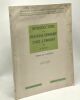
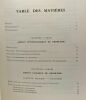
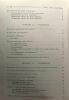
Bon état cependant premier plat taché de rousseurs sous papier de soie intérieur propre
LA REGENERATION PHYSIOLOGIQUE DE L'ETRE HUMAIN - SANTE LONGEVITE.
"LES EDITIONS DE LA CLOSERIE. 1946. In-12. Broché. Etat d'usage, Tâchée, Dos satisfaisant, Intérieur acceptable. X + 103 pages + un fascicule de 11 pages ""la mort des rhumatismes"" - ouvrage recouvert d'un plastique transparent - tâches brunes sur les plats.. . . . Classification Dewey : 500-SCIENCES DE LA NATURE ET MATHEMATIQUES"
Classification Dewey : 500-SCIENCES DE LA NATURE ET MATHEMATIQUES
ROLE DE LA CHAINE PHYTYLE SUR CERTAINS SYMPTOMES D'AVITAMINOSE E CHEZ LE POUSSIN
Faculté des Sciences de Bordeaux. 1969. In-8. Broché. Bon état, Livré sans Couverture, Dos satisfaisant, Intérieur frais. Plaquette de 15 pages illustrée d'un graphique en noir et blanc. Annotations en 1re page.. . . . Classification Dewey : 570-Sciences de la vie
Arch. Sci. Physiol., 1969, 23. Classification Dewey : 570-Sciences de la vie
Scribes and the Presentation of Texts (from Antiquity to c. 1550). Proceedings of the 20th Colloquium of the Comité international de paléographie latine. Beinecke Rare Book & Manuscript Library, Yale University (New Haven, September 6-8, 2017)
, Brepols, 2021 Hardback, 604 pages, Size:216 x 280 mm, Illustrations:193 b/w, 37 col., 27 tables b/w., Language(s):English, French, Italian. ISBN 9782503595160.
Summary Scribes played complex, often overlooked roles in the production of hand-written texts across Antiquity, the Middle Ages, and the Renaissance. Some scribes simply copied the exemplar; other scribes participated with authors and decorators in establishing the mise-en-page and overall appearance of a text. Many decisions needed to be made regarding the selection of text script; the style of rubrication, display scripts, and initials; the placement and execution of potentially elaborate illuminated images. What was the role of the scribe in contributing to the decision-making process or in determining the final format and material appearance of a document, scroll or codex? This volume explores many of the choices that a single scribe or groups of scribes would need to make when writing and presenting a text, whether in a monastic, cathedral or lay setting. The articles in the volume range from case studies of a single artifact to the analysis of multiple copies and versions of a particular text. The authors include eminent specialists in the field of manuscript studies as well as mid- and early career scholars. TABLE OF CONTENTS Keynote Stefano ZAMPONI (Università di Firenze Italia), The Papyri of Dura Europos in the History of Latin Script I papiri di Dura Europos nella storia della scrittura latina (In Italian, accompanied by an English translation) I. Tradition and Innovation: Classical Traditions and Medieval Innovations Serena AMMIRATI, (Università degli Studi Roma Tre), Il manoscritto latino di contenuto giuridico tra Antichità e Medioevo: strategie distintive e conservatorismo grafico da Oriente a Occidente Marilena MANIACI & Giulia OROFINO, (Università di Cassino e del Lazio meridionale), Making, Writing and Decorating the Bible: Montecassino, a Case Study Irene CECCHERINI (University of Oxford), The Shaping of the Latin Classics in 14th-Century Italy Julia MARVIN ( University of Notre Dame), The Rhetoric of Textual Presentation in Manuscripts of the Anglo-Norman Prose Brut Chronicle: When Foundation Stories Collide II. Decision Making and Workflow: Patrons, Authors And Scribes Jesús ALTURO & Tània ALAIX (Universitat Autònoma de Barcelona), Categories of Promoters and Categories of Writings: The Free Will of the Scribes, Cause of Formal Graphic Differences Francisco ÁLVAREZ LÓPEZ & Julia CRICK (King's College London), Decision-Making and Workflow in the Making of Exon Domesday Laura PANI (Università degli Studi di Udine), Lay Scribes before c. 1100: Books, Texts, Scripts Sébastien BARRET (IRHT-CNRS: Institut de recherche et d'histoire des textes - Centre national de la recherche scientifique, Paris), Présentation des textes, discours diplomatique et 'responsables de la transcription des actes' aux Xe et XIe siècles: quelques chartes clunisiennes Eef OVERGAAUW (Staatsbibliothek zu Berlin), Authors, Scribes and Librarians. Literary Estates in Germany in the Fifteenth and early Sixteenth Century III. Text and Paratext: Structuring Texts, Structuring Books David GANZ (University College London, retired) Half-Uncial Scripts: a Way of Presenting Texts Andrew J. M. IRVING (Rijksuniversiteit Groningen), Mass by Design: Design Elements in Early Italian Mass Books Elena RODRÍGUEZ DÍAZ (Universidad de Huelva), Las rúbricas en los códices medievales de los reinos de León y Castilla (siglos XII-XV) Thomas FALMAGNE (Bibliothèque nationale de Luxembourg), L'ordinatio dans les manuscrits de compilation Patrizia CARMASSI (Herzog August Bibliothek), Il prologo tra autore, scriba e manoscritto. Indagini su uso e funzione di un particolare paratesto in codici della Herzog August Bibliothek Wolfenbüttel, e della Niedersächsische Staats- und Universitätsbibliothek, Göttingen Dominique STUTZMANN (IRHT-CNRS: Institut de recherche et d'histoire des textes - Centre national de la recherche scientifique, Paris), Du Roman de la Rose aux livres d'heures : étudier et comprendre les écritures de colophons Beyond Words: Visual Representations of Meaning Gabriella POMARO (SISMEL: Società Internaionale per lo Studio del Medioevo Latino, Firenze), Dall'ars scripta all'Ars figurata: Raimondo Lullo (1232-1316) e la tradizione figurata dell'ars combinatoria Marigold Anne NORBYE (University College London), The manifold manifestations of A tous nobles: decoration and diversity in a French genealogical chronicle Maria THEISEN (Österreichische Akademie der Wissenschaften, Wien), God Speaks Czech. Some reflection on layout, script and image in Czech Bibles of the 15th Century IV. APICES Session Evina STEINOVÁ (Pontifical Institute of Mediaeval Studies, Toronto) Nota and Require: The Oldest Western Annotation Symbols and Their Dissemination in the Early Middle Ages Anna DOROFEEVA (University of Frankfurt), Reading Early Medieval Miscellanies Manuel MUÑOZ GARCÍA (King's College London), The Script of Matthew Paris and His Collaborators (c. 1200-1259): A Multi-Methodological Approach Adrián ARES LEGASPI (Universidad de Sevilla), La presentación de los textos en las profesiones religiosas del monasterio de San Martín Pinario (Santiago de Compostela), en la primera mitad del siglo XVI Agnieszka REC (Boston, Massachusetts Historical Society), The Archaeology of the Book and the Alchemy of Cracow Index of Manuscripts and Documents Index of Private Collections Index of Papyri and Tablets Index of Names Index of Scribes and Decorators
Masterpieces Of The Metropolitan Museum of Art
, Metropolitan Museum of Art , 1993 Hardcover, 320 pages, English, 315 x 250 x 30 mm, very richly illustrated with coloured illustrations, in Good Condition !. ISBN 9780821220474.
The Metropolitan Museum of Art in New York City is a living encyclopedia of world art. Cultures from every part of the world - from Florence to Thebes, from Pennsylvania to Papua, New Guinea - from the ancient world to the present, and in every medium, are represented, frequently at the highest levels of quality. This book presents over 250 of the finest masterpieces in the Metropolitan's collection, drawn from more than three million works in eighteen different curatorial departments. Some of these splendid objects, such as the Temple of Dendur, Botticelli's Annunciation, Rembrandt's Aristotle with a Bust of Homer, and Leutze's Washington Crossing the Delaware, are very famous; others, including a rare Chinese scroll, a drawing by Michelangelo, and an ornate Turkish sword, are less well known. All are remarkable and unique. The works have been arranged in a generally chronological order by culture, beginning with ancient Egypt and ending with the twentieth century in Europe and America. Each reproduction is accompanied by a text that includes pertinent information about the work.
Monastic Performance - The Mystic Contract - The Ecstatic Recording Jan Fabre in St Augustine's Church in Antwerp
, mercaterfonds - fondsmercator, 2018 Softcover, 124 pages ill. 24,1 x 17 x 1,1 cm. NEW ISBN 9789462302433.
As part of the city-wide 'Antwerp Baroque 2018' festival, artist Jan Fabre has been invited to create three new altarpieces for Antwerp's Church of St Augustine, now the home of the international cultural and music centre AMUZ. In fulfilling this prestigious commission Fabre is following in the illustrious footsteps of Peter Paul Rubens, Jacob Jordaens and Anthony van Dyck, who were asked to produce an altarpiece each in 1628. This handsomely illustrated book brings to life the origin, history and richness of these works of art in all their subtlety. Fabre's extraordinary triptych, The Monastic Performance, The Mystic Contract and The Ecstatic Recording is truly breathtaking. Specially conceived, the works form an apotheosis of core elements from his oeuvre, including the lamb, fire, woman, spirituality, and his love of Antwerp, represented by the diamond motif. In this sumptuous Mercatorfonds publication, Barbara De Coninck, Joanna De Vos, Jenke Van den Akkerveken and Els Wuyts take an investigative trip through the iconography and meaning of the individual altarpieces. Starting from Fabre's preparatory collage drawings we follow the construction and metamorphosis of the mosaics. Paul Huvenne's connective essay makes a detailed comparison between Fabre's contemporary interpretations and the Baroque originals, with reference to the particular history of St Augustine's Church. And Joost Vander Auwera discovers surprising parallels between Fabre, Jordaens and Van Dyck.
Fabrice Souvereyns Erased and Not Erased
, Posture Editions Nr 50, 2023 PB, 300 x 210 mm, 256 pages, EN-NL edition, Illustrated. ISBN 9789491262555.
Armed with pencil, eraser and breaker knife, FabArmed with pencil, eraser and breaker knife, Fabrice Souvereyns (°1995 Tongeren) creates a detailed world from intense observations and perceptions. Souvereyns's young oeuvre draws inspiration from the physical world, from fauna and flora and from what is visible to humankind in the skies. In addition, more 'invisible' themes also play a substantial role in the work. The influence of, for example, science cannot be denied, while art history also serves as inspiration for the artist's eccentric plant world. Vegetal scenes in art reflect how humans relate to subjects such as nature, religion, philosophy or science at the time. Souvereyns makes use of this frame of reference but also leaves room for his personal formal language. As a result, a certain universality and restraint always hangs around his drawings: although they are based on centuries-old natural landscapes, we cannot exactly find them in reality. The line between reality and the (sub)consciousness blurs. While working, he is guided by spontaneity yet the drawings are not simply the result of automatism. Each movement, whether adding or omitting, leaves a unique trace, and is a deliberate choice by the artist. Posture Editions N° 50 brings together these diverse landscapes, making the book function as the young artist's first survey work. rice Souvereyns (°1995 Tongeren) creates a detailed world from intense observations and perceptions. Souvereyns's young oeuvre draws inspiration from the physical world, from fauna and flora and from what is visible to humankind in the skies. In addition, more 'invisible' themes also play a substantial role in the work. The influence of, for example, science cannot be denied, while art history also serves as inspiration for the artist's eccentric plant world. Vegetal scenes in art reflect how humans relate to subjects such as nature, religion, philosophy or science at the time. Souvereyns makes use of this frame of reference but also leaves room for his personal formal language. As a result, a certain universality and restraint always hangs around his drawings: although they are based on centuries-old natural landscapes, we cannot exactly find them in reality. The line between reality and the (sub)consciousness blurs. While working, he is guided by spontaneity yet the drawings are not simply the result of automatism. Each movement, whether adding or omitting, leaves a unique trace, and is a deliberate choice by the artist. Posture Editions N° 50 brings together these diverse landscapes, making the book function as the young artist's first survey work.
Église et les églises. Iconographie du monde grégorien (Rome, Italie, France)
, Brepols, 2024 Hardback, 484 pages, Size:178 x 254 mm, Illustrations:279 col., 3 tables b/w., 3 maps b/w, Language: French. ISBN 9782503606392.
Summary Vers le milieu du XIe siècle, le pape s'empare d'un projet à vocation universelle : la réforme de l'Église. L'initiative entraîne à de profonds changements de société, et au renouvellement des formes et moyens d'expression, architecturaux et iconographiques. Nouveau chapitre dans un débat ancien, ouvert dans les années 1970 par Hélène Toubert et Ernst Kitzinger et sans cesse réinvesti par les spécialistes du roman, l'ouvrage vise à mieux comprendre la réception artistique des idées de réforme, à Rome, en Italie et en France. L'enquête procède par cumul d'expériences, acquises sur des monuments singuliers et emblématiques des XIe et XIIe siècles. Elle révèle la diversité des discours et des solutions, en écho à leur temps et à leur lieu, et montre aussi l'unité des répertoires iconographiques, des systèmes de pensée et des enjeux, tous liés au nouveau modèle de la société chrétienne. TABLE OF CONTENTS 1. Introduction 2. l'Eglise et les églises 3. La géographie de la réforme 3.1. Rome 3.1.1. Saint-Clément: église inférieure 3.1.2. L'Exultet du Mont-Cassin 3.1.3. Saint-Clément: les mosaïques de l'église supérieure 3.1.4. Sainte-Marie in Cosmedin 3.2. Le dominium des Canossa 3.2.1. Saint-Silvestre de Nonantola 3.2.2. La cathédrale de Modène 3.2.3. Modène et son héritage: Sant-Pierre-et-saint-Paul d'Andlau 3.2.4. La cathédrale de Piacenza 3.3. L'Aquitaine: la traditon des façades sculptées 3.4. Le Pays ligérien 3.4.1. Notre-Dame-de-Nantilly (Saint-Florent de Saumur) 3.4.2. Saint-Aubin d'Angers: la salle capitulaire et le réfectoire 3.4.3. Saint-Nicolas de Tavant (Marmoutier) 3.5. Cluny et ses églises 3.5.1. Farfa 3.5.2. Berzé-la-Ville 3.5.3. Beaulieu-sur-Dordogne 3.5.4. Moissac: le porche et le cloître 4. Conclusion

