 Write to the booksellers
-
Type
Art print (2)
Autograph (4)
Book (33826)
Magazine (146)
Manuscript (3)
Maps (1)
Photographs (8)
-
Latest
Last 24h (9)
Last 3 days (13)
Last month (239)
Last week (102)
-
Language
Chinese (1)
Dutch (3)
English (108)
French (33738)
German (9)
Greek (1)
Italian (112)
Japanese (1)
Latin (5)
Polish (1)
Portuguese (4)
Russian (3)
Spanish (3)
Swedish (1)
-
Century
16th (32)
17th (84)
18th (603)
19th (4364)
20th (11329)
21st (1725)
-
Countries
Belgium (7839)
Brazil (14)
Canada (11)
Côte d'Ivoire (35)
Denmark (291)
France (24534)
Germany (9)
Greece (3)
Netherlands (1)
Switzerland (1253)
-
Syndicate
ALAC (11)
CLAM (15)
CLAQ (3)
CNE (19)
ILAB (14047)
NVVA (532)
SLACES (531)
SLAM (13119)
SNCAO (64)
LES REMEDES NOUVEAUX
Gautier, Bibliothèque des Ecoles et des Familles n°76.. sans date. In-12. Broché. Bon état, Couv. convenable, Dos satisfaisant, Intérieur frais. 35 pages.. . . . Classification Dewey : 500-SCIENCES DE LA NATURE ET MATHEMATIQUES
Classification Dewey : 500-SCIENCES DE LA NATURE ET MATHEMATIQUES

LES PLANTES VENENEUSES
Henri Gautier. Non daté. In-12. Broché. Etat d'usage, Plats abîmés, Dos abîmé, Intérieur acceptable. Plaquette de 36 pages. 1er plat détaché. 2e plat manquant.. . . . Classification Dewey : 570-Sciences de la vie
'Bibliothèque scientifique des écoles et des familles', n° 10. Classification Dewey : 570-Sciences de la vie
Elemens des mathematiques contenant les elemens de geometrie, d'arithmetique, d'algebre & d'analise -- EDITION ORIGINALE -- BEL EXEMPLAIRE
Lyon, Perrot, 1737, un volume in 8 relié en plein veau, dos orné de fers dorés, tranches rouges (reliure de l'époque), 13pp., 3pp., 214pp., (1), 5 planches dépliantes
---- EDITION ORIGINALE -- BEL EXEMPLAIRE -- Le Père DUCLOS de la compagnie de Jésus fut professeur de mathématiques au collège de Lyon**6603/N2
JARDINAGE ENGRAIS-
1913 BAILLIERE et fils-économie ménagére agricole 1913-
IN12 carton.ed.79p.-ill/bois in texte Remise de 20% pour toutes commandes supérieures à 200 €
Les nouveaux savans (savants) de société, ou recueil complet de tous les jeux familiers, physiques et mathématiques. Augmentée des régles des jeux de dames, de domino, de trictrac, et du poëme de M. Cérutti sur les échecs. Suivi des règles du Boston et de la bouillote, et d'une petit traité de la natation (2 volumes).
Barba Paris, Barba, 2 volumes, 1810, pleines reliures d'époque, 17x10.5cm, 12 gravures H.T., xij (avertissement, discours préliminaire -pour les 2 volumes-), 310 p., 331 p., des trous de ver et des épidermures sur la reliure, coins émoussés, des rousseurs sur les toutes premières pages de chaque volume, intérieur propre pour le reste.
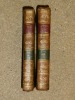
Merci de nous contacter à l'avance si vous souhaitez consulter une référence au sein de notre librairie.
Entretiens sur la chimie et ses applications les plus curieuses suivis de notions de manipulation et d'analyse chimique.
Tours Alfred Mame et cie imprimeurs,libraires. 1843 416p 1 volume IN8 en pleine basane cerise. Plat orné d'un filet doré. Dos lisse orné. En frontispice portrait de Lavoisier. Deuxième édition.
Entretiens sur la chimie et ses applications les plus curieuses.
Tours, Alfred Mame et Fils,1843. In-8, rel. de l'ép. demi-basane verte, dos lisse orné de double filet doré, roulette dorée en tête et en queue, titre doré, tr. mouchetées; 416 pp., 2 portraits sous serpente dont le front. h.-t. (Lavoisier et Berthollet), très nb. fig. en n/b. in-t, qq. tableaux, culs-de-lampe, petit dictionnaire de chimie et table alphabétique des matières.
Coiffes frottées, petites épidermures, accroc au milieu du dos, qq. rousseurs, bon ex. - Frais de port : -France 6,8 € -U.E. 9 € -Monde (z B : 14 €) (z C : 24 €)
ENTRETIENS DE LA PHYSIQUE ET SUR SES APPLICATIONS LES PLUS CURIEUSES / BIBLIOTHEQUE DE LA JEUNESSE CHRETIENNE.
MAME ET CIE. 1841. In-8. Broché. Etat passable, Plats abîmés, Dos abîmé, Intérieur acceptable. 400 pages - Plat desolidarisé - Plats rognés et defraichis - Coiffes en tete et pied absentes.. . . . Classification Dewey : 500-SCIENCES DE LA NATURE ET MATHEMATIQUES
Classification Dewey : 500-SCIENCES DE LA NATURE ET MATHEMATIQUES
Entretiens sur la physique et ses applications les plus curieuses -- BEL EXEMPLAIRE
Tours, Mame, 1851, un volume in 8 relié en pleine basane, dos orné de filets dorés, fers et filets dorés sur les plats (reliure de l'époque), 1 portrait (de GAY-LUSSAC), 400pp., figures dans le texte
---- BEL EXEMPLAIRE ---- Troisième édition --- Exemplaire de prix (Lycée Louis Le Grand) --- Jean-Sylvestre DUCOIN-GIRARDIN, ingénieur, fut professeur de physique et de chimie ---- Propriétés générales des corps - Propriétés mécaniques des corps - Principes de mécanique - Disposition des molécules des corps - Equilibre et mouvement des liquides, des corps gazeux - Du son - De la chaleur - Phénomènes dus à l'action de la lumière - magnétisme et électricité - Météorologie - etc**1845/L4
Entretiens sur la physique et ses applications les plus curieuses
M. Entretiens sur la physique et ses applications les plus curieuses 130x220mm ; In 8 plein cuir glacé, marron, , plaque dorée avec filets et écoinçons en encadrement, dorés. Sur les plats. Roulette dorée sur coupe. Ecole primaire supérieure de bar le Duc Prix 20 août 1842 au premier plat. Faux-titre, titre, 400pages, petites figures dans le texte. Tranches marbrées. Tours A. MAME & Cie 1841. Importantes rousseurs à tout le volume. (Plus concentrées et fortes à certaines pages
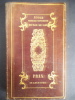
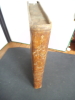
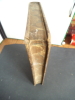
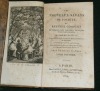
Entretiens sur la Physique et ses applications les plus curieuses. Seconde édition.
Tours, Ad. Mame 1844, 215x130mm, 400pages, percaline ornée de l’éditeur, quelques rousseurs.

illustré de deux portraits gravés Descartes et Galillée, Pour un paiement via PayPal, veuillez nous en faire la demande et nous vous enverrons une facture PayPal
Entretiens sur la Physique et ses applications les plus curieuses.
Tours, Ad. Mame 1841, 215x125mm, 400pages, veau de l’époque, pièce de titre en cuir noir, ornementations dorées. Bel exemplaire.
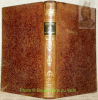
Pour un paiement via PayPal, veuillez nous en faire la demande et nous vous enverrons une facture PayPal
LE CINEMATOGRAPHE SCIENTIFIQUE ET INDUSTRIEL.
Son évolution intellectuelle , sa puissance éducative et morale. Traité Pratique de cinématographie, entièrement refait , considérablement augmenté et décrivant les procédés les plus nouveaux. 2 ème édition ( 1931 ). Albin Michel Editeur. 1 volume fort in 8. broché couverture grise imprimée. 509 pages + 127 pages ( cinéma sonore ). BON ETAT. Ouvrage abondamment illustré de croquis et photos.
SOLDES D'ETE : 30% de remise immédiate sur le prix marqué.
Des grandes routes et des chemins vicinaux; procédés les plus économiques pour les construire, les améliorer et les maintenir constamment dans le meilleur état possible. Suivi de «Suite à la notice des Grandes routes...». 2 parties dans 1 volume.
Paris, Carillian Goeury, 1829, in-8°, IV + 148 p. / IV + 220 p., quelques rousseurs, reliure en demi-parchemin à coins, pièce de titre en maroquin bleu, dos orné, bel exemplaire.
Ouvrage peu commun et extrêmement intéressant pour l'histoire du génie-civil. Contient, notamment, le système de pavement des routes du fameux Mac-Adam. Image disp.

(SLACES, NVVA)
Phone number : 41 (0)26 3223808
Le fabuleux pari sur la lune. 12 septembre 1959.
Paris Laffont 1961 In-8 de 236 pp., br.
Planches h.t.
20 ANS DE REVOLUTION
SEP. 1989. In-8. Relié toilé. Bon état, Couv. convenable, Dos satisfaisant, Intérieur frais. 178 pages. Nombreuses photos en couleurs dans le texte et hors texte;. Avec Jaquette. . . Classification Dewey : 500-SCIENCES DE LA NATURE ET MATHEMATIQUES
Classification Dewey : 500-SCIENCES DE LA NATURE ET MATHEMATIQUES
La chaîne bleue. A l'écoute des civilisations extra-terrestres.
Paris, Edition n°1, 1979. In-8 broché, 306 pp. Photos en noir.
LA SCIENCE A LA CONQUETE DU PASSE
PLON. 1955. In-8. Broché. Etat d'usage, Couv. légèrement passée, Dos plié, Intérieur frais. 283 pages. Illustré en noir et blanc dans et hors texte. Dos frotté.. . . . Classification Dewey : 500-SCIENCES DE LA NATURE ET MATHEMATIQUES
Classification Dewey : 500-SCIENCES DE LA NATURE ET MATHEMATIQUES
La science à la conquête du passé
Plon. 1955. In-12. Broché. Etat d'usage, Coins frottés, Dos abîmé, Papier jauni. 283 pages augmentées de nombreuses planches photos et illustrations en noir et blanc dasn et hors texte. Dos plié, coiffes frottées.. . . . Classification Dewey : 500-SCIENCES DE LA NATURE ET MATHEMATIQUES
Classification Dewey : 500-SCIENCES DE LA NATURE ET MATHEMATIQUES
"La science à la conquête du passé Collection ""D'un monde à l'autre"""
Plon. 1955. In-8. Relié cuir dos-coins. Bon état, Couv. convenable, Dos satisfaisant, Intérieur frais. 283 pages. reliure cuir dos-coins rouge. Auteur et titre dorés sur pièce de titre.Roulettes. Fleuron.Tranches fines en couleurs. 1 signet conservé.. . . . Classification Dewey : 500-SCIENCES DE LA NATURE ET MATHEMATIQUES
Classification Dewey : 500-SCIENCES DE LA NATURE ET MATHEMATIQUES
Le changement global
Jean-Claude Lattès 1993 In-8 broché 22,3 cm sur 14. 543 pages. Bon état d’occasion.
Bon état d’occasion
LE LIVRE D'OR DE LA SCIENCE 1977.
SOLAR. 1977. In-4. Broché. Bon état, Couv. convenable, Dos satisfaisant, Intérieur frais. 109 pages - nombreuses illustrations en couleurs et en noir et blanc dans et hors texte.. . . . Classification Dewey : 500-SCIENCES DE LA NATURE ET MATHEMATIQUES
la médecine - les seismes - la biologie - la psychologie - les origines de l'homme - l'année spatiale - l'électronique. Classification Dewey : 500-SCIENCES DE LA NATURE ET MATHEMATIQUES
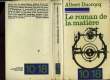
LE ROMAN DE LA MATIERE.
EDITION 10/18 N°0471/472. 1970. In-12. Broché. Etat d'usage, Couv. défraîchie, Dos frotté, Intérieur frais. 383 pages. Couverture illustrée en couleur. Quelques shémas et tableaux. . . . Classification Dewey : 500-SCIENCES DE LA NATURE ET MATHEMATIQUES
Cybernetique et univers. Classification Dewey : 500-SCIENCES DE LA NATURE ET MATHEMATIQUES
le roman de la matière + le roman de la vie
Le club fançais du livre. 1964. In-8. Broché. Bon état, Couv. légèrement passée, Dos satisfaisant, Intérieur bon état. 206p. + 202p. Ex. N° 5532 / 7000 et N° 608 / 7200. Nombreuses illustrations documentaires en noir et blanc. Rousseurs sur les tranches. reliure éditeur.. . . . Classification Dewey : 500-SCIENCES DE LA NATURE ET MATHEMATIQUES
Classification Dewey : 500-SCIENCES DE LA NATURE ET MATHEMATIQUES

