 Write to the booksellers
-
Type
Art print (2)
Autograph (4)
Book (34575)
Magazine (146)
Manuscript (3)
Maps (1)
Photographs (8)
-
Latest
Last 24h (4)
Last 3 days (18)
Last month (402)
Last week (205)
-
Language
Chinese (1)
Dutch (3)
English (108)
French (34488)
German (9)
Greek (1)
Italian (112)
Japanese (1)
Latin (4)
Polish (1)
Portuguese (4)
Russian (3)
Spanish (3)
Swedish (1)
-
Century
16th (34)
17th (75)
18th (575)
19th (4413)
20th (11630)
21st (1721)
-
Countries
Belgium (7834)
Brazil (14)
Canada (11)
Côte d'Ivoire (35)
Denmark (146)
France (25433)
Germany (9)
Greece (3)
Netherlands (1)
Switzerland (1253)
-
Syndicate
ALAC (11)
CLAM (15)
CLAQ (3)
CNE (18)
ILAB (14089)
NVVA (532)
SLACES (531)
SLAM (13306)
SNCAO (64)
Pursuit of Salvation. Community, Space, and Discipline in Early Medieval Monasticism - with a critical edition and translation of the Regula cuiusdam ad uirgines
, Brepols, 2021 Paperback, 687 pages, Size:210 x 270 mm, Illustrations:1 col., 3 tables b/w., Language(s):English, Latin. ISBN 9782503589602.
Summary The seventh-century Regula cuiusdam ad uirgines (Someone's Rule for Virgins), which was most likely written by Jonas of Bobbio, the hagiographer of the Irish monk Columbanus, forms an ideal point of departure for writing a new history of the emergence of Western monasticism understood as a history of the individual and collective attempt to pursue eternal salvation. The book provides a critical edition and translation of the Regula cuiusdam ad uirgines and a roadmap for such a new history revolving around various aspects of monastic discipline, such as the agency of the community, the role of enclosure, authority and obedience, space and boundaries, confession and penance, sleep and silence, excommunication and expulsion. TABLE OF CONTENTS Summary The book consists of two sections. The first is a critical edition and translation of the Regula cuiusdam ad uirgines, a seventh-century Frankish monastic rule for nuns, along with the short treatise De accedendo ad Deum, which most likely formed a part of the Regula cuiusdam ad uirgines. The second section is a study on the transformations and diversification of monastic theology, concepts of communal life and monastic discipline in the early medieval period. It revolves around the Regula cuisudam ad uirgines in its historical and intertextual context. The study is divided four parts that are related to the four key words of the title of the book (Community, Space, Discipline, and Salvation). Each part consists of a chapter that makes an argument about the place of the Regula cuiusdam ad uirgines in intertextual contexts and a chapter that applies these arguments in a historical inquiry. Introduction Section I: Edition and Translation of the Regua cuiusdam ad uirgines Section II: Study Part I: Community revolves around the question to what extent the monastic community can serve as an agent of the collective and individual pursuit of salvation Chapter 1: Quidam pater - quaedam mater? The Regula cuiusdam ad uirgines and its author provides a survey of the monastic milieu in which the Regula cuiusdam ad uirgines was written, discusses potential authors and stakeholders in the monastic foundation that may have been addressed by the Rule and shows on the basis of semantic and stylistic similarities and shared content and ideas that Jonas of Bobbio, the author of the Vita Columbani, is to be considered the author of the Regula cuiusdam ad uirgines as well. Chapter 2: The dying nuns of Faremoutiers: the regula in action argues that Jonas of Bobbio's description of the deaths of the nuns of Faremoutiers, which is a part of Book 2 of his Vita Columbani, and the Regula cuiusdam ad uirgines represent the same monastic program, once presented as a "narrated rule", once as a normative text. The Faremoutiers episodes are closely modelled after Book 4 of the Dialogi of Gregory the Great and can be read as a critical response to Gregory's eschatology and his notion of pursuing salvation by living a virtuous life. After having fleshed out the parallels and differences between the Dialogi and the Faremoutiers miracles, the chapter analyzes each episode of the Faremoutiers miracles, showing that Jonas wrote his monastic program in a highly sophisticated manner into stories describing the deaths occurring in the founding generation of nuns in Faremoutiers - deaths that were most likely still remembered by the primary audience of the Vita Columbani. Part II: Space discusses the role of space and boundaries for the monastic pursuit of salvation and explores the origins of the medieval cloister Chapter 3 The Regula cuiusdam ad uirgines, a supplement to Caesarius' Rule for Nuns? compares the provisions of Caesarius of Arles' Rule for Nuns with the Regula cuisudam ad uirgines and argues that Jonas wrote his Rule as an expansion and revision of Caesarius work: an "early medieval" update of a "late antique" monastic program, as it were. Chapter 4: Enclosure re-opened: Caesarius, Jonas, and the invention of sacred space discusses the evolution of Caesarius of Arles' notion of enclosure as salvific instrument and then shows how Jonas of Bobbio tried to face the aporias of Caeasarius' theology of enclosure by expanding it towards a system of total control of all physical, social and corporeal boundaries and the implementation of various enclosures. Part III: Discipline provides a historical survey of the evolution of various aspects of monastic discipline in early medieval monastic rules leading to the Regula cuiusdam ad uirgines. Chapter 5: The Regula Benedicti in seventh-century Francia explores the role of the Regula Benedicti in Frankish monasticism in the aftermath of Columbanus and shows how Jonas used and revised the Regula Benedicti and refuted some of his main theological premises. Chapter 6: The Regula cuiusdam ad uirgines and its context describes the history of the topics addressed in each chapter of the Regula cuiusdam ad uirgines and provides a detailed commentary to the Rule itself, showing how Jonas rewrote the Regula Benedicti. I discuss every chapter of the Rule but put a special emphasis on the following topics: abbatial authority, hierarchy, boundaries, love, confession, silence, work, sleep, excommunication, and family ties. Part IV: Salvation focusses on the short treatise De accedendo ad Deum which provides a unique theological rationale why monastic discipline enables monks and nuns to pray effectively and to attain eternal salvation. Chapter 7: De accedendo ad Deum - a lost chapter of the Regula cuiusdam ad uirgines? shows that De accedendo was most likely a lost chapter of the Regula cuiusdam ad uirgines and thus written by Jonas of Bobbio as well. Chapter 8: Prompto corde orandum: the theological program of De accedendo analyzes the theological argument that monastic discipline enable a nun or monk to approach God through prayer, which forms one of the most sophisticated early medieval responses to the challenge of the doctrine of prevenient grace and the "semi-Pelagian" debate. De accedendo essentially explains how the monastic pursuit of salvation works. Conclusion Three appendices provide textual evidence for ascribing the Regula cuiusdam ad uirgines to Jonas of Bobbio and to document the reception of the Regula cuiusdam ad uirgines in the eighth-century Life of Bertila. Bibliography of manuscripts, sources, and literature Index uerborum
Jan Vanriet Bienal São Paulo [Biennale van São Paulo 1979 belgica - belgium
, , 1979 Oorspronkelijk uitgevers omslag, Portugese en Engelse tekst.

catalogue Bélgica. Ministério da educação nacional e da cultura flamenga. Serviço de difusao de artes internacional [België. Ministério da educação nacional e da cultura flamenga. Serviço de difusao de artes internacional]
Elemens de physiologie
Chez Guillyn | à Paris 1769 | 10 x 17 cm | relié
Seconde édition de la traduction par Bordenave. L'oeuvre avait paru an latin en 1749, à Gottingen. Reliure en pleine basane blonde marbrée. Dos à nerfs orné. Pièce de titre en maroquin rouge. Coiffes élimées. Rousseurs éparses. Papier en partie jauni. Considéré comme une des principales figures de son temps, Haller était à la fois naturaliste, médecin, anatomiste et poète. On le considère à juste titre comme le père de la physiologie. Dans ce manuel classique, Haller donne une vue d'ensemble critique du savoir anatomique et physiologique de son époque. - Photographies et détails sur www.Edition-Originale.com -

La generation ou exposition des phenomenes relatifs a cette fonction naturelle de leur mechanisme, de leurs causes respectives et des effets immediats qui en resultent
Chez Des Ventes de la Doué | à Paris 1774 | 12.50 x 20 cm | 2 volumes reliés
Édition originale française et première traduction en langue vulgaire après l'originale latine, laquelle avait paru dans les Elementa physiologica en 8 tomes, publiés de 1757 à 1766. Reliures en plein veau blond moucheté. Dos à nerfs ornés. Pièces de titre et de tomaisons en maroquin rouge. Coiffes de tête élimées, idem pour la coiffe de queue du tome 2. Deux coins émoussés au tome 2. Pièce de tomaison du tome 1 manquante. Quelques feuillets jaunis. Importante étude consacrée aux phénomènes de la génération, de la fécondation et de l'embryologie, avec une description des organes sexuels et de leur fonction. En dressant un état des connaissances contemporaines, Haller réfute certaines thèses jusqu'alors établies, notamment celle de Malpighi, et en fonde de nouvelles, éclaircissant la façon dont de nouveaux individus viennent au monde. - Photographies et détails sur www.Edition-Originale.com -
La generation ou exposition des phenomenes relatifs a cette fonction naturelle de leur mechanisme, de leurs causes respectives et des effets immediats qui en resultent
Chez Des Ventes de la Doué | à Paris 1774 | 12.50 x 20.50 cm (In-8) | 2 volumes reliés
Édition originale française et première traduction en langue vulgaire après l'originale latine, laquelle avait paru dans les Elementa physiologica en 8 tomes, publiés de 1757 à 1766. Exemplaire aux armes non identifiées, mouchetures d'Hermines angulaires sur les plats. Les Rohan ou les Rohan Chabot n'apposent sur leurs livres que les emblèmes, les meubles de leurs armoiries, mais nous n'avons pu identifier de famille derrière l'utilisation des mouchetures d'hermines, ces mouchetures étant présentes dans de trop nombreuses armes. Reliures en plein veau brun granité d'époque. Dos à nerfs de fers au chardon dans des caissons. Pièces de titre et de tomaison en maroquin rouge ornées. Roulettes en queue. Triple filet d'encadrement sur les plats avec mouchetures d'hermines angulaires. Frise géométrique intérieure. Tranches cailloutées. 3 coins émoussés. Traces de frottements aux mors et bordures. Manque une page de garde au tome I. Bel exemplaire très bien relié. * Importante étude consacrée aux phénomènes de la génération, de la fécondation et de l'embryologie, avec une description des organes sexuels et de leurs fonctions... On remarquera que si le plaisir masculin est plusieurs fois évoqué, celui féminin est totalement absent des commentaires. - Photographies et détails sur www.Edition-Originale.com -
"Technisch frans woordenboeck; deel 1 : frans-nederlands."
Haarlem/Antwerpen, De Technische Uitgeverij H. Stam, 1949. 12 x 16, 230 pp., broché, bon état (couverture légèrement défraîchie).
Système D.
Non Renseigné. 1964. In-12. Broché. Bon état, Couv. convenable, Dos satisfaisant, Intérieur bon état. Non Renseigné. . . . Classification Dewey : 600-TECHNIQUE (SCIENCES APPLIQUEES)
Année 1964 Classification Dewey : 600-TECHNIQUE (SCIENCES APPLIQUEES)
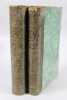
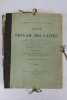
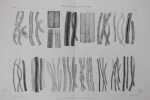
Fabrication des étoffes. Traité du travail des laines.
Paris& Liège, Noblet & Baudry 1866 3 volumes : deux de texte, in-8 demi-basane, XII- 544- 441 pp. et un atlas in-4, en ff. sous chemise à lacets, 56 planches litho. 55 doubles. Reliures un peu frottée, accroc à une coiffe sup. Chemise de l’atlas défraichie charnière sup. fendillée. Quelques pales rousseurs. Bon exemplaire.
Bon état d’occasion
Une autre école pour votre enfant - Les pédagogies différentes
1993, Albin Michel, Le Grand Livre du Mois. in-8 br. rigide de 255 pages, ill en couleurs sur couv. Préface de Roger Auffrand. | Etat : Très bon état général. Occasion. (Ref.: ref10124)
Albin Michel
NOTRE MONDE AU RYTHME DU TEMPS
NON PRECISE. 1958. In-12. Cartonné. Bon état, Couv. convenable, Dos satisfaisant, Intérieur frais. 126 pages. Nombreux dessins en noir et blanc dans le texte et hors texte.. . . . Classification Dewey : 500-SCIENCES DE LA NATURE ET MATHEMATIQUES

"Collection ""Je sais... je sais"". Traduit et adapté de l'américain par Michel Deutsch Directeur d'Etude à l'école alsacienne. Illustrations d'Odile Bonnemain. Classification Dewey : 500-SCIENCES DE LA NATURE ET MATHEMATIQUES"
ALDO VAN EYCK: AOHNA 1983
Athene, The National Gallery Athens, 1983 Envelope with bilingual folders and fold-out booklets, 20 x 16 cm, ENGLISH/GREEK. *Fine condition, envelope worn.
The National Gallery and Alexander Soutzos Museum, 17 September - 23 October 1983, Athens
Les phénomènes paranormaux. Collection : Regard chrétien.
Namur, Fidélité, 1993. 15 x 21, 125 pp., broché, très bon état.
Le Carnet De Voyage De Jérôme Aléandre En France et à Liège (1510-1516)
, Bruxelles - Rome 1969, Broché, 237 pages;Introduction, texte Latin et traduction juxtaposée en Français. Tres bon etat. ***dedicace de l'auteur.
Bibliothèque de l'Institut Historique Belge de Rome - fascicule XVIII. Pages en partie non coupées,
SCIENCES NATURELLES - PREPARATION AU B. E. AU B. E. P. S., AUX E. N.
DELAGRAVE. 1933. In-8. Cartonné. Bon état, Couv. convenable, Dos satisfaisant, Intérieur frais. 496 pages. Nombreuses illustrations en noir et blanc et en couleurs, dans le texte et hors texte. Une carte déplainte en couleurs.. . . . Classification Dewey : 500-SCIENCES DE LA NATURE ET MATHEMATIQUES
Nouvelle bibliothèque des écoles primaire supérieures et des cours complémentaire. Classification Dewey : 500-SCIENCES DE LA NATURE ET MATHEMATIQUES
Invitation: feuilles volantes, et autres
, Le miroir d'encre, 1988 Two pages and insert, 23.5 x 18 cm, FR. *Good condition.
Invitation to Alechinsky's 1988 exhibition 'feuilles volantes, et autres' at gallery Le miroir d'encre.
Odilon Redon Catalogue Raisonne de L'oeuvre et Dessine ; VOLUME 1 / Portraits et Figures.
, Wildenstein Institute / Bibliotheque des Arts, 1992 Cloth with dust jacket, 344 pages, illustre coleur / b/w 28,5 x 34 cm Texte en Francais, *Tres belle exemplaire. ISBN 9782908063073.
Odilon Redon Catalogue Raisonne de L'oeuvre et Dessine ; VOLUME II: Mythes et Legendes.
, Wildenstein Institute / Bibliotheque des Arts, 1994 Cloth with dust jacket, 384 pages, illustre coleur / b/w 28,5 x 34 cm Texte en Francais, Tres belle exemplaire. ISBN 9782908063110.
Odilon Redon Catalogue Raisonne de L'oeuvre et Dessine ; VOLUME IV: Etudes et Grandes. Decorations
, Wildenstein Institute / Bibliotheque des Arts, 1998 Cloth with dust jacket, 433 pages, illustre coleur / b/w 28,5 x 34 cm Texte en Francais, *Tres belle exemplaire. ISBN 9782908063134.
Identiteit en locatie in de hedendaagse literatuur,
Nijmegen, Vantilt, paperback, 224 pagina's. ISBN 9789075697865.
Identiteit en locatie in de hedendaagse literatuur geeft antwoord op de essentiele vragen over wie wij zijn en wie de anderen zijn. Het uitgangspunt van deze essaybundel is dat, anders dan vaak wordt beweerd, identiteit niet betekenisloos is geworden. In de recente wereldliteratuur staat juist de betekenis van identiteit op de voorgrond. Die betekenis wordt vooral gezocht door identiteit in relatie te brengen met een bepaalde locatie. Dat kan zowel een concrete geografische plaats zijn, als een conceptuele locatie, zoals een literaire traditie of een mythologisch en ideologisch erfgoed. Naar aanleiding van het werk van onder meer Salman Rushdie, Jose Saramago, David Grossman, Etienne van Heerden en Maryse Conde legt deze bundel de relatie tussen identiteit en locatie in de hedendaagse literatuur bloot.
Werkdocument nr. W-159 : Stuediedag Werkgroep Natuurtechnish Bosbeheer : Visies en ervaringen over beheer van Natuur in Bos.
IKC Natuurbeheer Ministerie van Landbouw. Non daté. In-4. Broché. Bon état, Couv. convenable, Dos satisfaisant, Intérieur frais. 29 pages .Texte en néerlandais.. . . . Classification Dewey : 500-SCIENCES DE LA NATURE ET MATHEMATIQUES

Classification Dewey : 500-SCIENCES DE LA NATURE ET MATHEMATIQUES
Baracoa bakermat van Cubaanse cacao
, Stockmans Kalenders 2011, 2011 Hardcover, 247 pagina's/pages, Nederlands/ Francais, 240 x 205 mm, met illustraties en foto's, nieuwstaat, . ISBN 9789077207239.
Baracoa, bakermat van de Cubaanse cacao, is een noodzakelijk boek. Cacao is immers een autochtoon product waarvan het belang nog niet voldoende wordt benadrukt. Het boek exploreert de kenmerken die Baracoa onderscheiden als de Cubaanse en misschien zelfs Latijns-Amerikaanse en Caraïbische stad waar cacao de sterkste sporen heeft achtergelaten en waar in vergelijking met andere producerende landen, reeds lang vervlogen tradities werden bewaard. Baracoa, hoofdstad van de Cubaanse cacao, is een complexe en rijke culturele ruimte waar een eeuwenoude landbouwactiviteit specifieke culturele kenmerken heeft, die bepalend zijn voor de identiteit van die plek.
Moving Sculptures Southern Netherlandish alabasters from the 16th to 17th centuries in Central and Northern Europe
, Brill, 2016 Hardcover, xxii, 385 pp., 205 color & b/w illus. Illustrated. Fine. ISBN 9789004270930.
The Low Countries are generally considered to be the land of painting. Consequently, sculpture, especially that of the 16th century, has been insufficiently explored. In Moving Sculptures Aleksandra Lipi?ska presents a little-known chapter of the history of Netherlandish sculpture: the serial production of small-scale alabaster reliefs, altarpieces and statuettes in the workshops of Mechelen and Antwerp between c. 1525 and 1650. She gives the reader an insight into the rules of this craft, the specificity of the material, and the marketing methods employed. But the innovative element of this study lies in the fact that Lipi?ska analyses the phenomenon from the perspective of its distant recipients in Central and Northern Europe on the basis of works largely unknown to the broader public.At the Source: Production of the Alabaster Sculpture in the Southern Netherlands 1 Alabaster as a Sculpture Material 17 2 Alabaster in Netherlandish Sculpture from the Late Gothic to the Early Baroque 44 3 Serial Production of Alabaster Sculpture in Mechelen 96 4 The Spread of Alabaster Sculpture from the Low Countries 124 Part 2 At the Destination: Southern Netherlandish Alabaster Sculpture in Central and Northern Europe 5 Altarpieces 143 6 Tombs and Epitaphs 205 7 Exhibits of Real and ?Imagined? Collections 254 8 Alabaster Chambers 271
MATHEMATICS. Its content, Methods and Meaning ---- BEL EXEMPLAIRE -- 3 VOLUMES (COMPLET SET)
Cambridge, The M.I.T. Press, 1965, 3 volumes in 8 reliés en pleine toile éditeur, T.1 : 11pp., 358pp., (1), T.2 : 11pp., 376pp., (1), T.3 : 11pp., 351pp., (1)
----- BEL EXEMPLAIRE**9147/N5DEP
Recueil des planches sur les sciences. charpente mathématiques, mécanique ALEMBERT ET DIDEROT 1772
,1772, in-4 de xxx pages ,manque piece de titre et début index des planches. ,broché ,Etat correct ,reliure abîmée .(11 photos du livre sur mon site https://www.vieuxlivre.fr) .Les frais de port pour la France sont offerts à partir de 25 euros d'achat (Mondial relay ). (colissimo suivi +6,90 ).
Traité de Dynamique. I & II.
Paris, Gauthier-Villars et Cie, 1921, pt. in-8vo, 108 p. /201 p., brochure originale.

(SLACES, NVVA)
Phone number : 41 (0)26 3223808

