 Write to the booksellers
-
Type
Autograph (3)
Book (37327)
Engraving (6)
Magazine (540)
Manuscript (5)
Music sheets (109)
Old papers (5)
Photographs (69)
Posters (2)
-
Latest
Last 24h (5)
Last 3 days (11)
Last month (390)
Last week (9)
-
Language
Dutch (9)
English (25)
French (37988)
German (8)
Greek (1)
Italian (3)
Latin (24)
Polish (1)
Portuguese (1)
Russian (1)
Spanish (5)
-
Century
16th (66)
17th (193)
18th (1012)
19th (4026)
20th (17525)
21st (1890)
-
Countries
Belgium (1345)
Brazil (11)
Canada (60)
China (6)
Côte d'Ivoire (70)
Denmark (661)
France (32553)
Greece (6)
Italy (3)
Netherlands (2)
Switzerland (3349)
-
Syndicate
ALAC (59)
CLAM (20)
CLAQ (56)
CNE (26)
ILAB (23566)
NVVA (2119)
SLACES (2119)
SLAM (20179)
SNCAO (180)
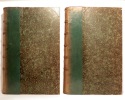
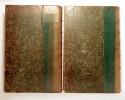
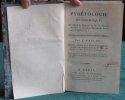
RUDIMENS D'UNE PYRETOLOGIE METHODIQUE, TRADUITS DU LATIN PAR M. CLANET, EX OFFICIER DE SANTE.
TOULOUSE. FAGES. MEILHAC. 1801. IN-8 (13 X 20 CENTIMETRES ENVIRON) DE XVI + 384 PAGES, RELIURE D'EPOQUE 1/2 VELIN, TITRE DORE SUR ETIQUETTES JAUNE ET VERTE, TRANCHES JAUNES. PETITE TRACE DE BRULURE ANCIENNE SUR QUELQUES FEUILLETS EN FIN DE VOLUME, SINON BON EXEMPLAIRE.

Pyrétologie méthodique. (Théorie des Fièvres) - Édition originale.
De Selle, Médecin du Roi de Prusse, membre de l'Académie Royale des Sciences de Berlin, etc.;Traduite du latin sur la 3e et dernière Édition par J. Nauche, Médecin, membre de la Société Académique des Sciences, des Sociétés médicale de Paris, des Sciences et Arts de Toulon, de Douai, etc. Avec des notes du Traducteur et du citoyen Chaussier, de l'Institut national, Professeur à l'École de médecine de Paris.Édition originalede la traduction française. A Paris, chez la veuve Panckoucke - An X (1801-1802) - xvj et 424 pages. Tampon ex-libris.Reliure demi basane de l'époque. Dos lisse à filets dorés. Petit accident à la coiffe supérieure. Plats frottés. Une tache d'encre marginale page 364. Pas de rousseur. Bon état. Format in-8°(20x14).Christian Gottlieb Selle, médecin et philosophe. Docteur en 1770, Halle. Médecin de Frédéric II (1786), de Frédéric-Guillaume II (1797), puis de Frédéric-Guillaume III.

SELLE M. ( Christian Gottlieb ) / CORAY ( KORAIS Adamántios ) Traducteur
Reference : 055693
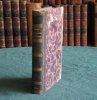
INTRODUCTION A L'ÉTUDE DE LA NATURE ET DE LA MÉDECINE. Traduite de l'allemand, d'après la seconde édition corrigée et augmentée de M. Selle. par Coray, Docteur en médecine de l'Université de Montpellier
Montpellier de l'imprimerie de Tournel père et fils, Imprimeurs-Libraires, an III 1794 in 8 1 reliure pleine basane havane de l'époque, dos lisse richement orné de caissons dorés, pièce de titre de cuir beige, filet doré sur les coupes, tranches teintées rouge, XXXII et 312 pages. Christian Gottlieb Selle, 1748-1800, Médecin et philosophe allemand; professeur en médecine, médecin de la Charité, et membre de l'Académie royale des sciences de Berlin, Médecin de Frédéric II (1786), de Frédéric-Guillaume II (1797), et de Frédéric-Guillaume III. Adamántios Coray (Koraís), 1748-1833, docteur en médecine de l'université de Montpellier. Rare. Très bel exemplaire, très frais
Très bon Couverture rigide
LES TESTS LES COMPRENDRE ET Y REPONDRE
LA BIBLIOTHEQUE DU CEPL. non daté. In-8. Relié. Bon état, Couv. convenable, Dos satisfaisant, Intérieur frais. 252 pages. Nombreuses illustrations en noir et blanc dans le texte. Reliure d'éditeur moderne.. . . . Classification Dewey : 610-Sciences médicales. Médecine
Collection Connaitre les autres. La psychologie moderne. Classification Dewey : 610-Sciences médicales. Médecine
Une âme prisonnière - Grâce à la communication assistée, un jeune austiste nous révèle son univers
Robert LAFFONT. 1995. In-8. Broché. Bon état, Couv. convenable, Dos satisfaisant, Intérieur frais. 208 pages.. . . . Classification Dewey : 610-Sciences médicales. Médecine
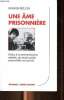
Collection réponses Classification Dewey : 610-Sciences médicales. Médecine
Contributions to human biometeorology.
1987 236 p., num. figs & tables, hardbound. Progress in Biometeorology 4. Spine somewhat discoloured, else very good copy.
Stress sans détresse
Montréal La Presse 1976
in-8, 175p. Couverture illustré (portrait par Yousuf Karsh), sans titre, mention : 40e anniversaire. :: Édition présentée par DACCA international. Tirage à 3000 exemplaires numérotés et signés par Hans Selye. :: Broché. Bon état.
The Physiology and Pathology of Exposure to STRESS, A treatise based on the concepts of the General-Adaptation-Syndrome and the diseases of adaptation
Montréal ACTA medical publishers 1950
in-8 illustré, xx, 822p. et 203p. (References). Cartonnage toilé rouge de l'éditeur. :: Edition originale. Garrison and Morton N° 2238 : "In his study of the aetiology of the collagen diseases Selye developed the idea that animals react to stress or injury by a certain sequence of physiological reactions, the "general adaptation syndrome". :: Bon état.
Medizinische Chinoiserien - Eine Untersuchung zur Kenntnis und Anwendung der chinesischen Medizin im 17. und 18. Jahrhundert, Diss. Universität Zürich.
Olten, Dietschi & Cie. AG, 1969, in-8vo, 68 S., Stempel auf Titel und letzter Seite ‘Universitätsbibliothek Bern’ + ’ausgeschieden USB Bern‘ Original-Pappband.

(SLACES, NVVA)
Phone number : 41 (0)26 3223808
Die Erbkrankheiten um 1850, Dissertation, (erscheint gleichzeitig als Heft Nr. 3 der ‘Zürcher medizingeschichtliche Abhandlungen’).
Zürich, Juris Druck + Verlag, 1960, in-8vo, 61 S., Original-Pappband.
(SLACES, NVVA)
Phone number : 41 (0)26 3223808
LE DYSMETABOLISME GLUCIDIQUE CHEZ LES ARTERITIQQUES - ETUDE STATISTIQUE PORTANT SUR 250 SUJETS - N°414
IMP. OFFSET. 1974. In-8. Broché. Etat d'usage, Couv. convenable, Dos satisfaisant, Intérieur acceptable. 57 pages. Notes au stylo dans le texe. Ecritures au stylo sur le dos du titre et de l'auteur.. . . . Classification Dewey : 610-Sciences médicales. Médecine
Université de Bordeaux, faculté de médecine et de pharmacie. Classification Dewey : 610-Sciences médicales. Médecine
Le dysmétabolisme glucidique chez les artéritiques - Etude statistique portant du 250 sujets - Thèse pour le doctorat en médecine - Année 1974 thèse n°414 Université de Bordeaux II.
Impression Offset. 1974. In-8. Broché. Bon état, Couv. convenable, Dos satisfaisant, Papier jauni. 3+57+7 pages - quelques tableaux, grahiques en noir et blanc dans et hors texte et quelques tableaux en noir et blanc hors texte dépliants - légères rousseurs sur les plats.. . . . Classification Dewey : 610-Sciences médicales. Médecine
Classification Dewey : 610-Sciences médicales. Médecine
SEMAINES SOCIALES de FRANCE. XXXVIIIe session - Montpellier 1951. Santé et société. Les découvertes biologiques et la médecine sociale au service de l'homme. Compte rendu in extenso.
Lyon, Chronique Sociale de France, 1951, in 8° broché, 410 pages.
...................... Photos sur demande ...................

Phone number : 04 77 32 63 69
Mémoire sur les fonctions du Foie pendant la digestion et sur les usages de la Bile.
"P., Baillière ; Lyon, Savy ; 1851. In 8 dérelié de 68 pp."
****
PAGES SUR LE DOCTEUR ALIBERT
1927 plaquette gris-vert (booklet) grand in-octavo, première de couverture imprimée ornée petite d'une illustration (front printed cover decorated), tranches lisses (smooth edges), illustrations : orné d'un bandeau et d'un cul-de-lampe (and illuminated of headpiece and tailpiece), 15 pages, 1927 à Montauban Imprimerie et Lithographie Georges Forestié,
bon état général (good condition)
Ueber die gegenwärtigen Grenzen der miasmatischen und contagiösen Krankenheiten. (Vorträge für Thierärzte).
Jena, Dege & Haenel, 1880, in-8vo, 52 S., Original-Broschüre.
(SLACES, NVVA)
Phone number : 41 (0)26 3223808
EGAUX mais... différents. Accroissements et maturation somatiques, 3 essais sur le normal et les limites.
Méditions diffuseur, 1996, broché, 14,5x22 cm, 87 pages + XV planches en noir et blanc en fin de volume. Figures dans le texte.
Bon état.
Scientific Memoirs by Officers of the Medical and Sanitary Departments of the Government of India. No 44. The Preparation of a Safe and Efficient Antirabic Vaccine. Issued under the Authority of the Government of India by the Sanitary Commissioners with the Government of India, Simla.
Calcutta, Office of the Superintendent of Goverment Printing, India 1911 300x225mm, 32pages, editor's binding.
Pour un paiement via PayPal, veuillez nous en faire la demande et nous vous enverrons une facture PayPal
Scientific Memoirs by Officers of the Medical and Sanitary Departments of the Government of India. No 43. The Relation of Tatanus to the Hypodermic or Intramuscular Injection of Quinine.
Calcutta, Office of the Superintendent of Goverment Printing, India 1911, 300x225mm, 61pages, editor's binding.
Pour un paiement via PayPal, veuillez nous en faire la demande et nous vous enverrons une facture PayPal
Scientific Memoirs by Officers of the Medical and Sanitary Departments of the Government of India. No 32. An Enquiry on Enteric Fever in India. Carried out at the Central Research Institute, Kasauli. Issued under the Authority of the Government of India by the Sanitary Commissioners with the Government of India, Simla.
Calcutta, Office of the Superintendent of Goverment Printing, India 1908 300x225mm, 108pages, editor's binding.
Pour un paiement via PayPal, veuillez nous en faire la demande et nous vous enverrons une facture PayPal
Croissance et maturation osseuse.
Théraplix. non daté. In-4. Relié toilé. Bon état, Couv. convenable, Dos satisfaisant, Intérieur frais. 103 pages - quelques graphiques en couleurs hors texte - quelques figures en noir et blanc hors texte - texte sur deux colonnes - 2 signets conservés.. . . . Classification Dewey : 610-Sciences médicales. Médecine
Classification Dewey : 610-Sciences médicales. Médecine
Traite de la structure du coeur, de son action, et de ses maladies.
1749 (1st ed.) 2 vols (complete). xliv; [4]; 504; [4]; 694; [2] p., 17 folding engraved pls, 4to, late 19th century cloth. Library stamps on title-pages (Birmingham General Hospital Library), several in lower right corner of text, and on recto and verso plates (not affecting text or figures). Some very slight foxing but the great majority of text and plates clean. Lower corner (1.5 x 5 cm) of title-page of volume two missing. Rare and very important first edition of the first comprehensive treatise on the structure and diseases of the heart. Sénac describes the direction in placement of the fibers of the heart, and points out the correlation between incidence of cardiac disease with increase in age. He provides a detailed discussion on transfusions and circulation. He was also the first physician to use quinine for palpitation.Jean-Baptiste Sénac (1693-1770), a Jesuit priest, studied medicine at Rheims and was later appointed physician to Louis XV.
De recondita febrium intermittentium remitentium natura et de earum euratione ; varus experimentis & observationibus illustratâ
Seconde édition augmentée.Petit In 8 plein cuir fauve à nerfs raciné,pièce titre chagrin rouge.fers dorés,roulette dorée sur coupes.Tranches rouges.De Tournes éditeur Genève 1769.(un coin légèrement émoussé)
IMAGERIE MODERNE DU COEUR ET DES VAISSEAUX
SAURAMPS MEDICAL. 1986. In-8. Cartonnage d'éditeurs. Bon état, Couv. convenable, Dos satisfaisant, Intérieur frais. 555 pages illustrées de nombreux schémas et nombreuses photographies hors et dans le texte.. . . . Classification Dewey : 610-Sciences médicales. Médecine
Les techniques - L'embolie pulmonaire et les veines - L'embolie pulmonaire - Les artères viscérales - La gerbe aortique et le défilé thoraco-brachial - L'aorte - Les artères des membres inféfieures - L'imagerie du coeur. Classification Dewey : 610-Sciences médicales. Médecine
Parallèle entre les principales stations hydro-minérales suisses et étrangères. Conférence faite à la société genevoise de médecine, le 21 mars 1918.
Genève, Atar, 1918, pt. in-8vo, 42 p. + un tableau récapitulatif de 4 p., brochure originale imprimée.
(SLACES, NVVA)
Phone number : 41 (0)26 3223808

