 Write to the booksellers
-
Type
Autograph (3)
Book (37249)
Engraving (6)
Magazine (540)
Manuscript (5)
Music sheets (109)
Old papers (5)
Photographs (69)
Posters (2)
-
Latest
Last 24h (5)
Last 3 days (5)
Last month (399)
Last week (12)
-
Language
Dutch (9)
English (25)
French (37909)
German (8)
Greek (1)
Italian (3)
Latin (25)
Polish (1)
Portuguese (1)
Russian (1)
Spanish (5)
-
Century
16th (65)
17th (193)
18th (1008)
19th (4027)
20th (17460)
21st (1880)
-
Countries
Belgium (1267)
Brazil (11)
Canada (116)
China (6)
Côte d'Ivoire (70)
Denmark (660)
France (32485)
Germany (11)
Greece (6)
Italy (3)
Netherlands (2)
Switzerland (3351)
-
Syndicate
ALAC (115)
CLAM (20)
CLAQ (112)
CNE (26)
ILAB (23611)
NVVA (2119)
SLACES (2119)
SLAM (20168)
SNCAO (180)
Heralds of science as represented by two hundred epochal books and pamphlets selected from the Burndy Library
Norwalk, Burndy Library, 1980; un volume in 4 relié en pleine toile éditeur, 13pp., 96pp., figures dans le texte
---- BEL EXEMPLAIRE ---- Astronomy - Botany - Chemistry - Electricity and magnetism - General science - Geology - Mathematics - Medicine - Physics - Technology - Zoology**6252/E5AR-981/K3
L'ultime transgression Refaçonner l'homme
Editions de Chire. 2012. In-8. Broché. Bon état, Couv. convenable, Dos satisfaisant, Intérieur frais. 276 pages.. . . . Classification Dewey : 610-Sciences médicales. Médecine
Classification Dewey : 610-Sciences médicales. Médecine
CHAIRE DE CLINIQUE DENTAIRE ET STOMATOLOGIQUE
IMPRIMERIE MODERNE A. DESTOUT. 1936. In-8. Broché. Bon état, Couv. légèrement passée, Dos satisfaisant, Intérieur frais. 30 pages.. . . . Classification Dewey : 610-Sciences médicales. Médecine
Classification Dewey : 610-Sciences médicales. Médecine
ESSAI SUR LES FRACTURES QUI ONT LEUR SIÉGE PRÈS D'UNE ARTICULATION
Paris Imprimerie et fonderie de Rignoux et Cie 1837 in 4 (26x20) 1 fascicule broché, sous couverture muette de papier ancien, 23 pages. Thèse présentée et soutenue à l'Ecole de Médecine de Paris, le 18 février 1837. C.-J.-P.-Edouard Diday, de Bourg, département de l'Ain. Bon exemplaire ( Photographies sur demande / We can send pictures of this book on simple request )
Bon
Thérapeutique des maladies vénériennes et des maladies cutannées.
Paris G.masson, éditeur. 1876 887p 1 volume IN8. Reliure demi-chagrin noir. Dos lisse. Bon état.
Exposition critique et pratique des nouvelles doctrines sur la syphilis suivie d'une étude sur de nouveaux moyens préservatifs des maladies vénériennes.
P., Baillière, 1858, fort in 12 broché, 560 pages ; couverture fanée.
PHOTOS sur DEMANDE. ...................... Photos sur demande ...................


Phone number : 04 77 32 63 69
Exposition critique et pratique des nouvelles doctrines sur la syphilis suivie d'une étude sur de nouveaux moyens préservatifs des maladies vénériennes.
P., Baillière, 1858, fort in 12 relié demi-basane brune, dos lisse orné, 560 pages ; quelques rousseurs.
PHOTOS sur DEMANDE. ...................... Photos sur demande ...................
Phone number : 04 77 32 63 69
LA PRATIQUE DES MALADIES VENERIENNES. Troisième édition révisée conformement aux doctrines pathologiques modernes.
Paris, Asselin, 1890, 1 demi percaline. in-8 de VII-374 pp. ;
Le docteur Ariste Potton.
Eloge historique prononcé dans la séance publique annuelle de la Société de Médecine de Lyon le 28 février 1872. P.Vingtrinier 1872. Plaquette grand in-8 (25/16cm). 30 pages. Brochée, couvertures imprimées.
"Tiré à part du ""Lyon médical"". Exemplaire enrichi d'une très belle lettre du docteur Potton datée 1868. Très bon état."
Notice historique sur le Docteur J.E. PETREQUIN
Lyon, Association typographique, 1878; un volume in 8, broché, couverture imprimée, 40pp.
---- EDITION ORIGINALE**4101/E1
L'hystérie et l'évolution humaine.
P., Flammarion (Bibliothèque de Philosophie scientifique), 1935, in 12 broché, 250 pages ; quelques rousseurs et quelques petites taches marginales ; petit manque angulaire en tête de la première garde.
...................... Photos sur demande ...................
Phone number : 04 77 32 63 69
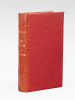
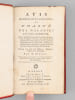
Avis aux gens de la campagne, ou Traité des maladies les plus communes, avec des observations sur les causes des maladies du peuple, sur l'abus des remèdes et des aliments dont il fait usage, et sur ceux qu'il doit employer pour se guérir des maladies auxquelles il est le plus exposé, quand il n'est pas à portée d'avoir le secours d'un médecin. [ Edition originale ]
1 vol. in-12 reliure postérieure (XXe) plein chagrin rouge, Gervois, Nancy, 1772, 3 ff., XXXVI-322 pp., et 3 ff. n. ch.
Dans l'approbation il est indiqué : "cet ouvrage est dans le goût de celui de M. Tissot "Avis au peuple sur sa santé". Nous proposons la transcription de la table des matières: Causes des maladies qui régnent dans les Campagnes pendant l'hiver, relativement à l'air que respire le paysan ; moyen de les prévenir ou d'en diminuer le danger ; Causes de maladies relativement à la boisson & aux alimens ; De la Bierre ; Du Cidre ; Du Vin ; Des Alimens ; Du Sommeil & de la Veille ; De l'Exercice ; Du Repos ; Des Passions de l'Ame ; De la Joie ; De la Tristesse ; De la Colere ; Abus de la Saignée parmi les Gens de la campagne ; Occasions où la saignée est nuisible ; Abus des fréquens Purgatifs ; Dangers des Vomitifs, cas où ils conviennent ; De l'abus du Tabac, de ses dangers & des occasions où il convient ; De la Fiévre en général ; De la Fiévre Quotidienne ; De la Fiévre Tierce ; De la Fiévre Quarte ; De la Fiévre Putride ; De la Fiévre maligne ; De la Fiévre ardente ; De la Toux ; De l'inflammation de la poitrine ; De la Diarrhée ; De la Dyssenterie ; De l'inflammation du bas-ventre ou colique inflammatoire ; De la Jaunisse ; De l'Hydropisie générale & particuliere ; Du Rhumatisme ; De la Gale. Prix en l'état pour cet exemplaire incomplet du dernier feuillet du Privilège (bon état par ailleurs, petit accroc sans mq. à un feuillet). Quérard, France, II, 553.
Dissertations sur les Convulsions en général.
P. Didot le jeune, 1816. In 4° dérelié de 21 pp.
****
LE MOI PEAU
DUNOD. 1986. In-8. Broché. Bon état, Couv. convenable, Dos satisfaisant, Intérieur frais. 254 pages.. . . . Classification Dewey : 610-Sciences médicales. Médecine

Classification Dewey : 610-Sciences médicales. Médecine
L’Art de la taxidermie au XXème siècle.
P., Lechevalier, 1948. In 8 broché, 77 pp. et XLIX planches hors texte.
****
Geschichte der Neonatologie in Zürich, 1908 - 1978, ‘Zürcher medizingeschichtliche Abhandlungen’, Nr. 133.
Zürich, Juris Druck + Verlag, 1979, gr. in-8vo, 88 S. + 5 Bl. ‘Verzeichnis der Abhandlungen ZmA’, Original-Pappband.
(SLACES, NVVA)
Phone number : 41 (0)26 3223808
Péan
Maloine 1948 In-8 broché 27,5 cm. Bon état d’occasion.
Biographie du chirurgien Jules-Émile Péan (1830 - 1898). Bon état d’occasion
LES CONTES DE SEGUR LES COULISSES DE LA POLITIQUE DE SANTE (1988-2006).
OPHRYS SANTE. 2006. In-8. Broché. Bon état, Couv. convenable, Dos satisfaisant, Intérieur frais. 419 pages - 1er plat illustré en couleurs.. . . . Classification Dewey : 614-Santé publique, médecine préventive
Classification Dewey : 614-Santé publique, médecine préventive
Thèse Pour Le Doctorat En Médecine Présentée et Soutenue Le 12 Février 1852 - De L'hémorrhagie Cérébrale
Paris Rignoux 1852 In4 Jules Didion fut médecin à Metz - Rare thèse - brochage d'époque imprimé avec envoi de Didion - 37 pages - bon etat
Bon Signé par l'auteur
Foie et affections du sang
Masson et cie 1974 205 pages in4. 1974. 205 pages. 205 pages illustrées de nombreuses photos en noir et blanc
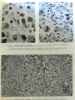
Bon Etat sous rhodoïd
Dichtng und Medizin. Zur Persönlichkeitsstruktur, körperlichen Verfasstheit in seinen dichterischen Schaffen und zur medizinischen Profession der Arztfiguren in den Werken Gerhart Hauptmanns
Deutscher Wissenschafts-Verlag, 2012, in-8vo, 250 S., Original-Pappband.
(SLACES, NVVA)
Phone number : 41 (0)26 3223808
Le bien etre par la relaxation - enfin une methode simple pour retrouver la serenite- faites face au stress de la vie- 20 mns de relaxation valent deux heures de sommeil- massages pour relaxer bebe
ATTITUDE SANTE. 2013. In-8. Broché. Bon état, Couv. convenable, Dos satisfaisant, Intérieur frais. 63 pages illustrées en couleurs. . . . Classification Dewey : 614-Santé publique, médecine préventive
Classification Dewey : 614-Santé publique, médecine préventive
Der Aether gegen den Schmerz. - [""THE WONDERFUL DREAM THAT PAIN HAS BEEN TAKEN AWAY FROM US HAS BECOME REALITY""]
Berlin, A. Hirschwald, 1847. 8vo. Uncut in the original printed wrappers. Previous owner's name (Kurt Egon Deutsch) to half-title. Wrappers a bit discoloured and frayed, and spine missing small part of paper. Spine skewed. Internally with light marginal brownspotting, otherwise a good copy. Housed in a cloth clam-shell box. XII, 228 pp. + 1 engraved plate.
Rare first edition, here in the original printed wrappers, of Dieffenbach’s landmark work in which he helped popularize aether as an anesthetic and, for the first time, applied “ether anesthesia for plastic operations. Dieffenbach made his first use of the anesthetic in reconstructing a nose. Dieffenbach’s work helped bring about the early acceptance of anesthesia in Germany.” (Garrison & Morton). After the successful use of ether as a surgical anaesthetic Dieffenbach famously stated that: ""The wonderful dream that pain has been taken away from us has become reality. Pain, the highest consciousness of our earthly existence, the most distinct sensation of the imperfection of our body, must now bow before the power of the human mind, before the power of ether vapor."" The present work was published shortly before Dieffenbach died. Here he recorded his results of his practical experience with etherization:“He expressed the opinion that since ether was able to obviate completely even the most intense pain during capital operations, it afforded the greatest possible relief to the patient" but for the surgeon […] it merely made the matters more difficult. He stressed the dangers of etherization: its liability to produce apoplexy and haemorrhage, the possibility of instantaneous death through overdosage, the tendency to increased post-operative bleeding, the slow healing of wounds where much tissue had been lost. He found indeed, that the post-operative condition of the patients who had been etherized was in general less favourable than of patients operated upon without ether.” (Davison, The Evolution of Anaesthesia). Johann Friedrich Dieffenbach (1792 -1847), German surgeon, specialized in skin transplantation and plastic surgery. His work in rhinoplastic and maxillofacial surgery established many modern techniques of reconstructive surgery. His endeavours comprehended subcutaneous operations such as tenotomy, the surgical division of a tendon. Before the discovery of blood typing and blood matching, Dr. Dieffenbach researched blood transfusion, Dieffenbach performed the first successful myotomy for the treatment of strabismus on a seven-year-old boy with esotropia. He settled in Berlin, where he focused his attention on plastic and reconstructive surgery.He soon won recognition as a leading plastic surgeon. In the following years he published a large number of writings describing his methods of operation, above all in the field of rebuilding surgery. In 1829 he was made chief physician to the surgical department of the Berlin Charité. At this period he turned his attention to the recently introduced subcutaneous operations like tenotomys and other methods of treating orthopaedic disturbances. He also concerned himself with blood transfusions, with the healing of stuttering and blinking. Shortly before his death he authored the last, and most famous and influential, of his medical dissertations introducing painless plastic surgery. Waller 2443 Garrison & Morton 5659.1
Psychologie curative et médecine. Collection Actualités pédagogiques et psychologiques.
Paris, Neuchatel, Delachaux et Niestlé, 1970. 15 x 21, 175 pp., broché, bon état.

