 Write to the booksellers
-
Type
Autograph (3)
Book (36221)
Engraving (6)
Magazine (34)
Manuscript (3)
Music sheets (110)
Old papers (5)
Photographs (1)
Posters (2)
-
Latest
Last 24h (1)
Last 3 days (10)
Last month (85)
Last week (4)
-
Language
Dutch (9)
English (18)
French (36313)
German (7)
Greek (1)
Italian (3)
Latin (26)
Polish (1)
Portuguese (1)
Russian (1)
Spanish (5)
-
Century
16th (65)
17th (190)
18th (960)
19th (3838)
20th (16609)
21st (1852)
-
Countries
Belgium (1264)
Brazil (11)
Canada (60)
China (5)
Côte d'Ivoire (72)
Denmark (653)
France (30944)
Germany (11)
Greece (6)
Italy (3)
Netherlands (2)
Switzerland (3354)
-
Syndicate
ALAC (59)
CLAM (19)
CLAQ (56)
CNE (26)
ILAB (23673)
NVVA (2119)
SLACES (2119)
SLAM (20294)
SNCAO (180)
Sämtliche Werke, Bde.1-6 Komplett - (in 9 gebunden) (Mit Registerband). 2. Aufl.
Berlin, Akademie-Vlg., 1956, gr. in-8vo, mit Titelbild, kleiner Bibl. - Rundstempel auf Titelverso, Ln. Verlagseinbände. Rücken mit Bibl.-Zettel, sauberes und gut erhaltenes Exemplar.

(SLACES, NVVA)
Phone number : 41 (0)26 3223808
Die Arbeit der Verdauungsdrüsen.
Weisbaden, J. F. Bergman, 1898. Large8vo. Bound uncut with the original wrappers in contemporary half cloth with marbled boards and gilt lettering to spine. Front wrapper partly detached and previous owner's inscription to top of front wrapper. Otherwise a fine and clean copy. XII, 199, (5) pp.
First German (and first in general) translation of Pavlov's seminal work on the digestion glands in which he demonstrated that the effects of feeding were transmitted to the gastric glands even when food was prevented from entering the stomach. (One Hundred Books Famous in Medicine 86). ""Pavlov summarized his experiments in a series of lectures given in 1896 and published in Russian the following year. A German translation appeared in 1898 and an English one in 1902. For his work on physiology of digestion Pavlov was awarded the Nobel Prize in 1904."" (One Hundred Books Famous in Medicine 86). ""Scientific Research In the years 1891-1903, Pavlov concentrated on the studies of the digestive system that were systematized in his Lectures on the Work of the Main Gastric Glands (1897) and won him a Nobel Prize in Physiology or Medicine (1904). In this research, Pavlov’s ""physiological thinking"" was embodied in the ""chronic experiment,"" and his analysis of data was structured by his metaphor of the digestive system as a precise and purposive chemical factory. For the chronic experiment, experimental dogs were prepared surgically with an operation designed to give the experimenter access to a digestive gland. Experiments began only after the dog had recovered and regained a ""normal"" state. These operations included the esophagotomy, which separated the cavities of the mouth and stomach, allowing Pavlov to use sham-feeding experiments to demonstrate the centrality of a psychic actor, appetite, in the first phase of digestive secretion. To study the second, nervous-chemical phase of digestion, he developed an innervated version of Heidenhain’s isolated stomach. In Pavlov’s isolated sac, the main stomach remained continuous with the digestive tract, but a smaller pouch, isolated from food by a mucous membrane, maintained its nervous connections to the larger stomach. For Pavlov, as a nervist, the innervation of the isolated sac assured that its glandular reactions would mirror those in the main stomach. Inserting a fistula in this small stomach, Pavlov and his co-workers measured the quantity and quality of its glandular secretions, which Pavlov analyzed in his ""characteristic secretory curves."" For Pavlov, these curves reflected the precise and purposive action of the glands as they processed different foods."" (DSB)Bibliotheca Walleriana 7257.
Die Arbeit der Verdauungsdrüsen. Vorlesungen. Autorisierte Übersetzung aus dem Russischen von Dr. A. Walther. Mit einem Vorwort und Zusätzen des Verfassers.
Wiesbaden, J. F. Bergmann, 1898. 8vo. In later half cloth with gilt lettering to spine. Ex-libris pasted on to pasted down front end-paper. Previous owner's name to title-page. A very fine and clean copy. XII, 199, (5) pp.
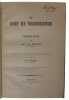
First German (and first in general) translation of Pavlov's seminal work on the digestion glands in which he demonstrated that the effects of feeding were transmitted to the gastric glands even when food was prevented from entering the stomach. (One Hundred Books Famous in Medicine 86). ""Pavlov summarized his experiments in a series of lectures given in 1896 and published in Russian the following year. A German translation appeared in 1898 and an English one in 1902. For his work on physiology of digestion Pavlov was awarded the Nobel Prize in 1904."" (One Hundred Books Famous in Medicine 86). ""Scientific Research In the years 1891-1903, Pavlov concentrated on the studies of the digestive system that were systematized in his Lectures on the Work of the Main Gastric Glands (1897) and won him a Nobel Prize in Physiology or Medicine (1904). In this research, Pavlov’s ""physiological thinking"" was embodied in the ""chronic experiment,"" and his analysis of data was structured by his metaphor of the digestive system as a precise and purposive chemical factory. For the chronic experiment, experimental dogs were prepared surgically with an operation designed to give the experimenter access to a digestive gland. Experiments began only after the dog had recovered and regained a ""normal"" state. These operations included the esophagotomy, which separated the cavities of the mouth and stomach, allowing Pavlov to use sham-feeding experiments to demonstrate the centrality of a psychic actor, appetite, in the first phase of digestive secretion. To study the second, nervous-chemical phase of digestion, he developed an innervated version of Heidenhain’s isolated stomach. In Pavlov’s isolated sac, the main stomach remained continuous with the digestive tract, but a smaller pouch, isolated from food by a mucous membrane, maintained its nervous connections to the larger stomach. For Pavlov, as a nervist, the innervation of the isolated sac assured that its glandular reactions would mirror those in the main stomach. Inserting a fistula in this small stomach, Pavlov and his co-workers measured the quantity and quality of its glandular secretions, which Pavlov analyzed in his ""characteristic secretory curves."" For Pavlov, these curves reflected the precise and purposive action of the glands as they processed different foods."" (DSB)Bibliotheca Walleriana 7257.
Du ZONA
Montpellier, 1875.,In-4 broche,,48 p.Thèse/dissertation : Thèse/mémoire : sans couvertures
,envoi autographe signé page de titre,bon etat Remise de 20% pour toutes commandes supérieures à 200 €
La famille des scarabéides. La chasse aux hannetons. Extrait de la Revue des Deux Mondes
Extrait de La Revue des deux mondes | s. l. [Paris] (1868) | 15.50 x 25 cm | agrafé
Edition originale. Sous couverture muette. - Photographies et détails sur www.Edition-Originale.com -
Les vers à soie et les maladies du bombyx du murier. Extrait de la Revue des Deux Mondes
Extrait de La Revue des deux mondes | s. l. [Paris] (1868) | 15.50 x 25 cm | agrafé
Edition originale. sous couverture muette. - Photographies et détails sur www.Edition-Originale.com -
Déontologie médicale d'après le Droit naturel (résumé). Devoirs d'état et droits de tout médecin
Chang-hai [Shangai], Imprimeriede T'ou-sè-wè 1928 152pp., 25cm., édition chinoise (texte en français), br., qqs.rousseurs, J68529
essai sur l encéphalite ou inflamation du cerveau, consideré spécialement dans l enfance
paris didot le jeune 1826 in 4 broché 40 pages - couverture muette
these présentée et soutenue à la faculté de medecine de paris le 10 février 1826 - envoi de l auteur - on joint notice biographique sur le docteur payen d orléans par m. jallon medecin membre de la societé royale des sciences belles lettres et arts d orléans in 12 brochée 14 pages couverture muette - envoi de l auteur.
Considérations générales sur les sciences dans leurs rapports à la médecine, et sur l'art du médecin; présentées et soutenues à l'école de médecine par P. Payen, docteur en médecine.
Paris: De l'imprimerie de Didot Jeune, 1807 gr. in-8, 31 pages. Cartonnage moderne muet, très bon état.
Considérations générales sur les sciences dans leurs rapports à la médecine, et sur l'art du médecin; présentées et soutenues à l'école de médecine par P. Payen, docteur en médecine. (Paris: De l'imprimerie de Didot Jeune, 1807). [M.C.: histoire de la médecine]
MORT SUBITE ET LÉSIONS DES CAPSULES SURRÉNALES
Lyon Imprimerie Express 1921 in 8 (24,5x16) 1 volume broché, couverture imprimée, 47 pages. Docteur Jean-Louis Payerne-Baccard, Ex-interne des Hôpitaux de Grenoble. Bel exemplaire ( Photographies sur demande / We can send pictures of this book on simple request )
Très bon Broché
LE VENTRE PLAT C'EST FACILE
ALBIN MICHEL. 1996. In-8. Relié. Bon état, Couv. convenable, Dos satisfaisant, Intérieur frais. 131 pages. Nombreux schémas en noir et blanc dans le texte.. . . . Classification Dewey : 610-Sciences médicales. Médecine
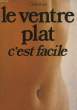
Illustrations de François Fréchet. Classification Dewey : 610-Sciences médicales. Médecine
Un bon dos c'est facile.
broché - 15x23 - 131 pp - 1992 - éditions ALBIN MICHEL, Paris. Illustrations de François FRECHET.
ANTHROLOGIE HISTOIR PHILOSOPHIE LITTERATURE PARADES
Un bon dos c'est facile
Albin Michel 1994 130 pages in-8. 1994. broché. 130 pages. Avec figures en noir
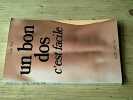
Bon état
Maladies, médecine et pharmacopée populaire d'hier en Uzège et Vivarais
Cercle de l'Amitié / Diffusion Simone Sudre, 1983, in-8 br. (14,5 x 21), 202 p., un dessin, éraflure sur la couverture, intérieur propre, bon état.
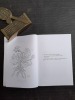
"Ce que j’ai désiré faire, c’est partager avec mon lecteur des notes originales, prises sur des textes nombreux, qui m’ont fait parfois sourire, parfois frémir, et sont un témoignage de l’extrême variété des moyens auxquels les hommes de notre province ont fait appel pour soulager leurs maux. Entendons-nous bien ! Je n’ai pas écrit cet ouvrage avec le souci de suivre la mode des poutres apparentes, des potées campagnardes et du gestuel paysan. Je n’ai pas voulu, non plus, dresser une nomenclature de la pharmacopée végétale traditionnelle ; de nombreux ouvrages récents, concernant les plantes médicinales, vous apprendront que le tilleul est un calmant (ce qui n’est pas vrai pour toutes les personnes), que la menthe est un digestif, et vous y découvrirez les vieilles formules transmises de génération en génération, qui sont souvent les mêmes, d’ailleurs, du nord au sud de la France".
Etude sur le dictionnaire basque.
1867 Saint-Etienne, Théolier, 1883, in 8° broché, 48 pages ; couverture imprimée (légèrement fanée).
Fermeture du 1er au 23 Août

Phone number : 04 77 32 63 69
LA GYMNASTIQUE RAISONNEE MOYEN INFAILLIBLE DE PREVENIR LES MALADIES ET DE PROLONGER L EXISTENCE.
HACHETTE.. 1880. In-12. Cartonnage d'éditeurs. Etat passable, Couv. défraîchie, Dos fané, Fortes mouillures. 356 pages. Nombreuses illustrations en noir et blanc dans le texte et hors texte.. . . . Classification Dewey : 610-Sciences médicales. Médecine
Classification Dewey : 610-Sciences médicales. Médecine
I SANTI NELLA STORIA DELLA MEDICINA
Roma Casa Editrice "mediterranea" Della "libreria Cattolica internazionale" 1937 grand et fort In-8 Broché Satisfaisant
Couverture illustrée, imprimée en marron, très légèrement défraichie ; ouvrage à toutes marges, papier un peu jauni sur les tranches débordant parfois vers les marges ; 605 ; illustrations HT ; ouvrage en italien ; Quelques notes marginales au crayon.
Pour le centenaire de la géométrie non euclidienne
Imprimerie & éditions 'Coni' | Buenos Aires 1931 | 17 x 26.50 cm | broché
Edition originale. Ouvrage illustré de photographies, quelques annotations au crayon de papier. - Photographies et détails sur www.Edition-Originale.com -
ENSEIGNEMENT DESTINE A LA FORMATION DES CHEFS DE CENTRE DE TRANSFUSION SANGUINE - LA MESURE DE LA MASSE SANGUINE.
CENTRE NATIONAL DE TRANSFUSION SANGUINE. NON DATE. In-8. Broché. Etat d'usage, Couv. convenable, Agraffes rouillées, Intérieur acceptable. Un fascicule de 16 pages agrafées - petite annotation sur le 1er plat - nombreuses phrases soulignées et quelques mots entourés au stylo bleu à l'intérieur du fascicule sans conséquence sur la lecture.. . . . Classification Dewey : 610-Sciences médicales. Médecine
Classification Dewey : 610-Sciences médicales. Médecine
LA METHYL-ERGOBASINE MEDICAMENT DE CHOIX DES HEMORRAGIES DE LA DELIVRANCE. (LA MEDECINE, NOVEMBRE 1956)
AU BUREAU DE LA REVUE. 1956. In-8. Broché. Bon état, Couv. convenable, Dos satisfaisant, Intérieur frais. Article de 8 pages.. . . . Classification Dewey : 610-Sciences médicales. Médecine
Classification Dewey : 610-Sciences médicales. Médecine
LES CAHIERS SANDOZ n°12 : morsures et piqures d'animaux venimeux terrestres
SANDOZ EDITIONS. SEPTEMBRE 1968. In-8. Broché. Bon état, Couv. convenable, Dos satisfaisant, Intérieur frais. 83 pages. Quelques illustrations en couleur dans le texte.. . . . Classification Dewey : 610-Sciences médicales. Médecine
Classification Dewey : 610-Sciences médicales. Médecine
Biochimie medicale - 2 - Metabolismes et regulations
Masson, "Collection Abreges de medecine", 1981. Format 13x21 cm, broche, 344 pages. Bon etat, petites traces d'usage sur un livre d'occasion.
HISTOIRES DE CHASSE EN RHUMATOLOGIE
LABORATOIRES CASSENE. NON DATE. In-8. Broché. Etat d'usage, Couv. légèrement passée, Dos satisfaisant, Intérieur frais. 76 pages. Premier plat illustré en couleurs. Couverture rempliée. Nombreuses photos noir et blanc, dans et hors texte.. . . . Classification Dewey : 610-Sciences médicales. Médecine
Préface du Professeur de Sèze. Classification Dewey : 610-Sciences médicales. Médecine
LES SYNDROMES OPTO-CHIASMATIQUES
MASSON. 1979. In-8. Cartonnage d'éditeurs. Bon état, Couv. convenable, Dos satisfaisant, Intérieur frais. 196 pages avec de nombreuses photos.. . . . Classification Dewey : 610-Sciences médicales. Médecine
La region opto-chiasmatique. Sémiologie des syndromes opto-chiasmatiques. Etiologie des syndromes opto-chiasmatiques. Classification Dewey : 610-Sciences médicales. Médecine

