 Write to the booksellers
-
Type
Autograph (3)
Book (36989)
Engraving (6)
Magazine (540)
Manuscript (3)
Music sheets (109)
Old papers (5)
Photographs (69)
Posters (3)
-
Latest
Last 24h (14)
Last 3 days (10)
Last month (73)
Last week (10)
-
Language
Dutch (9)
English (24)
French (37648)
German (8)
Greek (1)
Italian (3)
Latin (26)
Polish (1)
Portuguese (1)
Russian (1)
Spanish (5)
-
Century
16th (65)
17th (191)
18th (988)
19th (4015)
20th (17603)
21st (1901)
-
Countries
Belgium (1264)
Brazil (11)
Canada (60)
China (5)
Côte d'Ivoire (72)
Denmark (653)
France (32286)
Germany (11)
Greece (6)
Italy (3)
Netherlands (2)
Switzerland (3354)
-
Syndicate
ALAC (59)
CLAM (19)
CLAQ (56)
CNE (26)
ILAB (23666)
NVVA (2119)
SLACES (2119)
SLAM (20287)
SNCAO (180)
PSYCHOVILLE
EDITIONS J'AI LU. 1998. In-8. Broché. Bon état, Couv. convenable, Dos satisfaisant, Intérieur frais. 371 pages.. . . . Classification Dewey : 610-Sciences médicales. Médecine
Traduit de l'anglais par François Thibaux. Classification Dewey : 610-Sciences médicales. Médecine

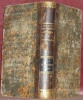
Traité de Matière Médicale et de Thérapeutique appliquée à chaque maladie en particulier. Tome premier: Matière Médicale.
Paris, Germer Baillière 1843, 225x130mm, VIII- 628pages, reliure demi-basane. Plats papier marbré. Etiquette d’auteur, titre et ornementation dorés au dos. Intérieur propre, quelques rousseurs marginales. Dos et charnières frottés, par endroits durement. Bon état.
Pour un paiement via PayPal, veuillez nous en faire la demande et nous vous enverrons une facture PayPal
Voyages au fond des mers, ou trente ans d'aventures sous-marines
Editions France Empire Broché 1974 Grand in-12 carré broché (15 x 20 cm),broché avec rabats, couverture illustrée en couleurs, 222 pp., deux cahiers d'illustrations noir et blanc ; l'ouvrage est équipé d'un protège-livre, pliures au dos incurvé, coiffes et bords frottés, plats défraîchis, ex-libris et notes manuscrites en 1ère garde, assez bon état. Livraison a domicile (La Poste) ou en Mondial Relay sur simple demande.

GUIDE DE CARDIOLOGIE DU SPORT
BESINS-ISCOVESCO. 1976. In-4. Cartonnage d'éditeurs. Etat d'usage, Couv. convenable, Dos satisfaisant, Intérieur frais. 157 pages. Jaquette illustrée en couleurs, légèrement passée. Quelques illustrations en couleurs et noir et blanc dans et hors texte.. Avec Jaquette. . . Classification Dewey : 610-Sciences médicales. Médecine
Classification Dewey : 610-Sciences médicales. Médecine
Precis d'immunologie - Tome I - Immunologie generale
Editions Heures de France, 1973. Format 14x22 cm, reliure skyvertex rouge, 331 pages. Bon etat.

HIERONYMI FRACASTORII VERONENSIS OPERUM. Pars prior - pars posterior
Genève Samuelem Crispinum 1621 in 12 1 volume relié demi basane havane, dos lisse, filets noirs à froid, (reliure du XIXème), [15] 657 pages, [7] 235 pages [2], et 95 pages, nombreuses figures scientifiques dans le texte, quelques petites rousseurs et trace claire de mouillure ancienne, surtout visible sur la troisème partie. Ex-libris Alph. Ménard. Fracastori Jérôme, médecin poète et astronome italien, né à Vérone en 1483, mort en 1553. Bon exemplaire
Bon Couverture rigide
Syphilis, sive morbus gallicus. - [THE RAREST AND MOST IMPORTANT EDITION OF THE SYPHILIS-POEM]
Roma, Apud Antonium Bladum Asulanum (on colophon), 1531, mense Septembri. 4to. Sown, uncut and unbound. Title-page and a few other leaves with a bit of minor brownspotting" overall a very nice and well-preserved copy of this beautifully printed, extremely scarce work. Two quires with loose leaves. Floriated large initial at beginning. [32] ff. (being title-page, 29 ff. text, 1 f. errata, 1 f. blank).
The exceedingly scarce second edition (the ""Rome text"") of ""[t]he most famous of all medical poems"" (Garrison & Morton), the poem which gave to the disease syphilis its name, being the most important edition of the work, the first complete edition (with the two lines of the first book printed for the first time - not found in any other contemporary editions of the work), the only authoritative version of the text to appear contemporarily, and by far the rarest edition - with only four known copies at the time of the official bibliography (Baumgartner and Fulton, 1935) (whereas the first edition from the year before, 1530, was known in 30 copies) - our copy also with the final blank leaf (H4), ""not preserved in any copy examined"" (Baumgartner & Fulton, p. 38).""The edition published at Rome (no. 2) in the following year is a finer piece of printing, AND IT IS EVIDENTLY A MUCH RARER WORK SINCE ONLY FOUR COPIES HAVE BEEN TRACED, WHILE AT LEAST 30 COPIES OF THE VERONA EDITION (i.e. the first edition) ARE KNOWN."" (Baumgartner & Fulton, p. 37). Apart from the work itself being of the greatest impact on the history of medicine, giving to Syphilis its name and epitomizing contemporary knowledge of the illness, and the author being one of the most renowned physicians of the Renaissance, being compared in scope and excellence to Leonardo da Vinci, the present work in the present second edition has yet another feature, apart from its utmost scarcity, which contributes to its excellence"" it is printed by the excellent Italian printer Antonio Blado, whose works are scarce and very sought after.""Textually, as well as typographically, this is the most important edition of Fracastoro's poem, since, unlike those which follow, it bears evidence of having been supervised by Fracastoro himself, the two lines which had been omitted from Bk. I of the Verona edition being here included (verses 1 and 2 on leaf C2b) in exactly the form in which they were written on the vellum copy of the 1530 edition mentioned above (see end of note)... Among his other achievements in typography Antonio Blado can claim the distinction of having issued the most beautiful edition of Fracastoro's poem of any of the sixteenth century. The format is larger than that of the Verona edition and the fount of large italic type seems particularly well suited to Fracastoro's even lined verses. As with the other editions of this period the capitals are in Roman throughout"" the ornamental capital (Q) at the beginning of Bk. I is particularly well executed. Bks II and II have spaces at the beginning for an illuminated initial.THE BOOKS OF ANTONIO BLADO ARE APPARENTLY AS RARE AS THEY ARE EXCELLENT, AND THEY HAVE LONG BEEN SOUGHT AFTER BY ITALIAN COLLECTORS. Blado was born in 1490 at Asloa in northern Italy. In 1515 Blado settled in Rome where he remained until his death in 1567. He was a bold and original printer, who, as Fumagelli points out, almost invariably undertook new things, never reprinting classics, and only occasionally , as in the case of Fracastoro's poem, reprinting the work of a contemporary. In 1532 he issued the first edition of Machiavelli's ""Il Principe"", and in 1549 he became official printer to the Papal See..."" (Baumgartner & Fulton, p. 39).""Girolamo Fracastoro (1484-1553), a Veronese of thick-set, hirsute appearance and jovial mien, who practiced in the Lago di Garda region, was at once a physician, poet, physicist, geologist, astronomer, and pathologist, and shares with Leonardo da Vinci the honour of being the first geologist to see fossil remains in the true light (1530). He was also the first scientist to refer to the magnetic poles of the earth (1543). His medical fame rests upon that most celebrated of medical poems, ""Syphilis sive Moribus Gallicus (Venice, 1530), which sums up the contemporary dietetic and therapeutic knowledge of the time, recognizes a venereal cause, and gave the disease its present name..."" (Garrison, History of Medicine, p. 233).The magnificent medical poem is about the main character, a young shepherd called ""Syphilis"", who induces the people to forsake the Sun God, who in return bestows upon man a new, horrible plague, which Fracastoro names after the shepherd. ""It epitomized contemporary knowledge of syphilis, gave to it its present name, and recognized a venereal cause. Fracastorius refers to mercury as a remedy."" (Garrison and Morton).The work must be described as seminal, and its great influence and importance has continued throughout centuries. As stated in the bibliography by Baumgartner and Fulton, which is devoted exclusively to the poem, ""[t]he full extent of the influence exerted by a work which has received such wide recognition cannot be adequately estimated without searching bibliographical analysis"", and thus they have traced 100 editions of Fracastoro's Syphilis-poem, including translations into six languages. 18 of these appeared in the 16th century, but it is curious to see, how the work continues to resurface up until the 20th century. Almost 200 years after the work originally appeared, Italy witnessed a great revival of Fracastoro and his poem, and the first Italian translation appeared in 1731, with a preface by the great Enlightenment philosopher Giambattista Vico, and by 1739 five Italian editions had appeared. Another revival of the work took place as late as the 20th century, with four new English translations appearing between 1928 and 1935.""Le poème de Fracastor sur la Syphilis restera toujours un chef-d'oeuvre, parce que le pinceau est large, l'imagination hardie, la versification harmonieuse, et que le poète agrandit son sujet ingrat en remontant aux cases celestas, en montant la main des Dieux s'appersantissant pour punir la terre"" la fiction, surtout, qu'il a imagine pour retrace la découverte du mercure, est un tableau digne des plus grands maîtres."" (Achille Chéreau, Le Parnasse medical francais, 1874, p. xv). Baumgartner & Fulton, A Bibliography of the Poem of Syphilis sive Moribus Gallicus by Girolamo Fracastoro of Verona: no. 2 (our copy follows exactly the collation given here - and also has the final blank leaf mentioned but not found in any of the examined copies).Garrison and Morton: 2364. ""There is every reason to believe that the first edition of 1530 was personally supervised by Fracastoro as it was passing through the press. The printer, however, omitted two verses in the first book, which have been inserted in manuscript, apparently by Fracastoro himself, in the copy on vellum now preserved in the Bibliothèque Nationale. As these two lines are included in the Rome edition of the following year, it is likely that Fracastoro also supervised this, the second edition, and that this should be regarded as the authoritative text, since there is no evidence of textual changes in seven subsequent editions during his life.""
De Sympathia et Antipathia rerum. Liber unus. De Contagione et Contagionis Morbis et Curatione. Libri III. - [FOUNDING MODERN EPIDEMIOLOGY]
Venice, 1546. 4to. Contemporary full vellum. Neatly recased, endpapers renewed. A (mostly fairly faint) damp stain throughout and a marginal worm tract, far from affecting text. Inner blank margin of title-page re-enforced. Some contemporary marginal annotations. Woodcut title-vignette and woodcut printer's device to final blank verso. (4), 76, (4) ff.
Scarce first edition of this milestone in the history of medicine, the foundational work of modern epidemiology, which was the first to state the germ theory of infection.This epochal work ""establishes Fracastoro as one of the foremost scientists of all time, and earns him the title of founder of modern epidemiology. ""De contagione"" contains the first scientifically reasoned statement of the true nature of infection, contagion, and the germ theory of disease and is the foundation of all modern views on the nature of infectuous diseases... Fracastoro's influence is also clearly reflected in the work of such modern scientists as Louis Pasteur, Joseph Lister, and Robert Koch as they broadened and furthered man's knowledge of infectuous diseases."" (Heirs of Hippocrates). ""This book represents a landmark in the development of our knowledge of infectuous disease. Fracastorus was the first to state the germ theory of infection. He recognized typhus and suggested the contagiousness of tuberculosis. Haeser describes him as the ""founder of scientific epidemology""."" (Garrison & Morton).Faracstoro's theories on contagions and epidemics were far ahead of their time, but they were still widely respected. The magnificent theories here constitute the first correct illustrations of how contagions might spread: by simple contact as in scabies and leprosy"" by ""fomities"" or inanimate carriers, such as clothing or sheets" and at a distance, without direct contact or carriers, as in plague, smallpox, etc., attributing their transmission to the action of the air - and his ideas on the spreading and controlling of epidemics were of vital importance to Renaissance man and to the further development of our knowledge within this field. The work furthermore gives the first accurate account of typhys as well as several other contageous diseases, together with the affirmation of the contagiousness of tuberculosis. With this work, Fracastoro was also the first to enunciate the modern doctrine of the specific characters and infectious nature of fevers. Heirs of Hippocrates: 101 G&M: 2528 Wellcome: 2393 Govi: 83.
Syphilis ou le Mal vénérien
Paris, Jacques-François Quillau, 1753. In-16, [2]-200-[2] pp., basane fauve, filet à froid en encadrement sur les plats, dos long à a grotesque, tranches rougies (épidermures, 1 mors fendu, petites taches et rousseurs).
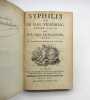
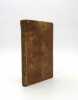
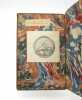
Édition originale de la traduction annotée et éditée par Philippe Macquer et Jacques Lacombe. L'ouvrage est orné d'une jolie vignette au titre gravée par Baquoy d'après De Sève. Il contient une vie de Fracastor, le poème en latin en regard de la traduction française et de nombreuses notes. Fracastor est l'inventeur du terme syphilis qui apparaît pour la première fois avec son ouvrage Syphilis sive morbus gallicus (titre originale en latin du présent ouvrage), paru pour la première fois en 1530. Complet de son erratum. Ex-libris imprimé et ex-libris gravé du Dr J. Sottas, ex-libris manuscrit Hauserligote [?]. Voir photographie(s) / See picture(s) * Membre du SLAM et de la LILA / ILAB Member. La librairie est ouverte du lundi au vendredi de 14h à 19h. Merci de nous prévenir avant de passer,certains de nos livres étant entreposés dans une réserve.
LA COMMUNICATION - MODALITES, TECHNOLOGIES ET SYMBOLES.
ARNETTE. 1991. In-4. Relié. Bon état, Couv. convenable, Dos satisfaisant, Intérieur frais. XX pages + 471 pages.. . . . Classification Dewey : 610-Sciences médicales. Médecine
Préface de P. Pialoux. Classification Dewey : 610-Sciences médicales. Médecine
Mediator 150 mg - Sous-titre censuré.
Editions Dialogues. 2010. In-8. Broché. Etat d'usage, Coins frottés, Dos satisfaisant, Papier jauni. 148 pages.. . . . Classification Dewey : 614-Santé publique, médecine préventive

Postface de Rony Brauman. Classification Dewey : 614-Santé publique, médecine préventive
Frachon Irène - Rony Brauman (postface)
Reference : RO20274463
(2010)
ISBN : 2918135178
Mediator 150 mg - Sous-titre censuré - Collection Ouverture
"Editions Dialogues. 2010. In-8. Broché. Bon état, Couv. convenable, Dos satisfaisant, Intérieur frais. 148 pages - annotation en page de garde - ""Acces gratuit au fichier numerique inclus"". . . . Classification Dewey : 614-Santé publique, médecine préventive"

Classification Dewey : 614-Santé publique, médecine préventive
DISSERTATION SUR LA CHLOROSE, OU LES PALES COULEURS DES JEUNES FILLES
Montpellier Jean Martel Ainé 1816 in 4 (24,5x20) 1 fascicule broché, sous couverture muette en papier marbré ancien, 18 pages [1]. Présentée et publiquement soutenu à la Faculté de Médecine de Montpellier, le 10 mai 1816. Pour obtenir le titre de docteur en médecine. Fradin des Delinières, Henri-Modeste, de Montcoutant, Département des Deux-Sévres. Bachelier ès-lettres, ex-Officier de santé de la Marine au Port de Rochefort, ex-Chirurgien de 2e classe au 82e régiment d'infanterie de ligne,ex-Chirurgien-Major des troupes destinées pour les îles de Cayenne et du Sénégal. Bon exemplaire
Très bon
Die Empfängnis-Verrhütung. Biologische Grundlagen Technik und Indikationen Für Ärzte bearb.
Enke, 1932, gr. in-8vo, 212 S., Mit 71 Abbildungen, Original-Pappband.

(SLACES, NVVA)
Phone number : 41 (0)26 3223808
FRAGA DE AZEVEDO, J. - DA COSTA MOURAO, M. - CASTRO SALAZAR, J. M. de.
Reference : 42404
Estudos, ensaios e documentos 91. A erradicaçao da Glossina Palpalis Palpalis da ilha do principe. 1956 - 1958. The eradication of Glossina Palpalis Palpalis from the principe island. 1956 - 1958.
Lisboa, Ministerio do Ultramar 1962, 245x175mm, 181páginas, cartonagem. Bom exemplar.

14 placas p/b, Pour un paiement via PayPal, veuillez nous en faire la demande et nous vous enverrons une facture PayPal
Partition de la chanson : Sérénade au pharmacien
Partitions sur le Métier,Partitions sur la Santé et médecine Répertoire Français 1900 approx.
Bon état Petit format
[ Waléry] - Fragson Harry - Fragson Harry,Marinier Paul - Lelièvre Léo,Briollet
Reference : 10361
(1912)
Partition de la chanson : Mes bons docteurs Chansonnette
Partitions sur Paris Paname,Partitions sur la Santé et médecine Bosc 1912
Bon état Petit format
PHYSIOTHERAPIE 4/ MECANOTHERAPIE REEDUCATION, SPORTS, METHODE BIER, HYDROTHERAPIE
J.-B. BAILLIERE. 1909. In-12. Relié. Bon état, Couv. convenable, Dos satisfaisant, Intérieur frais. 404 pages. Nombreuses figures et photos en noir et blanc, dans le texte et hors texte. Tranches vertes.. . . . Classification Dewey : 610-Sciences médicales. Médecine
Bibliothèque de thérapeutique. Classification Dewey : 610-Sciences médicales. Médecine
Traité de Gymnastique, de développement et d'application
à l'usage des Sociétés de Gymnastique et de Sports. Avec 225 figures dans le texte. Paris. Octave Dion. 1929. In-8 (130 x 181mm) dos basane noire à 5 nerfs, titre or, plats et gardes marbrés dans les tons de vert, XVI, 394 pages. Bel exemplaire en excellent état.
Principes du diagnostic gynécologique. Livre 1.
Paris, Felix Alcan, 1901. In-12 broché, IV-348 pp. Avec figures dans le texte. De l'interrogatoire - De l'examen proprement dit - Technique particulière de l'examen combiné - Moyens auxiliaires de l'examen combiné.
PASTEUR, l' oeuvre, l'homme, le savant - une page d'histoire du XIX è siècle
PARIS, Lib. Vuibert - SD, vers 1930 - In-8 broché, couverture illustrée - Nombreuses illustrations NB, certaines PP - rousseurs -160 pages
Cnformément à nos conditions générales de vente :Les frais de port sont affichés à titre indicatif. Il se peut que nous devions vous contacter pour vous informer du coût de laffranchissement supplémentaire en fonction du poids et du nombre de livres, surtout pour les envois internationaux Cependant vu l'augmentation des tarifs postaux à l'internationale, nous pouvons expédier les ouvrages en point relais MONDIAL RELAY pour les pays suivants : Allemagne, Autriche, Belgique, Espagne, Italie, Luxembourg, Pays-Bas, Pologne, et Portugal. Merci de nous indiquer en retour le point relais choisi ainsi que votre numéro de téléphone mobile & adresse Courriel pour assurer le suivi du colis.N'hésitez pas à nous interroger.In accordance with our general terms and conditions of sale:Shipping costs are displayed for informational purposes only. We may need to contact you to inform you of the additional postage costs depending on the weight and number of books, especially for international shipments.However, given the increase in international postal rates, we can ship books via Mondial Relay to the following countries: Germany, Austria, Belgium, Spain, Italy, Luxembourg, Netherlands, Poland, and Portugal. Please provide us with your chosen Mondial Relay point, as well as your mobile phone number and email address to ensure package tracking.Please feel free to contact us with any questions
N Abrahami Frambesarii veromandui medici regii . Scholae medicae , ad candidatorum examen pro Laurea impetranda subeunduni . Quibus accessit Ambrosiopoea , eodem auctore.
Couverture rigide Lugduni , I Maire , 1647 , in16 cartonnage marbré, pièce de titre mar rouge , ( 5 f) - 276pp Reliure XIXè Langue: Français
Neurosurgery of Infancy and Childhood
Charles C. Thomas 1954 in4. 1954. Cartonné.
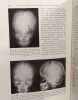
Bon état intérieur propre bonne tenue
LE BAIN DERIVATIF. CENT ANS APRES LOUIS KHUNE...
EDITIONS DU ROCHER. 2004. In-12. Broché. Etat d'usage, Couv. convenable, Dos plié, Intérieur frais. 136 pages. Premier plat illustré en couleurs.. . . . Classification Dewey : 610-Sciences médicales. Médecine
Classification Dewey : 610-Sciences médicales. Médecine
LES BAINS DERIVATIFS
JOUVENCE. 1995. In-8. Broché. Bon état, Couv. convenable, Dos satisfaisant, Intérieur frais. 150 pages. Premier plat illustré en couleurs.. . . . Classification Dewey : 610-Sciences médicales. Médecine
Classification Dewey : 610-Sciences médicales. Médecine

