 Write to the booksellers
-
Type
Autograph (1)
Book (5442)
Magazine (35)
Music sheets (3)
Photographs (8)
-
Latest
Last month (17)
Last week (4)
-
Language
Czech (1)
English (3)
French (5472)
German (11)
Latin (1)
Spanish (1)
-
Century
17th (16)
18th (206)
19th (1165)
20th (2296)
21st (78)
-
Countries
Belgium (352)
Côte d'Ivoire (20)
Denmark (697)
France (4062)
Switzerland (358)
-
Syndicate
CLAM (2)
ILAB (3069)
NVVA (183)
SLACES (183)
SLAM (2164)
SNCAO (48)
Les colloïdes.
Couverture souple. Broché. 290 pages. Couverture légèrement défraîchie. Rousseurs.
Livre. Ed. Gauthier-Villars (Collection : Actualités scientifiques), 1925.
"Mouvement brownien, II : Partie théorique; traité de chimie physique, tome II, chapitre VI; Leçons de chimie physique appliquée à la biologie, XI. Actualités scientifiques et industrielles, 700."
Paris, Hermann, 1938. 17 x 25, 103 pp., 6 figures, 5 tableaux, broché, bon état.
"Suspensions, émulsions; chapitre V du traité de chimie-physique (tome 1); Leçons de chimie physique appliquée à la biologie (V). Actualités scientifiques et industrielles, 129."
Paris, Hermann, 1934. 17 x 25, 45 pp., 4 figures, broché, partiellement non coupé, bon état.
La chimie de la matière vivante. 2e édition.
P., Alcan, 1910, in 12 broché, II-284 pages.
...................... Photos sur demande ...................


Phone number : 04 77 32 63 69
Physique colloïdale et biologie (n° 928) et Chimie colloaïdale et biologie (n°929). Actualités scientifiques et industrielles
Hermann et Cie Actualités scientifiques et industrielles Revue 1942 In-8, (25x16.5 cm), broché, 44 pages pour le n° 928 et 43 pages pour le n° 929, schémas en noir et blanc ; coins à peine écornés, très bon état général. Livraison a domicile (La Poste) ou en Mondial Relay sur simple demande.
Physique colloïdiale et biologie, Conférence faite le 3 octobre 1941
Hermann et Cie, Actualités Scientifiques et Industrielles, 1942 17 x 25, 44 pp., 4 figures, broché, non coupé, Très bon état
Observations sur les EAUX MINERALES de plusieurs province de France faites en l'Académie Royale des Sciences en l'année 1670 & 1671 -- EDITION ORIGINALE
P., Imprimerie Royale, 1675, un volume in 12 relié en pleine basane, dos orné de fers dorés, tranches mouchetées (reliure de l'époque), (coiffe usée, un mors légèrement et partiellement fendu), 203pp., 4 feuillets non chiffrés
---- EDITION ORIGINALE ---- "This work contains many interesting details referring to the CHEMISTRY OF WATERS of various places which are listed and described". (Duveen p. 183) ---- "DU CLOS fut l'un des premiers membres de l'ancienne Académie des sciences qui l'admit dans son sein en 1666. Il devint médecin du roi. Il fut également L'UN DES PREMIERS QUI CHERCHERENT A FONDER LA MATIERE MEDICALE SUR LA CHIMIE EXPERIMENTALE". (Jourdan)**8102/E4
Entretiens sur la chimie et ses applications les plus curieuses
suivis de notions de manipulation et d’analyse chimiques. Mention de 4ème édition. In 8 pleine toile lie de vin de l’éditeur, guirlande dorées sur le premier plat et petit décor doré au deuxième plat, frise à froid en encadrement, décor doré en long au dos, portrait gravé de LAVOISIER, sous serpente, en frontispice. Titre, 388 pages. A. Mame & Cie 1855. Très bon état, pratiquement sans rousseurs.
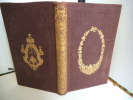
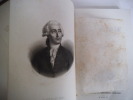
Entretiens sur la chimie et ses applications les plus curieuses suivis de manipulations et d'analyses chimiques.
Couverture souple. Reliure pleine basane 388 pages. Coins légèrement émoussés et quelques épidermures.
Livre. Editions Mame et Cie, 1860.
Entretiens sur la Chimie et ses applications les plus curieuses, suivis de Notions de manipulation et d'analyse chimiques.
Mame, Tours, 1843, gr. in-8vo, frontispice gravé: Portr. de Berthollet + 416 p. + 1 planche gravé: Portrait de Lavoisier, reliure en toile de l'éditeur, dos et plats ornées or.. Dos passé.
(SLACES, NVVA)
Phone number : 41 (0)26 3223808
Entretiens sur LA CHIMIE et ses applications les plus curieuses suivis de notions de manipulation et d'analyse chimique -- BEL EXEMPLAIRE
Tours, Mame, 1848, un volume in 8 relié en pleine basane, dos orné de filets dorés, fers et filets dorés sur les plats (reliure de l'époque), 1 PORTRAIT (de LAVOISIER), (2), 388pp., figures dans le texte
---- BEL EXEMPLAIRE ---- Troisième édition - Exemplaire de prix (Lycée Louis Le Grand) ---- Jean-sylvestre DUCOIN-GIRARDIN, ingénieur, fut professeur de chimie et de physique ---- Des éléments - Etude l'air - De l'eau - Hydrogène - Affinité chimique - Composition des corps - Le charbon ou carbone - De la respiration - Des métaux - Des alcalis - Chimie organique - Organisation des animaux (respiration, nutrition, digestion) - Décomposition des corps - Manipulations chimiques - ETC**18460/1846/o4
Entretiens sur la chimie et ses applications les plus curieuses suivis de notions de manipulation et d'analyses chimiques
Mame et Cie. 1858. In-12. Cartonnage d'éditeurs. Etat d'usage, Coins frottés, Manque en coiffe de tête, Intérieur bon état. 388pages. Coiffe en pied abîmée. Mors frottés. Tâché en tête des des premiers feuillets. Portrait gravé de Berthollet en frontispice (en noir). Portrait en noir de Lavoisier en hors-texte. Ouvrage illustré de quelques figures en noir dans le texte.. . . . Classification Dewey : 540-Chimie et sciences connexes
Classification Dewey : 540-Chimie et sciences connexes
Entretiens sur la Chimie et ses applications les plus curieuses. Suivis de Notions de manipulation et d'analyse chimiques.
1860 Editions Ad Mame et Cie, Imprimeurs-Libraires, Tours, "Bibliothèque de la jeunesse chrétienne" - 1860 - Cinquième édition - In-8, percaline vert foncé, dos richement décoré, pièce de titre, 4 "faux" nerfs - 388 p. - Illustration de Lavoisier en frontispice en N&B hors-texte
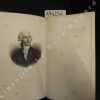
Bon état - Légères rousseurs sur les premières pages - Cartonnage très légèrement frotté
Memoire sur les Barometres lumineux.
(Paris, L'Imprimerie Royale, 1725). 4to. Without wrappers. Extracted from ""Mémoires de l'Academie des Sciences. Année 1723"". Pp. 295-306.
First appearance of Dufay's first work. ""His first academic paper (1723), on the mercurial phosphorus, already displayed the characteristics which distinguished his later work: full command of earlier writings, clear prescriptions for producing the phenomena under study, general rules or regularities of their action, thorough study of possible complications or exceptions, and cautious mechanical explanations of a Cartesian flavor. This ""phosphor"" - the light sometimes visible in the Torricelli space when a barometer is jostled - much perplexed the physicists of the era, primarily because it did not always occur under apparently identical conditions. Dufay found that traces of air or water vapor occasioned the failures, which could be entirely eliminated with a technique of purification taught him by a German glassmaker. He explained the light in terms of Cartesian subtle matter squeezed from the agitated mercury"" although he knew the work of Francis Hauksbee (the elder), he suggested no connection with electricity.""(DSB).
"DUFAY (DU FAY), CHARLES FRANCOIS DE CISTERNAY. - PHOSPHORESCENCE.
Reference : 46595
(1732)
Mémoire sur un grand Nombre de Phosphores nouveaux.
(Paris, L'Imprimerie Royale, 1732). 4to. Without wrappers. Extracted from ""Mémoires de l'Academie des Sciences. Année 1730"". Pp. 524-535.
First appearance of Dufay's importent work on phosphorescence.""Chemists had long been acquainted with a fes minerals like the Bologna stone (BaS) and Balduin's hermetic phosphor (plain CaS) that glowed after exposure to light. Greatmystery surrunded those expensive and supposedly rare substances. Dufay detested mysteries and held as a guiding principle that a given physical property, however bizarre, must be assumed characteristic of a large class of bodies, not of isolated species. He found that almost everything except metals and very hard gems could be made phosphorescent: he depressed the phosphor market by describing his procedure: and he became sensitive to the endless small variations in the physical properties of bodies. 'How many things behave that seemed similar, and how many varieties there are in effects that seemed identical."" (Heilbron ""Electricity in the 17 & 18 Centuries"", p. 251).Another paper attached to Dufay's paper is Charles Pitot ""Reflexions sur le Mouvement des Eaux"". Pp. 536-544 a. 1 folded engraved plate. (Poggendorff II:p. 459).Partington ""A History of Chemistry"" III, p.66
Cours élémentaire sur les propriétés des végétaux et leurs applications à l’alimentation, la médecine, la teinture, l’industrie, etc.
Lausanne - Paris, Librairie Delafontaine - Librairie Meyrueis 1855, 185x115mm, 499pages, reliure demi-basane. Auteur, titre et filets dorés, cuir par endroits froté, reliure de l’époque.
Pour un paiement via PayPal, veuillez nous en faire la demande et nous vous enverrons une facture PayPal
Le mixte et la combinaison chimique. Essai sur l'évolution d'une idée -- EDITION ORIGINALE
P., Naud, 1902, un volume in 8 relié en pleine toile noire, étiquette de titre rouge, (cachets de bibliothèque), (3), 208pp.
---- EDITION ORIGINALE ---- BON EXEMPLAIRE ---- DSB IV pp. 225/233 ---- Des origines de la révolution chimique (le mixte selon les atomistes et les péripatéticiens, la notion de mixte au XVIIe siècle, au XVIIIe siècle jusqu'à la révolution chimique : l'école newtonienne, l'école empirique) - De la révolution chimique jusqu'à nos jours - ETC**18640/1864/o6de
THERMODYNAMIQUE ET CHIMIE - LECONS ELEMENTAIRES A L'USAGE DES CHIMISTES.
A. HERMANN. 1902. In-4. Relié demi-cuir. Bon état, Couv. convenable, Dos satisfaisant, Intérieur frais. IX+496 pages. Tampon sur la page de titre et la page 25. Quelques figures en noir et blanc dans texte.. . . . Classification Dewey : 540-Chimie et sciences connexes
Classification Dewey : 540-Chimie et sciences connexes
UNE NOUVELLE THEORIE DU MONDE INORGANIQUE
Revue des Questions Scientifiques. 1893. In-12. Broché. Etat d'usage, Couv. légèrement passée, Dos abîmé, Intérieur frais. 48 pages.. . . . Classification Dewey : 540-Chimie et sciences connexes
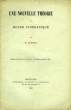
Extrait de la 'Revue des Questions scientifiques', jan. 1893. Classification Dewey : 540-Chimie et sciences connexes
UNE SCIENCE NOUVELLE, LA CHIMIE PHYSIQUE
Revue Philomathique de Bordeaux et du Sud-Ouest. 1899. In-8. Broché. Etat d'usage, Couv. légèrement passée, Dos abîmé, Intérieur bon état. 38 pages. Plats et cahiers détachés.. . . . Classification Dewey : 540-Chimie et sciences connexes
Extrait de la 'Revue Philomathique de Bordeaux et du Sud-Ouest', 2e année, n° 5, 1er mai et n° 6, 1er juin 1899. Classification Dewey : 540-Chimie et sciences connexes
Thermodynamique et chimie
P., Hermann, 1910, un volume in 8, broché, couverture imprimée, (défraîchie, dos cassé, cachets de bibliothèque), 12pp., 579pp.
---- Seconde édition REDONDUE ET CONSIDERABLEMENT AUGMENTEE ---- "ONE OF THE FOUNDERS OF MODERN PHYSICAL CHEMISTRY"". (DSB) ---- "DUHEM began his scientific work with the generalization and application of thermodynamics... Among the subjects treated systematically were thermoelectricity, pyroelectricity... His success with problems in the period 1884/1900 rank him with J.H. Van't Hoff, Ostwald, Arrhénius and H. Le Chatelier as one of the founders of modern physical chemistry. DUHEM's results are of course an extension and elaboration of the pioneer work of Gibbs and Helmholtz. But DUHEM's elaboration, explanation and application of their suggestions in his Traité de mécanique chimique and Thermodynamique et chimie provided a whole generation of french physicists and chemists with their knowledge of chemical thermodynamics... DUHEM's scientific ideas had a major influence on french physical chemistry and particularly on HADAMARD, JOUGUET and the COSSERATS. He was a pioneer in attempting to prove rigorous general theorems about thermodynamics, physical chemistry, Navier-Stokes fluids, finite elasticity and wave propagation. His purely scientific investigations and results in these fields are important, useful and significant today...". (DSB IV pp. 225/233)
Notice Sur Les Instruments De Précision Appliqués à L'oeunologie
Paris Dujardin & Salleron 1928 Fort In-8 1096 pp Reste la bible dans le genre. 6 ème édition, papier jauni
Médiocre Reliure Éditeur Fatiguée
Notice Sur Les Instruments De Précision Appliqués à L'oeunologie
Paris Dujardin & Salleron 1905 Fort In-8 543 pp. 4 ème édition, papier correct
Correct Reliure Éditeur Souple
Recherches sur les lois de dilation des solides, des liquides et des fluides élastiques, et sur la mesure exacte des temperatures.
(Paris, Crochard), 1816. Without wrappers. In ""Annales de Chimie et de Physique"", Tome II, 2. Series, Cahier Juillet 1816. Pp. (217-) 328. Entire issue offered). The paper of Dulong & Petit: pp. 240-263. 5 leaves with a stamp in upper right corner. Some scattered brownspots.
First apperance of this, their (first) joint paper, which initiated the recheches leading to the the ""Law of Dulong and Petit"", the connection between atomic weight and atomic heat.""In 1815 Dulong’s famous collaboration with the mathematical physicist Alexis Thérèse Petit began"" it produced three important memoirs on heat (of which this is the first). The best-known part of this work is the statement of the law of constant atomic heats that bears their names, .... They began with the fundamental problem of measuring quantities of heat, which involved a critical analysis of thermometric scales. In 1804-1805 Gay-Lussac had carried out a comparison of mercury and air thermometers between 0°C. and 100°C. Dulong and Petit extended the range of comparison up to 300°C. and found an increasing discrepancy between the two scales at higher temperatures."" (DSB).
"DULONG, (PIERRE) & (ALEXIS) PETIT. - THE ""LAW OF DULONG AND PETIT"" THE CONNECTION BETWEEN ATOMIC WEIGHT AND ATOMIC HEAT ESTABLISHED.
Reference : 47356
(1817)
Recherches Sur la Mesure des Températures et sur les Lois de la communication de la chaleur. Introduction. (+) Suite des Recherches sur la Mesure des Témperatures..... Seconde Partie. Des Lois du Refroidissement. (+) Suite Des Recherches sur la Mesure...
Paris, Crochard, 1817 a. 1819. Bound in one contemp hcloth (vol. 7) and 1 issue without wrappers. In: ""Annales de Chimie et de Physique, Par MM. Gay-Lussac et Arago."", Vol. 7 and vol. 10, Cahier 4. - 448 pp. a. 2 engraved plates (entire vol. 7 offered) + pp. 337-443 a. 2 engraved plate (entire issue offered, Cahier 4 of vol. 10 with htitle to the vol.). Dulon & Petit's papers: pp. 113-154, pp. 225-264, pp. 337-367 and Vol. X, pp. 395-413.
First edition of these 4 groundbreaking papers with the first appearance in print of THE LAW OF THE CONSTANCY OF ATOMIC HEAT, i.e. the specific heat multiplied by the atomic weight. The insight had far reaching implications as it showed a new way to Dalton's atomic theory. ""In 1815 Dulong's famous collaboration with the mathematical physicist Alexis Therese Petit began"" it produced three importent memoirs on heat."" (the papers offered here). The 2 first was awarded the price of the Academy in 1818 and was leading up to the last paper in which they formulted the ""Law of the Constancy of product of atomic weight and specific heat""""They (Dulang and Petit) were concerned with the specific heats of elements"" but if these elements really existed as atoms, it seemed possible that there might be a connection between trhe weight of the atom and the amount of heat aquired to raise the temperature of a given weight of that element by a certain amount."" (DSB). ""One of his (Dulong) most importent researches was made in collaboration with Alexis Thérese Petit (1791-1820), with whom he announced the law that the product of atomic weight and specific heat is constant (1819). It rendered a distinct service in fixing atomic weights, especially when these were in question, and enabled Berzelius and later Cannizzaro to arrive at correct atomic weights and the correct number of atoms in molecules."" (Leicester & Klickstein, A source Book in Chemistry 1400-1900, p. 273). Parkinson, Breakthroughs (1819).

