 Write to the booksellers
-
Type
Autograph (1)
Book (5362)
Magazine (35)
Music sheets (3)
Photographs (8)
-
Latest
Last 24h (1)
Last 3 days (3)
Last month (17)
Last week (2)
-
Language
Czech (1)
English (3)
French (5392)
German (11)
Latin (1)
Spanish (1)
-
Century
17th (16)
18th (201)
19th (1152)
20th (2272)
21st (79)
-
Countries
Belgium (352)
Côte d'Ivoire (20)
Denmark (697)
France (3982)
Switzerland (358)
-
Syndicate
CLAM (2)
ILAB (3024)
NVVA (183)
SLACES (183)
SLAM (2119)
SNCAO (48)
Les nouvelles conceptions de la matière et de l'atome
P., Doin, 1923, un volume in 8 relié en cartonnage éditeur, (cachets de bibliothèque), (2), 314pp.
---- EDITION ORIGINALE ---- Théorie électromagnétique et électronique - La théorie de la relativité et la masse - Les rayons X et le nombre atomique - La radioactivité et l'isotopie - Atome de Rutherford et la transmutation des éléments - L'atome de Bohr et la théorie des quanta - la constitution des atomes complexes et les rayons x - Constitution atomique et affinité chimique**513/M7DE
Matière et atomes
P., Doin, 1932, un volume in 8, broché, couverture imprimée, (cachets de bibliothèque), 324pp.
---- Deuxième édition revue et augmentée des Nouvelles conceptions de la matière et de l'atome ---- La théorie classique de la lumière et de l'électron - Théorie de la relativité et la masse - Les rayons x et le nombre atomique - La radioactivité et l'isotopie - L'atome de Rutherford et la transmutation des éléments - L'atome de Bohr et la théorie des quanta - Atomes complexes ; émission des rayons x et affinité chimique - Mécanique ondulatoire**514/M7DE
Précis de chimie physique
Gauthier-Villars, 1939 16,5 x 25, 498 pp., 133 figures, broché, Etat moyen - nombreux soulignages crayon bleu
Précis de chimie physique.
Gauthier-Villars, 1939, in-8°, 498 pp, reliure demi-toile époque, couv. conservée, dos uniformément passé
Désormais les frais d'envoi sont de 6 € seulement pour les livres jusqu'à 1 kg (colissimo suivi), pour la France métropolitaine.
Précis de Chimie Physique. Nouveau Tirage.
Paris, Gauthier-Villars 1945, 250x165mm, VI- 498pages, broché. Cachet de possesseur sur la couverture.
figures n/b, Pour un paiement via PayPal, veuillez nous en faire la demande et nous vous enverrons une facture PayPal
Les petites chroniques de la science. Cinquième année
1866 Editions Garnier Frères, Libraires-Editeurs, Paris - 1866 - In-12, broché - 488 pages
Assez bon état - Couverture légèrement défraichie (salissures, légers frottements) - Plis de lecture au dos avec petite déchirure en bas du premier "mors" - Brochage fragile
LE NEWTON DE LA JEUNESSE OU ELEMENTS DE PHISIQUE ET DE CHIMIE A L'USAGE DE LA JEUNESSE.
Format in-16 (14 × 9 cm), 6 volumes regroupés en 3 parties, reliure d’époque plein veau marbré, dos ornés, tranches mouchetées rouges, dos lisses, pièces de titre dorées ainsi que les tomaisons, intérieurs frais. Ensemble complet de ses planches. Brunot - Labbe - Paris.
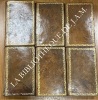
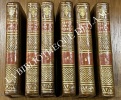
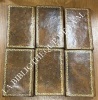
Manuel pédagogique de vulgarisation scientifique newtonienne destiné à la jeunesse : optique (décomposition de la lumière, prismes), mécanique (machines simples, leviers, poulies), gravitation, astronomie et éléments de chimie. Texte clair, progressif et illustré, typique des ouvrages éducatifs du Premier Empire. 12 gravures sur cuivre ou bois : diagrammes d’expériences, schémas de machines, orbites planétaires, prismes, appareils chimiques – numérotées, parfois pliées ou hors-texte.
La conduite du rucher
Librairie payot in8. Sans date. Relié.
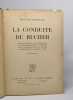
protection plastique réparation antérieure au scotch tranches fânées intérieur assez propre bonne tenue
De L'emploi Du Chalumeau Dans Les Analyses Chimiques et Les Déterminations Minéralogiques
Paris Méquignon-Marvis 1821 In-8 VI + 4 planches, originale de la traduction du Suédois de F. Fresnel
Correct Demi Basane
Recherches sur un nouveau corps minéral trouvé dans le soufre fabrique à Fahlun (+) Suite Des Recherches sur un nouveau corps mineral trouvé dans le soufre fabrique à Fahlun (+) Suite Des Recherches...(3 papers). - [THE DISCOVERY OF SELENIUM]
(Paris, Crochard, 1818). Without wrappers as extracted from ""Annales de Chimie et de Physique. Par Guay-Lussac et Arago"", Tome 9, pp. 160-80, pp. 225--267 and pp. 337-365.
First printing of these 3 papers which represents Berzelius's discovery of Selenium. Berzelius ""became a partner together with his friends Gahn and Palmstedt in the ownership of a factory near Gripsholm castle, manufacturing sulforic acid, vinegar, soap and white lead.During the summer of 1817 Berzelius spent an entire month supervising the manufacture. This lead to the discovery of a new elemen, Selenium, which he found in the form of a golden-brown sediment in the mud from the bottom of the lead chamber. This was an era when new elements could still be ""scrabed of the walls....what had previously been known as ""Swedish tellurium ore"" was now found to be selenide of copper and silver with a 26 per cent selenium content."" (Jorpes in ""Jac. Berzelius. His Life and Works.p. 61-62)..

Reseanteckningar. Utgifna af Kungl. Svenska Vetenskapsakademien genom H.G. Söderbaum.
Stockholm, Nordstedt & Söner, (1903). Smukt samtidigt hldrbd. med rig rygforgyldning, skindtitler på ryg og pergamentshgørner. (Indbundet af G. Hedberg, Stockholm). XII,(2),430,(1) pp. Farvelitografi som frontispiece., tekstillustrationer og plancher. Helt frisk eksemplar.
Sur la Maniere d'analyser les mines de nickel, et sur une nouvelle combinaison du nickel avec l'arsenic et le soufre.
(Paris, Crochard, 1818). Without wrappers as extracted from ""Annales de Chimie et de Physique, par Gay-Lussac et Arago"", Tome 9, pp. 113-151(misnumbered as 213-251).
First printing, the periodical issue.
Årsberättelser om Vetenskapernas Framsteg, afgivne af Kongl. Vetenskaps-Academiens Embetsmän D. 31. Mars 1823.
Stockholm, J.P. Lindhs Enka, 1823. Samtidigt hldrbd. Rig rygforgyldning samt forgyldte titel-og tomefelter. (2),492,(1) pp.
Om Blåsrörets Användande i Kemien och Mineralogien.
Stockholm, Henr. A. Nordström, 1820. Recent hcloth. (10),302,(2) pp. and 4 folded engraved plates. Very few brownspots.
First edition of Berzelius' important work on the Blowpipe, through which it became the most importent instrument of the chemist. The following years it was translated into German, English, French and Russian.
De l'emploi du chalumeau dans les analyses chimiques et les déterminations minéralogiques, traduit du suédois par F. FRESNEL -- BEL EXEMPLAIRE
P., Méquignon, 1843, un volume in 8 relié en demi-chagrin vert, dos orné de caissons dorés (reliure de l'époque), (2), 396pp., 4 PLANCHES DEPLIALNTES
---- BEL EXEMPLAIRE ---- Troisième édition française traduite sur l'édition originale suédoise par F. FRESNEL ---- "The scientific apparatus and reagents available in Sweden when BERZELIUS began his work were very inadequate. In consequence, he had to design and build almost everything he needed and to synthesize most of his own reagents. The new forms of apparatus that he built were described in the various editions of his textbook (De l'emploi du chalumeau) and became standard pieces of equipment in laboratories all over the world. He was especially skillful in the use of the blowpipe, which had been developed in the Scandinavian countries. He utilized it in many of his analytical procedures and the book that he wrote concerning it popularized its use abroad...". (DSB II pp. 93/94) ---- Partington IV pp. 142/176**52500(525)/O4+526/A6AR+530/CART5
Lehrbuch der Chemie. Aus der schwedischen handschrift des Verfassers übers. von F. Woehler. Dritte (u. Vierte) Umgearb. Original-Auflage (Binde 1-7:3 Aufl., 8-10:4 AUfl.). 10 Bde.
Lpz., 1833-41. 10,cont.hcalf. Backs rubbed,and back loose on 4 vols. With 12 fold.engr.plts.,showing chemical apparatus.
Rapport annuel sur LES PROGRES DES SCIENCES PHYSIQUES ET CHIMIQUES présenté le 31 Mars 1840 à l'Académie Royale des Sciences de Stockholm. Traduit du suédois par M. Plantamour. P., Fortin, 1841 - Rapport annuel sur LES PROGRES DE LA CHIMIE. Traduit du suédois par Ph. Plantamour, (présenté à l'Académie Royale des Sciences de Stockholm de 1841 à 1847) -- 8 VOLUMES (complete set)
P., Fortin, 1841/1848, 8 VOLUMES in 8 reliés en demi-toile verte (reliure de l'époque), (quelques rousseurs, cachets de bibliothèque), T.1 : (2), 16pp., 346pp., 8pp., T.2 : (3), 280pp., 8pp., T.3 : (2), 15pp., 336pp., T.4 : 16pp., 399pp., T.5 : 12pp., 402pp., T.6 : 19pp., 532pp., T.7 : 19pp., 532pp., T.8 : 16pp., 414pp., 1 tableau dépliant
---- PREMIERE EDITION FRANCAISE ---- BON EXEMPLAIRE BIEN COMPLET DE TOUS SES VOLUMES ---- "BERZELIUS presented an annual report on physics, chemistry and mineralogy which was published in swedish... The french translation contains some polemics against Liebig omitted from the German by Wöhler who also toned down some wording in earlier volumes...". (Partington IV p. 146) ---- "BERZELIUS' most active and productive years were those in which chemistry was beginning to show the full effects of LAVOISIER's revolution. The fundamental tools which he created were extremely influential in determining the direction in which the science developed. His achievements were many and varied, and at first glance they seem rather unrelated to each other. Upon closer examination we find an underlying unity of thought and a logical interconnection and development of this thought in most of his work... The tremendous influence which BERZELIUS exerted on the chemist of his time came not only from his experimental discoveries and his theoretical interpretations. His voluminous writings were circulated everywhere in the chemical world. He reported his own discoveries in the various editions of his textbook and he surveyed the whole progress of chemistry in his Annual reports which were read everywhere... By the force of his personality, by the skill of his laboratory techniques, and by his power to collect, synthesize and publicize the chemistry of his day, he exerted an influence on his own time which is still reflected in chemistry more than a century after his death...". (DSB II pp. 90/96) ---- Partington IV pp. 142/152**53400(534)O6AR
Traité de chimie minérale, végétale et animale -- PREMIERE EDITION FRANCAISE -- 8 VOLUMES (complete set)
P., Firmin Didot, 1829/1833, 8 VOLUMES in 8 reliés en demi-basane noire, dos ornés de filets dorés (reliures de l'époque), (quelques coiffes émoussées, rousseurs, petites taches d'encre dans la marge de quelques feuillets à la fin du tome 3, feuillets de la table synoptique du tome 5 légèrement détachés, mouillures pâles aux planches du tome 8, cachets de bibliothèque), T.1 : (2), 2pp., 480pp., 3 PLANCHES dépliantes (n° 1 à 3), T.2 : (2), (1-table des matières), 544pp., T.3 : (2), 495pp., 8pp., T.4 : (2), 708pp., (1), T.5 : (2), 599pp., 1 TABLEAU DEPLIANT (p. 172), 1 PLANCHE DEPLIANTE non numérotée (p. 576), 18 ffnc (table synoptique des poids et mesures), T.6 : (2), 747pp., (1), 2 PLANCHES DEPLIANTES (n° 4 & 5), T.7 : (2), 758pp., T.8 : (2), 355pp., 66pp., PLANCHES DEPLIANTES (n° 1 à 5 et 8) ; soit 12 PLANCHES DEPLIANTES, 1 TABLEAU DEPLIANT ET 18 FEUILLETS NON CHIFFRES (TABLE synoptique des poids et mesures)
---- PREMIERE EDITION FRANCAISE EN PARTIE ORIGINALE traduite par A.J.L. Jourdan sur les manuscrits de l'auteur : "M. BERZELIUS AYANT BIEN VOULU COMMUNIQUER EN MANUSCRIT TOUTES LES ADDITIONS ET CORRECTIONS QUE LES PROGRES DE LA SCIENCE ONT RENDUES NECESSAIRES, LA TRADUCTION QUE NOUS PUBLIONS DOIT ÊTRE REGARDEE COMME UNE VERITABLE EDITION NOUVELLE DANS LAQUELLE ON TROUVERA LES DERNIERS OPINIONS DE L'AUTEUR". (Avertissement de l'éditeur) ---- "This is the first french edition from the second edition of the authors'text book. A.J.L. Jourdan translated vol I and M. Esslinger translated the remaining volumes. Much new material was contributed by the author making this a "new edition". (Cole N° 149) ---- "THE MOST AUTHORITATIVE CHEMICAL TEXT OF ITS DAYS" (DSB) ---- "BERZELIUS' most active and productive years were those in which chemistry was beginning to show the full effects of Lavoisier's revolution. The fundamental tools which he created were extremely influential in determining the direction in which the science developed. His achievements were many and varied, and at first glance they seem rather unrelated to each other. Upon closer examination we find an underlying unity of thought and a logical interconnection and development of this thought in most of his work... The tremendous influence which BERZELIUS exerted on the chemist of his time came not only from his experimental discoveries and his theoretical interpretations. His voluminous writings were circulated everywhere in the chemical world. He reported his own discoveries in the various editions of his textbook and he surveyed the whole progress of chemistry in his annual reports which were read everywhere... By the force of his personality, by the skill of his laboratory techniques, and by his power to collect, synthesize and publicize the chemistry of his day, he exerted an influence on his own time which is still reflected in chemistry more than a century after his death...". (DSB II pp. 90/96) ---- Partington IV pp. 142/176**53300(533)/O4+527/CAV.E1-F1
Traité de Chimie. Traduit par A. Jourdan, sur des Manuscrites inédits de L'Auteur et sur la derniere Édition Allemande. Tome 1-3 and 5-8 (of 8).
Paris, Didot Freres, 1829-33. 8vo. Bound in 7 cont. hcalf. Richly gilt backs. Light rubbing to backs. Occasionnaly light browning. With 14 folded engraved plates.
First French edition.
Des Recherches sur la Composition des prussiates ou des hydro-cyanates ferrugineux. III-VII.
(Paris, Crochard, 1820). Without wrappers as issued in ""Annales de Chimie et de Physique"", tome XV, pp. 225-264. A small tear to one leaf.
First edition.
Lehrbuch der Chemie. Nach des Verfassers schwedischer Bearbeitung der Blöde-Palmstedt'schen Auflage übersetzt von F. Wöhler. 4 Bde. (8 Abtheilungen).
Dresden, Arnoldischen Buchhandlung, 1825-31. Uncut in 8 orig. blue boards. Printed on good paper. A wormtrack on cover of volume IV:2, only effecting cover and halftitle. With all 13 folded engraved plates, showing chemical apparatus. Titles with rubber-stamps.
This German translation of Berzelius main work contains many additions by the author not found in the swedish original. ""Berzelius's work on the science of Chemistry in general is universally known. He mastered the whole of Chemistry as no one else has ever done since his time, and he created something new in all the spheres in which he worked.""
Lehrbuch der Chemie. Nach des Verfassers Schwedischer Bearbeitung der Blöde-Palmstedt'schen Auflage übersetzt von F. Wöhler. 1. Band, Erste Abth.
Dresden, Arnoldischen Buchhandlung, 1825. Cont. hcalf. Gilt back. Back slightly rubbed. Stamp on title. XVIII,442 pp. and 3 folded engraved plates. Internally fine and clean, printed on goos paper.
First German edition. The first part of Berzelius' famous ""Lehrbuch"".
Lehrbuch der Chemie. Nach des Verfassers schwedischer Bearbeitung der Blöde-Palmstedt'schen Auflage übersetzt. 2. Bd., erste-zweite Abth. (in 2 Bde).
Dresden, Arnoldischen Buchhandlung, 1826. 2 cont. hcalf. Gilt backs. Backs slightly rubbed. Stamp on titles. VI,XIII,995,(4) pp. Internally fine and clean, printed on good paper.
First German edition of the second volume (in 2 parts) of Berzelius' famous ""Lehrbuch"".
(Von der Anwendung des Löthrohrs in der Chemie und Mineralogie. 2. Auflage.).
(Nürnberg, Schrag, 1828). Cont. marbled boards. Gilt back. Gilt titlelabel. Lightly rubbed. XVI,282 pp. and 4 folded engraved plates. Titlepage lacks and with a hole in pp. 1-2 loosing some words on p.2. A few leaves with marginal browning, otherwise clean and printed on good paper.
Second German edition, the first published 1821 translated from the Swedish original from 1820. The classic work on the blowpipe and its history.
Versuch, ein rein-wissenschaftliches System der Mineralogie auf die electro-chemische Theorie und die chemische Proportionslehre zu gründen.
Leipzig, Ambrosius Barth, 1814. 8vo. Bound in a bit later half calf with five raised bands and gilt lettering to spine. In ""Annalen der Physik"", Hrsg. Ludwig Wilhelm Gilbert, 1814. Entire volume offered. Library stamps to verso of title page. Fine and clean. Pp. 105-134. [Entire volume: 478 pp + 3 plates].
First German (abbreviated) translation/review of Berzelius landmark work published the same year as the original: the first system based on chemical formulae. The first complete German translation was not published untill 1815. The system was based, not on the crystallographic appearance of the minerals, but on knowledge of their chemical composition. Hausmann review [the present] was highly critical of the Berzelius work. This provoked Berzelius to publish the ""Försök till ett rent kemiskt Mineralsystem"" in 1815. ""With the addition of this supplemenentary monograph Berzelius' mineralogy no longer looked like an ""attempt"" but a fully developed mineralogy"". (Curtis Schuh).He was honoured in London by the Royal Society in 1836 for his new system by awarding him the Copley Medal in gold.""In accord with the interest that Swedish chemists had long shown in mineralogical studies, Berzelius had from time to time analyzed minerals that came into his hands. As was noted above, the discovery of cerium was the result of such an analysis. However, when he began his systematic studies to establish the law of constant proportions, he worked largely with simple salts. In 1812 he received a gift of a large number of minerals which he later decided to classify. The methods of mineral classification existing at that time were based on appearance and physical properties. These seemed highly unsystematic to Berzelius. He concluded from his analytical experience that a logical classification could be based only on chemical composition. In his original system, first published in 1814, he arranged the minerals in terms of their basic constituents, although he later revised this and placed chief emphasis on the acid component. Like many of Berzelius' innovations, his system of mineral classification was at first received with some hostility, but this was gradually overcome. During his visit to Paris in 1818 he won the approval of Haüy, the leading mineralogist of the day whose own system was based on physical properties.""(DSB).

