 Write to the booksellers
-
Type
Autograph (1)
Book (5364)
Magazine (35)
Music sheets (3)
Photographs (8)
-
Latest
Last 24h (2)
Last 3 days (1)
Last month (12)
Last week (7)
-
Language
Czech (1)
English (3)
French (5394)
German (11)
Latin (1)
Spanish (1)
-
Century
17th (16)
18th (201)
19th (1155)
20th (2272)
21st (78)
-
Countries
Belgium (352)
Côte d'Ivoire (20)
Denmark (697)
France (3984)
Switzerland (358)
-
Syndicate
CLAM (2)
ILAB (3024)
NVVA (183)
SLACES (183)
SLAM (2119)
SNCAO (48)
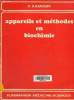
Appareils et méthodes en biochimie
Flammarion médecine sciences. 1977. In-4. Broché. Bon état, Couv. convenable, Dos satisfaisant, Intérieur frais. 236 pages .Exemplaire de bibliothèque . Etiquette sur le premier plat et au dos. Tampon sur certaines pages. Range fichette sur la dernière page.. . . . Classification Dewey : 540-Chimie et sciences connexes
Classification Dewey : 540-Chimie et sciences connexes
Revision der finnischen arten der gattung oligota mann (Col. Staphylinidae) - EXTRAIT p.201-212
Sonderabdruck 1938 in8. 1938. Agrafé.
Bon Etat bonne tenue intérieur propre
Viscosity of liquid Helium below the lambda-point [Kapitza] (+) Flow of liquid Helium II [J. F. Allen & A. D. Misener] [The volume also contain the following papers: New phenomena connected with heat flow in liquid Helium II [J. F. Allen & H. Jones] (... - [THE DISCOVERY OF SUPERFLUIDITY]
New York, Macmillian and Co, 1938. Royal8vo. In publisher's pictorial cloth with the original wrappers [in the back]. Gilt lettering and Nature's logo to spine and front board. Entire issue of ""Nature"", January - June, 1938, Vol. 141. ""Emmanuel College"" in gilt lettering to spine and two library stamps to title-page and first index page. Two small white paper labels pasted on to spine and a small tear to top of spine. Very slight wear to extremities, otherwise a very fine and clean copy. Rare in the publisher's binding. P. 74"" P. 75. [Entire volume: LXIV, 1156 + VIII, IV, VIII, VIII, XVI, VIII, VIII, XVI, VIII, XII, VIII, XII, XII, IV, IV, VIII, XII, VIII, VIII, VIII, VIII, XII, VIII, IV, XVI, CCLX (Advertisements).
First publication of these two seminal papers which constitutes one of the most significant discovery in 20th century physics. It ushered a golden period of low-temperature physics and created a new research field within physics which was later to be called quantum liquids. Both paper described a hitherto unknown state of matter: superfluidity of matter. The two discoveries were made independently, Kapitza's paper superseding Allen and Misener's by two weeks. Both studies reported that liquid helium flowed with almost no measurable viscosity below the transition temperature of 2.18 K.""Although the discovery of superfluidity stands as one of the most significant in physics in the 20th century, it was to be 40 years before the Royal Swedish Academy of Sciences honoured this seminal discovery with a Nobel prize - an exceptionally long interval. In 1978 Kapitza, by then 84, was given half of that year's Nobel Prize for Physics with a somewhat vague citation reading ""for his basic inventions and discoveries in the area of low-temperature physics"". The other half did not go to Allen and Misener. Today, science popularizers generally give sole credit for the discovery of superfluidity to Kapitza."" (Physics world, University of Toronto.). ""Kapitza observed that He II flowed between two closely spaced parallel plates extremely rapidly compared to He I, for the same pressure difference. This result, published in Nature on 8 January 1938, showed unambiguously that here was a new and mysterious kind of liquid - one with almost no viscosity. On the page facing Kapitza's one-page paper was another by the young Canadian physicists Jack Allen and Donald Misener, with essentially equivalent results on helium flow on long capillary tubes. It was submitted two weeks after Kapitza's, but both papers are the standard reference for the discovery of superfluidity"". (Griffin, A Century of Nature, 2003, p. 52).While investigating the thermal conductivity of liquid helium, Kapitsa measured the flow as the fluid flows through a gap between two discs into a surrounding bath. Above the lambda point, there was little flow, but below the lambda temperature, the liquid flowed with such great ease that Kapitsa drew an analogy with superconductors. It was a liquid of zero viscosity. He discovered the phenomenon in 1937 and published a paper about it in Nature in January 1938. He wrote: ""The helium below the lambda point enters a special state that might be called a ‘superfluid.’"" (DSB).Today the theory behind superfluidity is widely used within a broad variety of different subject such as spectroscopic and in high-precision devices as gyroscopes which allow the measurement of some theoretically predicted gravitational effects. In 1999, a type of superfluid was used to trap light and greatly reduce its speed. Light was passed through a Bose-Einstein condensed gas of sodium (superfluid) and found to be slowed to 17 m/s from its normal speed of 299,792,458 metres per second.Brandt, The Harvest of a Century, Pp. 254-7.
Biochimie.
DOIN. 2ème édition. 1971. In-4. Relié. Très bon état, Couv. fraîche, Dos satisfaisant, Intérieur frais. 435 pages. Nombreuses figures en noir et blanc, dans le texte. Une planche dépliante, en fin d'ouvrage.. . . . Classification Dewey : 540-Chimie et sciences connexes
Préface de A. Butenandt. Classification Dewey : 540-Chimie et sciences connexes
Lehrbuch der organischen Chemie.
2. Auflage. Leipzig, Georg Thieme, 1930. 8°. XXI, 889 Seiten Priv. Halbleinen mit Rückenbeschriftung (von Originaleinband).
Div. Besitzer- bzw. Institutsstempel. Seiten 13 bis 18 mit Klebstreifen.
Traité de chimie organique.
Paris / Neuchatel, Ed. Dunod / Ed. du Griffon, 1948 ; fort in-8, XVI-965pp.-1pl.h.t. Pleine toile gris perle, Titre en noir sur plat et dos. Bon état.
Edition originale de la traduction française. Traduit de la dixième édition allemande par Philippe GRANDJEAN. Shéma dépliant hors-texte. Lauteur a obtenu le prix Nobel de chimie en 1937.
Traité de chimie organique. Bibliothèque scientifique, N°13.
Neuchâtel, Editions du Griffon, 1948. 18 x 25, 965 pp., broché, très bon état.
traduit de la 10e édition allemande par Philippe Grandjean.
Traité de chimie organique. Traduit de la 10e édition allemande par Philippe Granjean...
Paris, Neuchâtel, Dunod, éditions, coll. « Bibliothèque scientifique », n° 13 1948 In-4 25 x 17 cm. Reliure éditeur toile grise, auteur & titre en noir sur le dos et le premier plat de couverture, XVI-965 pp., table alphabétique des matières, table des matières. Exemplaire en bon état. Traces de ruban adhésif sur les pages de gardr.
Bon état d’occasion
Aux sources de la vie: De la cellule à l'être humain
Flammarion 2018 304 pages in8. 2018. Broché. 304 pages.
Comme neuf avec son bandeau commercial
Philosophie der Chemie.
Berlin, G. Reimer, 1843. Uncut and unopened with backwrapper preserved. Some brownspots to the first 3 leaves. VIII,327 pp. A bit creased at end.
First edition. - Duveen, p. 15 - Bolton I,568.
[ Ferd. Dïmmlers Verlag] - KASPER, Hugo ; SCHURBA, Walter ; LORENZ, Hans
Reference : 67554
(1968)
Die Klotoide als Trassierungselement.
Herausgeben im Auftrag des Bundesminister für Verkehr, Fünfte, stark erweiterte Auflage (mit viersprachigen Erlaüterungen im Tafelteil), 120 Seiten mit 142 Abbildungen im Texteil, 348 Seiten mit 12 Abbildungen im Tafelteil, 1 vol. in-4 cartonnage éditeur, Ferd. Dïmmlers Verlag, Bonn, s.d. [ 1968 ], 120-348 pp. avec 142 et 12 planches
Bon état (petit frott. à une coupe)
Microbiologie appliquéee a la transformation des produits agricoles
Baillières et Fils. 1921. In-12. Broché. Bon état, Couv. convenable, Dos satisfaisant, Non coupé. 384p illustrées dans le texte de 49 figures.. . . . Classification Dewey : 631.4-Science des sols : chimie, physique, fertilité
4 ème édition revue et augmentée.Encyclopédie agricole. Classification Dewey : 631.4-Science des sols : chimie, physique, fertilité
Microbiologie appliquée à la transformation des produits agricoles
Baillères. 1931. In-12. Broché. Bon état, Couv. convenable, Dos satisfaisant, Non coupé. 485p illustrées de gravures dans le texte.. . . . Classification Dewey : 631.4-Science des sols : chimie, physique, fertilité
Collection : Encyclopédie agricole Classification Dewey : 631.4-Science des sols : chimie, physique, fertilité
MICROBES ET FERTILITE DU SOL
PAYOT. 1923. In-12. Broché. Bon état, Couv. convenable, Dos abîmé, Intérieur frais. 158 pages.. . . . Classification Dewey : 631.4-Science des sols : chimie, physique, fertilité
Classification Dewey : 631.4-Science des sols : chimie, physique, fertilité
Ueber die Constitution und die metamorphosen der chemischen Verbindungen und über die chemische Natur des Kohlenstoffs.
Leipzig und Heidelberg, C.F. Winter'sche Verlagshandlung, 1858. 8vo. Later hcloth. Spine with gilt lettering. In: ""Annalen der Chemie und Pharmacie. hrsg. von Friedrich Wöhler, justus Liebig und hermann Kopp"", Band CVI. With both titlepages. (8),392 pp. a. 1 litographed plate (shaved in outer margin, ut not belonging to Kekule's paper). (Entire volume offered). Kekule's paper: pp. 129-159. Internally clean.
First appearance of this milestone paper in organic chemistry in which he demonstrated the mutual linking together of carbon atoms, developed the idea of affinity units, later called ""valence bonds"", and thus making it possible to explain the formation of organic compounds containing large numbers of carbon atoms. This was ""the final step in the development of modern structural formulas for organic compounds..."" (Leicester & Klickstein, p. 417)""It was not till 1858 that a satisfactory theory of molecular constitution was advanced, simultaneously and independently, by thwo young chemists, Friedrich August Kekulé and Archibald Scott Couper. The theory of molecular constitution put foreward....by Couper and Kekulé rested on two main postulates, the quadriivalency of carbon,....and the capacity of the carbon atom for mutual linking or combining together to form a carbon ""chain"". By this hypothesis of the mutual linking together of carbon atoms - which waslater confirmed by experiment - it was possible to explain the formation of organic compounds containing a large number of carbon atoms. On the foundation of their postulates two postulates, moreover, (they) showed how the molecular constitution or mutual linking together of the atoms of a compound could be represented diagrammatically and the relstions between different compounds made readily intelligible. In his classic paper ""On a New Chemical Theory"" (the paper offered here in its first appearance) advanced beyond Kekulé by representing the constitutions of the compounds by means of GRAPHIC FORMULA in which, as at the present day, the valencies pf the atoms are represented by lines....his formulae are similar to those at present in use...""(Findlay pp. 34 ff)""The theory of Kekulé and Couper gave the chemists the means of solving the problems of chemical constitution"" and by means of the graphic or constitutional formulae it became possible to represent the molecular constitution of known compounds and to foresee the possible existence of isomeric compounds.""(Findlay).Parkinson ""Breakthroughs"" 1858 C. - Ostwald's Klassiker No. 183. - Leicester & Klickstein ""A Source Book in Chemistry"", pp. 417-425. - Exhibition of First Editions of Epochal Achievements in the History of Science, Berkeley 1934. No 57.
Onomatologia Chymica Practica oder vollständig practisches Handbuch der Chemie in alphabetischer Ordnung zum Nutzen und Gebrauch für Aerzte, Apotheker, Fabrikanten, Künstler und andere Personen... und mt einer Vorrede von Johann Friedrich Gmelin.
Ulm, Stettinischen Buchhandlung, 1791. Contemp. hcalf. Raised bands. Titlelabel with gilt lettering. Stamp on title-page. (10) pp., 722 columns, (30) pp. A few minor brownspots.
First edition. - Poggendorff I, 1241.
"KENDREW, J. C. & G. BODO & H. M. DINTZIS & R. G. PARRISH & H. WYCKOFF & D. C. PHILLIPS.
Reference : 43218
(1958)
A Three-dimensional Model of the Myoglobin Molecule Obtained By X-ray Analysis. - [THE DAWN OF STRUCTURAL BIOLOGY]
London, Macmillian and Co., 1958. Royal8vo. Bound in a green full cloth with gilt lettering to spine. Volume 181, from January to June, 1958, of ""Nature"" offered. Binding tight and clean externally as well as internally. Pp. 662-666. [Entire volume: CXLII, (2), 1816 pp].
![A Three-dimensional Model of the Myoglobin Molecule Obtained By X-ray Analysis. - [THE DAWN OF STRUCTURAL BIOLOGY]. "KENDREW, J. C. & G. BODO & H. M. ...](https://static.livre-rare-book.com/pictures/LLX/43218_1_thumb.jpg)
![A Three-dimensional Model of the Myoglobin Molecule Obtained By X-ray Analysis. - [THE DAWN OF STRUCTURAL BIOLOGY]. "KENDREW, J. C. & G. BODO & H. M. ...](https://static.livre-rare-book.com/pictures/LLX/43218_2_thumb.jpg)
First edition of the important paper in which the first three-dimensional model of a protein was obtained, and which thus laid the foundation for all structural biology. Kendrew was furthermore one of the first to use a computer in analyzing the data produced by x-ray diffraction. For his essential discovery Kendrew was awarded the Nobel Prize in Chemistry in 1962. The discovery is widely regarded as being one the most important in the second half of the 20th century within biology and chemistry. ""The first dramatic but hard-won success of the approach [in understanding molecules], the determination of the three-dimensional structure of a protein called myoglobin, was announced in 1958 [in the present paper]. The findings laid the foundation for the age of structure in biology: [...] the paper was the outcome of a truly Herculean task. (Garwin, A century of Nature: twenty-one discoveries that changed science and the world, 2003, Pp. 87-88).
The Pyrotechnist's Treasury" or the complete Art of making Fireworks. - [PYROTECHNICS - FIREWORKS]
London, Chatto & Windus, 1878. 8vo. Orig. full pictorial cloth, stamped in silver and black with silver lettering on back. Top of spine very slightly frayed, edges with very light wear, a small spot on frontcover. Halftitle. XII,200 pp., 16 plates with many figs. (numb. 1-15 a. 1 unnumb.). The halftitle with a rather faint brownspot in outer margin, otherwise clean.
First edition of this pyrotechnic classic. - ""Despite having first been printed over 100 years ago this remains one of the greatest classic how-to-do-pyrotechnic books that have ever been written."" (Chris Philip in A Bibliography of Firework Books, No K 010.1).The work has recently been printed again, and the publshers describe the work as ""The famous Kentish book, a best seller for over 100 years"".
Contribution à la révision du poids atomique du brome. Détermination de la densité normale du gaz acide bromhydrique. ‘Université de genève, Faculté des Sciences’, Thèse n° 581.
Genève, Albert Kundig, 1917, gr. in-8vo, 50 p., non coupé, ill., brochure originale.

(SLACES, NVVA)
Phone number : 41 (0)26 3223808
Mécanique du vol
Editions Modulo 1982 189 pages 15 6x4x22 4cm. 1982. Broché. 189 pages.
Bon Etat bonne tenue intérieur propre
Cellulose et bactéries : décomposition et synthèse. Actualités scientifiques et industrielles n° 164
Hermann et Cie Actualités scientifiques et industrielles Revue 1934 In-8, (25x16.5 cm), broché, 41 pages, photographies en noir et blanc, index bibliographique ; dos légèrement usé, coins à peine écornés, très bon état. Livraison a domicile (La Poste) ou en Mondial Relay sur simple demande.
Exposés de chimie biolotique. Volume 2
HERMANN ET CIE. 1934. In-8. Broché. Bon état, Couv. convenable, Dos frotté, Intérieur frais. 44 p. Illustré de tableaux.. . . . Classification Dewey : 540-Chimie et sciences connexes
Cellulose et bactéries. Décomposition et synthèse. Classification Dewey : 540-Chimie et sciences connexes
Laboratoriumsbuch für die Portlandzementfabrik. 2. Auflage.
Charlottenburg, Zementverlag, 1925, in-8vo, 144 S., ill., Original-Broschüre, Rücken mit Fehlstelle.
Beitrag: Analysengang für Normenzemente. Zementverlag, 1931. 18 S., orig. Brosch.
(SLACES, NVVA)
Phone number : 41 (0)26 3223808
Chemische Analyse durch Spectralbeobachtungen. (In: Annalen der Physik und Chemie, vol. 110, pp.161-189). - [BEGINNING OF SPECTRUM ANALYSIS]
Leipzig: Johann Ambrosius Barth, 1860. 8vo. (207x124mm). Entire volume offered here in contemporary card board binding with hand written paper label to spine. A fine copy.
First edition of the paper which marks the beginning of spectrum analysis. In this work Kirchhoff and Bunsen announced their discovery of the two alkali metals, cesium and rubidium, with the aid of the spectroscope they had invented the year before. These discoveries inaugurated a new era in the means used to find new elements.
Cours de chimie physique.
Moscou, Mir, 1968, in 8° relié pleine toile noire de l'éditeur, 636 pages.
...................... Photos sur demande ...................

Phone number : 04 77 32 63 69

