 Write to the booksellers
-
Type
Autograph (1)
Book (5170)
Magazine (35)
Music sheets (3)
Photographs (8)
-
Latest
Last 24h (2)
Last 3 days (2)
Last month (11)
-
Language
Czech (1)
English (3)
French (5200)
German (11)
Latin (1)
Spanish (1)
-
Century
17th (16)
18th (197)
19th (1142)
20th (2266)
21st (80)
-
Countries
Belgium (353)
Côte d'Ivoire (20)
Denmark (697)
France (3789)
Switzerland (358)
-
Syndicate
CLAM (2)
ILAB (3011)
NVVA (183)
SLACES (183)
SLAM (2106)
SNCAO (48)
Leçons de chimie, garçons, 1ère année.
Delagrave.. 1911. In-12. Cartonnage d'éditeurs. Bon état, Couv. convenable, Dos satisfaisant, Intérieur frais. 215 pages, illustrations noir & blanc in texte.. . . . Classification Dewey : 540-Chimie et sciences connexes
Bibliothèque des écoles primaires supérieures et des écoles prfessionnelles. D'après les programmes officiels du 27 juillet 1909. Classification Dewey : 540-Chimie et sciences connexes


Chimie, 1ère année.
Delagrave.. 1938. In-12. Cartonnage d'éditeurs. Bon état, Couv. convenable, Dos satisfaisant, Intérieur frais. 405 pages, illustrations noir & blanc in texte.. . . . Classification Dewey : 540-Chimie et sciences connexes
Bibliothèque des écoles normales. Conforme aux programmes officiels du 18 août 1920. Classification Dewey : 540-Chimie et sciences connexes
Chimie, 3è année.
Delagrave.. 1928. In-12. Cartonnage d'éditeurs. Bon état, Couv. convenable, Dos satisfaisant, Intérieur frais. 228 pages, illustrations noir & blanc in texte.. . . . Classification Dewey : 540-Chimie et sciences connexes
Bibliothèques des écoles normales. Conforme aux programmes officiels du 18 août 1920. 2è édition. Classification Dewey : 540-Chimie et sciences connexes
CHIMIE - DEUXIEME ANNEE / CONFORME AUX PROGRAMMES OFFICIELS DU 18 AOUT 1920 / BIBLIOTHEQUE DES ECOLES NORMALES.
DELAGRAVE. 1935. In-12. Cartonné. Etat d'usage, Couv. défraîchie, Dos satisfaisant, Intérieur acceptable. 268 pages augmentées de nombreuses figures en noir in texte - Nombreuses annotations sur les pages de garde - Petite annotation sur le 1er plzt.. . . . Classification Dewey : 540-Chimie et sciences connexes
Classification Dewey : 540-Chimie et sciences connexes
COURS DE CHIMIE, 2e ANNEE
Delagrave. 1932. In-12. Relié. Etat d'usage, Couv. légèrement passée, Dos frotté, Quelques rousseurs. 268 pages. Dos muet. Plats frottés. Quelques annotations en pages de garde et de titre.. . . . Classification Dewey : 540-Chimie et sciences connexes
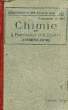
6e édition. Bibliothèque des Ecoles Normales. Programmes officiels d'août 1920. Classification Dewey : 540-Chimie et sciences connexes
Cours de chimie (deuxième année).
Couverture rigide. Cartonnage de l'éditeur. 268 pages.
Livre. Programmes de 1920. Editions Delagrave (Collection : Bibliothèque des écoles normales), 1939.
Cours de chimie (deuxième année).
Couverture rigide. Cartonnage de l'éditeur. 268 pages. Quelques annotations sur la page de garde.
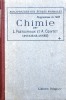
Livre. Programmes de 1920. Editions Delagrave (Collection : Bibliothèque des écoles normales), 1935.
Problèmes de physique et chimie. Corrigés des problèmes de physique et de chimie. Ecoles primaires supérieures et cours complémentaires.
Couverture rigide. Cartonnage de l'éditeur. 264 pages.
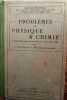
Livre. Programme de 1920. Editions Delagrave (Collection : Bibliothèque des écoles normales), 1929.
Les sciences par l'observation et l'expérience.
Paris, Delagrave, 1930. Petit in-8 cartonné, 373 pp. Physique, chimie, histoire naturelle. 600 illustrations en noir. Préparation au C.E.P. et aux bourses, cours supérieur, classes élémentaires de l'enseignement secondaire.
Chimie 3è, cours complémentaires.
"Delagrave.. 1949. In-12. Broché. Bon état, Tâchée, Dos frotté, Intérieur frais. 107 pages, dessins noir & blanc in texte. Tampon ""Hommage de l'éditeur"" en couverture.. . . . Classification Dewey : 540-Chimie et sciences connexes"
Classification Dewey : 540-Chimie et sciences connexes
Sciences physiques.
Delagrave.. 1939. In-8. Cartonnage d'éditeurs. Bon état, Couv. légèrement passée, Dos satisfaisant, Intérieur frais. 211 pages, 259 dessins et photos noir & blanc in texte.. . . . Classification Dewey : 540-Chimie et sciences connexes
Nouveau cours de sciences. Classe de cinquième, 1ère année de l'enseignement primaire supérieur. Programmes des 30 août 1937 & 14 avril 1938. Classification Dewey : 540-Chimie et sciences connexes
CONCENTRATION DE TRITIUM DANS L'EAU DE PLUIE, L'EAU POTABLE ET LA VAPEUR D'EAU ATMOSPHERIQUE AU SUD DE LA REGION PARISIENNE
Journal of Radioanalytical Chemistry. 1983. In-8. Broché. Bon état, Couv. légèrement passée, Dos satisfaisant, Intérieur frais. Plaquette paginée de 39 à 48. Annotations sur le 1er plat.. . . . Classification Dewey : 540-Chimie et sciences connexes
JRC, vol. 77, n° 1, 1983. Classification Dewey : 540-Chimie et sciences connexes
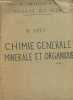
Chimie générale minérale et organique- Cours de l'université de Bordeaux, Faculté des sciences
Editions Tex. Non daté.. In-4. Broché. A relier, Plats abîmés, Dos abîmé, Papier jauni. 384 pages. Désolidarisé, plats conservés, détachés du corps. Coins frottés. Couverture jaunie. Plats partiellement manquants. Dechirures. Annotations au crayon et à l'encre. schémas monochromes.. . . . Classification Dewey : 540-Chimie et sciences connexes
Classification Dewey : 540-Chimie et sciences connexes
Recherches sur le rôle de la lumière dans la germination. Étude historique, critique et physiologique.
1880 Paris, G. Masson, Librairie de l’Académie de Médecine, 1880.
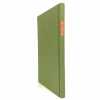
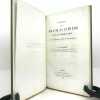
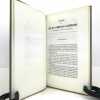
1 volume in-8 (24,5 x 15,5 cm), bradel toile verte (reliure moderne), pièce de titre orangée. 220-[2] pages (complet). Très bon état. RARE ÉDITION ORIGINALE de cette thèse d'Albert Pauchon, présentée et soutenue le 19 novembre 1880; illustrée d’une planche hors texte titrée : “Appareils pour le dosage de l’Oxygène et de l’Acide carbonique exhalés par les graines”. Albert Pauchon (1848-1904), docteur en médecine et lauréat de la Faculté de Paris (prix Corvisart 1870), docteur ès sciences naturelles, Professeur suppléant à l’École de plein exercice de médecine et de pharmacie de Marseille. Bon exemplaire.
CHIMIE ORGANIQUE. COURS. 1er CYCLE UNIVERSITAIRE. 16e EDITION.
DUNOD. 1990. In-8. Broché. Bon état, Couv. convenable, Dos satisfaisant, Intérieur frais. 529 pages. Premier plat illustré en couleurs. Nombreux schémas dans le texte.. . . . Classification Dewey : 540-Chimie et sciences connexes
Classification Dewey : 540-Chimie et sciences connexes
Cours de chimie organique - 5e édition
Gauthier-Villars / Paris 1968 in8. 1968. Broché.
bon état général cependant couverture défraîchie rousseurs sur tranche intérieur propre
Exercices de chimie organique
Gauthier-Villars, 1975. Format 16x24 cm, broche, 349 pages. Tres bon etat.
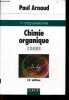
Chimie organique - Cours - 1er cycle universitaire - 16e édition
DUNOD. 1997. In-8. Broché. Etat d'usage, Coins frottés, Dos satisfaisant, Intérieur frais. 529 pages. Premier plat illustré en couleurs. Nombreux schémas dans le texte.. . . . Classification Dewey : 540-Chimie et sciences connexes
Classification Dewey : 540-Chimie et sciences connexes
LES COLLOIDES leurs gelées et leurs solutions
broché " couverture muette" - 16x24 - 586pp - 144 figures - 57 tableaux - éditions DUNOD - 1933.
ANTHROLOGIE HISTOIR PHILOSOPHIE LITTERATURE PARADES
Paul D. Boyer Alton Meister R.L. Sinsheimer Esmond E. Snell
Reference : 100081444
(1966)
Annual review of biochemistry - volume 35 Part I & II
Annual reviews 1966 in8. 1966. Cartonné.
Bon Etat de conservation intérieur propre bonne tenue couvertures un peu défraichies
Biochimie pathologique
Presses académiques européennes / Maloine 1972 in4. 1972. Cartonné.
Bon état couverture un peu défraîchie tranche ternie intérieur propre bonne tenue accroc sur le dos du côté de la charnière du premier plat
La femme un traité complet d'initiation anatomie vie sexuelle amour maternité maladies ménopause
Stauffacher 1967 308 pages in8. 1967. Cartonné. 308 pages. 10 planches en couleurs 120 illustrations et des modèles transparents du corps humain et du bassin féminin
Bon Etat tranche assez salie pages légèrement jaunies
Le Diagnostic Chimique des Avitaminoses. Techinques Actuelles. Preface du P' Javillier
Masson et Cie Editeurs 1942 in8. 1942. Broché.
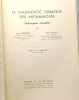
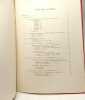
Bon état cependant couverture défraîchie intérieur propre
La Catalyse en Chimie Organique
Librairie Polytechnique Ch. Béranger Éditeur 1920 388 pages collection Encyclopédie de Science Chimique Appliquée. in8. 1920. reliure editeur. 388 pages. Cet ouvrage de Paul Sabatier lauréat du prix Nobel de chimie en 1912 traite de la catalyse en chimie organique. Il couvre les généralités sur la catalyse les différents types de réactions catalytiques (oxydations hydrogénations isomérisations polymérisations déshydratations etc.) et constitue une référence majeure dans ce domaine
Bon état couverture usagée intérieur propre
Introduction à la microbiologie générale
sd Masson et Cie broché, 185p. Très bon état.
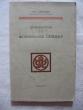
Table : introduction - agents physiques et microorganismes - agents chimiques et microorganismes - enzymes - énergie et microorganismes, métabolisme - microorganismes dans la nature.
Phone number : 04 76 97 79 28

