 Write to the booksellers
-
Type
Book (5667)
Magazine (35)
Music sheets (3)
Photographs (8)
-
Latest
Last 24h (1)
Last 3 days (2)
Last month (103)
Last week (3)
-
Language
Czech (1)
English (3)
French (5696)
German (11)
Latin (1)
Spanish (1)
-
Century
17th (16)
18th (200)
19th (1155)
20th (2516)
21st (95)
-
Countries
Belgium (352)
Côte d'Ivoire (19)
Denmark (687)
France (4298)
Switzerland (357)
-
Syndicate
CLAM (2)
ILAB (3004)
NVVA (183)
SLACES (183)
SLAM (2110)
SNCAO (48)
Die Thier=Chemie oder die organische Chemie in ihrer Anwendung auf Physiologie und Pathologie. Zweite unveränderte Auflage.
Braunschweig, Vieweg und Sohn, 1843. Contemp. hcalf. Slightly rubbed, corners bumped. XVIII,344,(1) pp. Brownspotted throughout, mainly marginal.
Scarce second edition of a groundbreaking work in animal physiology. ""...for Liebig had provided one of the first comprehnsive pictures of the overall meaning of the ceaseless chemical exchanges which form an integral part of the vital process. A few men adopted it as a guide for further investigation, and Bishoff and Voit based the field of energy metabolism on Liebig's ideas."" (F.L. Holmes in DSB). - Duveen p.359 - Not in Neville.
Mémoire sur la Constitution de l'Ether et de ses Combinaisons.
Paris, Crochard, 1833. No wrappers. In: ""Annales de Chimie et de Physique, Par MM. Gay-Lussac et Arago."", 2 Séries, Tome 55, Cahier 2. pp. 113-224. Entire issue offered. Liebig's paper: pp. 113-156. Scattered brownspots.
First appearance in French - the paper was published at the same time in ""Annalen der Pharmacie"" and in""Annalen der Physik und Chemie. Hrsg.von Poggendorff""- of an importent paper on Radicals in which he regards alcohol as a hydrate of the ethyl radical and ether as the oxide of the ethyl radical. The paper is also relevant for the discovery and development of ether as an anaesthesia.
Ueber die Constitution des Aethers und seiner Verbindungen.
Leipzig, Johann Ambrosius Barth, 1834. Without wrappers as issued in ""Annalen der Physik und Chemie. Hrsg.von Poggendorff"", 1. Bd. (31. Bd. der Reihe), No. 21, 22 a. 23. Pp. 321-368. Liebig's paper: Titlepage to 1. Bd. pp. 321-360. Clean and fine.
First appearance - the paper was published at the same time in ""Annalen der Pharmacie"" - of an importent paper on Radicals in which he regards alcohol as a hydrate of the ethyl radical and ether as the oxide of the ethyl radical. The paper is also relevant for the discovery and development of ether as an anaesthesia.
CHIMIE PHOTOGRAPHIQUE À L’USAGE DES DÉBUTANTS, traduit de l’allemand et annoté par le Profr J. Maupeiral.
Gauthier-Villars et fils (coll. Bibliothèque photographique), Paris, 1898
Un volume petit in-8° (13 X19 cm), demi-reliure cuir marron à coins, plats marbrés. 217 pages plus Table des matières et errata. E.O. (en français), livre rare et en TRES BON ETAT.
LES SOLUTIONS ALCALINES D'IODE
Facultés Catholiques de Lille - A. Delplanque, Roubaix. Non daté. In-8. Broché. Bon état, Couv. légèrement passée, Dos satisfaisant, Intérieur frais. 144 pages. Illustré de graphiques et tableaux en noir. Etiquette de code sur le 1er plat. Tampons de bibliothèque sur le 1er plat et en page de titre.. . . . Classification Dewey : 540-Chimie et sciences connexes
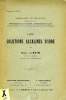
Mémoires et travaux publiés par des Professeurs des Facultés Catholiques de Lille, Fasc. XXIV. Classification Dewey : 540-Chimie et sciences connexes
CHIMIE CLASSE DE PREMIERE- SECTIONS C C' M ET M'- PROGRAMME 1957
ISTRA. 1959. In-8. Broché. Bon état, Couv. convenable, Dos satisfaisant, Intérieur frais. 209 pages- nombreux croquis, schémas en noir et blanc dans le texte. . . . Classification Dewey : 540-Chimie et sciences connexes
Classification Dewey : 540-Chimie et sciences connexes
LA CHIMIE EN CLASSES TERMINALES
Istra. 1970. In-8. Relié. Bon état, Couv. légèrement passée, Dos frotté, Intérieur bon état. 223 pages. Illustré de nombreux schémas et photos en noir et blanc dans le texte. Tampon Spécimen en page de titre.. . . . Classification Dewey : 540-Chimie et sciences connexes
Programme 1966. Les atomes et la notation chimique. Corps moléculaires... Classification Dewey : 540-Chimie et sciences connexes
CHIMIE - CLASSES DE MATHEMATIQUES ELEMENTAIRES ET DE SCIENCES EXPERIMENTALES
ISTRA. 1950. In-8. Broché. Bon état, Couv. convenable, Dos satisfaisant, Intérieur frais. 303 pages augmentees de nombreuses figures en noir et blanc dans le texte. . . . Classification Dewey : 540-Chimie et sciences connexes
Classification Dewey : 540-Chimie et sciences connexes
CHIMIE, CLASSES DE MATHEMATIQUES ELEMENTAIRES ET DE SCIENCES EXPERIMENTALES
Istra. 1955. In-8. Broché. Etat d'usage, Couv. défraîchie, Dos abîmé, Mouillures. 303 pages. Illustré de nombreux schémas en noir et blanc dans le texte. Pages légèrement jaunies.. . . . Classification Dewey : 540-Chimie et sciences connexes
Programmes de 1947. Chimie générale et chimie organique. Classification Dewey : 540-Chimie et sciences connexes
CHIMIE - CLASSES DE MATHEMATIQUES ELEMETNAIRES ET DE SCIENCES EXPERIMETNALES.
ISTRA. 1949. In-8. Broché. Etat d'usage, Couv. convenable, Dos satisfaisant, Rousseurs. 301 pages illustrées de nombreuses figures dans le texte - Nombreuses rousseurs dans l'ouvrage.. . . . Classification Dewey : 540-Chimie et sciences connexes
Classification Dewey : 540-Chimie et sciences connexes
Les parfums, les médicaments, les produits photographiques. Avec 21 figures.
P., Baillère, 1907, in 12 broché, 96 pages ; cachets.
Les parfums : parfums naturels, parfums artificiels.Les médicaments : produits naturels, produits chimiques, produits biologiques, produits galéniques.les produits photographiques : les opérations photographiques, les produits ...................... Photos sur demande ...................


Phone number : 04 77 32 63 69
ELEMENTS PRATIQUES DE CHIMIE AGRICOLE, SUIVIS D'UNE NOTICE SUR ROQUEFORT
Imprimerie et Librairie de la Société du Pas-de-Calais, Arras. 1878. In-12. Relié. Etat d'usage, Couv. défraîchie, Dos fané, Intérieur acceptable. 324 pages. 2e plat fortement défraîchi. Pages de garde manquantes.. . . . Classification Dewey : 540-Chimie et sciences connexes
Chimie animale. Chimie végétale. Chimie minérale et inorganique. Classification Dewey : 540-Chimie et sciences connexes
Diagramme N° 125 - Carbochimie
Editons du cap Monte-Carlo. Juillet 1967. In-12. Broché. Bon état, Couv. convenable, Dos satisfaisant, Intérieur frais. 95 pages environ illustrées de nombreuses photos et dessins noir et blanc.. . . . Classification Dewey : 540-Chimie et sciences connexes
Classification Dewey : 540-Chimie et sciences connexes
TRAVAUX PRATIQUES DE CHIMIE ORGANIQUE
Dunod. 1955. In-8. Broché. Etat d'usage, Couv. légèrement pliée, Dos satisfaisant, Mouillures. 95 pages. Illustré de nombreuses figures en noir et blanc dans le texte. Page de faux-titre et dernière page tachées.. . . . Classification Dewey : 540-Chimie et sciences connexes
Bibliothèque de l'enseignement technique. Préparation aux Brevets de technicien et au BEI d'aide-chimiste. Classification Dewey : 540-Chimie et sciences connexes
[Magdeleine Lippens-Giguère] - LIPPENS-GIGUERE, Magdeleine
Reference : 58367
(1986)
Monsieur Peroxyde. Biographie du chimiste canadien Paul-Antoine Giguère, C.C. [ Edition originale ]
Tirage à 100 exemplaires, 1 vol. in-8 br., Magdeleine Lippens-Giguère, Québec, 1986, 325 pp.
![Monsieur Peroxyde. Biographie du chimiste canadien Paul-Antoine Giguère, C.C. [ Edition originale ]. LIPPENS-GIGUERE, Magdeleine](https://static.livre-rare-book.com/pictures/CDL/58367_thumb.jpg)
![Monsieur Peroxyde. Biographie du chimiste canadien Paul-Antoine Giguère, C.C. [ Edition originale ]. LIPPENS-GIGUERE, Magdeleine](https://static.livre-rare-book.com/pictures/CDL/58367_2_thumb.jpg)
![Monsieur Peroxyde. Biographie du chimiste canadien Paul-Antoine Giguère, C.C. [ Edition originale ]. LIPPENS-GIGUERE, Magdeleine](https://static.livre-rare-book.com/pictures/CDL/58367_3_thumb.jpg)
Rare exemplaire de cette intéressante biographie, tirée à petit nombre, rédigée par l'épouse de Paul-Antoine Giguère, qui fut professeur de chimi-physique pendant 35 ans à l'Université Laval (Québec)
Recherches sur l’influence de l’inanition chez paramecium caudatum. Avec une planche.Thèse.
Genève, 1910, 245x165mm, 55pages, broché.
Pour un paiement via PayPal, veuillez nous en faire la demande et nous vous enverrons une facture PayPal
The determination of crystal structures - the crystalline state Vol. III
G. Bell and sons in8. Sans date. Cartonné.
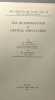
Bon état de conservation couverture frottée marque de scotch dans l'intérieur des plats intérieur propre par ailleurs
Tutoyer les virus
LABOR LITTERATURE 1993 in8. 1993. Broché.
couverture défraîchie intérieur propre
La guerre aero-chimique et les populations civile - Etude historique, clinique, therapeutique et preventive
Charles-Lavauzelle, Paris, 1933 ( 3* edition). Grand in-8* broche de 312 pages.Exemplaire neuf, non coupe.
Le régime rural de l'ancienne france
Presses universitaires de france. 1942. In-8. Broché. Etat d'usage, Tâchée, Coiffe en pied abîmée, Intérieur frais. 185 pages.. . . . Classification Dewey : 631.4-Science des sols : chimie, physique, fertilité
Classification Dewey : 631.4-Science des sols : chimie, physique, fertilité
CHIMIE - Classe de Philosophie
Un ouvrage de 165 pages, format 135 x 185 mm, illustré, relié cartonnage, publié en 1932, J. de Gigord Editeur, bon état
Programme du 30 avril 1931
Phone number : 04 74 33 45 19

